APCNF: A People-Powered Agroecological Transformation Rooted in Nature
Industrial agriculture has left behind broken soils, polluted waters, and fragile rural economies. But in Andhra Pradesh, India, a quiet revolution is underway, one that puts farmers, not chemicals, at the center of resilience. The Andhra Pradesh Community-managed Natural Farming (APCNF) initiative is redefining what it means to grow food in harmony with nature, at scale. It is demonstrating that adequate, diverse, safe and nutritious food can be grown without even one gram of synthetic fertilizers.
Launched in 2016 by Andhra Pradesh’s government through the state-run entity Rythu Sadhikara Samstha (RySS), APCNF is one of the world’s largest people-led transitions to agroecology. Their goal is ambitious: to shift six million farmers, organized through 845,000 women’s Self-Help Groups (SHGs), across five million hectares into chemical-free, regenerative natural farming by 2035. According to the initiative, as of October 2025, over 1.29 million farmers (21.5% of the state’s farmers) across 8,168 villages (61% of the state’s villages) have joined the movement. APCNF says that a unique feature of the initiative is that participating farmers’ incomes rise significantly even in the first year of transition.
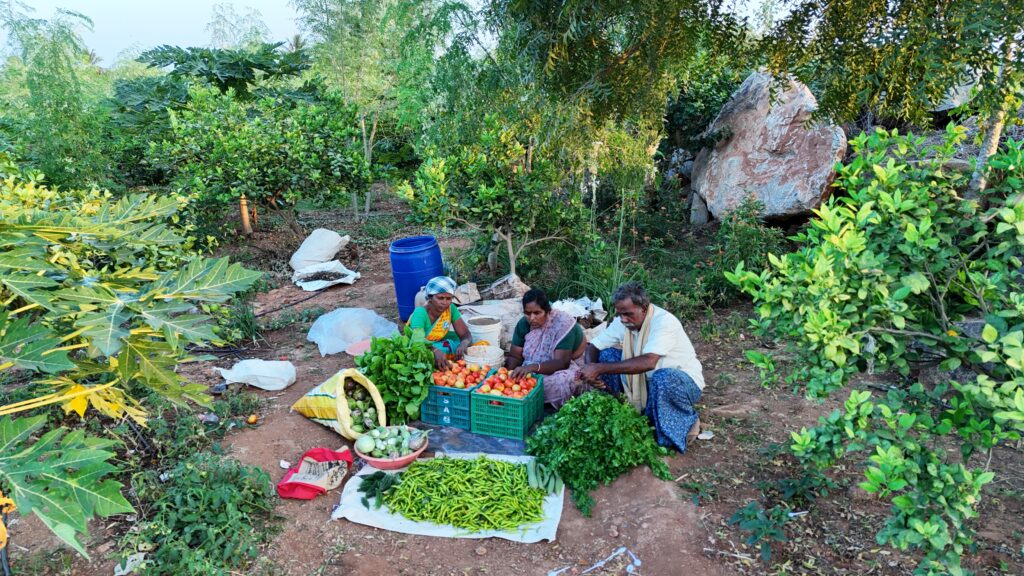
APCNF draws on modern soil microbiome science, indigenous knowledge, and grassroots women’s leadership to build resilient, biodiverse farms that thrive without synthetic inputs. The model is anchored in nine ecological principles, from continuous green cover and minimal soil disturbance to multi-species intercropping and Pre-Monsoon Dry Sowing (PMDS). At the heart of the initiative are 231,000 women’s SHGs, 10,000+ farmer-trainers, and a network of 11,000 demonstration farms. These local institutions drive adoption through peer learning, contextualized innovation, and shared ownership. Farmers are mentored through every stage of transition, transforming villages into agroecological hubs.
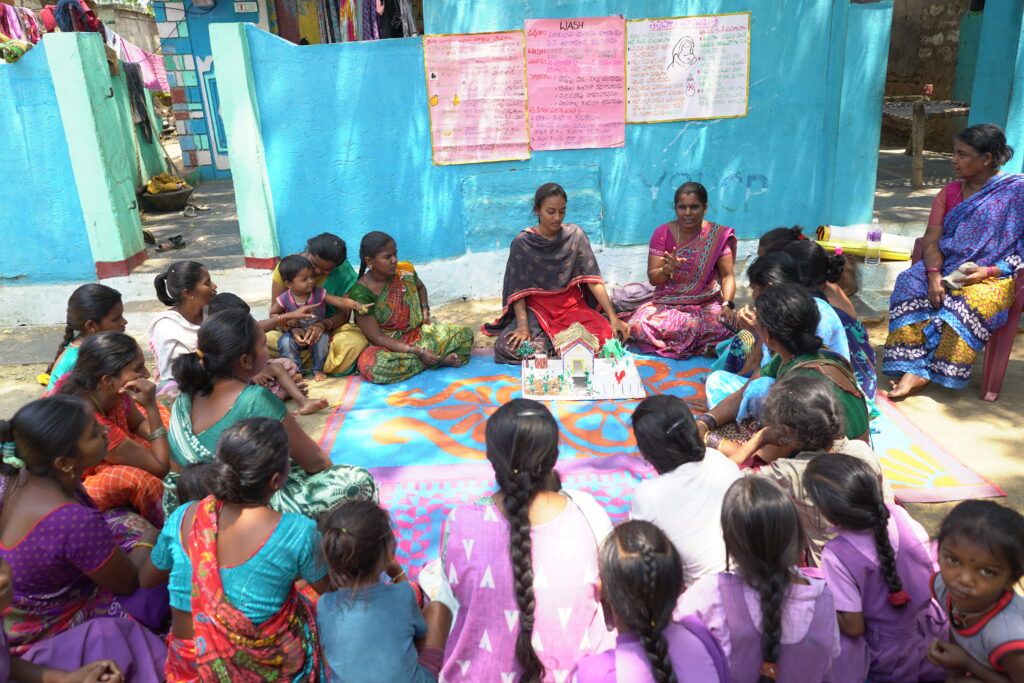
The impacts ripple across the food system. According to the initiative, soils under Natural Farming (NF) have been revived, with a seven-fold increase in earthworm populations and restored microbial activity. Water usage has dropped by up to 50%, thanks to mulching, root zone moisture retention, and ecosystem mimicry. Fields have become carbon sinks, emitting up to 90% less greenhouse gases. NF farms host 55% more birds and 60% more beneficial insects, while year-round intercropping boosts resilience, income, and biodiversity.
And it’s not just the land that’s healing. According to the initiative, in 247 study villages, 87% of households now consume 5-7 food groups daily, a significant improvement from the earlier 3-4 food groups per day. Maternal and child nutrition indicators are improving, and women farmers are regaining agency over seeds, markets, and livelihoods. Through APCNF’s A-grade models, Any Time Money models, and decentralized input-output enterprises, the initiative says its work has resulted in 40% higher net incomes, stable or improved yields, and real climate resilience.
With pilots in 23 Indian states and support extended to Zambia, Indonesia and Sri Lanka, APCNF is already shaping a global conversation on systemic agricultural transformation. Its strength lies in its simplicity and scalability, making it uniquely suited for many countries throughout the world. By working with natural systems, APCNF, together with its Indo German Global Academy for Agroecology Research and Learning (IGGAARL), offers more than a farming model. It offers a living blueprint for regenerative food futures that prioritize farmers, ecosystems, and public good. In a fragmented world chasing silver bullets, APCNF proves that transformation can be rooted, inclusive, centered around women farmers and led by those closest to the land.
Learn more about APCNF.
Written by Sarah Souli
Photos provided by APCNF
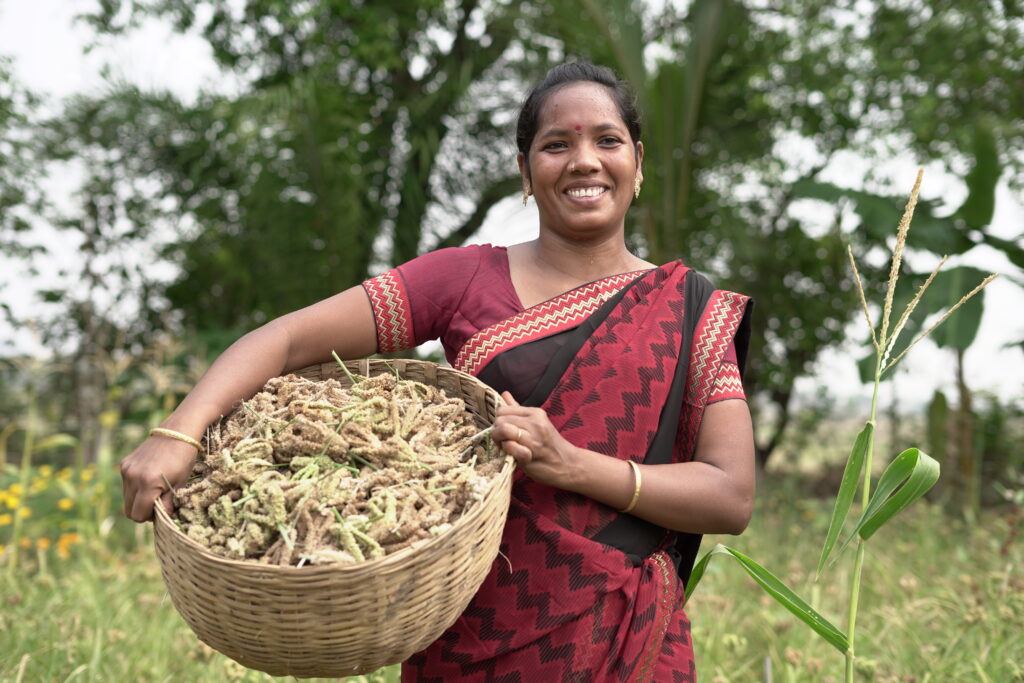
Andhra Pradesh Community-managed Natural Farming (APCNF)
Andhra Pradesh Community-managed Natural Farming (APCNF) is one of the world’s largest collective transitions to agroecology.
Launch year: 2016
Based in: India