Building Impact Through Eaters: Changing the World One Bite at a Time
For most of us, change is hard. When it comes to what people eat, could it start with the menu? That’s the premise behind BITE: Building Impact Through Eaters, a women-led nonprofit that works with chefs, foodservice companies, universities, workplaces, and other institutions to make more sustainable food easier to choose.
Founded in the United States in 2019, BITE focuses on the places where everyday food decisions happen—after all, adjusting what people eat is one of the highest-leverage climate interventions available. According to the 2025 EAT-Lancet Commission, food systems account for roughly 30% of global greenhouse gas (GHG) emissions. But with full adoption of the Planetary Health Diet, coupled with strong cross-sector climate policies, emissions could fall from 7.35 to 2.75 gigatonnes of CO2.
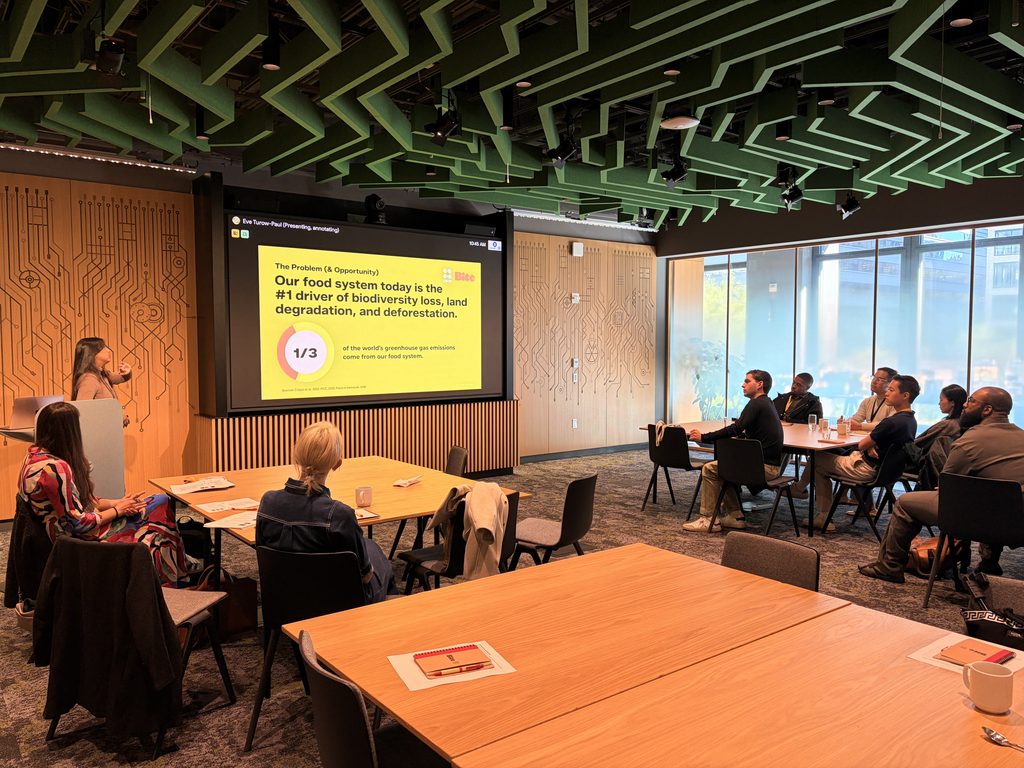
BITE’s approach combines behavioral science, research, and narrative testing to understand what makes people choose one dish over another. It then uses those insights to change menus, dining spaces, and how people talk about food. Its work is organized across three connected areas: The Lab, which researches what drives consumer and operator choices through studies and real-world experiments; The Solutions, which turns those insights into practical tools and programs; and The Amplifier, which works to shift the stories and cultural norms surrounding food.
The approach is already being implemented at scale. BITE says it works with Sodexo, Compass Group, and Aramark, the three largest contract foodservice companies in the world. In 2025, BITE says it activated interventions at 42 partner sites, directly reaching more than 95,000 eaters. Over the past seven years, the organization says its techniques, rooted in behavioral science and narrative design, have informed menu design, dining operations, and food strategy across more than 180 foodservice locations.
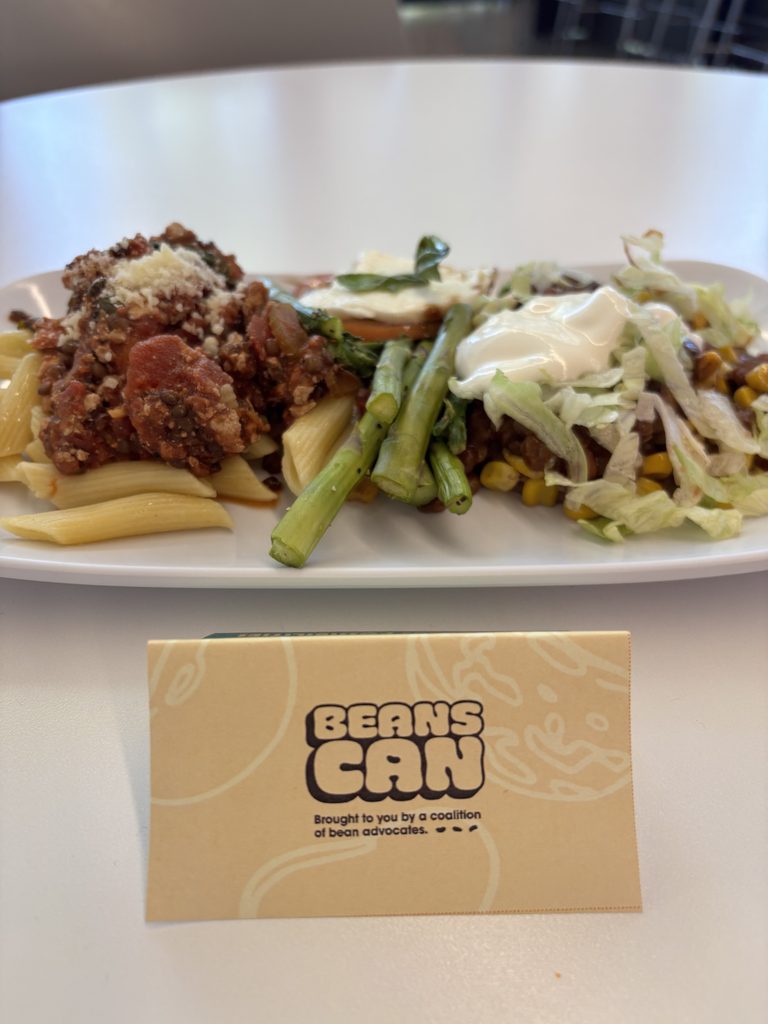
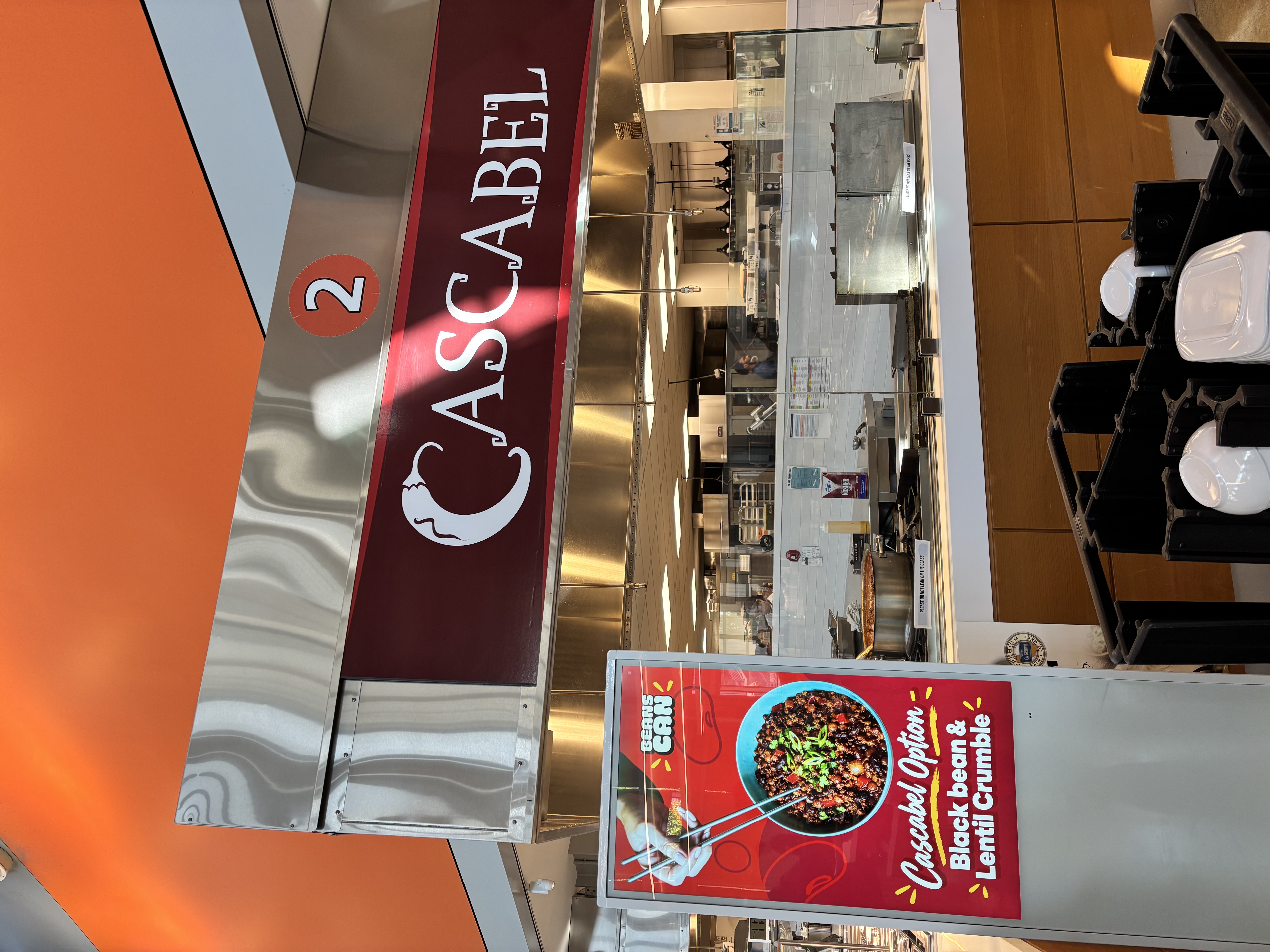
This Black Bean and Lentil Crumble is offered at partnered dining halls through BITE’s Beans Can Campaign.
BITE reports measurable environmental effects as well. According to the initiative, its Plant-Forward in Practice project produced a 10% reduction in daily average food-related GHG emissions at pilot sites. Its Beans Can campaign, which promotes beans through appealing menu choices rather than as a sacrifice or substitute, reportedly reduced emissions from burger sales alone by 8% across 20 sites. BITE says a 2023 randomized controlled trial of plant-based defaults in university dining increased plant-based dishes served by 58.3% and cut associated GHG emissions by 23.6%.
The organization has also looked beyond plant-based food. Through its Cook Aquatic Foods project, BITE says it worked with 106 chefs to introduce foods including clams, mussels, and sea vegetables. According to the initiative, the share of participating chefs who found these foods appealing rose from 56% to 80%, and 65% of the 29 chefs who completed the full eight-week program added them to their menus, creating 26 new dishes served to 242k guests.
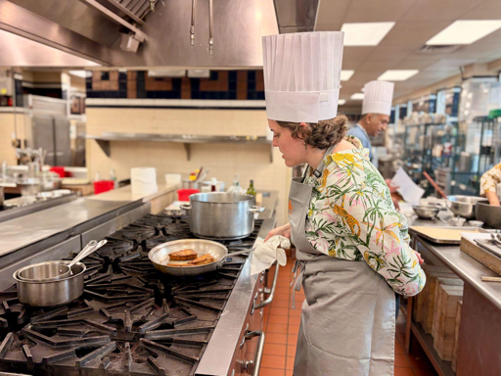
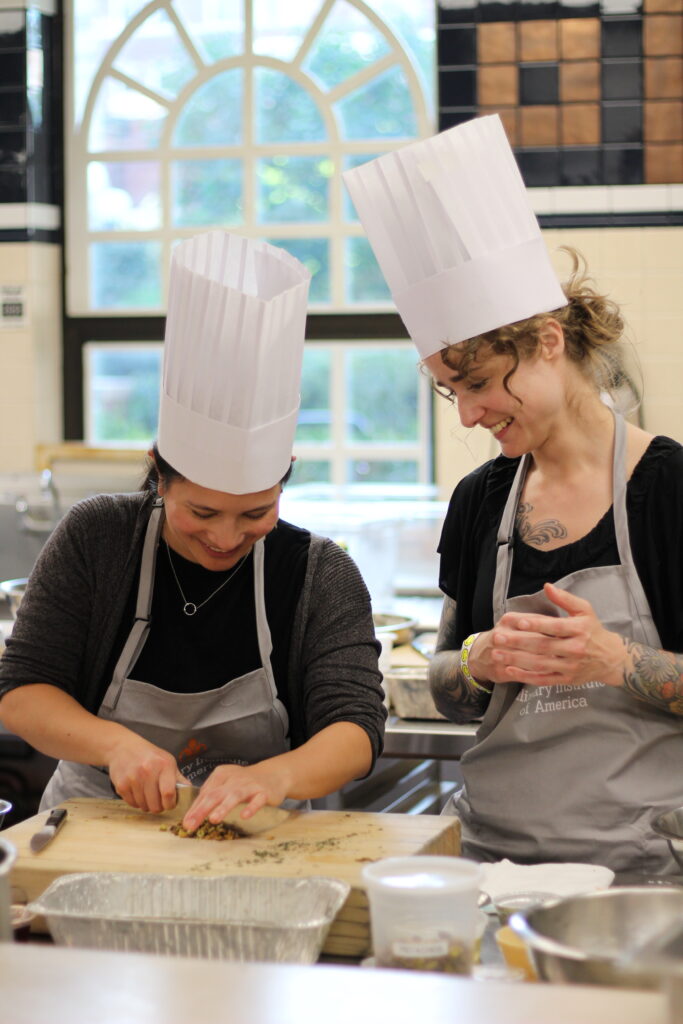
Stephanie Szemetylo, Sr. Design Researcher, cooking up a dish at the BITE Team Day at the Culinary Institute of America.
People do not make food choices based on environmental impact alone. Taste, price, habit, culture, and presentation all matter. So rather than asking people to completely rethink what they eat, BITE is betting on smaller shifts: a different default, a better description, a more appealing dish. At scale, those small decisions could add up to a very different food system. The proof, pun intended, is in the pudding: according to BITE, its methods, through its foodservice partners, have reached practitioners in more than 25 countries, and it aims to influence the food choices of 100 million people by 2030.
Learn more about BITE.
Building Impact Through Eaters (BITE)
Building Impact Through Eaters (BITE) equips food service operators with the latest behavioral science tools to shift consumer diets toward climate-smart foods.
Launch year: 2019
Based in: USA