Conscious Kitchen: If You Give a Kid an Organic, Locally Sourced Peach…
Across Northern California, an ambitious program is replacing processed school meals with organic ingredients grown on nearby farms.
Listen to the article
CALIFORNIA, United States of America.
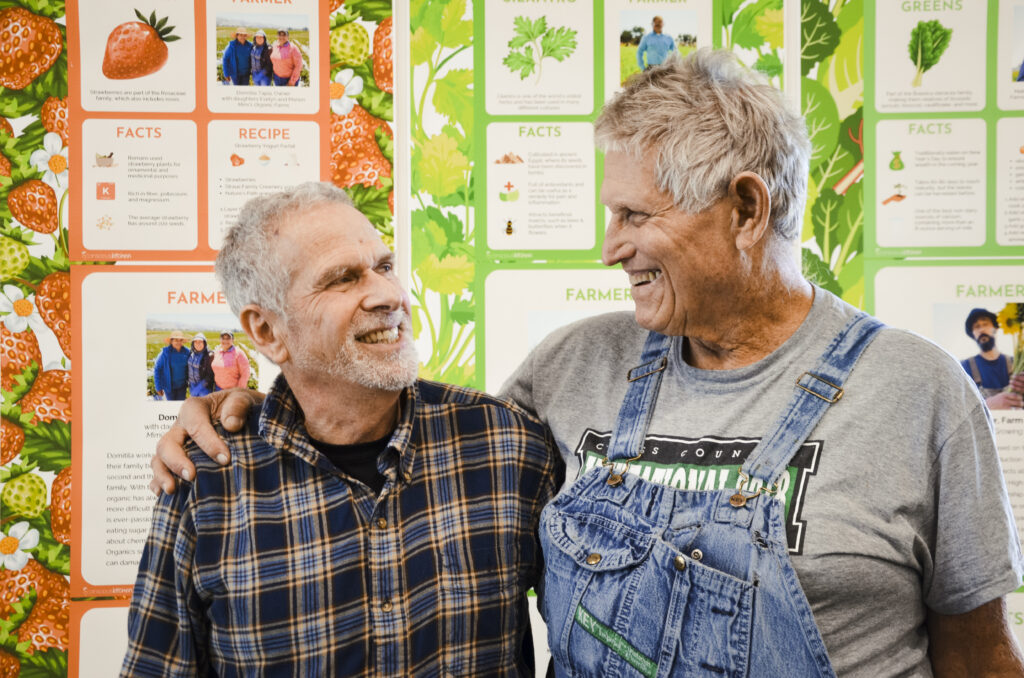
“I want to make peach ice cream with Albert Straus!” proclaims Al Courchesne. Affectionately known by all as Farmer Al, he sits on stage, eyes twinkling and sporting his trademark overalls. The reputation of his juicy stone fruits precedes him. The Albert Straus in question, of Straus Family Organic Creamery, chuckles appreciatively from the audience. Seated around him are organic farmers, chefs, distributors, and advocates from across California, gathered amidst the misty dunes and rustic cabins of Pacific Grove for the annual EcoFarm conference. The wind off the Pacific carries the scent of kelp and salt across the grounds, fanning the flames of good-natured debate. Discussions over the week have spanned many food system subjects, from soil health to seed sovereignty. The hot topic for the last panel of the day: school food.
Barbara Jellison, school food service executive director of the West Contra Costa Unified School District takes the microphone, smiling but serious. “You make that peach ice cream, and I’ll serve it in schools.”
What connects an organic dairy farmer, peach grower, and school food director beyond dreams of quality frozen dessert? The answer lies in a small but dedicated team of organizers. They call themselves Conscious Kitchen, and they are on a mission to provide 100% organic school food for 6 million students in California. A spontaneous proposal for organic ice cream is the cherry atop a deeper story of the collaborative relationships they are nurturing in the Golden State.
In the beginning
The idea for Conscious Kitchen grew out of a stark contradiction in the American food system. Every day, public schools serve more than 30 million lunches, effectively making them the largest restaurant in the country. Yet most of those meals are supplied through industrial food chains built around frozen products, processed ingredients, and centralized distributors. Fresh ingredients from nearby farms rarely make it into the cafeteria.
For many children, particularly those from low-income families, school lunch may be the most reliable meal of the day. Yet these meals often fail to be healthy or environmentally friendly.
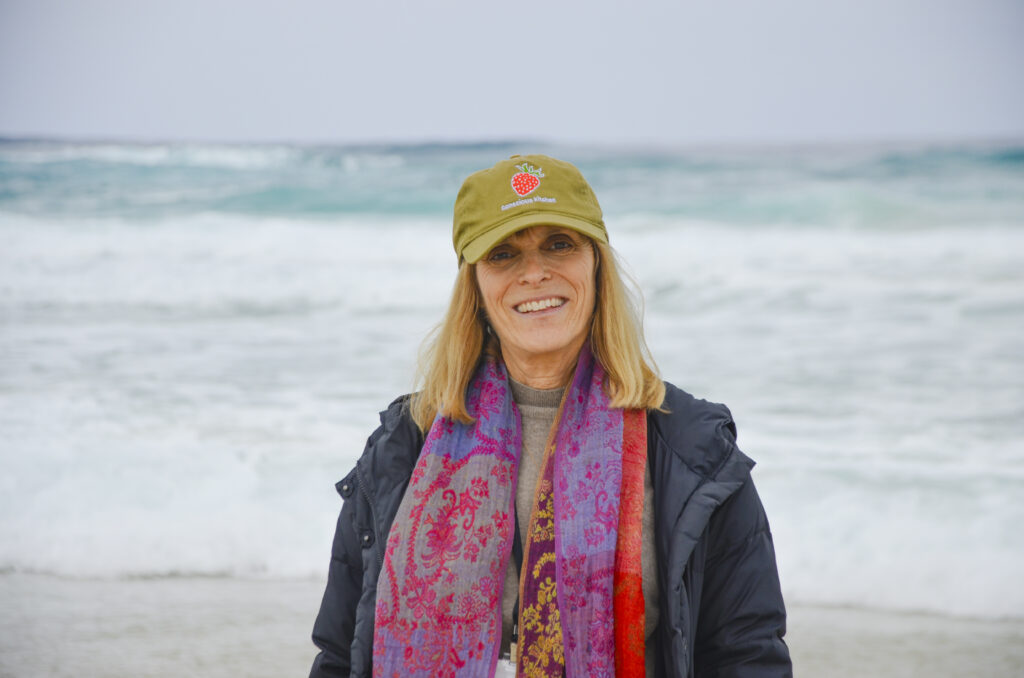
“When I first started Conscious Kitchen, I went through a school lunch line and I was astonished by what I saw,” says founder and executive director Judi Shils. “I picked up a small plastic bag of apples that had been preserved with something pungent smelling, and I just thought to myself, how can we be feeding our kids overly processed, chemically laden meals every day and be okay with that?”
Once Shils sets her mind to something, she has a history of moving earth to make it happen. Shils founded Conscious Kitchen in 2013 to challenge the school food system by rebuilding the local relationships that once connected farms, kitchens, and communities. Instead of relying on distant supply chains, the organization partners directly with regional organic and regenerative farms to supply fresh, seasonal ingredients that school kitchens prepare from scratch. Today the program works with 53 organic farms and supplies ingredients to hundreds of thousands of students across more than 103 California school districts.
The goal extends beyond improving the quality of school meals. Conscious Kitchen aims to reshape the food system itself by supporting small farmers, strengthening local economies, and helping children understand where their food comes from.
At EcoFarm, those connections are visible everywhere. Farmers greet Conscious Kitchen organizers like longtime collaborators, trading updates about harvests, weather, and upcoming deliveries to school districts. The network runs as much on trust as logistics: When one farm cannot supply enough produce, another often steps in. It is a community where people have each other’s backs. “I think a lot of what we do is relationship building and being present,” says Judi. “Conscious Kitchen is as a catalyst that inspires school food leaders across the state to understand “the why” behind organic and then support them as they transform their school food systems.”
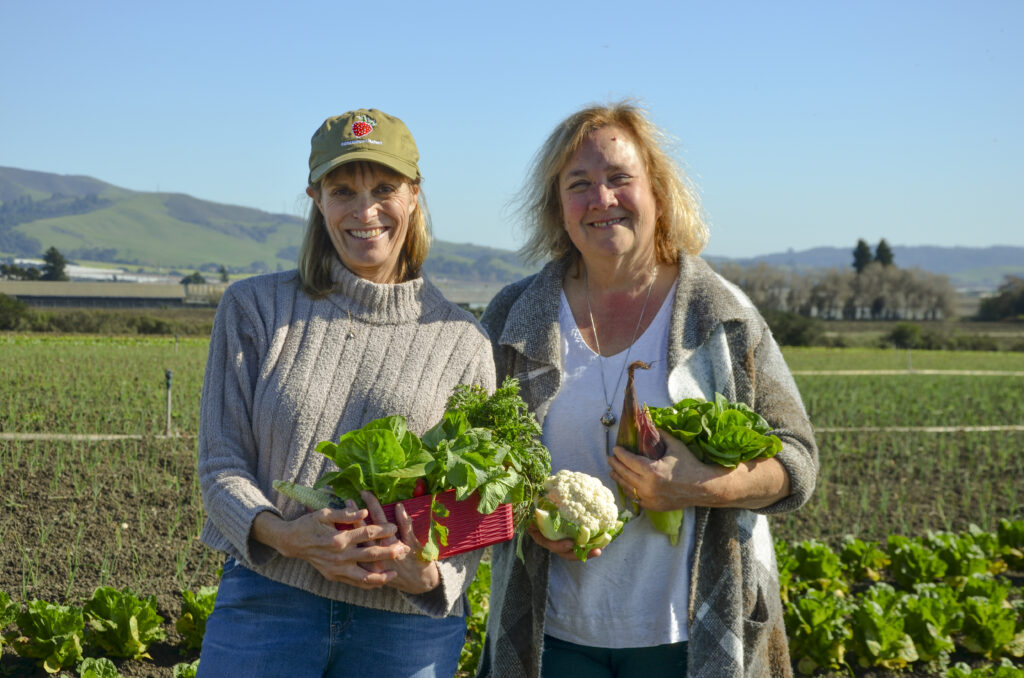
This level of trust is never more evident than in the relationship between Shils and Jellison. The two met in 2017 when Shils began a pilot program in Jellison’s school district and was met with some initial skepticism about whether it would work. Now they reach 26,100 students in that district, speak daily, and are dreaming big together. “There’s nothing I won’t do when she asks, and that relationship has enabled me to just push as hard as I can, because I never want to let her down, because she’s never let me down,” Jellison says of Shils.
Those relationships extend into the fields.
Out in the fields
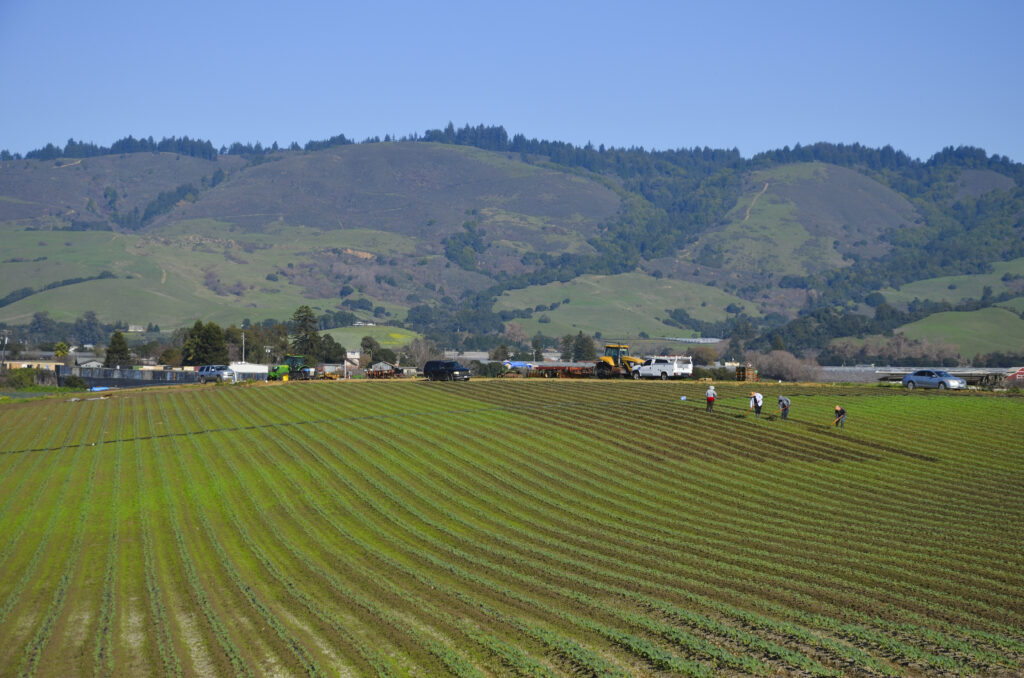
Along California’s Central Coast, farms supplying the program stretch across rolling landscapes of berries, greens, and vegetables. Here, Marlen Tapia and her parents, owners of Mimi’s Organic, farm organic strawberries, in a valley filled with rows of plants spread across sandy soil beneath the soft morning sun. It is the start of strawberry season, and the ripening fruit will soon be harvested, packed, and delivered to school kitchens before lunchtime.
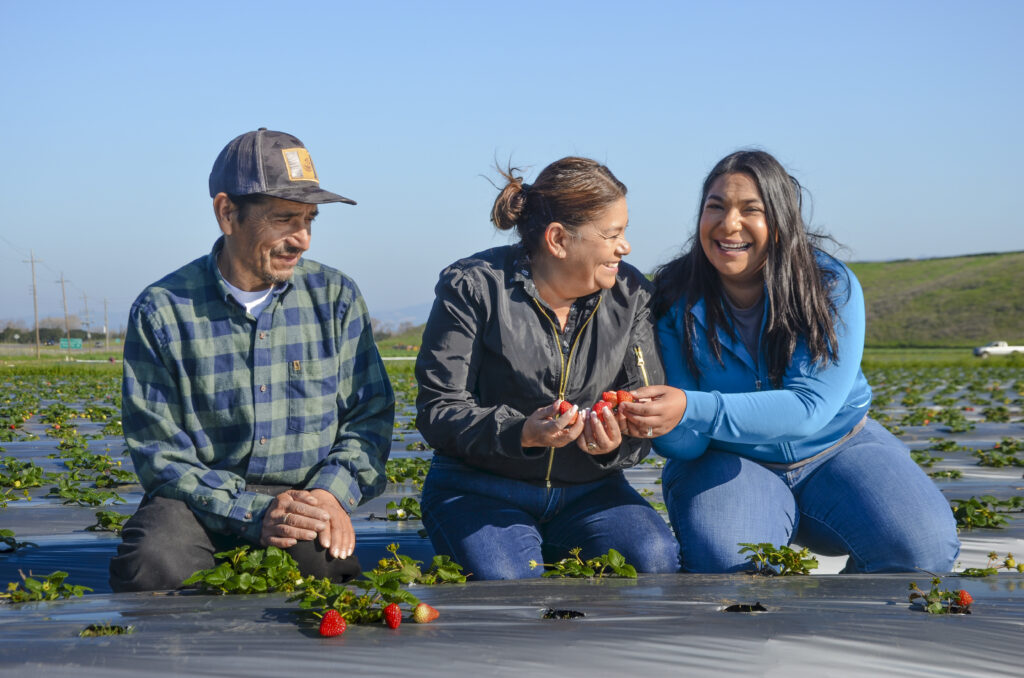
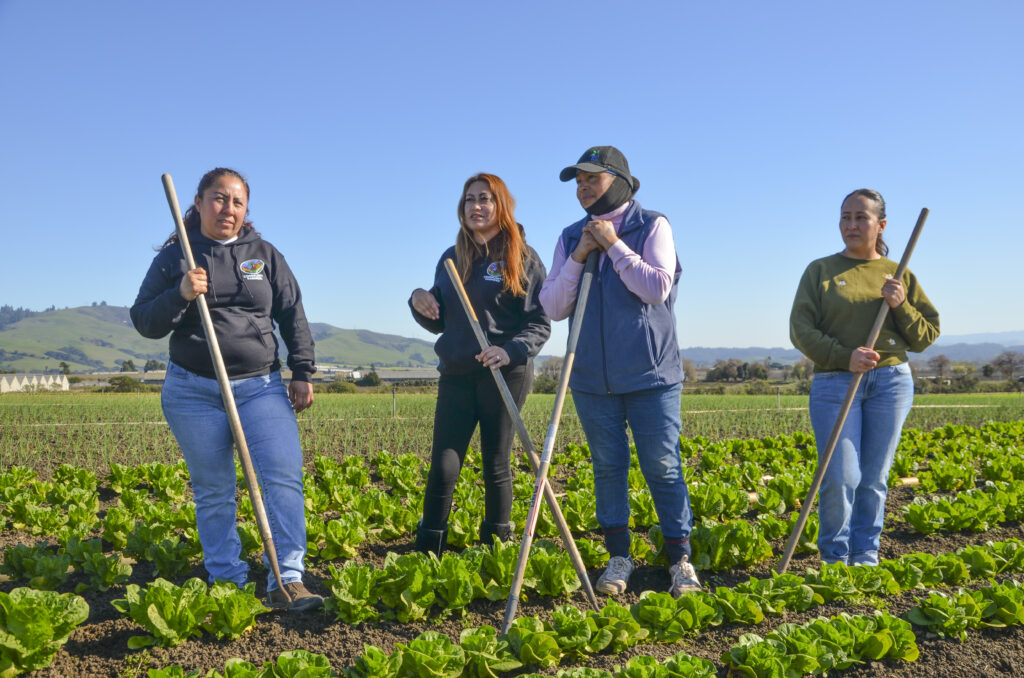
Tapia’s parents were previously organic farmers in Mexico. Since their migration to California, Conscious Kitchen’s support in reaching reliable markets has been invaluable.
“Conscious Kitchen has become family,” says Tapia as she plucks a fresh strawberry from the earth. “They’ve been with us through the hard, through the good, through everything. Conscious Kitchen was our voice for all that we needed.”
For farmers, selling to schools offers something rare in agriculture: stability. Markets for small organic farms often fluctuate with weather, labor shortages, and wholesale prices, growers in the region say. Many organic farmers struggle to reach enough consumers to make their leased land profitable enough to retain, resulting in them going out of business and the amount of organic land reducing. School districts, with their many hungry students, provide a more dependable buyer. Conscious Kitchen also helps farmers with applying for grants and organic certification and connecting any dots that are needed to help the wheels of organic farming turn.
With Conscious Kitchen’s help, farmers are able to expand their farms and by extension, organic farming inches across more of the state. Since they began working with Conscious Kitchen, the Tapia family have increased their organic regenerative acreage by an additional 30 acres, with another 20 acres planned.
Farmer Al, owner of Frog Hollow Farm, described the decision to supply produce to Conscious Kitchen as “one of the best choices ever made.” For growers like him, the partnership means focusing on cultivating environmentally friendly and healthy food while knowing there will be a reliable market for the harvest.
The payoff also comes in the form of connection. Many of Conscious Kitchen’s farmers take the opportunity to visit classrooms and engage directly with children. “Whenever I feel like it is hard in the field, I just remember those smiling faces, and they give me the power to continue,” says farmer Yadira Mendiola, owner of the Queen of Vegetables Organic Farm.
Those ingredients harvested in the field eventually arrive in kitchens like the one serving the West Contra Unified School District.
In the school kitchen
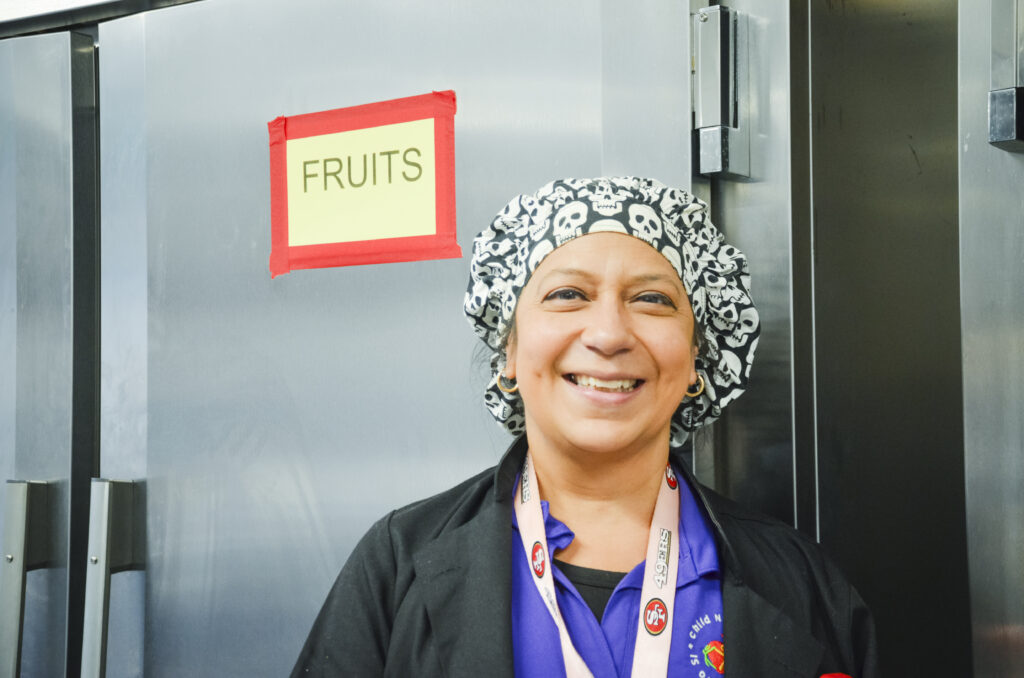
Inside the district’s central kitchen, food production supervisor Veronica Scollard oversees the preparation of meals that will be distributed across multiple schools. The transition from reheated packaged food to scratch cooking has transformed both the kitchen workflow and the meals themselves. Some schools used to serve McDonalds, so the difference is stark.
“Today it’s all organic—tomato sauce, organic cheese. Yes, organic everything is on it,” Scollard says, describing the pizza now served to students. “And it is just excellent.”
For Scollard, the work carries a responsibility that extends beyond the kitchen.
“We work for the kids,” she says. “We want to feed them good food because it could be the only meal they get.”
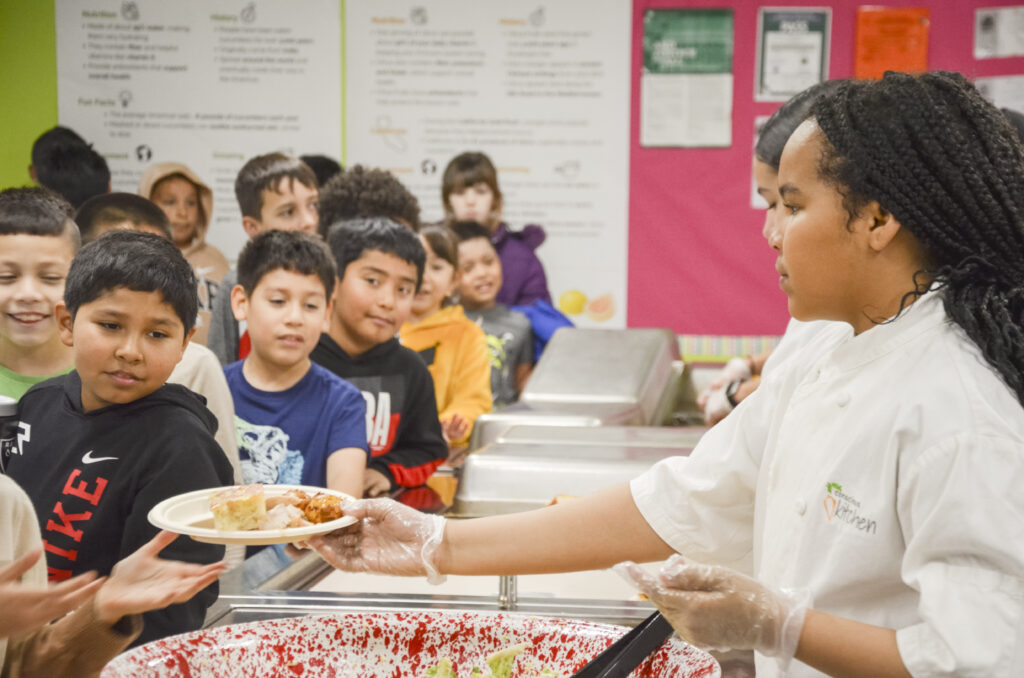
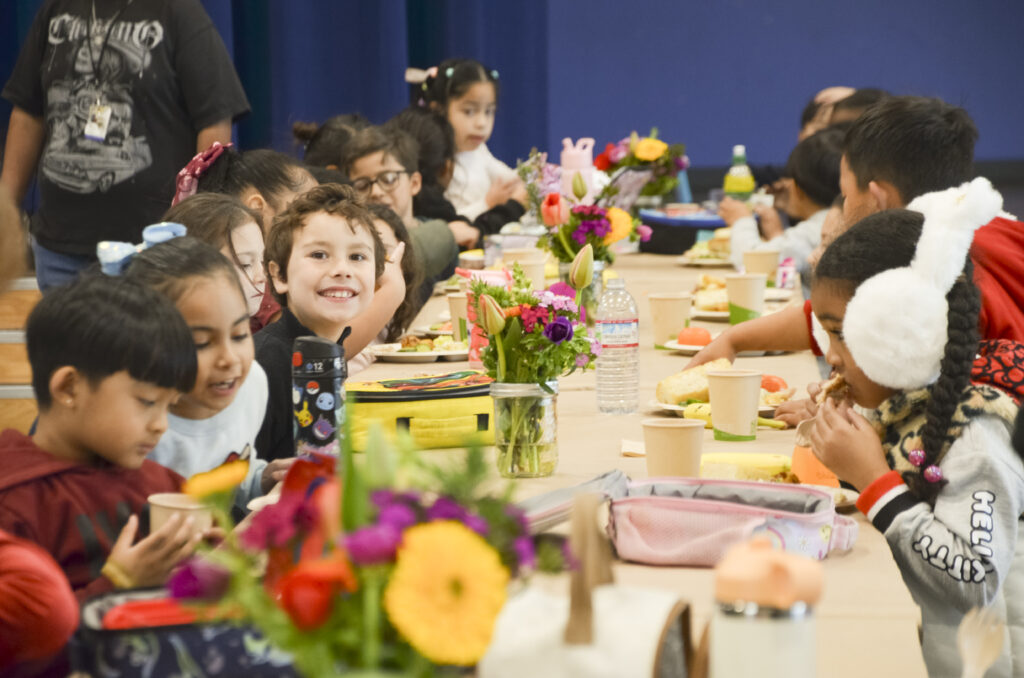
A few miles away at Michelle Obama Elementary School, hundreds of students stream into the cafeteria for lunch. The building is bright and new, its walls decorated with posters celebrating seasonal produce. Outside, children finish games of basketball and soccer before lining up for trays of chicken, roasted potatoes, Caesar salad, cucumbers, fruit, and freshly baked focaccia.
The atmosphere feels different from the stereotypical image of American school lunch. Instead of sealed packages and plastic trays, meals arrive colorful and freshly prepared.
Shils believes children respond when food is treated with care.
“Fresh, local, organic, seasonal, nutritious,” she says, are the criteria they’ve set for school meals.
For Shils, the program is also about teaching students how food connects to the land and the people who grow it.
“When you understand seasonality—flavor, color, the vibrancy and the beauty of how things grow—then you start to appreciate what’s being grown,” she says. “And when you appreciate it, you love it.”
Sophia, a sixth-grader and Conscious Kitchen Ambassador, helps encourage younger students to try new foods. Part of her role is introducing classmates to the farmers who grow the ingredients in their meals.
“We also encourage other kids to eat more vegetables,” she says. “We get to meet a lot of farmers—the ones that transfer fruit and vegetables to our school.”
On certain days, those farmers visit the school themselves. Tables fill with cucumbers, radishes, mandarins, dates, broccolini, and jars of fruit preserves. Students approach cautiously before curiosity takes over.
A young student bites into a cucumber slice before declaring, “This is the best cucumber I have ever tasted!”
Moments like that capture what Conscious Kitchen hopes to accomplish. Many children encounter fruits and vegetables primarily through supermarkets and packaging, rarely seeing the farms or people behind them. By connecting farmers directly with schools, the program turns lunch into something closer to a lesson about food literacy.
Back at the EcoFarm conference, the farmers and organizers who sustain this network speak about their work with a mixture of practicality and quiet pride. Feeding children may seem like a modest goal, but within the vast scale of the American food system it represents a meaningful and massive shift. The gift of good quality food to the next generation—be it an organic strawberry, cucumber, or a scoop of peach ice cream—is a challenge to the status quo.
For the students eating those meals, however, the change is simpler. It just tastes better.
Words by the Food Planet Prize team
Photos by Isabel Baudish
Conscious Kitchen
- Launch year: 2013
- Founder: Judi Shils
- Based in: California, USA
- Website: www.consciouskitchen.org