NoPalm Ingredients: Brewing Oil Without the Plantation
A Dutch start-up is producing palm-like oils through fermentation, offering manufacturers a way to reduce their reliance on deforestation-linked crops.
Listen to the article
WAGENINGEN, The Netherlands.
In NoPalm Ingredients’ modest office in the historic Dutch city of Wageningen (dubbed Europe’s Food Valley, a nod to its Silicon Valley levels of agricultural ingenuity) plush toy orangutans decorate the walls and photos of endangered species threatened by deforestation hang from office doors. The décor feels playful, but the message is deadly serious. NoPalm Ingredients believes that the world’s appetite for one of its most common ingredients should not come at the expense of tropical forests.
Palm oil is everywhere. It is the smoothness in chocolate bars, the structure in margarine, the stability in cookies, and the texture in countless processed foods. Nearly half of all packaged supermarket products contain it in some form, according to WWF. Manufacturers rely on it because it performs exceptionally well (it has a melting point close to the human body’s temperature and mimics the properties of more expensive fats) and is remarkably efficient to produce. Compared with other vegetable or seed oils, palm trees yield far more oil per hectare.
“Palm oil is the backbone of modern food,” Lars Langhout, Chief Executive Officer of NoPalm Ingredients. The team is careful to emphasize that this reliance did not happen by accident. Palm oil works technically, and it works economically—it’s considered “cheap.”
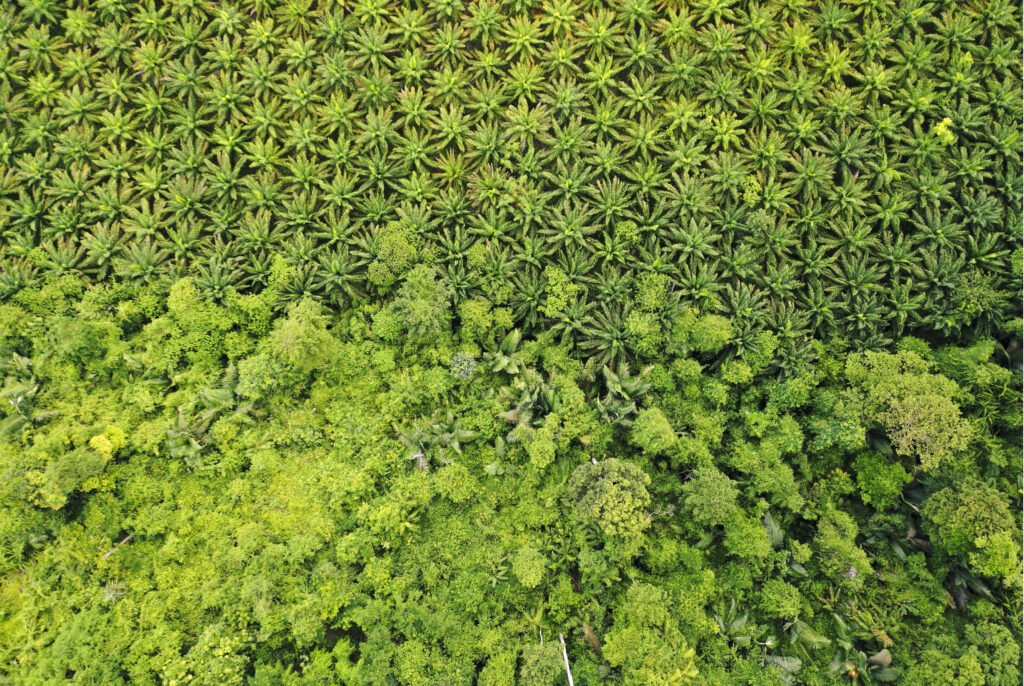
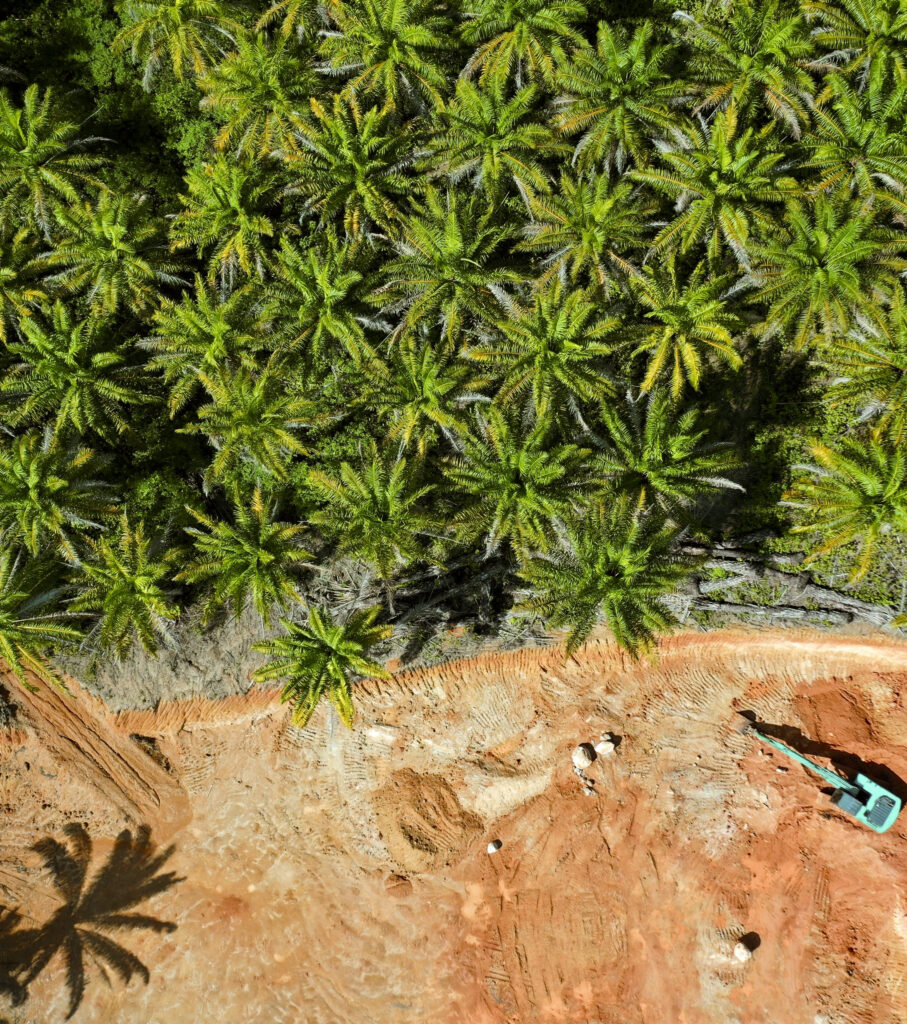
Yet the system that produces it is under increasing strain. Global demand for oils continues to rise each year as populations grow and diets shift toward processed foods. Meeting that demand through conventional production often means expanding plantations, frequently at the expense of tropical forests and peatlands.
Projected demand could drive deforestation on a scale comparable to the size of Ireland in the coming years. All that environmental destruction comes at a high cost to biodiversity and carbon footprint.
For those who have seen these landscapes from above, the scale can be shocking. NoPalm Ingredients’ Chief Operations Officer, Jeroen Blansjaar, spent time living in Borneo before joining the company. On one flight across the island, he looked out the airplane window and noticed the landscape below.
“You’re flying in an airplane and thinking, after half an hour, ‘Hey, I’ve been flying over a plantation now for half an hour,’” he recalls. “At 500 or 600 miles an hour. Then you realize how big it is. And it’s incredible.”
But replacing palm oil with other vegetable oils would require even more land. Soybean, sunflower, and rapeseed all produce far less oil per hectare. Eliminating palm oil entirely would shift environmental pressure elsewhere rather than solve the underlying problem. This paradox lies at the heart of the challenge: The world needs large quantities of fats, but producing them through farmland cannot be the sole solution.
An idea begins to ferment…
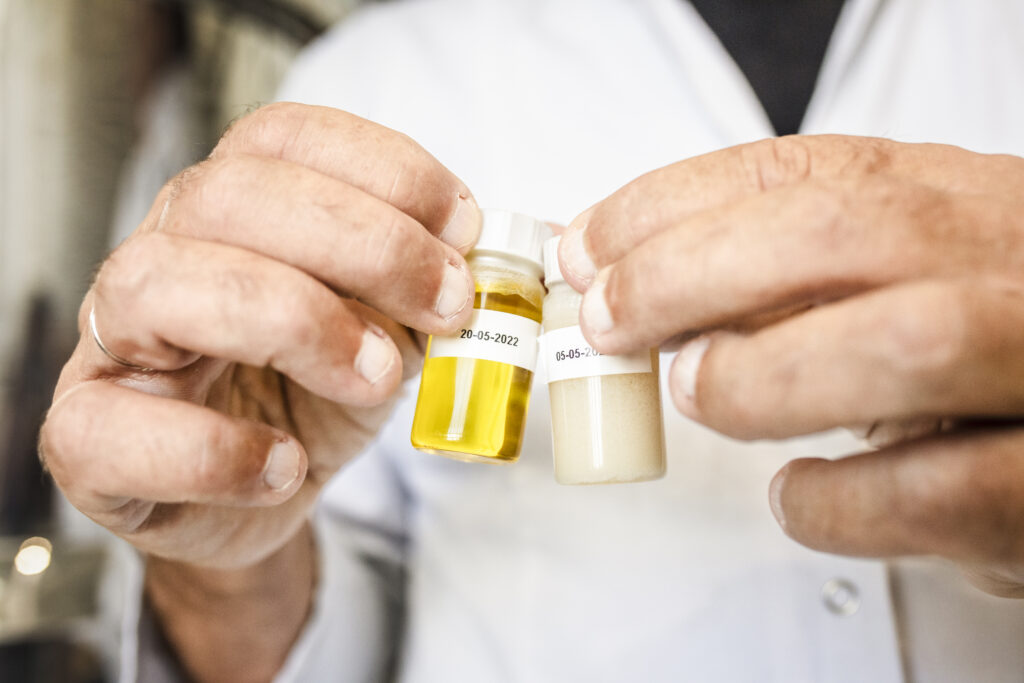
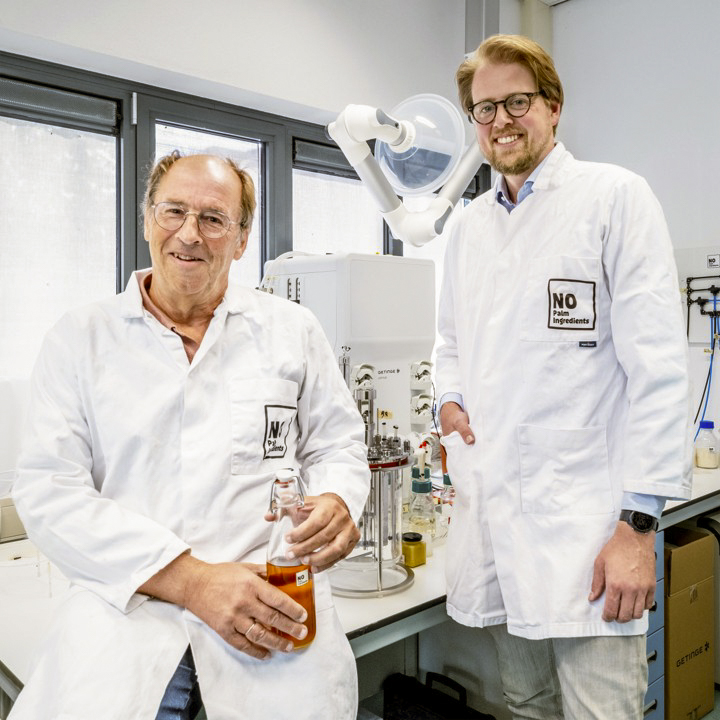
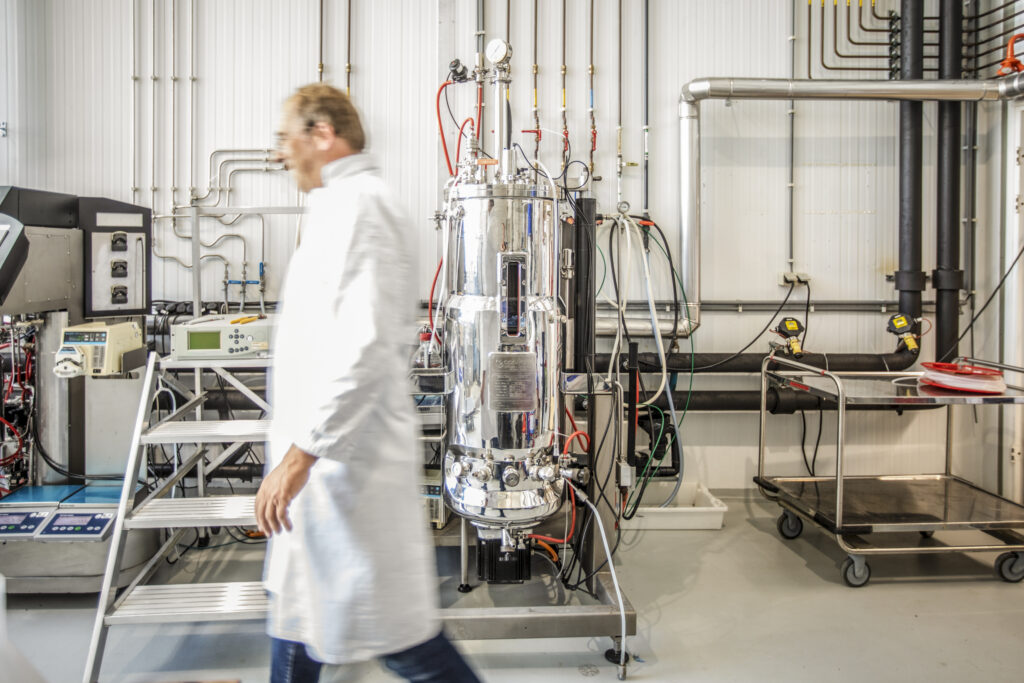
NoPalm Ingredients believes the answer is to decouple oil production from agriculture altogether. Instead of growing oil in plantations, the company grows it in fermenters. The process more closely resembles brewing beer than farming crops. Microorganisms are fed low-value by-products from the food industry—materials such as molasses or whey permeate—that might otherwise be underused. As they grow, the microbes accumulate fats inside their cells. Those fats can then be extracted and refined into oils with the same functional properties as palm oil.
The concept builds on decades of fermentation science, but applying it to large-scale fat production is new. If it can be scaled successfully, it would allow oils to be produced with a fraction of the land and far fewer greenhouse gas emissions than conventional palm oil production. Just as importantly, the oil is designed to function exactly like palm oil in food manufacturing. Many sustainable solutions falter because they require companies to entirely change recipes or rebuild production lines. NoPalm Ingredients’ oil is meant to be a drop-in ingredient that can replace palm oil without altering how factories operate.
“We’re not converting the existing palm oil plantations into rainforest,” the team explains. “That’s not something we can achieve. But we can help supplement the fats in how they’re being used today.”
Their goal is to meet the growing demand for fats in a new way, so future expansion does not require clearing additional forests.
The power of mayonnaise
Like many scientific ventures, NoPalm Ingredients’ origin story began with curiosity rather than a business plan. Years ago, microbiologist Jeroen Hugenholtz was studying oil-producing yeast in a research lab. At one point, the researchers decided to test the oil’s culinary potential. They used it to make mayonnaise.
The experiment worked. The oil behaved just like conventional vegetable oil. The story made its way online, where it caught the attention of Lars Langhout, a strategy consultant at the time.
Langhout became fascinated with the idea. For several days it was all he could talk about at home until his wife finally told him to stop wondering and contact the scientist behind it. He sent an email, and Hugenholtz replied within two hours. Soon after, the two met and began discussing the possibility of building a company around the technology.
Around the office today, the founders jokingly refer to that moment as “the power of mayonnaise.”
Turning a laboratory curiosity into an industrial ingredient, however, proved far more complicated. Early progress was measured in milliliters. For months the team was challenged to produce tiny samples of oil in the lab. Those early batches were precious, shared with potential partners to demonstrate that the technology worked.
Julie Cortal, the company’s Chief Commercial Officer, remembers how valuable those first drops felt. “Those first few milliliters were like liquid gold,” she says.
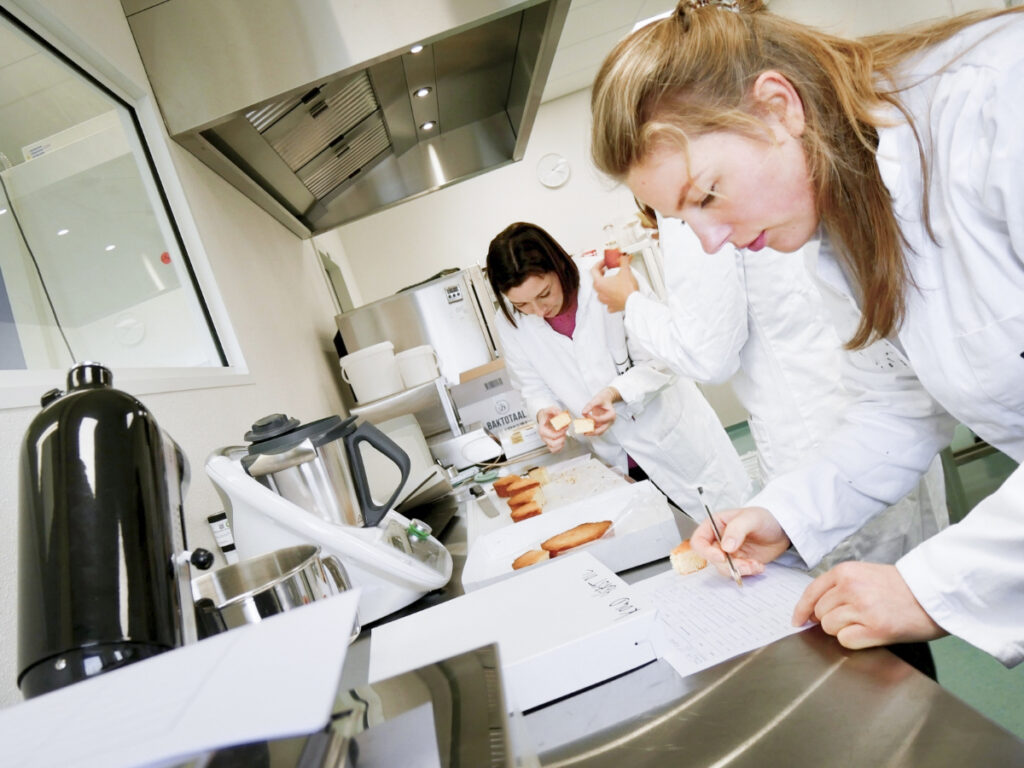
From those milliliters, the process gradually scaled. Experiments moved from laboratory flasks to pilot fermenters, then to industrial reactors capable of producing larger quantities of oil. Each step required solving technical challenges: improving yields, refining extraction methods, and ensuring the final oil matched the properties manufacturers expect.
Looking to the future
Today NoPalm Ingredients is preparing for the next phase: demonstrating the technology at commercial scale. The team envisions a system of co-location, where fermentation facilities are intentionally located near existing food-processing infrastructure, where by-products can be converted into valuable oils. The model resembles the distribution of breweries: many relatively small production sites rather than a handful of centralized plantations.
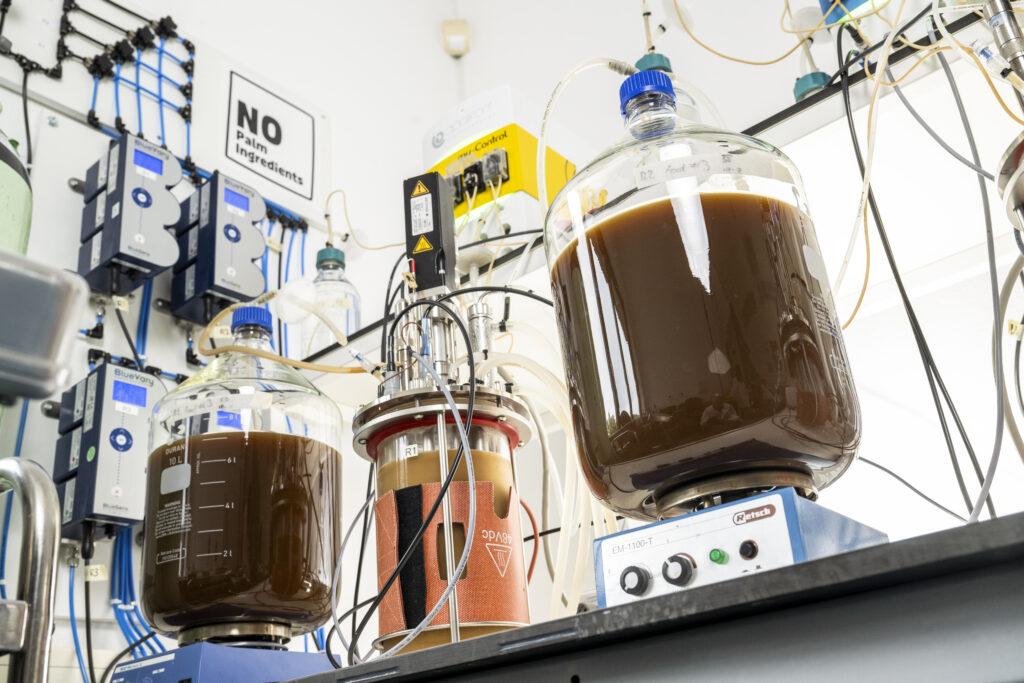
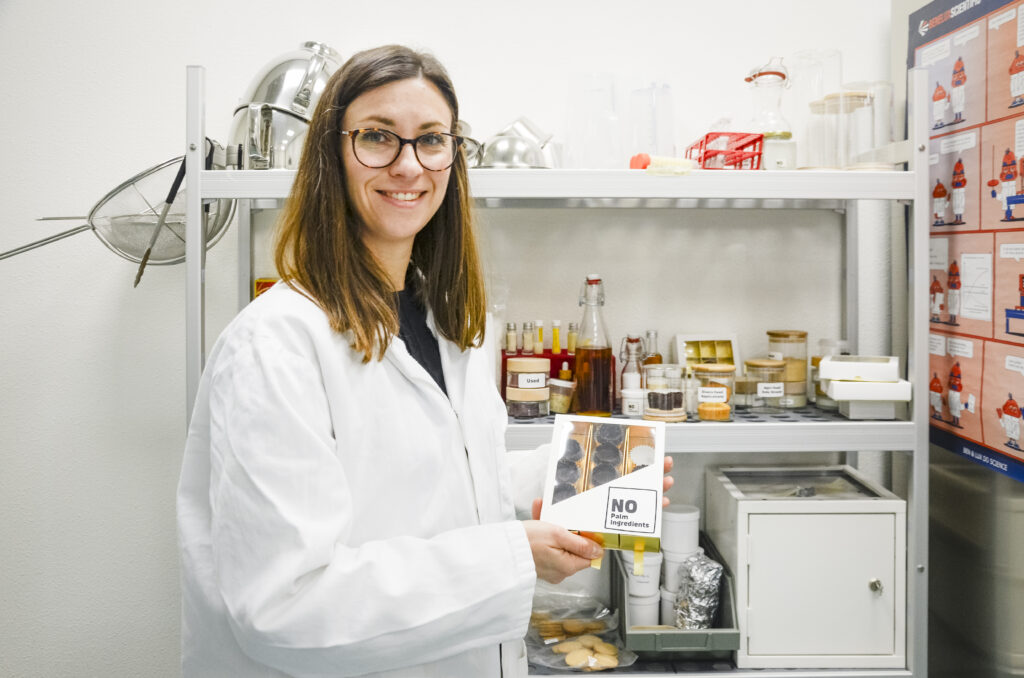
If successful, such facilities could produce oils close to where they are used, reducing the need to ship ingredients around the world while creating new local industries.
The founders know the road ahead remains challenging. Scaling fermentation systems to global demand will require investment, partnerships, and time. Yet the potential impact is enormous. Even replacing a fraction of global palm oil demand with fermentation-derived oils could significantly reduce pressure on forests. By 2030, the company hopes its technology could replace about five percent of global palm oil production.
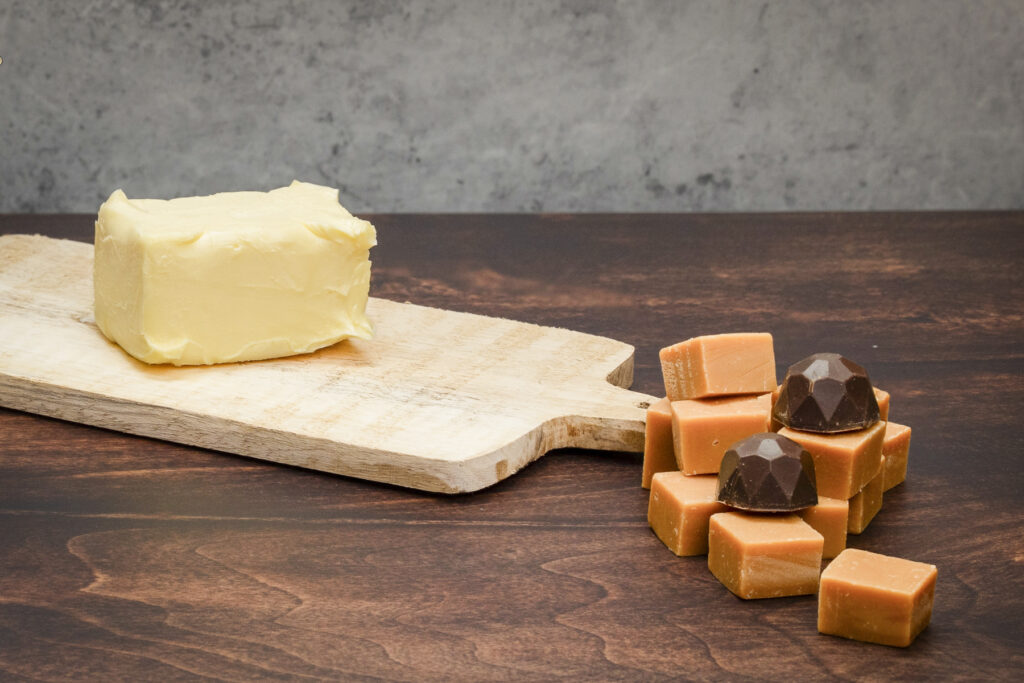
Back in the Wageningen office, there’s another story the team loves to tell. After months of painstaking work, they once brought a small vial of their newly produced oil to a conference. It represented countless experiments and late nights in the lab, and was proudly displayed at their booth.
Someone passing by assumed it was a free sample, and ate it.
For a moment, the scientists were horrified. Then they burst out laughing. In the end, that stranger may have demonstrated exactly what success looks like for NoPalm Ingredients. If the future of sustainable fats truly works, most people will never notice the difference at all.
Words by the Food Planet Prize team
Photos by Dieuwertje Bravenboer
NoPalm Ingredients
- Launch year: 2021
- Founder: Lars Langhout and Professor Dr. Jeroen Hugenholtz
- Based in: Wageningen, Netherlands
- Website: www.nopalm-ingredients.com