Savanna Institute: Can Trees Change the Future of American Farming?
By helping farmers integrate nuts, fruit, and timber into crop fields, a Midwest nonprofit is building a more resilient agricultural system.
Listen to the article
WISCONSIN, United States of America.
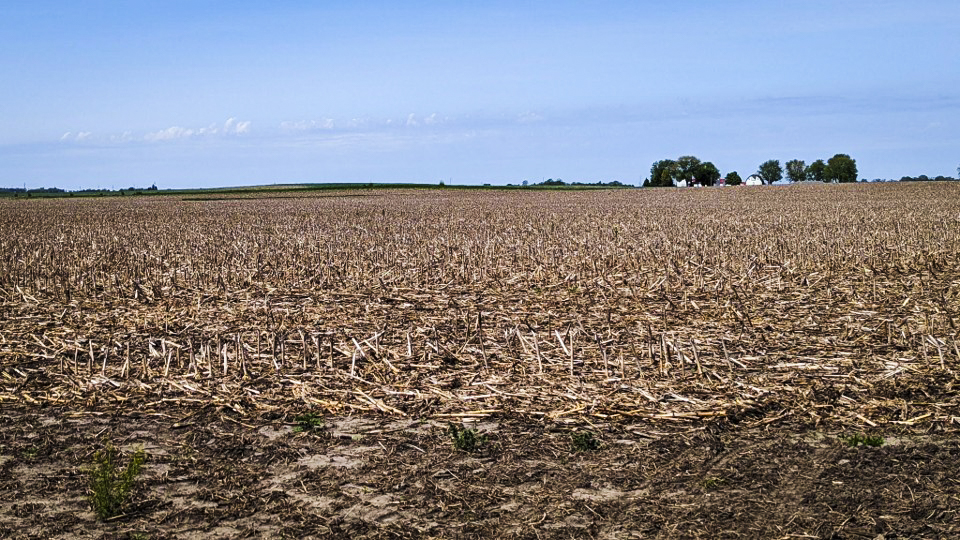
Flying above the Midwestern landscape reveals a grid so precise it almost looks engineered. Rectangles of farmland stretch mile after mile, separated by ruler-straight roads and drainage ditches. In winter the fields lie bare and brown; in summer, a sea of green. Trees appear only in scattered windbreaks or along distant creeks. The rest of the land is open and exposed to the sky.
On the ground, the scale becomes clear. The fields seem endless, interrupted only by grain silos and the occasional farmhouse. Wind whistles steadily across the plains, occasionally carrying plumes of dirt and dust. This region is one of the seven breadbaskets of the world, but a starker term is used to describe the landscape.
“A biological desert,” says plant breeder Lily Hislop.
For much of the past century, American agriculture has moved steadily toward vast monocultures – large fields planted with a single crop year after year. Corn and soybeans dominate millions of hectares across the Midwest. The system is highly productive, but it has also simplified the land and caused environmental damage.
Trees have largely disappeared from working farms, wildlife habitat has shrunk, and soils have become increasingly vulnerable to erosion and extreme weather, causing significant depletion. The 1930s Dust Bowl—severe dust storms brought on by prolonged drought and high intensity farming practices—is not a relic of history. “Sometimes when I’m driving and the soil is coming off the fields, the visibility gets so bad I have to pull over and wait for the dust to settle,” explains Hislop.
The Winds of Change
Across parts of the Midwest, a growing group of farmers and researchers believes the future of agriculture may lie in bringing trees back.
Their work centers around agroforestry, which describes the regenerative farming practices that integrate trees, shrubs, and other perennials into agricultural systems. The approach is gaining momentum in eight states across the Midwest, largely through the efforts of the Savanna Institute, a nonprofit organization founded in 2013 by a group of farmers, researchers, and students in Illinois led by scientist Kevin Wolz. Conservationist Keefe Keeley joined soon after.
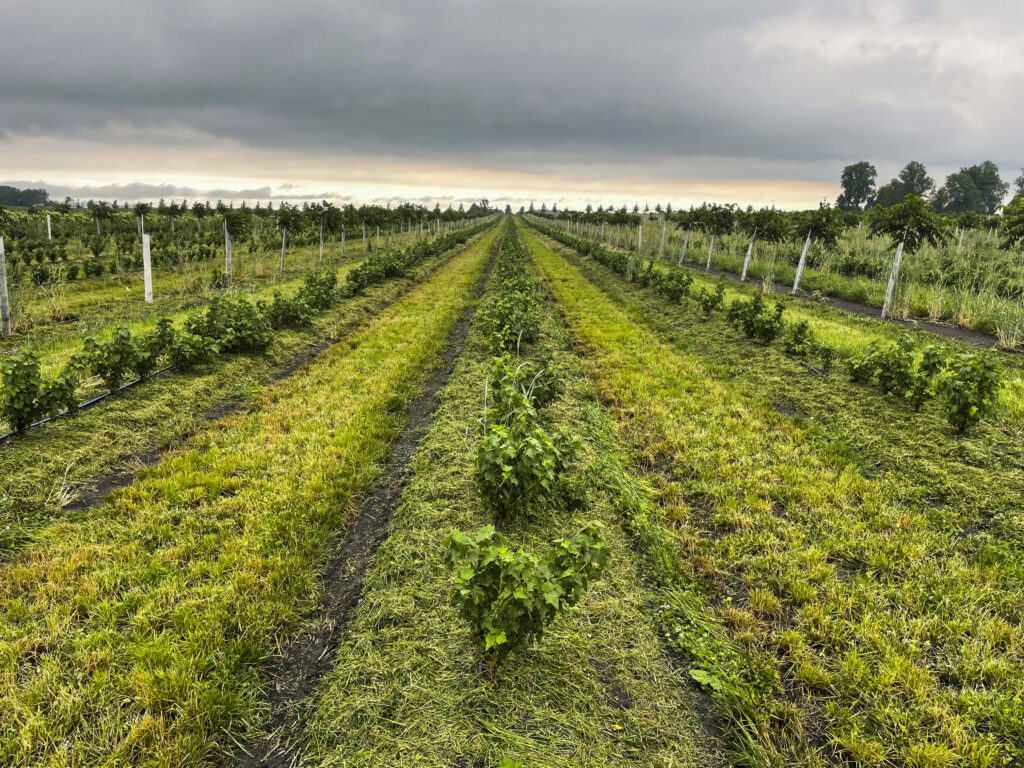
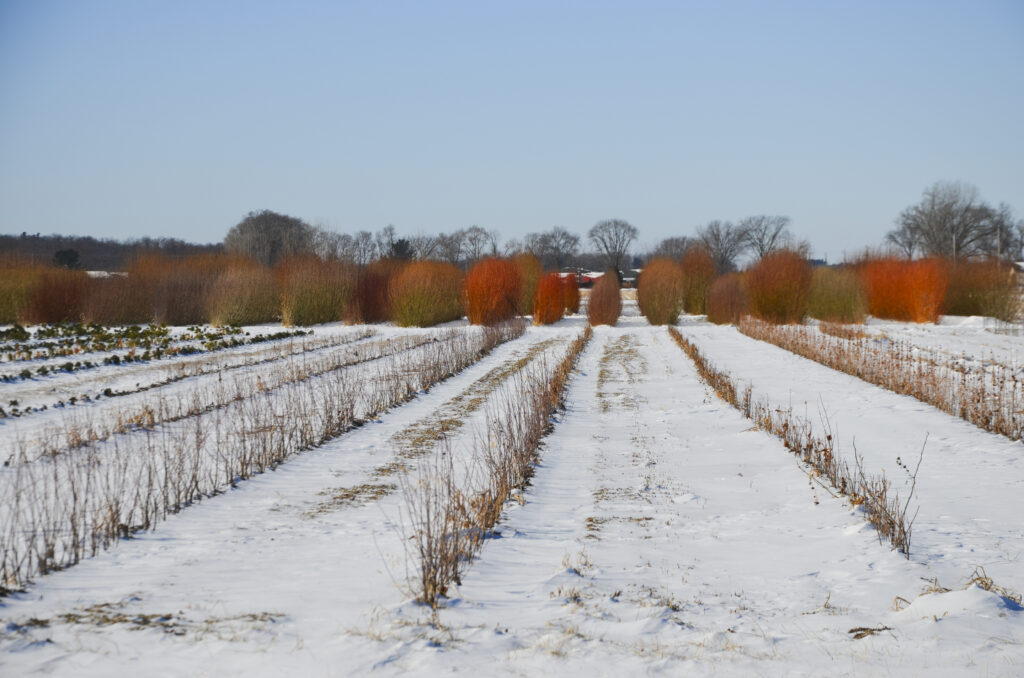
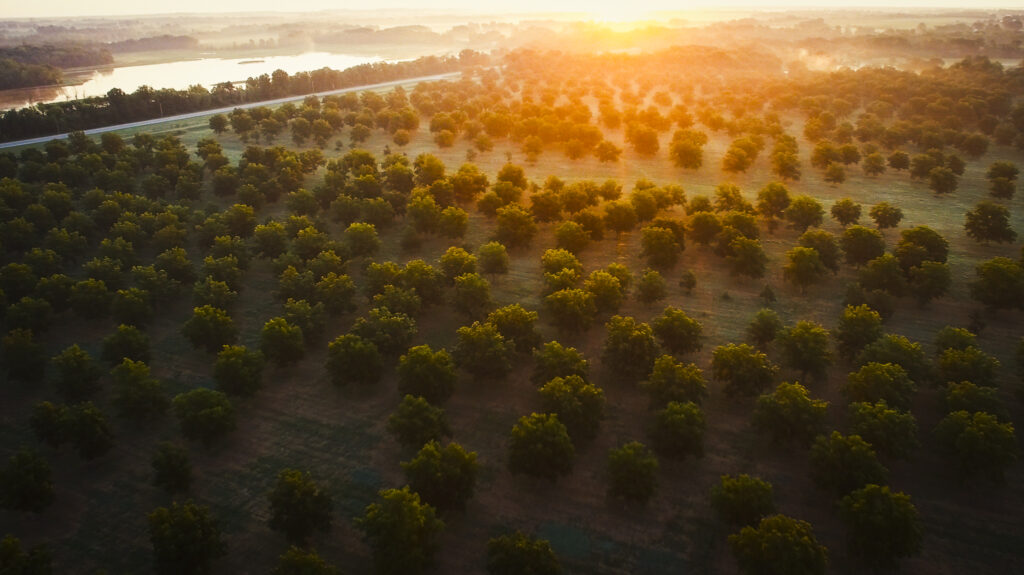
The organization’s goal is to redesign agricultural landscapes so they function more like the diverse ecosystems that once covered the region. Instead of planting a single crop across hundreds of hectares, farmers plant rows of perennials, like chestnuts, hazelnuts, or black currants, and grow crops or graze animals in the spaces between them. The trees provide shade, wind breaks, stabilize soil, and help regulate water, while also producing harvestable crops of their own. They also provide habitat corridors and opportunities for biodiversity to return to the region.
The idea draws inspiration from a long-lost ecosystem that once defined much of the Midwest: The oak savanna.
“It’s not a closed forest and it’s not a treeless prairie,” Executive Director Keeley explains. “You have canopy trees, shrubs, grasses, animals…multiple layers all interacting. That structure actually makes a lot of sense for agriculture.”
Savanna ecosystems under the care of indigenous people once covered millions of hectares across the region before being systematically cleared for row crops. Informed by this history, and inspired by contemporary farmers breaking the monoculture mold, Keeley and Wolz began to see savannas not only as an ecological reference point but as a model for how farms might function again.
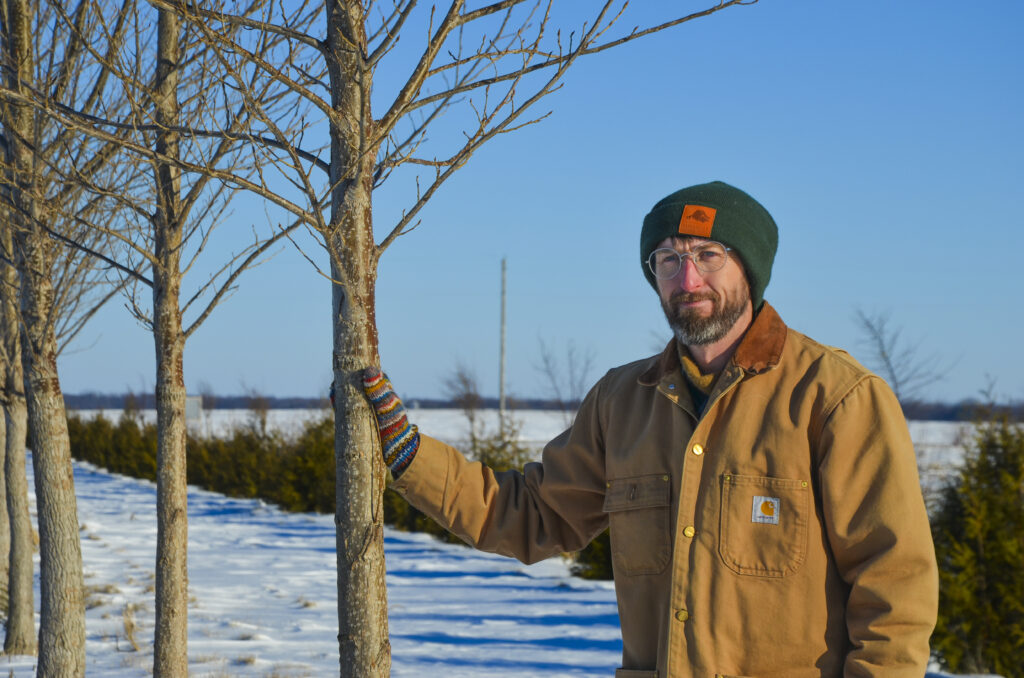
The two first crossed paths through their shared interest in sustainable agriculture and ecological restoration. Wolz, trained as a scientist studying perennial crops, had become increasingly interested in the potential of tree crops such as chestnuts and hazelnuts. Keeley brought experience in agroforestry and nonprofit organizing. Together with the rest of the team they began growing an organization that would bridge research and real farms.
“We focus on research, demonstration, and education,” Keeley says. “But just as important is building the whole system around farmers…from markets to technical support to community networks.”
Over the past decade, that work has expanded rapidly. Savanna Institute has helped establish hundreds of agroforestry plantings across the Midwest and trained thousands of farmers, landowners, and agricultural professionals through workshops, field days, farm tours and apprenticeship programs. The organization operates research sites, seven demonstration farms, and educational initiatives designed to help farmers transition toward perennial agricultural systems.
Research in Practice
The Savanna Institute is helping to reintroduce several so-called “forbidden fruits.” Following a push from the timber lobby in the early 1900s, black currants were banned and forcibly removed across the U.S., to stop the shrubs acting as an intermediate host for a timber disease. In parallel, the great Chestnut Blight was moving through the country, eradicating trees and leaving one of the great American forestry tragedies in its wake.
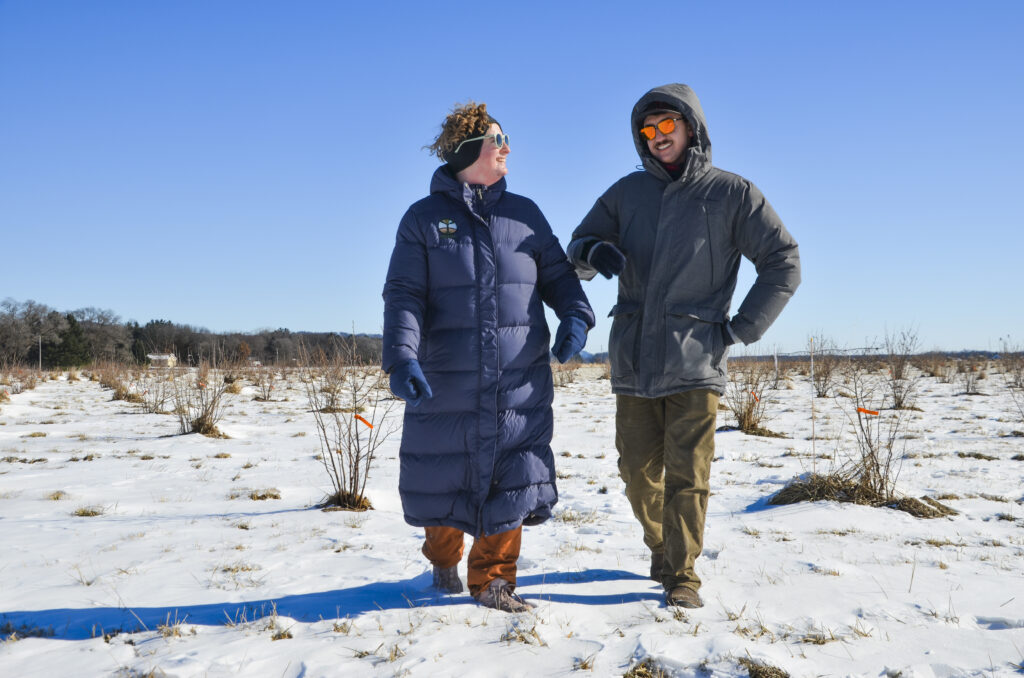
Savanna Institute now has breeding programs to develop resilient variants of these species and more. At their research site in Spring Green, Wisconsin, Hislop has more than 3,000 black currant selections that she is painstakingly testing for different traits—disease resistance, cold resistance and more. “The more plants you can evaluate, the better chances you have of finding the winner,” she says.
Researching the ultimate perennial is not enough to trigger transformation. Changing the natural landscape is deeply intertwined with farmer attitudes, with one employee laughingly referring to the initiative as a “family therapist.” For some farmers little convincing is needed—the need to adapt to a changing climate and to plant a future for grandchildren is undeniable. Farmer Tucker Gretebeck partnered with the Savanna Institute in 2018 following devastating floods. “I wanted to stop this from ever happening again,” Gretebeck says emphatically. “For my family, and for all those downstream.”
For others though, the narrative of monoculture is so pervasive that the idea of agroforestry seems unthinkable. When it comes to families who have farmed for generations the question begs: why would you replant the trees that once were strategically cut down?
Cultivating Curiosity
To this end, the Savanna Institute employs a communication strategy that focuses on awakening curiosity through compelling stories and market logic, bridging any political differences within and across farming families, in a climate where food and farming are heavily political. Wolz recounts how one farmer, after three years of working together, turned to him and said, “But you’re not one of those crazy climate guys, are you?” “It was a real point of pride,” says Wolz. “I tell it to our staff all the time—we need to meet the client where they are and where they are coming from.”
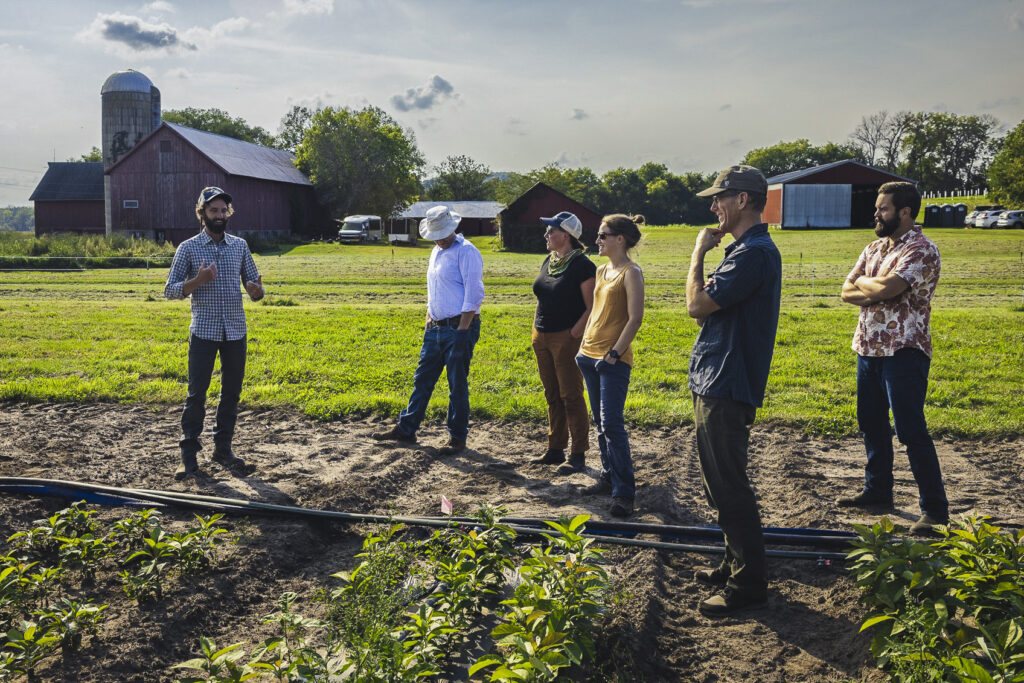
Another key way to bring farmers on board is through other farmers. “Even universities can struggle to earn farmers’ trust,” Wolz says. “What really changes minds is when farmers see something working on another farm.”
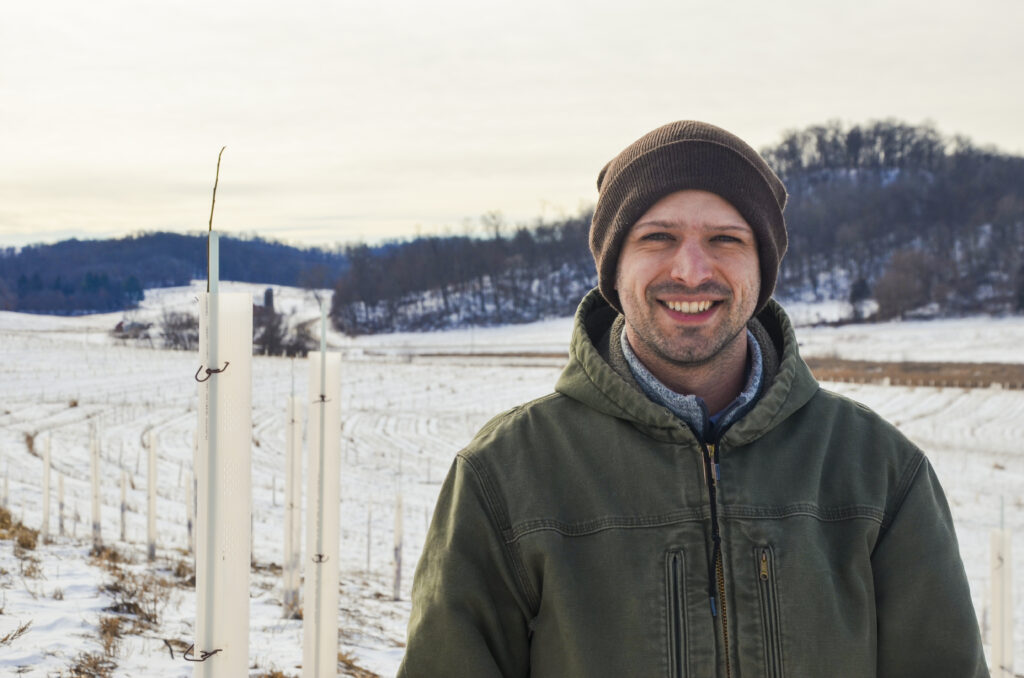
For some landowners, seeing the systems in person is enough to spark an immediate shift in thinking. Faith Michael remembers attending one of the Institute’s early farm tours (which now host 1,200 visitors annually) and realizing that her own land could look very different.
“I came off that tour and thought, this is what I want for our farm,” she says.
Her family’s land in Wisconsin had long been managed as a conventional cornfield. Years of intensive farming had left the soil compacted and depleted. Michael’s father had once attempted to transition the farm to organic production decades earlier, but the effort proved difficult, and the land eventually returned to conventional methods.
When Michael later inherited responsibility for the farm, she began looking for a different path. Working with Savanna Institute advisors and their commercial spin off Canopy Farm Management, Michael began transforming the property. Canopy offers a range of financial and technical services, from renting specific agroforestry equipment, to full implementation and management of an agroforestry site. In the space of one week, Canopy had transformed Michael´s farm—on a good day, they can plant 10,000 trees on a single site.
Rows of chestnut trees and black currant bushes now run across portions of the land. Crops grow between the tree rows in a system known as alley cropping, where multiple species share the same field. The transformation is often gradual; trees take years to mature, and new markets must develop for unfamiliar crops.
But even in the early stages, the farm already feels different. Birds have returned, insects move through the plantings, and the soil holds moisture more easily after rain.
Other farmers in the region have begun to notice.
“It’s an experiment,” Michael says with a laugh. “Other farmers are watching to see what happens.”
That curiosity is exactly what Savanna Institute hopes to encourage. The organization sees agroforestry as both an environmental solution and an economic opportunity. Trees can help farms become more resilient to drought, flooding, and temperature swings, all issues that negatively impact farm production. At the same time, tree crops offer new sources of income.
But developing those crops requires new supply chains. Corn and soybeans move through well-established commodity markets, while hazelnuts, chestnuts, and currants require different processing infrastructure and buyers. “When farmers see these crops, the first question is always the same,” Wolz says. “Where do I sell it?”
New Products, New Markets
Helping answer that question has become a major focus of the Institute’s current work. Researchers, farmers, and entrepreneurs are collaborating to develop markets for “forgotten flavors” and processing systems for perennial crops across the Midwest. The Savanna Institute collaborates with companies to ensure farmers can expect growing consumer demand for their produce. Products are developed to provide new exciting taste experiences—like an elderberry liqueur with remedial properties—or to be used more subtly in substitute for other products, such as the hazelnut oil and chestnut flour that sits atop a shelf in the Spring Green corner store.
When it comes to scope, Savanna Institute´s work is deeply rooted in changing the Midwest region they know so well. But they are also actively sharing their work nationwide through their Agroforestry Coalition and by supporting similar local initiatives operating internationally, from Denmark to Costa Rica.
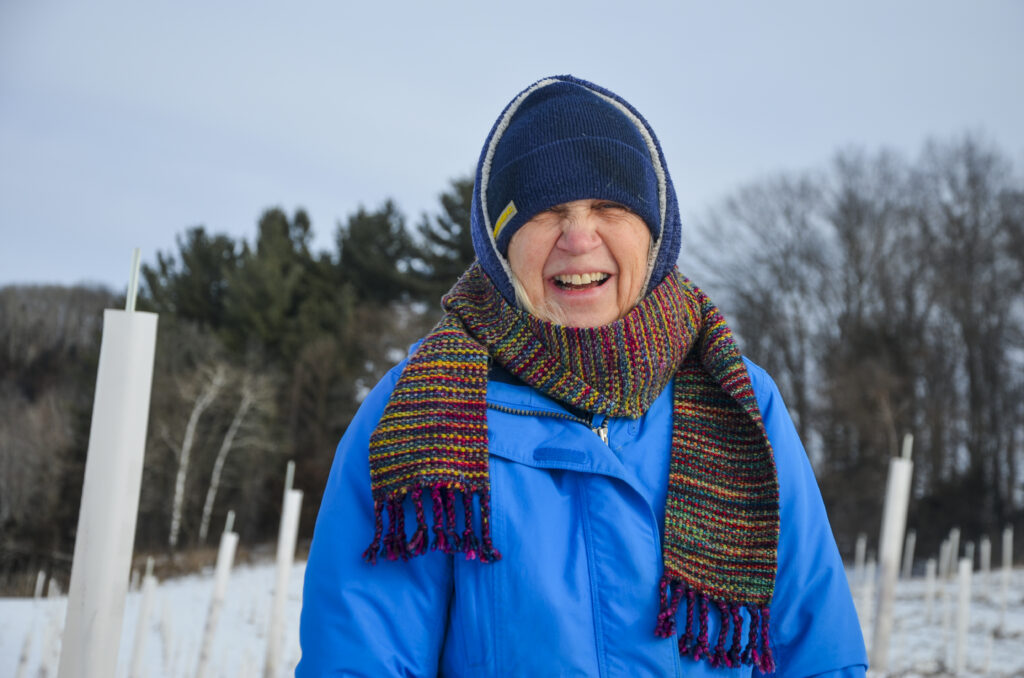
“I really believe the Savanna Institute can be a shining example,” says regenerative agricultural professor Emily Heaton. “When you drop a rock into the still pond that is the Cornbelt, it creates a ripple effect.
Over the past decade, Savanna Institute has helped transition 2,100 hectares (5,200 acres) into agroforestry across the Midwest, trained over 400 farmers, and built a growing network of demonstration farms and research sites. The work is still small compared with the vast scale of industrial agriculture. Corn and soybeans continue to dominate the landscape, propped up by heavy subsidies that favor an industrial monocultural system.
The Savanna Institute is not naïve about this, but remains optimistic. “We believe the next 10 years will be game changing for agroforestry,” says plant breeder Adam D’Angelo.
And indeed, on scattered farms across Wisconsin, Illinois, and beyond, young rows of chestnut and hazelnut trees are beginning to rise above the fields. From the air, the grid of Midwestern farmland still looks the same. But look closer, and the pattern is starting to change.
Words by the Food Planet Prize Team
Photos by Isabel Baudish and the Savanna Institute
The Savanna Institute
- Launch year: 2013
- Founder: Kevin Wolz along with a group of scientists and researchers
- Based in: Illinois and Wisconsin, USA
- Website: www.savannainstitute.org