Seafood Souq: Building the Digital Infrastructure for a Sustainable, Traceable Global Seafood System
The seafood trade world is complex and highly fragmented—over 30% of products are mislabeled; meanwhile, illegal, unreported and unregulated (IUU) fishing threatens marine ecosystems. Against this backdrop, Seafood Souq is offering something radical: clarity. Founded in the UAE in 2018, this technology-driven initiative is reimagining the global seafood supply chain with a modular suite of products that makes seafood traceable, trustworthy, and tradeable, and sustainable by design.
At the heart of their innovation is SFS Trace, a traceability platform that digitizes each step of the seafood journey from catch to consumption, capturing critical tracking events (CTEs) and key data elements (KDEs) required to comply with global standards such as FSMA 204, EU Catch Documentation, and GDST. This traceability backbone is flanked by SFS Fisheries, which enables fishers to log catch data through a mobile app (significantly reducing reporting times), and SFS Audit, a compliance scoring tool used by buyers to verify sourcing, certifications, and environmental, social, and governance (ESG) alignment.

Their solutions make invisible data such as fishing methods, vessel trips, and species origin visible to all actors, from fishers and regulators to global hospitality brands. According to Seafood Souq, this helps reduce waste, fraud, and environmental harm, while opening new market access for smallholders and artisanal producers often excluded from traceability requirements.
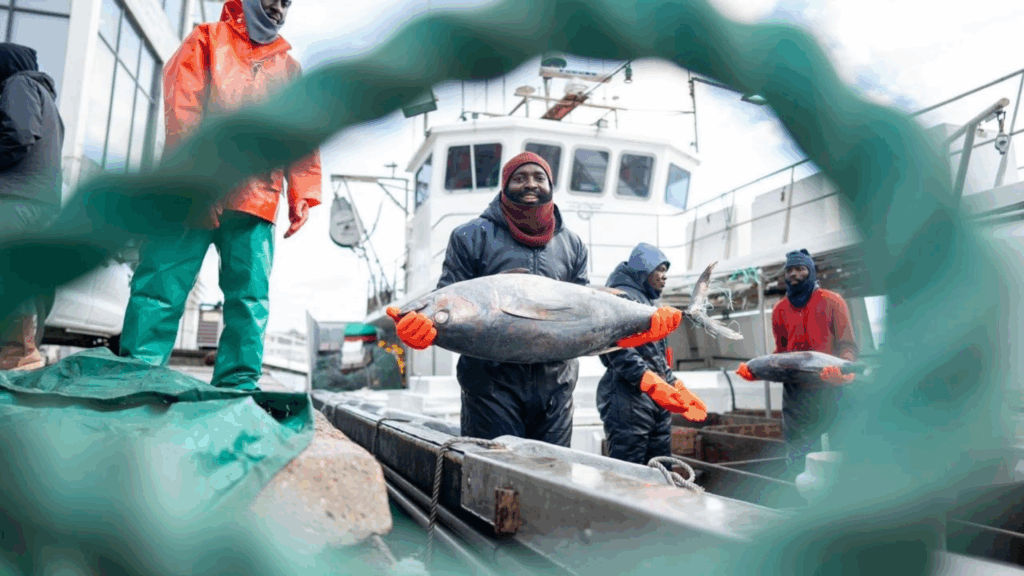
The product is also inclusive by design. Their tools work offline, support multiple languages, and are priced accessibly, making digital traceability viable even in low-resource settings. In places like Seychelles and Bangladesh, this approach has enabled artisanal tuna fishers and SME exporters to meet EU compliance standards and secure better prices. Seafood Souq says it has traced over 140 million seafood servings.
It’s also a digital public infrastructure for blue foods. The UAE’s Ministry of Climate Change and Environment (MOCCAE) is now adopting Seafood Souq’s platform to digitize national fisheries governance. In South Africa, SFS Fisheries is being used to track over 40 vessels, strengthening Marine Stewardship Council (MSC) certification readiness.

Looking ahead, the initiative plans to deepen its footprint in Southeast Asia and East Africa, regions rich in aquatic biodiversity but underserved by digital tools. Seafood Souq is proving that compliance, transparency, and sustainability can go hand in hand, delivering benefits across the triple bottom line: environmental protection, economic inclusion, and food system resilience. By 2035, they envision a world where seafood traceability is the norm, not the exception, and they’re building the infrastructure to make that vision a reality.
Learn more about Seafood Souq.
Written by Sarah Souli
Photos provided by the Seafood Souq
Seafood Souq
Seafood Souq brings digital traceability to the seafood supply chain, allowing actors to verify origin, comply with global regulations, and make ethically informed decisions.
Launch year: 2018
Based in: UAE