TREE: Regenerating Land and Livelihoods Through Farmer-Led Agroecology in Central America
In the highlands of Central America, where degraded soils and erratic rains challenge survival, smallholder farmers are facing a crisis: they produce most of the region’s food, yet they often go hungry themselves. For decades, traditional farming methods—often the only option available—have exhausted the land and reduced yields, making it increasingly difficult for farming families to sustain themselves. TREE, or TRaining to Expand Eco-agriculture, is changing that.
Launched by Sustainable Harvest International (SHI), TREE is a farmer-centered initiative rooted in regenerative agriculture and agroecology. It equips smallholder families with hands-on training to restore their land, grow nutritious food, and rebuild livelihoods that can withstand a changing climate. Though TREE is currently focused in Honduras, it builds on nearly three decades of experience working alongside rural farming communities across Honduras, Belize, Panama, and Nicaragua.
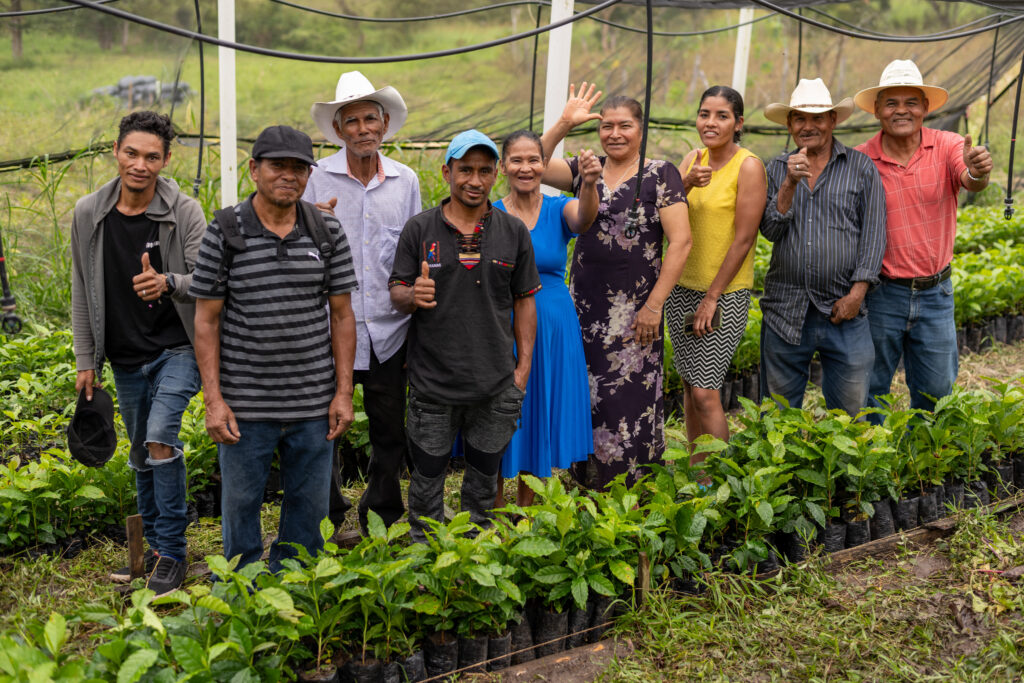
SHI field trainers (who, crucially, live in and come from the region they serve) visit farms regularly to deliver tailored support. This is paired with group training at community-based Farmer Field Schools, where families gather to share knowledge, experiment with techniques, and build trust. The approach promotes farmer-to-farmer learning and accelerates change through peer mentorship.
The initiative says that through hands-on training in practices such as crop diversification, agroforestry, soil conservation, homemade organic fertilizers, composting, bokashi, and intercropping, farmers build resilience from the ground up. They also learn to establish and care for community nurseries, while diversifying their diets and livelihoods through home gardens and marketable crops like cacao and coffee. The goal is not only to restore ecosystems, but also to increase yields, reduce input costs, and create new income opportunities.
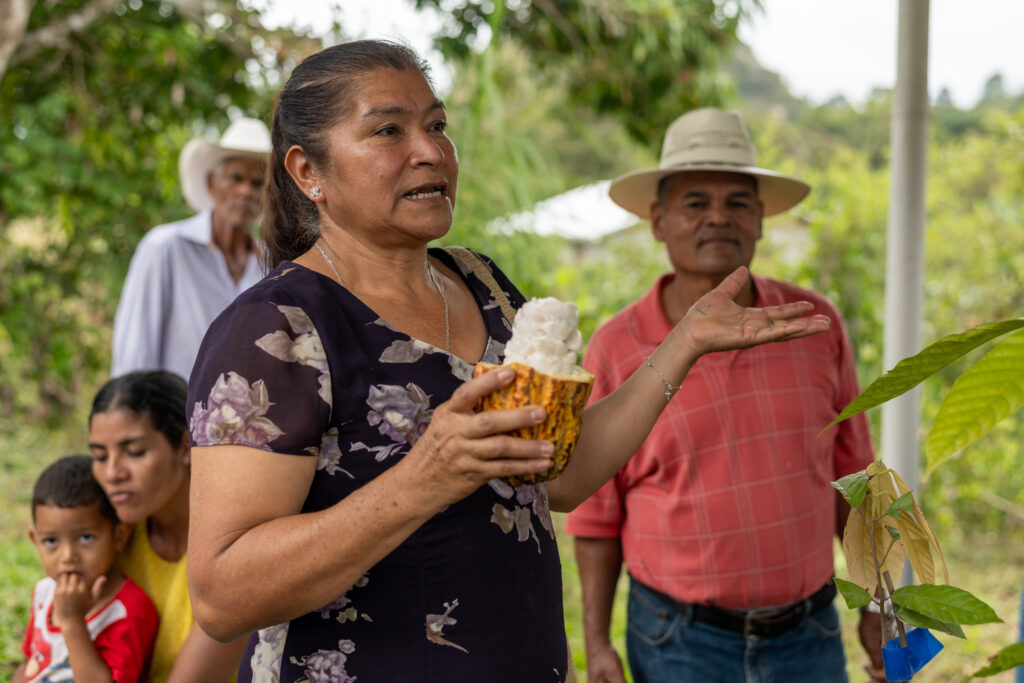
TREE is focused on scaling without losing integrity. Rather than importing external technologies or solutions, it builds local capacity. The initiative explains that farmers who graduate from the program can become certified mentors through its partnership with the Honduran government’s vocational training agency, INFOP (Instituto Nacional de Formación Profesional), helping TREE grow organically across communities. TREE claims it also supports entrepreneurship- responding to demand from families, especially women and youth, who want to turn sustainable farming into a viable livelihood.
The impact is already visible. According to the initiative, participating farmers are restoring soils, reducing reliance on chemical inputs, planting thousands of trees, and increasing their resilience to drought and floods. Early outcomes are promising: 35% of participating households are female-led, and 97% of SHI’s wider program participants report no food shortages in the previous year.
TREE is also contributing to global goals. SHI’s long-term «Million Farm Transformation» aims to transition one million smallholder farms to regenerative agriculture, achieve food security for 5 million people, restore eight million acres of degraded land, sequester 18 million tons of CO₂, and plant one billion trees. The initiative continues to cultivate partnerships with government agencies, institutions, and NGOs to strengthen and promote its agroecology training program, enhance market access, and increase opportunities for participating farmers.
SHI believes food systems transformation must begin with those at the roots—the smallholder farmers who steward the land but are too often left out of decision-making. TREE offers a different path grounded in ecological wisdom, local leadership, and long-term commitment, planting the seeds for a resilient, regenerative future.
Learn more about TREE.
Written by Sarah Souli
Photos provided by the TREE.
TREE by Sustainable Harvest International
TREE (Training to Expand Eco-agriculture) runs hands-on regenerative farming training, hosting field schools and supporting farmer-to-farmer mentorship.
Launch year: 1997
Based in: USA and Honduras