An alarming decrease in crop production from heat exposure is becoming a mounting threat to food security worldwide. The Intergovernmental Panel on Climate Change (IPCC) projects that global wheat yields could decline by 6-10% for every 1°C temperature increase. Heat waves pose even graver threats, reducing harvests by 15–30% and farm incomes by a staggering 66%.
ThermoReLEAF claims that its innovative platform that combines gene editing technology and biomolecule discovery can offer a solution to bolster crop resilience to heat stress by enhancing plant tolerance. Using specific gene editing and biomolecules derived from plants, it says it can help to stabilize yields, safeguard farmer revenues, and help to secure food systems globally.
The problem it addresses is pressing. High temperatures during critical crop growth phases—such as flowering and grain filling—can cause irreversible damage. The repercussions of these losses are felt worldwide; in 2022, heatwaves in India and Pakistan reduced wheat yields by up to 30%, prompting export bans. Europe and North America have faced significant crop destruction due to soaring temperatures, which has decreased food supplies and driven up prices.
Heatwaves also jeopardize seed quality, shorten the growing season, and raise the risk of complete crop failures. As these heat events grow more frequent and severe, the challenge to crop productivity—and consequently food availability—is anticipated to escalate further.
After extensive research, ThermoReLEAF says that it has identified a novel solution to these challenges. According to the initiative, it has discovered the precise molecular mechanism that causes heat-induced cell death in plants. The team claims to have disrupted this process without hampering plant growth or development, creating heat-resistant crops ready to weather soaring temperatures. Its CRISPR-Cas9 technology executes precise genetic edits to knock out specific genes.
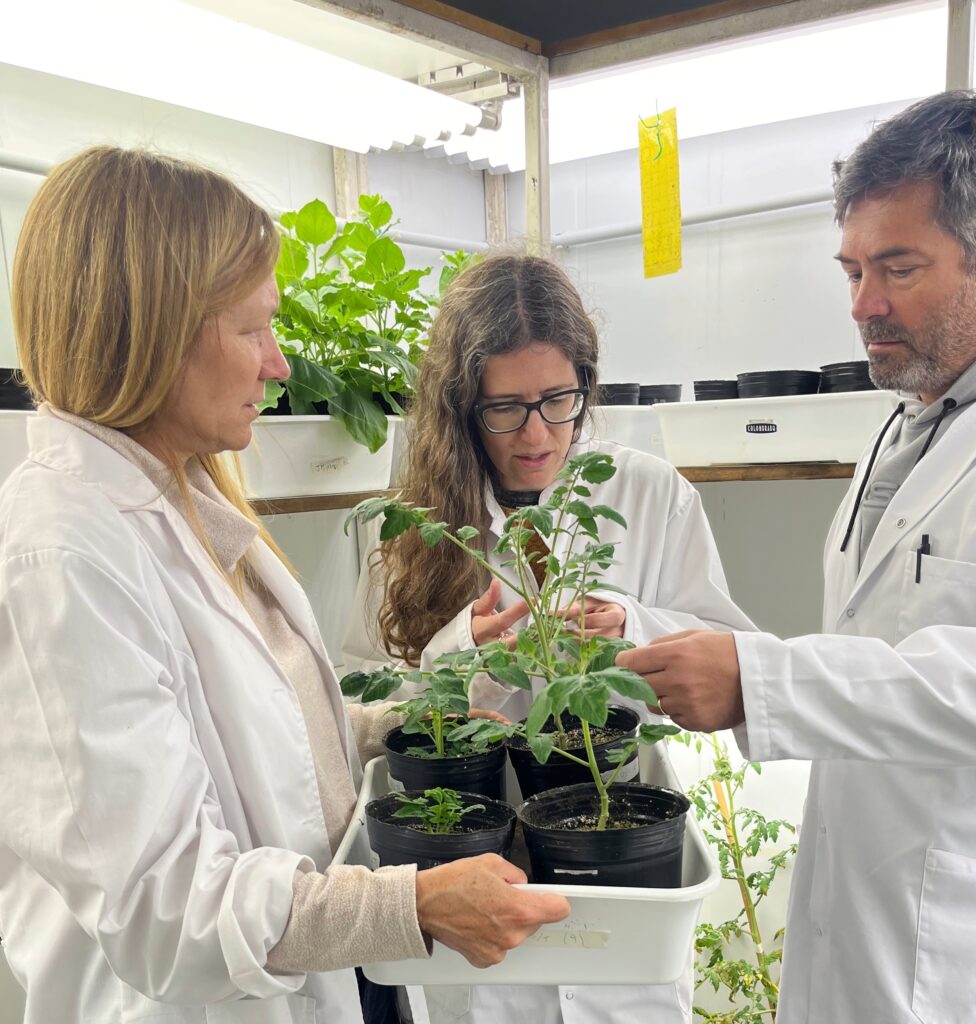
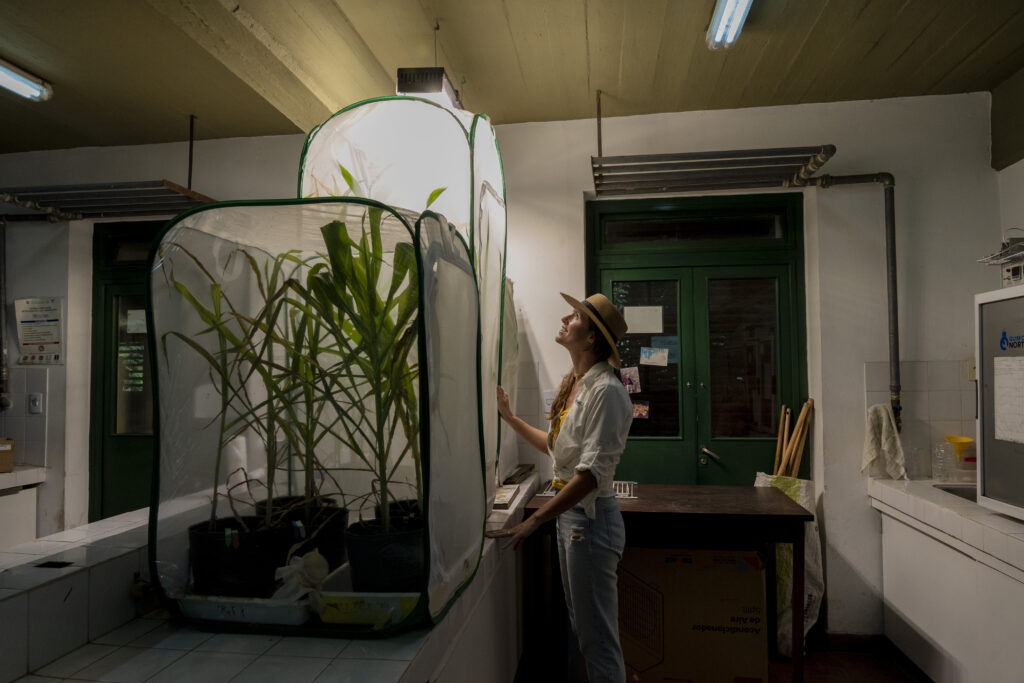
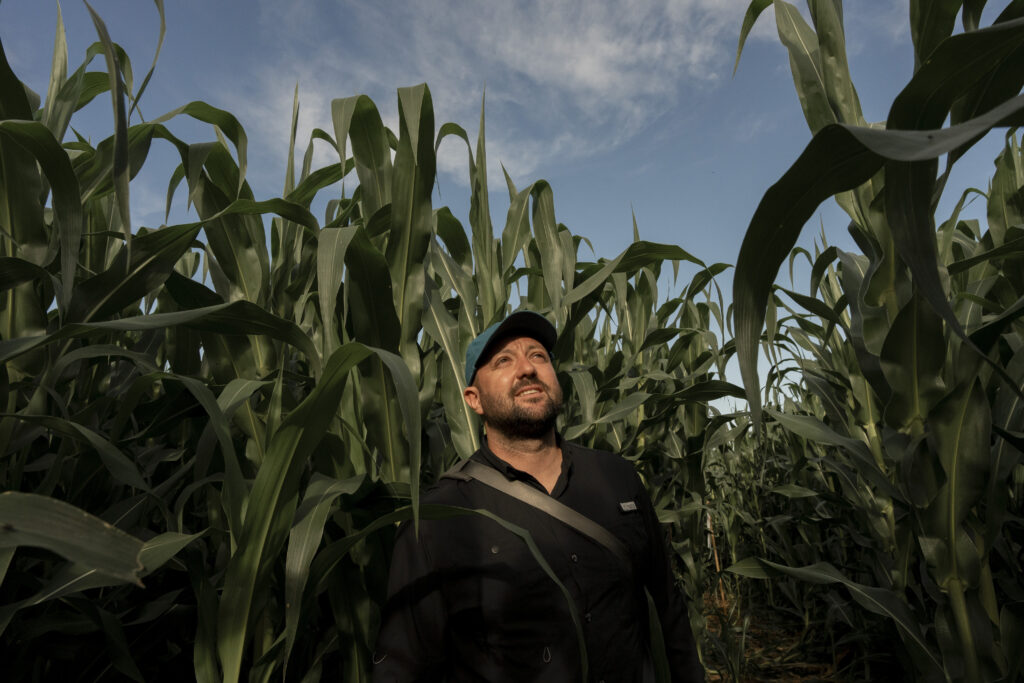
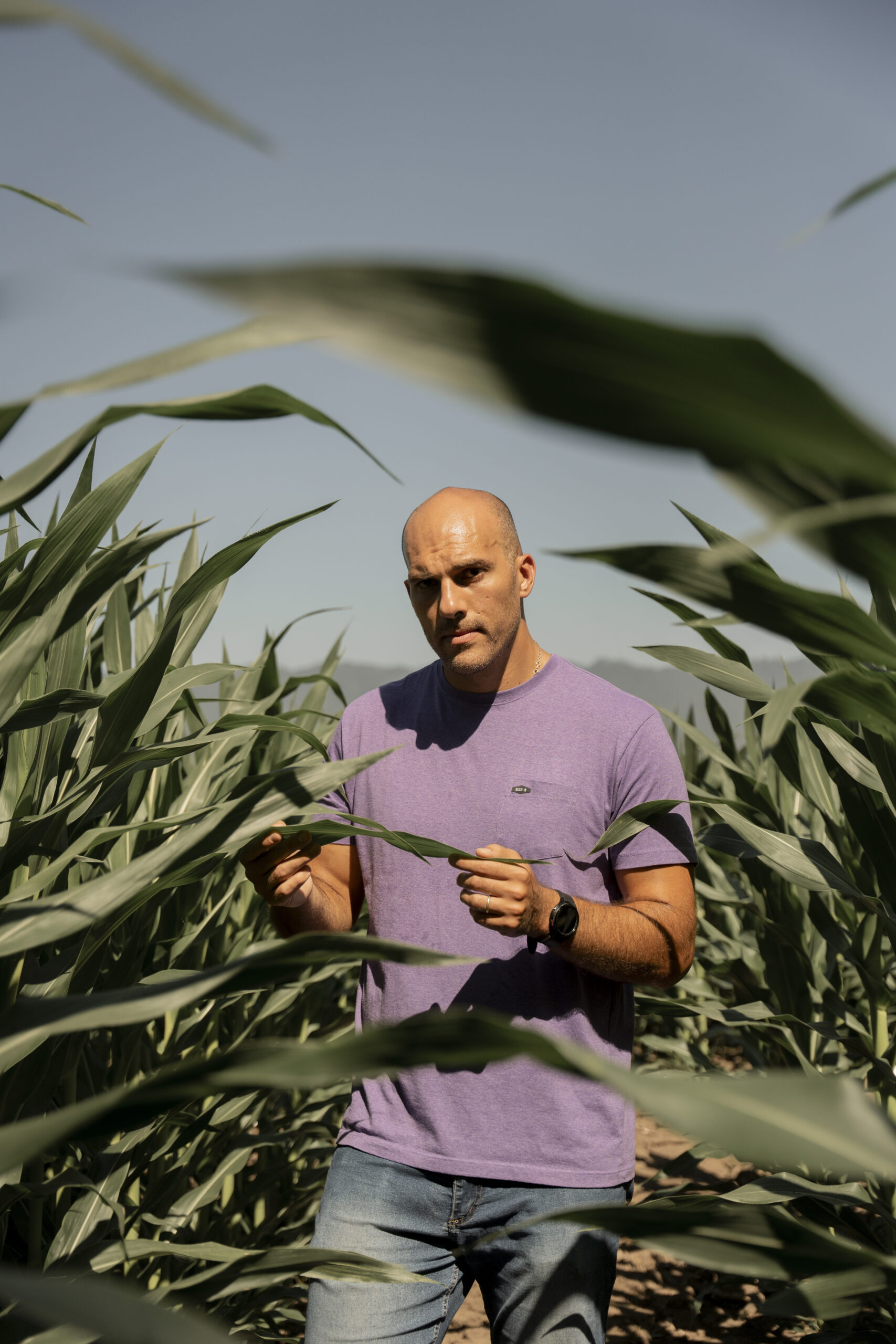
The ThermoReLEAF founding team — Ayelén, Diego, and Gabriela — in one of the growth chambers.
Recognizing the existing regulatory hurdles around gene editing, especially in regions already grappling with heat-related losses, ThermoReLEAF has also unveiled an environmentally friendly biochemical solution composed of plant-derived biomolecules. When applied to seeds or leaves, the initiative explains that the product targets the same harmful molecular pathway as the gene editing approach, which enhances crop survival and productivity under heat stress in all tested varieties.
The initiative says that the technology’s versatility means that it can be applied across a broad spectrum of crop species, ranging from cereals to vegetables and legumes. This could ensure that a wide array of agricultural products is shielded from the perils of heat stress. ThermoReLEAF believes this universal applicability could help to secure the immediate food supply and sustain the livelihoods of farmers and communities in some of the most vulnerable countries in the world.
Written by Gilly Smith Photos provided by ThermoReLEAF
Country: Argentina
Across Latin America’s sprawling grasslands, forests, and savannas, a new approach to livestock is gaining momentum—one that reimagines cattle not as a cause of environmental degradation, but as a tool for restoring ecosystems, storing carbon, and revitalizing rural livelihoods. Operating across Argentina, Brazil, Paraguay, and beyond, Ruuts is rapidly building Latin America’s largest network of regenerative livestock producers. The initiative’s vision is bold: to regenerate at least 5 million hectares of grazing land by 2035, restore critical ecosystems, sequester millions of tons of CO₂, and ensure that rural communities not only survive but thrive amid mounting climate and market pressures.
At the heart of Ruuts’ model is a multi-lever, systems-based approach that goes beyond training or certification. It integrates five interconnected components: hands-on technical support through regional «territorial nodes,» robust data and monitoring systems, direct ecosystem service finance, practical capacity building via the Regeneration School, and market development that links producers to premium supply chains and impact-driven investors. This structure enables the initiative to operate simultaneously at the grassroots and systems levels, thus scaling local solutions while aligning with global sustainability goals.
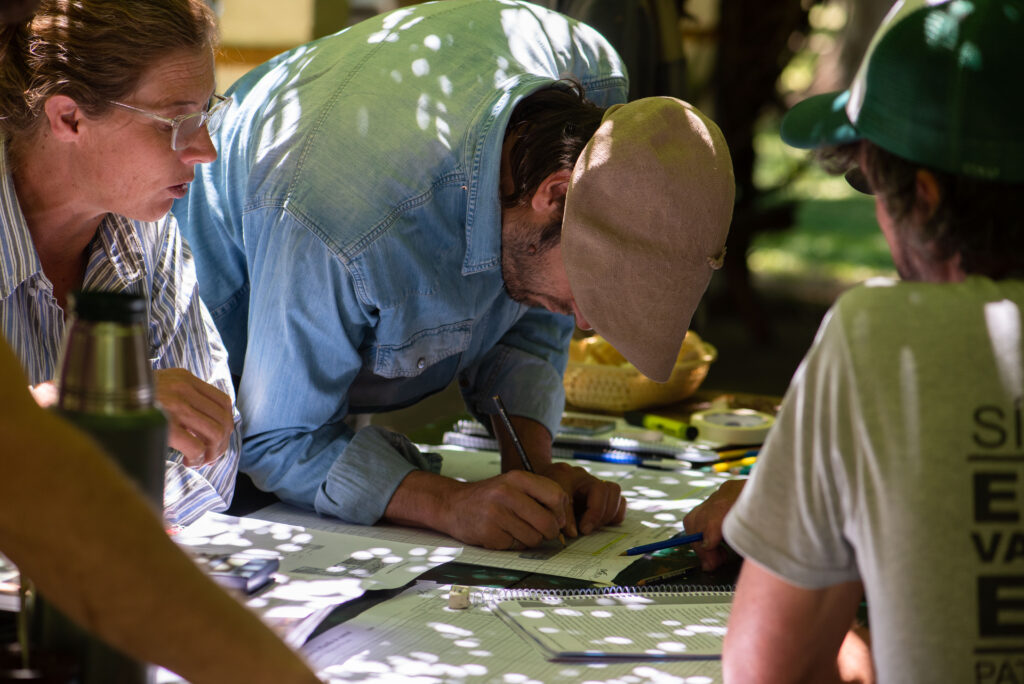
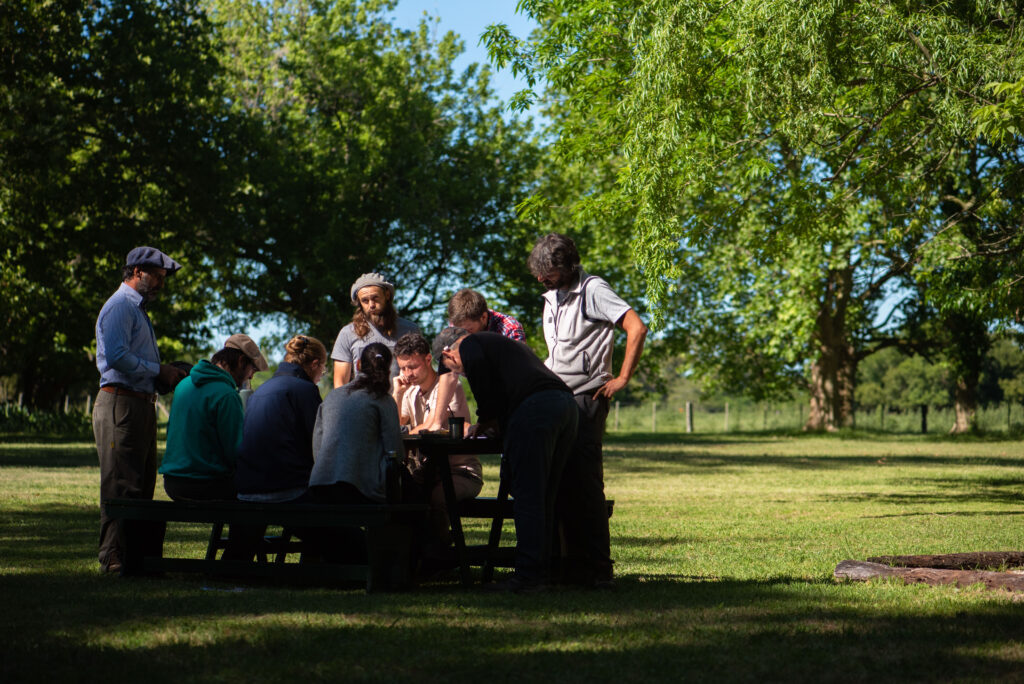
Ruuts fields professionals working with farmers in the field, planning grazing rotations and regenerative management strategies based on Holistic Management.
Ruuts builds on over two decades of field-proven experience from Ovis 21, a B-Corp company founded in Patagonia, with a unique strength in working directly with producers. Their model centers farmers’ agency (programs are co-designed), ensuring practices are ecologically effective and economically viable. According to the initiative, to date, over 400 producers managing more than 1.3 million hectares have adopted regenerative practices through Ruuts programs. The results are tangible: increased soil organic carbon, improved water infiltration, reduced erosion, and measurable biodiversity gains—all while enhancing productivity and reducing input costs.
Crucially, Ruuts connects these on-the-ground outcomes to climate and biodiversity finance. Through verified carbon programs using VERRA methodologies, the initiative states that over 400,000 hectares are under signed contracts that generate real, traceable income for producers through carbon credits and ecosystem service payments. This financial model offers long-term incentives that align livelihoods with land stewardship.
Ruuts also invests heavily in knowledge transfer. It claims that its Regeneration School has trained over 1,500 producers, technicians, and rural youth in holistic management, equipping the next generation with the tools to lead this transformation. The initiative is now expanding into dryland and forest-edge ecosystems with plans to launch new regional nodes and deploy digital tools that enable real-time monitoring, adaptive grazing plans, and financial analysis.
In a sector often framed as a problem, Ruuts offers a compelling counter-narrative: that livestock, when managed regeneratively, can heal land, store carbon, and build resilient food systems. By restoring just 10% of Latin America’s grazing lands, Ruuts estimates the potential to sequester hundreds of millions of tons of CO₂, create biodiversity corridors at a continental scale, and enhance food sovereignty for millions.
An innovative biotech startup is using nature’s own signals to fight crop-killing insects—without toxic chemicals.
TUCUMÁN, Argentina –
When dozens of desperate farmers and seed and agrochemical vendors flocked to Victoria Coll’s laboratory in Tucumán, Argentina, she knew her research had finally met its moment.
It was September 2023, and the visitors were on edge about the corn leaf hopper—a fourmillimeterlong bug already decimating the grain crops nationwide. Traditional insecticides had failed, leaving farmers facing billions in losses. Coll, a botanist with a doctorate in analytical chemistry, was certain the answer lay in cracking the code plants use to communicate with insects: their scent.
“Smell is a very universal language, except for between us humans,” Coll says. “Ants and bees, for example, communicate mainly through olfactory cues.”
Ultimately, Coll made the farmers and vendors powerful allies in the fight against the leafhopper when she became one of the four founders of Semion. The company, a biotech startup launched in 2023, focuses on restoring crops’ ability to defend against pests.
Their method consists of spraying the plants with substances that boost their natural defenses, activating genes that make them release odors that change insects’ behavior. Those scents both repel plagues and attract parasitoids, other insects that kill the pests and do not harm the plants. Semion is currently working on pests affecting corn and citrus and, in May, they will finish their onfield trials. They plan to scale up their production later this year.
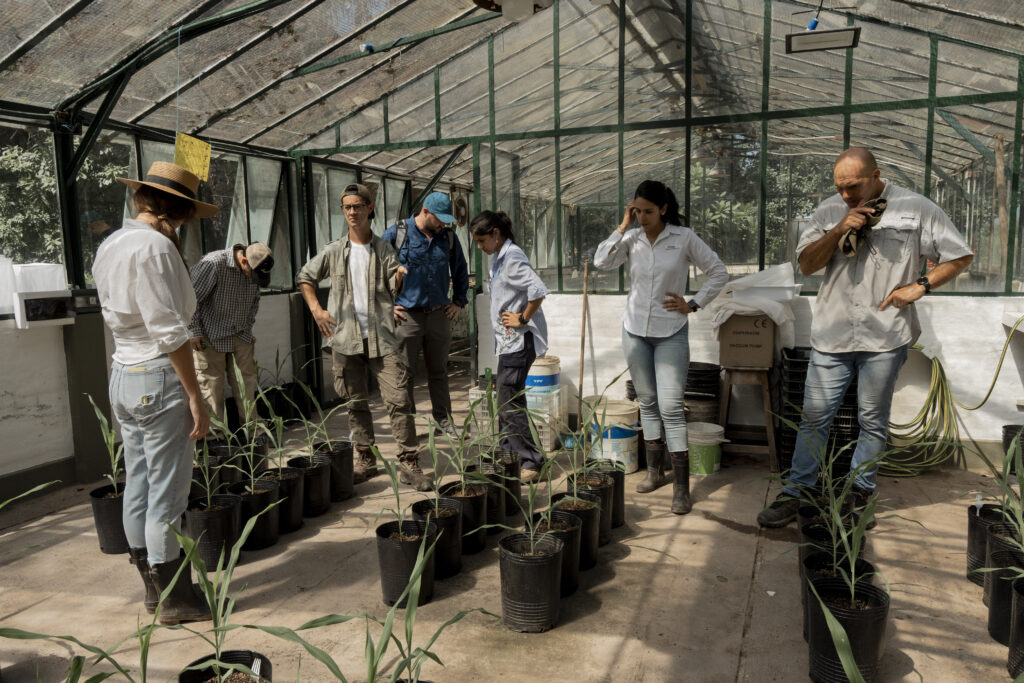
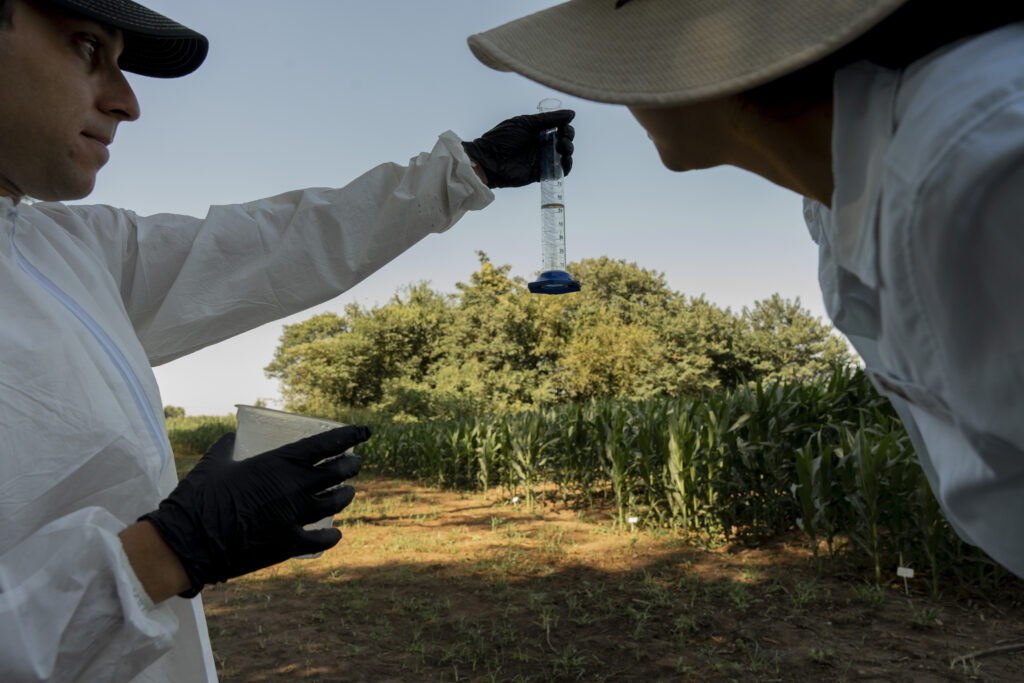
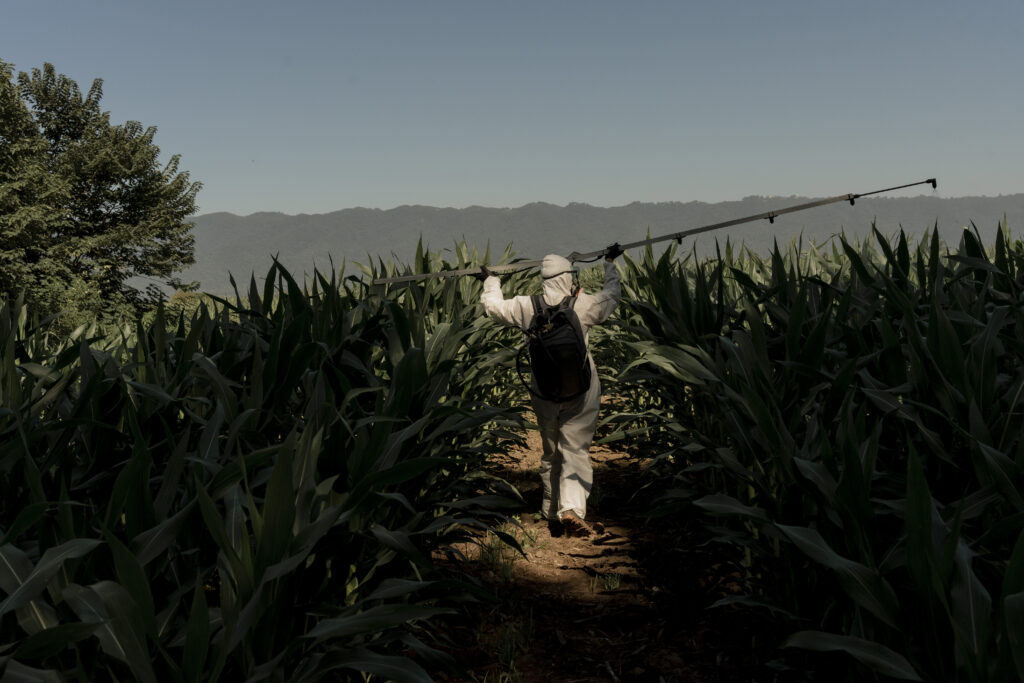
Semion workers and volunteers in the greenhouse at Semion trials in the Faculty of Agronomy, Animal Husbandry and Veterinary Science, El Manantial Farm in Tucuman. Preparing to apply the products tested on the corn plants during Semion trials.
Coll always wanted to be a biologist. Before beginning with Semion, she spent more than a decade in Tucumán investigating corn and its interaction with the leafhopper.
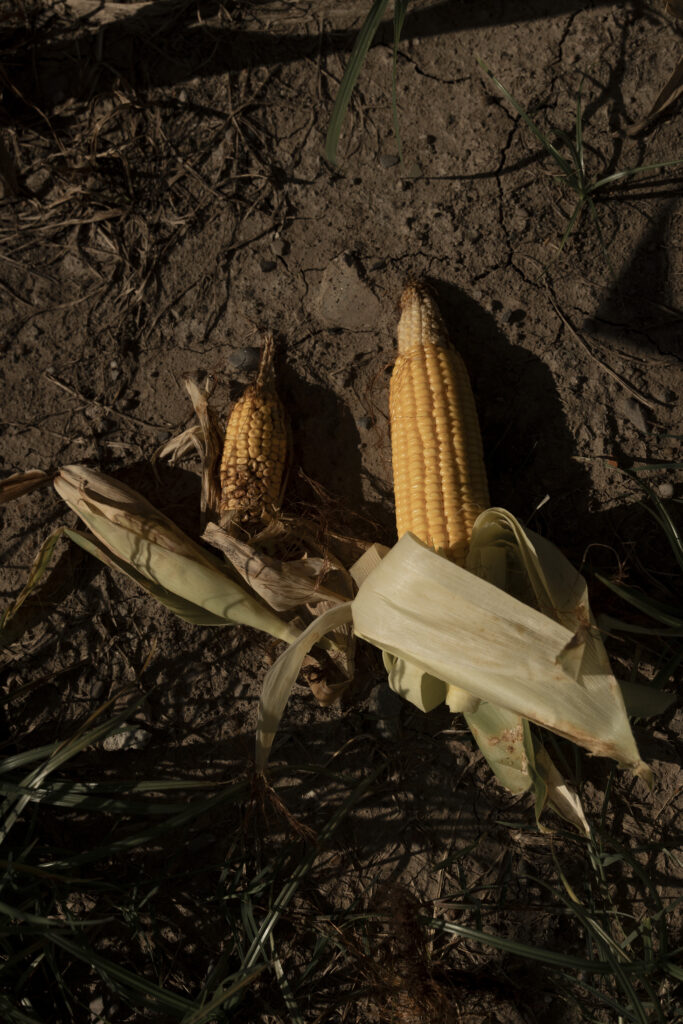
The corn leafhopper transmits four pathogens causing the corn stunt disease, which results in visibly shorter plants, leaves with white streaks and red edges, and smaller ears with almost no grains. The leafhopper also lays eggs in the plant’s bud, leaving open stomata that expose it to drying.
“When the plant is very infected, there can be up to 50 leafhoppers per plant— it has no chance to survive,” explains Coll, who did much of her research in collaboration with the renowned entomologist Eduardo Virla, with whom she shares the laboratory in Tucumán.
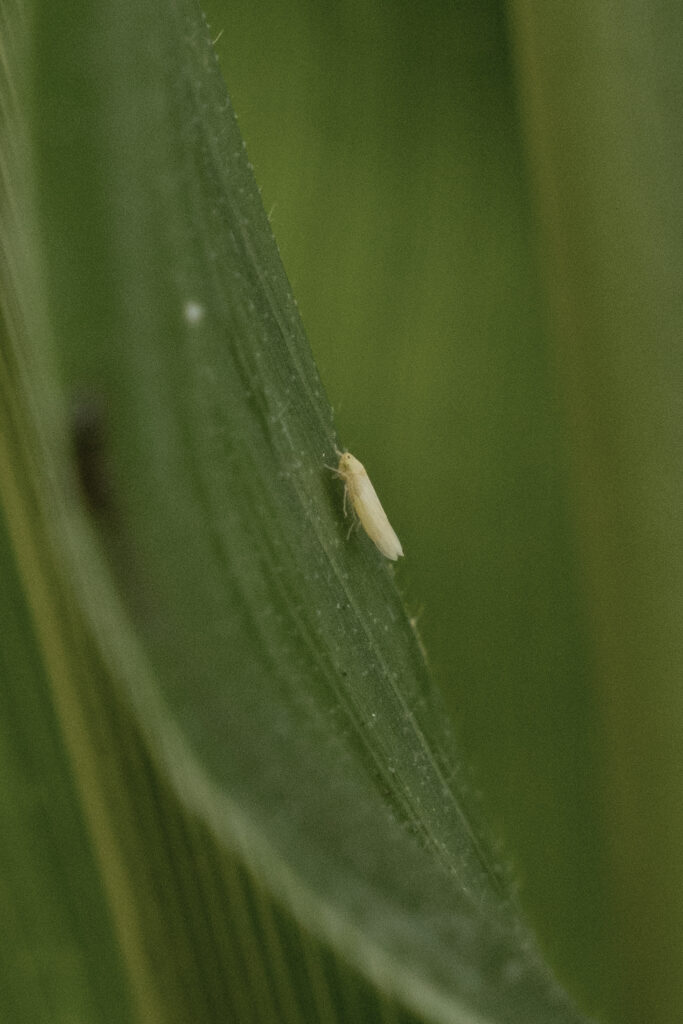
Corn leafhopper on a corn husk in a trial conducted in the university fields at the Faculty of Agronomy, Animal Husbandry and Veterinary Science.
Warnings Ignored, a Crisis Takes Root
At least since 2005, Virla has been warning people in the agricultural community that Argentina could have a major problem with corn leafhoppers, but no one took him seriously.
“I told them, the way you are handling things, this is going to blow up at any moment,” says Virla. The corn leafhopper can live up to three months in corn ears. Its depopulation occurs naturally when there is no corn growing. But now, he says, Argentine farmers are growing corn almost all year round. “You have two months at the most without corn. In other words, you are benefiting the bug,” he says.
Moreover, higher temperatures due to global warming and entire years without frost mean the insects can thrive, even beyond the 30° latitude, where the leafhopper is historically associated. Virla calls the phenomenon “tropicalization.”
Coll did not fare better. When publishing scientific papers or asking for funding for her investigation, she says people in academia and at agricultural supply companies usually brushed her off, telling her that she should change her object of study as the insect “was not a problem.”
“No one [but us] was studying the odor produced by the corn plant as it was attacked by the leafhopper,” says Coll. Through a gas chromatographer, she outlined the “volatilome” of multiple corn types—that is, the “aura” of volatile compounds that originate from it, or its odor profile, so to speak. That way, they could learn which of its components attracted the leafhopper, which repelled it, and which attracted the leafhopper’s parasitoid—a wasp that lays its eggs inside the planthoppers’ eggs, interrupting their hatching process. It is called Anagrus virlai, named after Virla himself when its biology was first described in 2018.
The research Coll and Virla were undertaking would later be instrumental in developing Semion, but at the time, their work fell on deaf ears.
At a corn trial located at the Sociedad Rural, Tucuman, Province of Tucuman.
Lessons From a Citrus Tree
Unable to move forward with the leafhopper project, Coll moved to Fort Pierce, Florida in 2022 with a Fulbright Fellowship to apply her research to another kind of pest. She had contacted a researcher in the Agricultural Research Service who was also working with hormones and odors to fight a plague: the citrus greening disease, also known as HLB, which can shorten the lifespan of citrus trees from 40 years to 5–7. The disease, caused by bacteria, is transmitted by an insect called psyllid and has no known cure. It is the most serious problem in the Florida citrus industry, reaching more than 90 percent of the crops.
Victoria Coll searches for a Corn leafhopper in a trial performed in the university laboratory. Alejandro Forlin, Agronomy Engineer, Co-Founder & COO at Semion.
Working with Alejandro Forlin, an Argentine agricultural engineer, Coll tested her hypothesis in the laboratory and later in Fort Pierce’s Botanical Garden. The psyllid is highly responsive to a specific volatile compound emitted by HLBinfected plants, so the scientists blocked its biosynthesis in citrus trees and stimulated it in “trap crop plants,” which they transported in Forlin’s car.
“Beautiful aroma—it was in my car for a week,” Forlin wryly recalls.
The plan worked even better than everyone hoped—after 10 months, the treated plants were 100 percent free of HLB disease, while nontreated ones were 66 percent infected.
Back in Argentina, Virla and Coll’s warnings were finally coming true. According to the Rosario Stock Exchange, between 2023 and 2024, 12 million hectares of corn were lost to the leafhopper—18 percent of the country’s total crop in 20232024, a loss close to $2 billion.
International news agency Reuters reported on the matter. “Many are going to reduce their hectares of corn to zero,” Aníbal Cordoba, a farmer in northern Chaco province, told them in May 2024. “You normally find leafhoppers in the bud of the plants if you look. But this year you go to the field, and you find clouds of leafhoppers. It’s just crazy.”
Return to Argentina
Coll returned to Tucumán with new determination in 2023 and started trials with compounds that trigger the release of odors that repel the corn leafhopper. In August, Gridx Exponential, the most important biotech startup accelerator in Latin America, contacted Coll for the fourth year in a row. They wanted to turn her investigation into a business—in previous years, she had rejected them because she did not feel ready. This time, she accepted.
Through GridX Exponential, Coll met Emilio Molina, an Ecuadorian who for years had been trying to start a plague control company. “I am a third-generation farmer,” says Molina. “My father is a small banana producer and since I was a little boy I saw a very strong correlation: The more agricultural supplies my father applied to his field, the more money he lost,” he says. A clear cycle repeated itself, he says. New agrochemicals were launched, pests became resistant to them, and then they became obsolete.
Jorge Hill, entomologist, Co-Founder and Chief Research Operation at Semion
In August 2023, Molina, Forlin, Coll, and an entomologist named Jorge Hill founded Semion. The name means “message” in Greek, referring to the messages transmitted through smell. Virla, the entomologist who first discovered the leafhopper’s parasitoid, works as an advisor to the startup. Today, 14 people are working on the project.
With financing from Gridx Exponential, they started trials in laboratories and fields throughout Argentina and Paraguay. Forlin drives through the country contacting farmers, who he says are generally eager to participate in the research. Having real farmers testing the compounds in the field is important, Forlin says, because there are things that one cannot prepare for in laboratory conditions—rain, wind, storms, other plagues, and the soil. “The soil is alive and it breathes,” he adds.
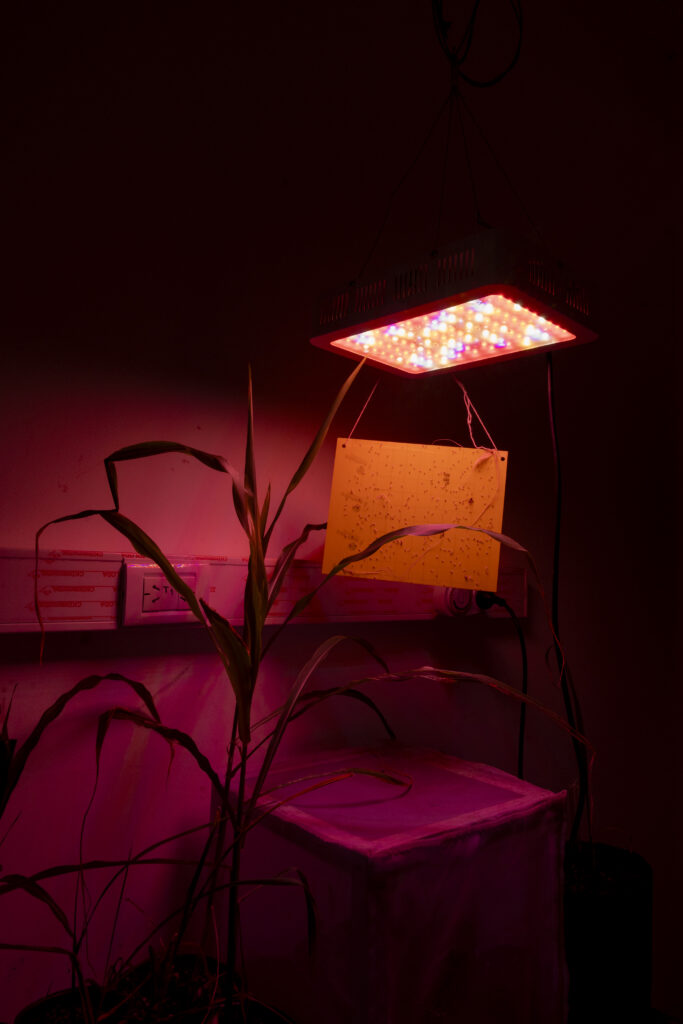
Unwanted insects captured on a self-adhesive surface in a trial room in the Semion laboratory. Artificial colored light corresponds to the spectrum of light useful for plants to grow, a spectrum found naturally in sunlight but not in white artificial lights. Applying products to the corn plants during Semion trials.
In its first year of operation, Semion developed Belion, a compound sprayed directly on the plant that triggers the release of odors repelling the leafhopper and attracting the parasitoids. It also increases the plant’s resilience against insect attacks and disease by enhancing physiological traits like nutrient conductivity, photosynthetic capacity, root mass development, and water use efficiency.
“Domesticated crops lost some defense mechanisms; others are dormant,” says Molina. “We develop products based on natural compounds to activate them when the plant is under stress or attack, so that it expresses genes that were not expressing themselves.”
In a corn trial at the agronomy school, the scientists found that “plants with chemical controls had a much larger presence of pests and grew less,” says Semion cofounder and entomologist Jorge Hill. He adds that those treated with Semion’s products had fewer pests, “higher photosynthesis values, and in the end, they ended up producing more.”
The reason, Coll explains, is the same as why the 2024 corn crop fared so terribly. “Since there were so many leafhoppers, farmers, in their desperation, applied insecticide up to 12 times. And, by doing that, they killed the plague’s natural controller—they killed the parasitoid, and the leafhopper was not even tickled.”
Semion compounds are also less toxic than agrochemicals, benefiting farmers and consumers, as well as the local environment.
“The solution [companies are proposing] is more insecticide,” Coll says, adding that Semion is proposing a change of paradigm. They plan to partner with an agrochemical company by November to scale up the production and sell their compounds as a biostimulant.
Apart from all the trials in the countryside and laboratories, Coll has put her research to the test in her house garden. “When I had leafhoppers in my grass, I released parasitoids. It is a biological control that does not deregulate the ecosystem, which has a way of self-regulating,” she says.
“I don’t kill one single spider.”
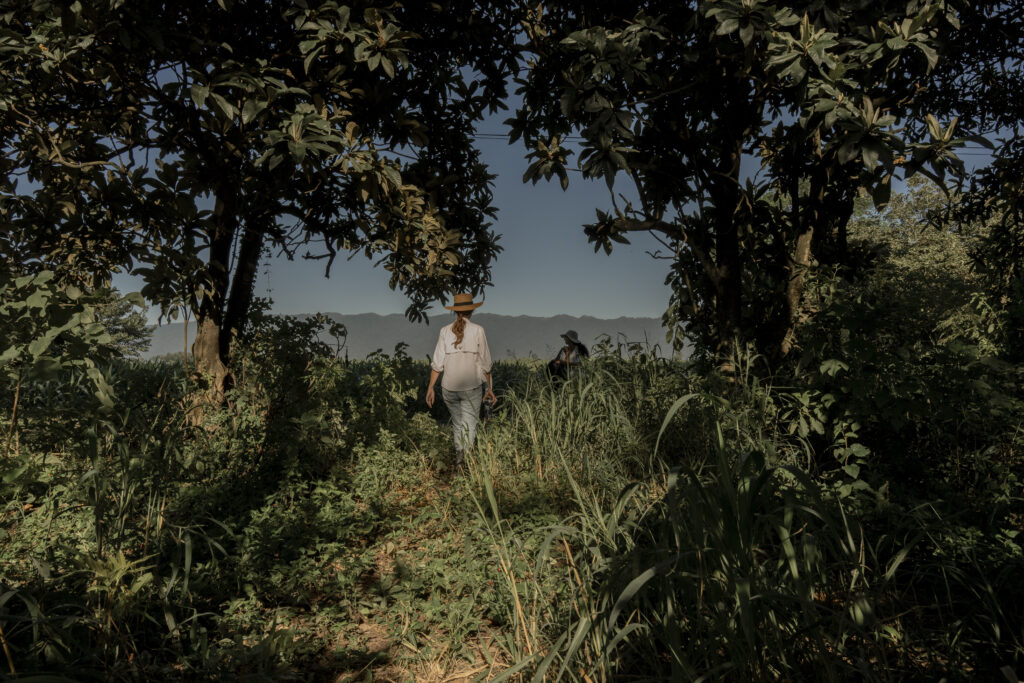
Victoria Coll walks at Semion trials, El Manantial Farm in Tucuman.
It’s a classic catch-22. As the population has swollen around the world, we’ve had to produce increasingly more food to support ourselves, relying on plant domestication to feed our growing numbers. As a result, crops have lost their natural defense mechanisms, leading to agrochemical abuse and pest resistance. While plant domestication has improved characteristics like yield and growth, it has sacrificed certain natural defense mechanisms. Crops are no longer as resilient as they once were, resulting in a global crisis making farmers lose billions and threatening the world’s food supply.
Officially launched in 2023 (on the heels of seventeen years of academic research), Semion has developed a novel pest control technology that activates crop defense mechanisms that have been weeded out through industrial domestication. They achieve this using phytostimulants—compounds that manipulate plants’ defense pathways. Modern industrial agriculture methods rely on agrochemicals that create pest resistance, ineffective repellents, or genetically modified seeds and plants. Instead, Semion manipulates the metabolic pathways of crops to activate the natural plant defense mechanisms lost during domestication.
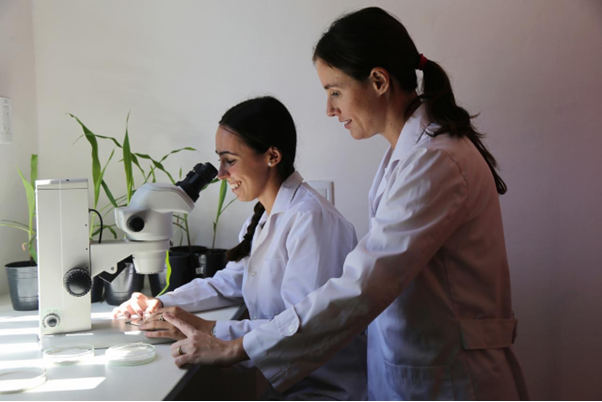
Lucia Ferrari and Victoria Coll at Semion doing lab work.
Semion’s first two developments focus on controlling two major threats to global agriculture: Dalbulus maidis, the vector of corn stunt disease, and Diaphorina citri, the vector of citrus greening disease. Semion has focused on these pests as they are prime examples of massive crop destruction. Diaphorina citri has devastated 80% of Florida’s citrus industry since 2005, while Dalbulus maidis is destroying corn crops across South America, causing over $2 billion in losses in Argentina last year alone, and rapidly spreading toward the US. For corn stunt disease, Semion protects the crops by making the plant more resistant to both the insect’s damage and the effects of the disease it transmits. In field trials they obtained, among other promising results, a 30% average yield increase compared to infected controls. To combat citrus greening disease, Semion has developed a push-pull approach that makes citrus plants emit specific odors to repel the insect while simultaneously attracting it to traps for elimination. After 12 months of field trials with the University of Florida, they say they’re achieving 100% disease control.
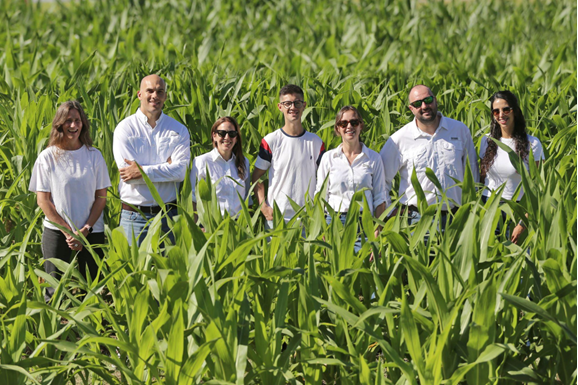
From left to right: Gabriela Valladares, Jorge Hill, Emilce Viruel, Facundo Herrera, Victoria Coll, Alejandro Forlin, Paula Paez
Semion’s ingenious technology has many positive benefits for our food planet. The initiative’s solution can lead to increased food security for vulnerable communities. By protecting farmers’ crops, they achieve higher yields and better-quality produce, which translates into increased earnings. This boost in income not only supports individual farmers but also stimulates the local economy. Reducing the need for agrochemicals drastically lowers the exposure of farm workers to dangerous substances, thereby improving their health and safety. This reduction in chemical use also prevents water contamination—which in turn, keeps communities healthier and safer.
Its technology has the potential to be applied to any crop in any geography, with six solutions already in the pipeline. Its first product for controlling Dalbulus maidis is ready and set for commercial launch this year, and the company is in discussions with major agrochemical companies about manufacturing and distribution across four countries. By focusing on the commercialization of the Dalbulbus maidis control product, Semion aims to address the immediate needs of farmers facing this challenge, demonstrating the effectiveness of its technology and laying a solid foundation for future expansion.