An educational program founded by celebrated Australian cook and food writer, Stephanie Alexander AO is on a mission to teach the next generation sustainable food production in their own school gardens.
The Kitchen Garden Program (KGP) aims to foster lifelong habits in food, health, and wellbeing among children and young people through a program of hands-on kitchen and garden activities. It teaches children and their families skills for sustainable, organic, small-scale food production, empowering the next generation with a holistic understanding of food systems and circular, regenerative practices.
Children learn how their school gardens can create nature corridors, and why these improve air quality and reduce urban heatwaves while becoming habitats for pollinators and enhancing biodiversity. Food is grown on-site using sustainable methods and is 100% packaging-free with zero emissions from transport.
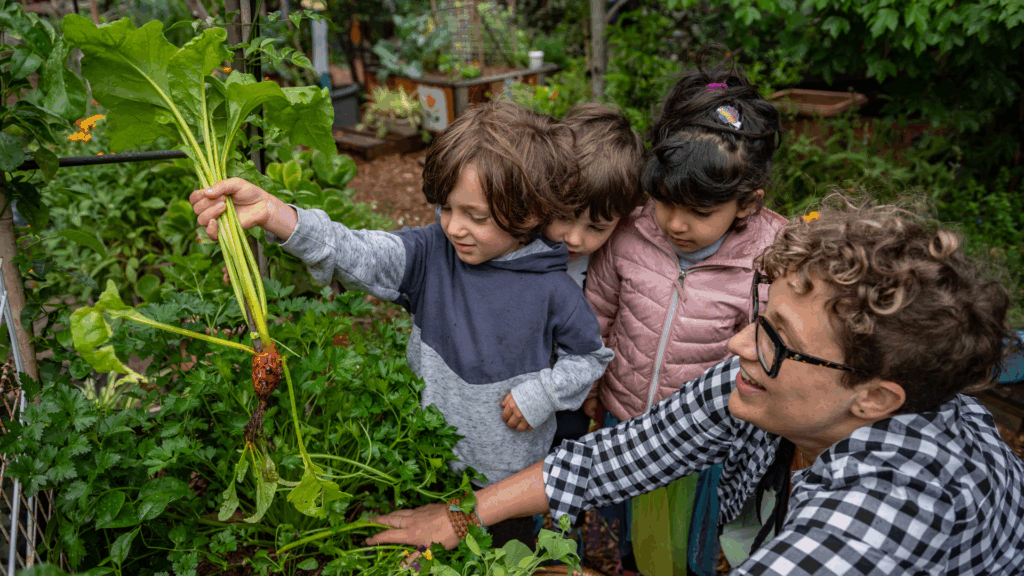
An early childhood educator teaching the Kitchen Garden Program at St Kilda Balaklava Kindergarten in Victoria.
The initiative says that in many KGP schools, garden produce is used to support the whole school community including healthy canteen options and school lunches for students and time-poor school staff, and fresh produce boxes for families facing food insecurity.
According to research by Australian organization, WasteSorted Schools, the 3kg of avoidable food waste is discarded per student per year. This is equivalent to 3 million whole fruit pieces, 1.3 million packaged food items, and 3.5 million whole sandwiches discarded each year in schools across the state. The KGP teaches students how to turn food waste into soil-enriching compost, creating circular systems that support soil health and create habitats for micro-organisms and mycorrhizal networks.
The Kitchen Garden Foundation believes its program helps children form connections to the natural environment, becoming active participants in local food production systems and advocates for planetary preservation and climate change action. Meanwhile, the Foundation’s community place-based projects empower local families to grow, harvest, prepare, and share their own sustainable produce, improving nutrition, wellbeing, and food security.
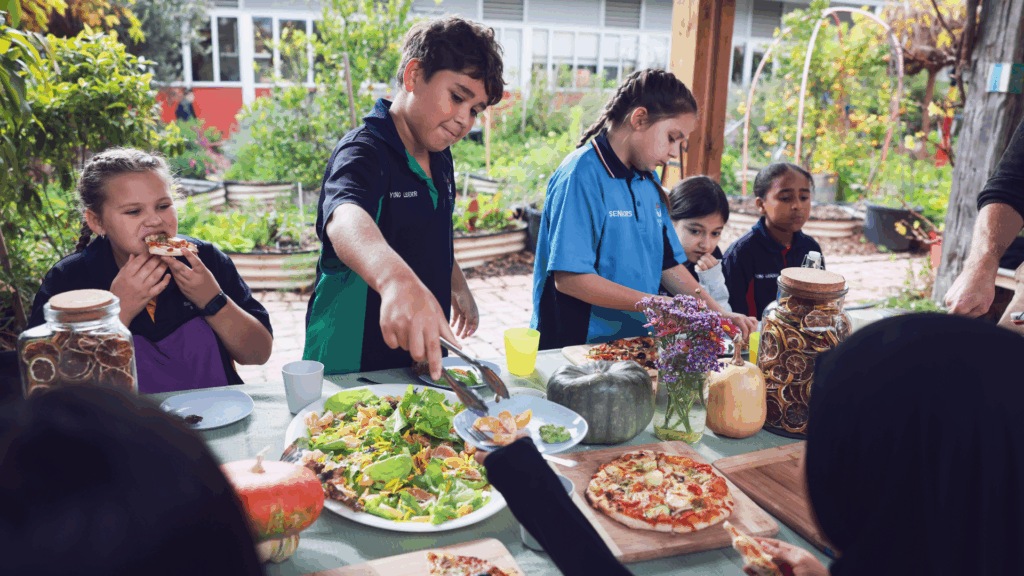
Outdoor education and a shared meal of garden-grown produce and wood-fired pizza at Blair Athol North Primary School in South Australia.
The vision driving this initiative is ambitious yet simple: to nurture healthy children and young adults to grow up in sustainable communities throughout Australia, boosting long-term public health and a generation committed to environmental stewardship.
Currently, the Kitchen Garden Foundation reaches over 1,000 schools and early childhood facilities across the nation, delivering 3 million food education experiences each year. The initiative estimates that 28,000 square meters of productive gardens have been established at schools and early childhood services over the past 20 years. According to the UN Food and Agriculture Organization (FAO), a garden plot one square meter in size can produce roughly 20kg of produce annually, which means the KGP school gardens could be producing 560 tonnes of fresh, hyper-local food per year.
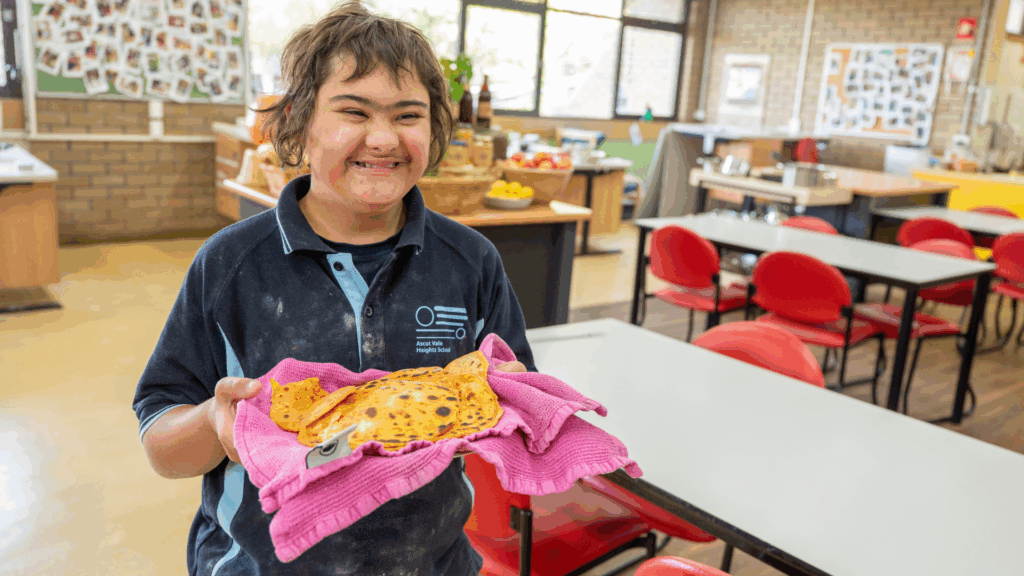
A proud student carrying sweet potato roti bread to the dining table at Ascot Vale Heights Special School in Victoria.
The program’s success has prompted the foundation to plan further expansion, aiming to reach more schools, especially those in marginalized areas. By fostering partnerships with local communities, the foundation claims to address a broad spectrum of health challenges, making measurable impacts on social well-being.
Written by Gilly Smith Photos provided by the Stephanie Alexander Kitchen Garden Foundation
Country: Australia
By helping farmers measure soil moisture with precision, a simple sensor is reducing waste, improving yields, and making agriculture more sustainable.
RANDFONTEIN, South Africa –
Patricia Seaba faced many challenges when she began farming. But few were as perplexing as the exploding cabbages. One moment, the plants seemed fine, cocooned snugly in their leaves, growing into the swirly purple and white heads that customers in suburban grocery stores couldn’t get enough of. The next, she was sitting in her living room when she heard a pop outside. When she got to the field, the cabbages “were bursting like balloons,” Seaba recalls.
The problem continued for the rest of the season. Not every cabbage she grew self-detonated, but enough of them did that it eventually stopped surprising her. Sometimes, Seaba says, she would pick a cabbage intact, only to have its rubbery body split apart in her hands.
Seaba knew that the plants she grew were always communicating with her. As she tended the fields of her 17.5-hectare (43 acre) vegetable farm near Johannesburg, she watched their color, texture, and posture for clues about what they needed. But exploding cabbages were like a foreign film with no subtitles. They must be trying to tell her something. She just had no idea what.
The answer, when it arrived, was unexpected. And it came from an equally unforeseen source. One day in 2023, a government liaison for farmers visited Seaba. He had a small device in his hand, made up of three wires, each with a small white water-sensing bulb dangling from it. The man explained that this was a Chameleon. It had been developed by an organization called the Virtual Irrigation Academy (VIA) to tell farmers like Seaba how much moisture was in their soil. That, in turn, would help them make better decisions about watering their crops.
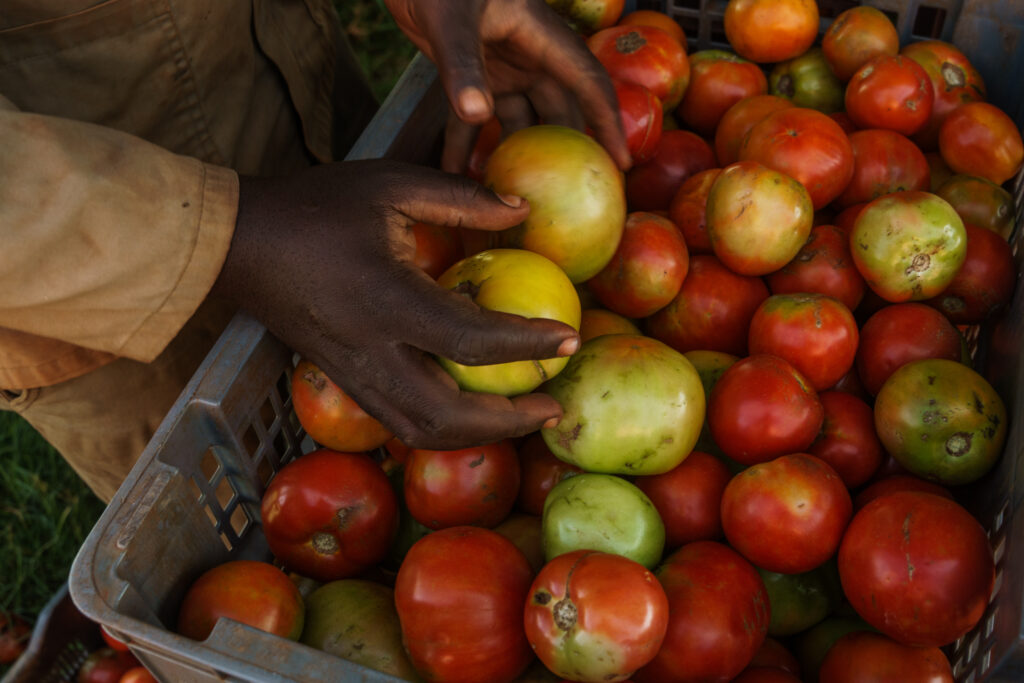
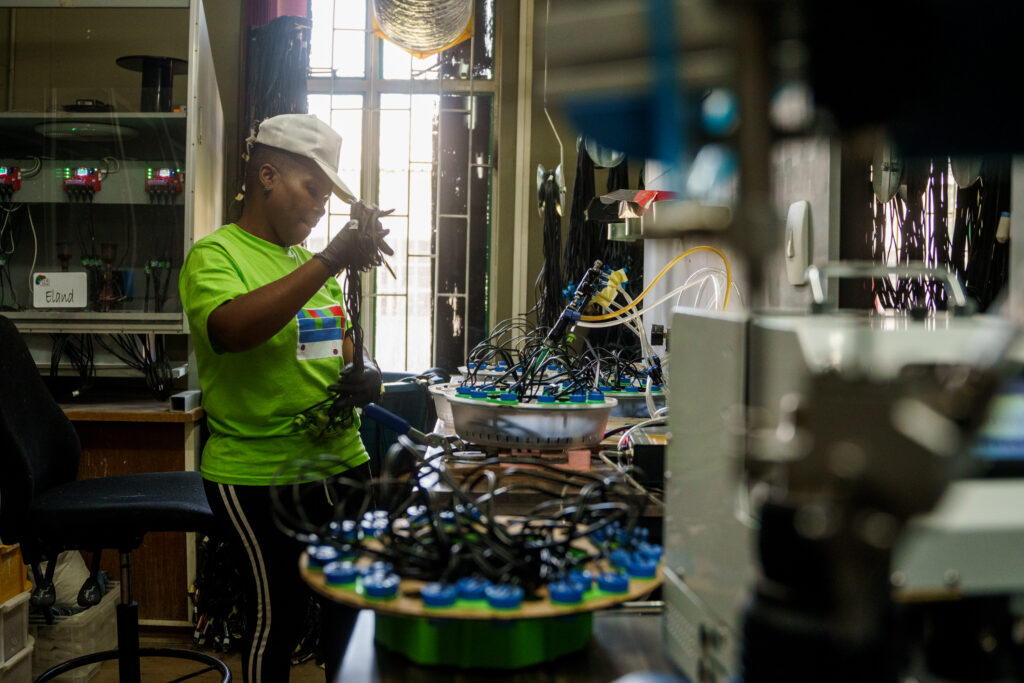
The team at TC Women in Action farm prepare to transport their tomatoes to a large market in Johannesburg. The Virtual Irrigation Academy enables farmers to merge the science of irrigation with their own practical experience using unique monitoring tools that give output as colors.
Seaba was skeptical. After all, she could see with her own eyes when the red dirt at her feet was cracked and dry, indicating the roots coiled below the surface needed water. Anyway, she and her partner Rinae Tshikangavhadzi irrigated their fields the same way all their neighbors did—three times a day, every day. Why reinvent the wheel?
Still, they decided to give the little device a try. And almost immediately, the Chameleon returned a surprising message. “We saw we were giving all the plants too much water,” she recalls.
This, it turns out, is what the exploding cabbages had been trying to tell her. They were drowning.
Turning Water Into Food
VIA’s Founder Richard Stirzaker has been talking to plants most of his life. Long before he was a research scientist with a specialty in irrigation and an obsession with what he calls “turning water into food,”he was a little boy growing vegetables in the sandy soil of his Cape Town backyard.
When he was in kindergarten, his teacher asked him to bring a seed to school and plant it. “I couldn’t believe that thing made a bean,” he recalls. “I thought, this is magic.”
Stirzaker never fully recovered from that wonder. Instead, he turned it into a career. When he was a teenager, his family moved to Australia, where he pursued his PhD in soil physics. Then he went to work studying agriculture for the country’s national science organization, CSIRO.
Over time, he became obsessed with one particular problem: Water.
Stirzaker often worked with smallholder farmers in sub-Saharan Africa. And every one he met grappled with the same quandary: how much water was needed for their plants to grow.
To be clear, the technology to solve the problem existed. The 5 percenters of global agriculture, large commercial farms, were outfitted with an expensive array of devices to measure the moisture, temperature, and nutrient content of their soil. As a result, they could gauge with precision when to water, and equally crucially, when to stop.
But more than half the world’s food is grown on farms less than 50 hectares (123 acres) in size. A third is grown on farms smaller than 2 hectares (5 acres). And Stirzaker knew that when it came to gauging water use, smallholder farmers had almost nothing to go on but what they saw with their own eyes.
And as it turned out, their eyes were deceiving them.
The conventional wisdom tended to go like this: Irrigate your crops when the soil looks dry. And yes, dry soil sometimes means dry, thirsty plants. But it can also just as easily indicate that the ground is protecting itself, forming that crusty exterior to shield the moisture below from evaporation.
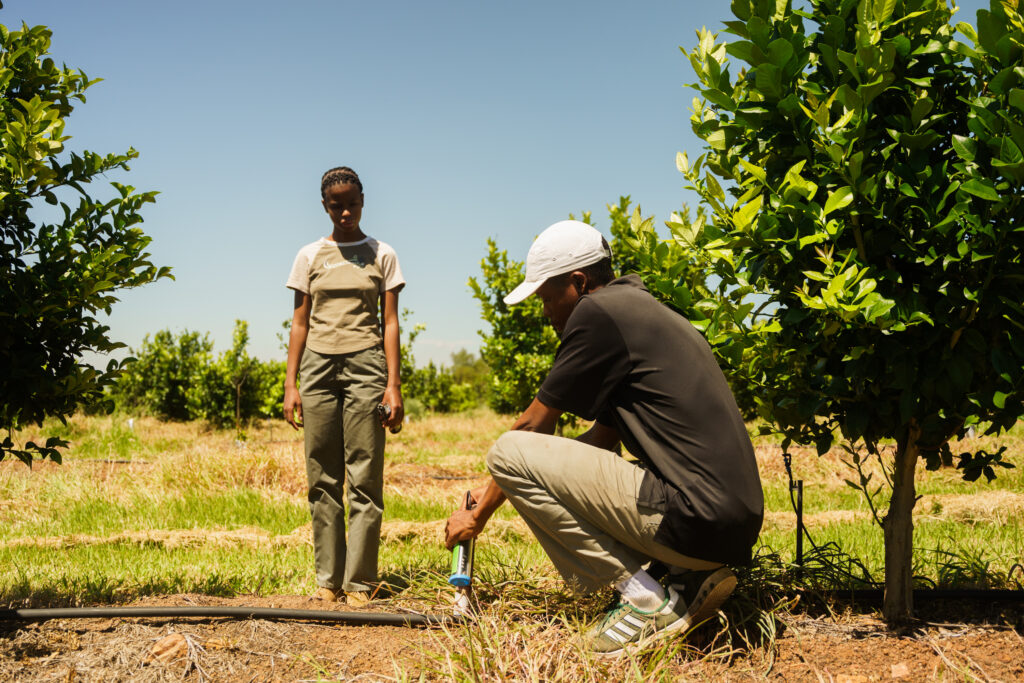
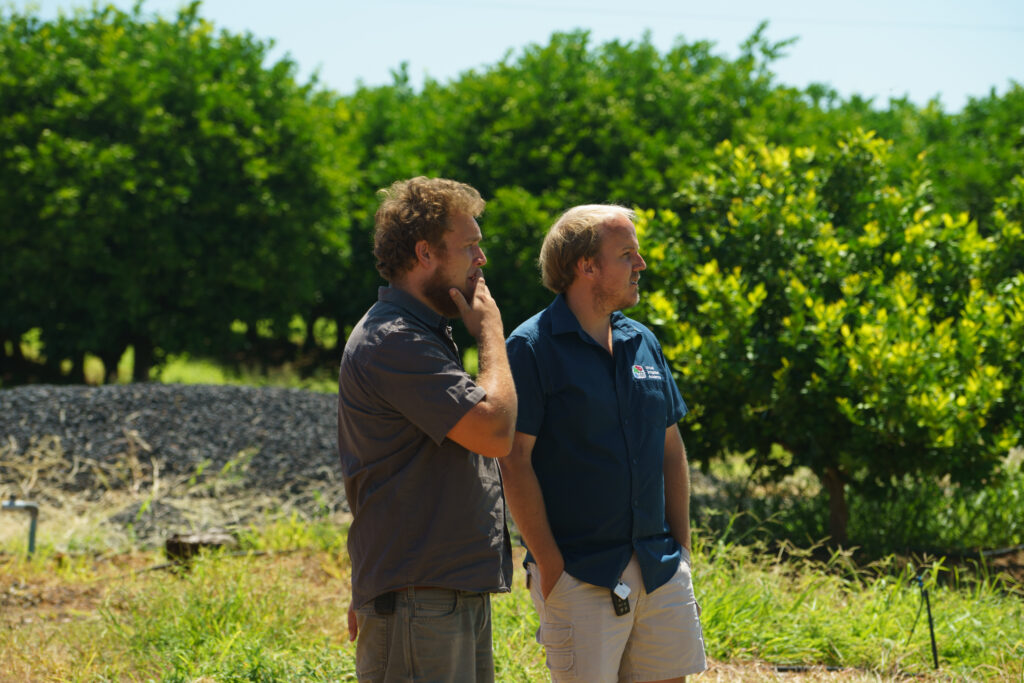
Batlhako Citrus Farm in Brits has greatly benefited from the use of VIA devices.Kutlwano Hlaletwa and Mmatsheko Moilwa use the Chameleon to monitor water levels at the Batlhako Citrus Farm.
However, short of digging up their own fields every time they watered them, farmers had no way to see what was happening down in the root zone. And because the dangers of too little water were so clear, they often ended up swinging too far in the other direction. They “killed their plants with kindness,” explains Luan Steyn, VIA’s Research and Development Engineer. Kindness, that is, in the form of too much water.
Overwatering, it turns out, is all kinds of bad for farms. It flushes nutrients from the soil, which must be replaced—often at great expense—with fertilizer. Plants yield less. And that’s to say nothing of the social implications. Water is a shared resource, and in many parts of the world, farmers compete for their share of communal sources, cutting rifts through communities and families.
Closing the Knowledge Gap
For Seaba and Tshikangavhadzi, the exploding cabbages proved only the tip of the iceberg. They irrigated all their crops three times a day, just as they saw the other farmers in the area do. But all that irrigation meant that they had to keep their small pump running day and night to transport water from a nearby dam to the fields. Huge electricity bills chewed away at the farm’s small profits, leaving the couple scrambling to pay their workers.
Seaba and Tshikangavhadzi had gone into farming with romantic notions of how it might go. Both in their early 30s, they’d grown up in Soweto, a Black township south of Johannesburg that was synonymous with urban grit. “To me, cucumbers came from the grocery store,” Seaba says.
But Tshikangavhadzi’s family had a background in farming, and in 2014, he, his mother, and Seaba began farming a plot of land leased from the Department of Agriculture. The farm was part of a government effort to redistribute land from white farmers—who, according to experts at Stellenbosch University, still own nearly 80% of the country’s farmable land—to Black ones.
The leasing program got the family a good deal on the land itself. But there was another chasm they still had to cross to have any chance of keeping up with their white neighbors who had been running commercial farms for generations. That was the gap in knowledge.
Seaba and Tshikangavhadzi knew they needed to learn everything they could about vegetable farming, as fast as they possibly could, and so they threw themselves into applying for mentorships, grants, and awards.
But both say one of their most profound learning experiences came from their two engineered water measurement devices, which they received from VIA.
Those two products are the fruits of Stirzaker’s career-long obsession with the small-farmer water problem.
His first invention is what he calls a Wetting Front Detector (WFD). The funnel-shaped gadget is inserted into the ground to measure how deep moisture from irrigation and rain goes. For instance, it tells farmers if the water has reached a plant’s roots. The device also takes samples of the soil water that can be tested to measure salt and nitrate levels—key indicators of healthy soil.
The other device, the aforementioned Chameleon, measures water suction, or how hard it is for the plant roots to extract water from the soil at any given time. Stirzaker says that what sets these two devices apart from other water management tools on the market is their price point (cheap) and how easy they are to use (very).
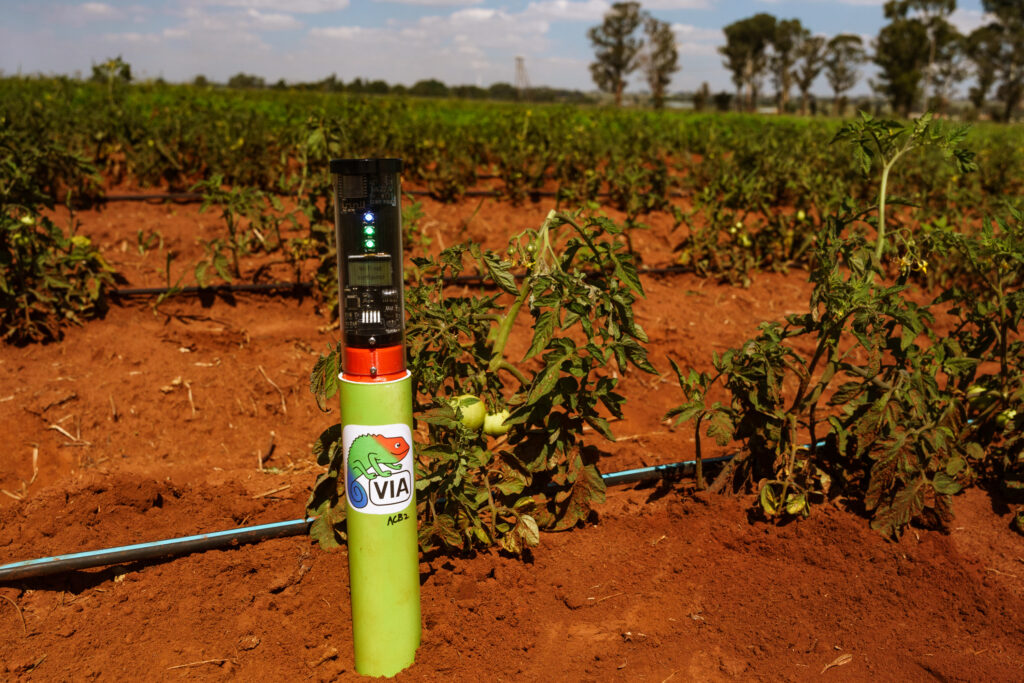
TC Women in Action’s farm uses VIA’s Chameleon sensor to measure the water in the soil.Kutlwano Hlaletwa and Mmatscheko Moilwa use the Chameleon Wifi to monitor water levels at the Batlhako Citrus Farm.
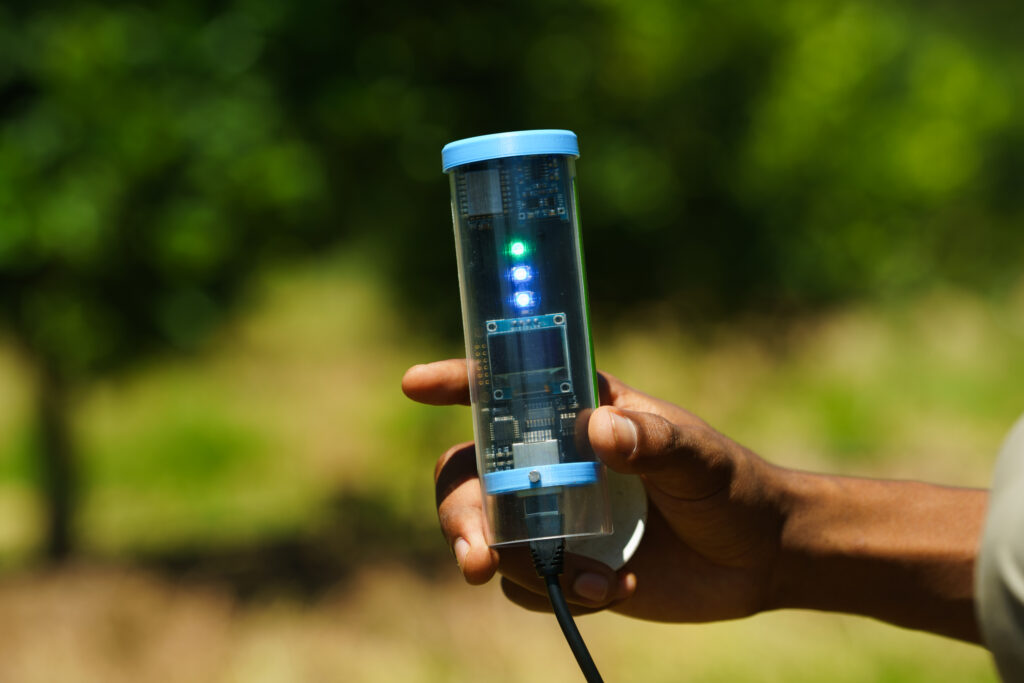
The Chameleon, for instance, employs a simple color code to help farmers interpret its data. A reader lights up red if the soil is dry, green if it is moist, and blue if it is wet.
Of course, Stirzaker is quick to point out, the colors alone don’t determine what a farmer does next. They are just a data point. “This is not a tech fix, it’s a people fix,” Stirzaker says. “People possess so much creativity to solve problems if they just have the right information.”
The Power of Data
On a recent morning, in a small room in a low-slung industrial park in Pretoria, a blocky metal machine gobbled plastic pellets. It whirred and beeped, and several seconds later produced a small plastic cylinder destined for the interior of a Chameleon sensor.
When Stirzaker founded VIA in 2016, he was building nearly all his devices himself in his lab in Australia, then hauled suitcase-loads of them to the African countries where he worked.
But since then, Stirzaker and his team, led by engineers Luan Steyn and Divan de Vaal, have devoted themselves to figuring out how to make nearly every piece of their technology, from the wiring down to the water sensing tip, locally in Africa.
The idea, he says, is that the communities using the sensors should “not just be at the end of our value chain, but also at the beginning.”
Today, nearly every part of the Chameleon—save its microprocessors and a few associated pieces—is made in South Africa, as is the WFD. And VIA recently opened a second production line for Chameleons in Blantyre, Malawi.
To date, VIA has produced and sold nearly 100,000 WFDs and Chameleons in 20 countries, largely through projects and NGOs, who distribute them to small-scale farmers. But the organization wants to reach more farmers, and faster, and for that, Stirzaker says, they simply need to get bigger.
That will help them reach even more farmers like Seaba and Tshikangavhadzi.
Last year, the couple’s farm hit a major milestone. They obtained an inter- national quality and sustainability certification called the Global G.A.P. Among other things, this required that they show auditors how they were responsibly managing the farm’s water use.
Easy. They just whipped out their Chameleon sensors and the case was closed. When the farm received its certification, they popped a bottle of champagne in celebration.
Stirzaker’s device had made it easy to quantify the progress they’d made on the farm. But they already knew they were succeeding.
Virtual Irrigation Academy production and R&D engineers, Luan Steyn and Divan de Vaal, visit one of their monitoring sites in Brits, South Africa.
Author: Ryan Lenora Brown Photographer: Lauren Mulligan
Country: Australia
A think tank is on a mission to change the role of meat in the Australian and New Zealand food culture.
Food Frontier’s vision is to promote a diverse and sustainable alternative protein supply that supports human and planetary health, reducing the country’s reliance on intensive animal agriculture and exploitation of land for animal feed production.
It aims to explore and promote the wide variety of alternative proteins which could address many of the issues we have seen in a meat-centric food industry: disease transmission from animal to human for example, as well as antibiotic resistance, food insecurity, and diet-related disease. According to the initiative, a more exciting variety of alternative proteins could stimulate demand and provide sufficient food for a healthy planet and a healthy population.
A mission-driven specialist organization, Food Frontier’s team is made up of research specialists and thought-leaders providing useful data, insights, strategies, recommendations, and commentary on the alternative protein industries. As Australia and New Zealand’s only think tank in this sector, Food Frontier claims to be a key influencer, already persuading major decision-makers to grow markets for alternative proteins.
The initiative is driven by communications, stimulating discussion and offering advice and insights about this emerging industry of plant-based proteins, cellular agriculture, and fermentation methodologies to government, media, and the food industry. Food Frontier claims that by creating the conversation, they can accelerate the market development of alternative proteins, unlocking economic, environmental, and health benefits.
Food Frontier’s contributions to the field of alternative proteins include comprehensive industry reports, government white papers, and a plethora of webinars, stakeholder roundtables, and events such as their AltProteins Annual Conference. They also keep audiences engaged with newsletters, press releases, media kits, op-eds, and foster ecosystem growth and support.
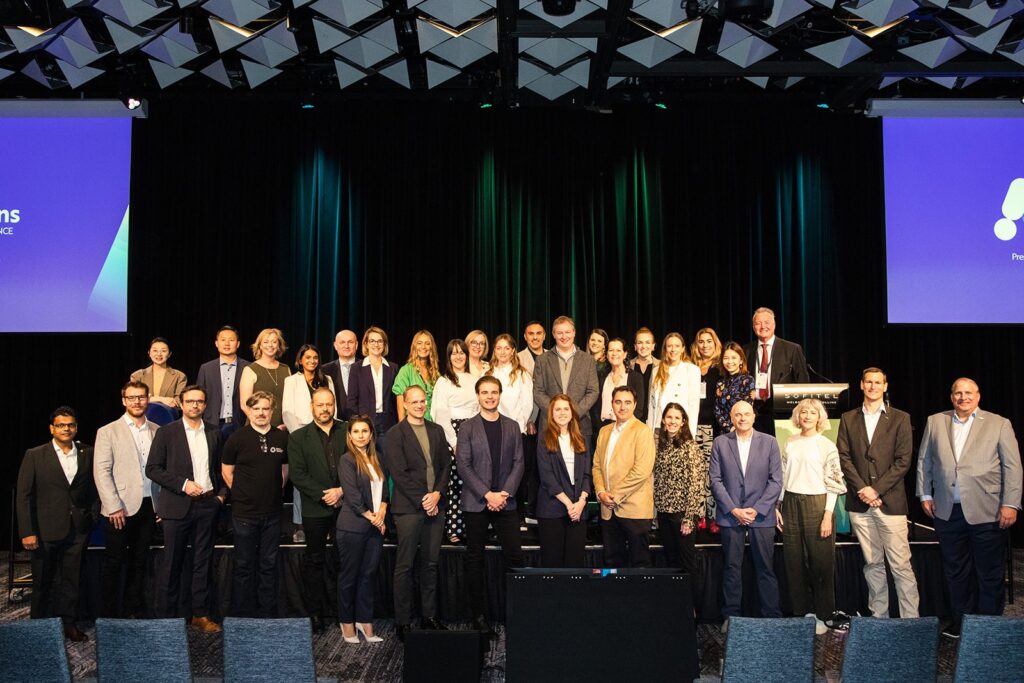
Food Frontier team members with speakers and panellists from 11 countries at Food Frontier’s annual conference, AltProteins24.
Food Frontier believes that it can achieve the most effective positive environmental impact through four strategic aims: firstly, by increasing the production and diversity of plant proteins to stimulate a market that is already showing an increasing interest in what is on the shelves. Secondly, influencing government and food standards regulators for the approval of cultivated meat products for consumption would give the green light for increasing fermentation production, which Food Frontier claims is a key factor in expanding the variety of alt-protein products. Thirdly, putting alternative proteins onto the agenda in the discussions around governmental climate and nature policy would be a huge boon for Food Frontier’s environmental campaign. Finally, encouraging food service providers to use alternative proteins in hospitals, schools, defence establishments, prisons, aged-care facilities, and university campuses, would change its perception in Antipodean food culture.
Food Frontier takes advantage of Australia and New Zealand’s position as a gateway into Asia. As a leader in research and development in this emerging market, the initiative believes it has the skills and infrastructure to make a major impact on global food culture.
Written by Gilly Smith Photos provided by Food Frontier.
Country: Australia
Australian farmers from more than thirty communities across the country are being empowered to engage confidently with leaders across Parliament, the media, and industry by Farmers for Climate Action’s (FCA) Climate Smart Farming program.
Farmers for Climate Action’s 8,400 farmer members have skills including advocacy, media, teaching, and of course, climate-smart farming. These skills can empower farmers across the country to grow their industry and protect the planet.
Farmers for Climate Action is the second-largest farmer representative group in Australia as measured by farmer membership, and, according to the initiative, the only to focus on the impact of climate change on agriculture. FCA’s Climate Smart Farming program has robust connections across the political spectrum and deep into the Canberra Press Gallery. In the past year, the Climate Smart Farming program has had significant policy wins in Australia on the global methane pledge and Australia’s electric vehicle policy. The initiative has had cut-through media moments on the topics of clean energy projects and the impact of climate change on food supply. With excellent media and strategic contacts, deep political experience, and a huge farmer base, FCA believes the Climate Smart Farming program is the initiative most likely to change Australia’s policy landscape.
FCA boasts some of the most proactive participants in any agricultural or regional organization, and a toolkit of webinars and workshops which empowers these farmers to showcase climate solutions on and off the farm. They can rally support for comprehensive, economy-wide climate policies that benefit both farmers and regional communities.
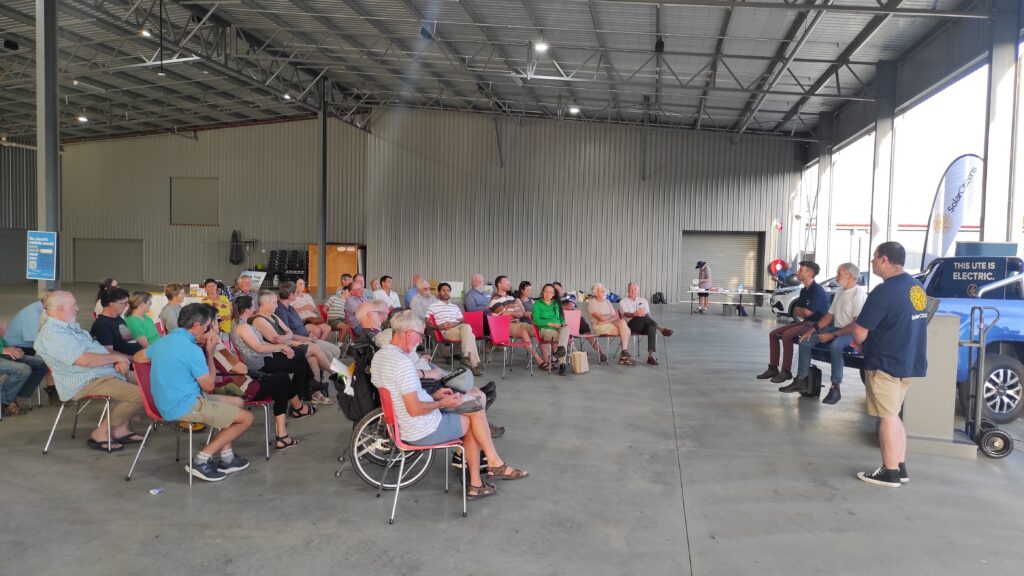
Community members in Shepparton explored electric farm vehicles, including one of Australia’s first electric utes, thanks to a Climate Smart Farming event with Solar Citizens.
The Climate Smart Farming program includes webinars during which participants can talk to experts, share insights, and gather practical knowledge about future-proofing their farms. The workshops upskill farmers on relations with media and government, covering best practice techniques for framing, language, press briefings, social media, and interviews. FCA aims to create what the initiative calls a cohort of “trusted messengers” to spread change effectively and quickly.
The program’s extensive web of existing partnerships means it is data-driven, community-led, and nationally delivered. The program has already produced training materials on topics such as renewable energy, electrification, regenerative farming practices, and biodiversity.
And farmers are reporting significant productivity boosts while curbing their dependency on heavy fertilizers and reducing emissions. The initiative believes that the measures they are implementing through the Climate Smart Farming program could cumulatively lead to a significant transformation in agriculture.
The Climate Smart Farming Initiative has already delivered so much with so little. With more, the sky is the limit.
Written by Gilly Smith Photos provided by Climate Smart Farming Program
Country: Australia
Even those taking care of simple houseplants know how complicated it can be to gauge how much, and how often, to water plants. Scaled up to the agricultural level, it’s a global problem for farmers. How much water is enough, especially since many regions are facing water scarcity? Giving plants more water than they need leaches nutrients out of the soil, wastes energy for pumping, and causes environmental problems such as waterlogging and salinity. The Virtual Irrigation Academy (VIA) is testing a big idea: what if farmers had access to streamlined information about whether their crops were thirsty or not?
When farmers have simple, accurate, and actionable information, they are empowered to make better decisions about their individual water use and – perhaps even more importantly – the allocation of water within their community. Smallholder farms have used VIA data to discuss water usage in town hall meetings. Improved water use leads to improved crop yields, increased income, better nutrition and food security, and the reduction of conflict over water within communities. Perceived scarcity over water fuels conflict, which undermines attempts to equitably govern and share water. Growing more food with less water is firstly a people problem. As such, the premise behind the Australia-based VIA is that by providing an information system that links farmers with higher-level stakeholders who create and manage the systems in which they operate, VIA can transform the irrigated agriculture sector in low- and middle-income countries.
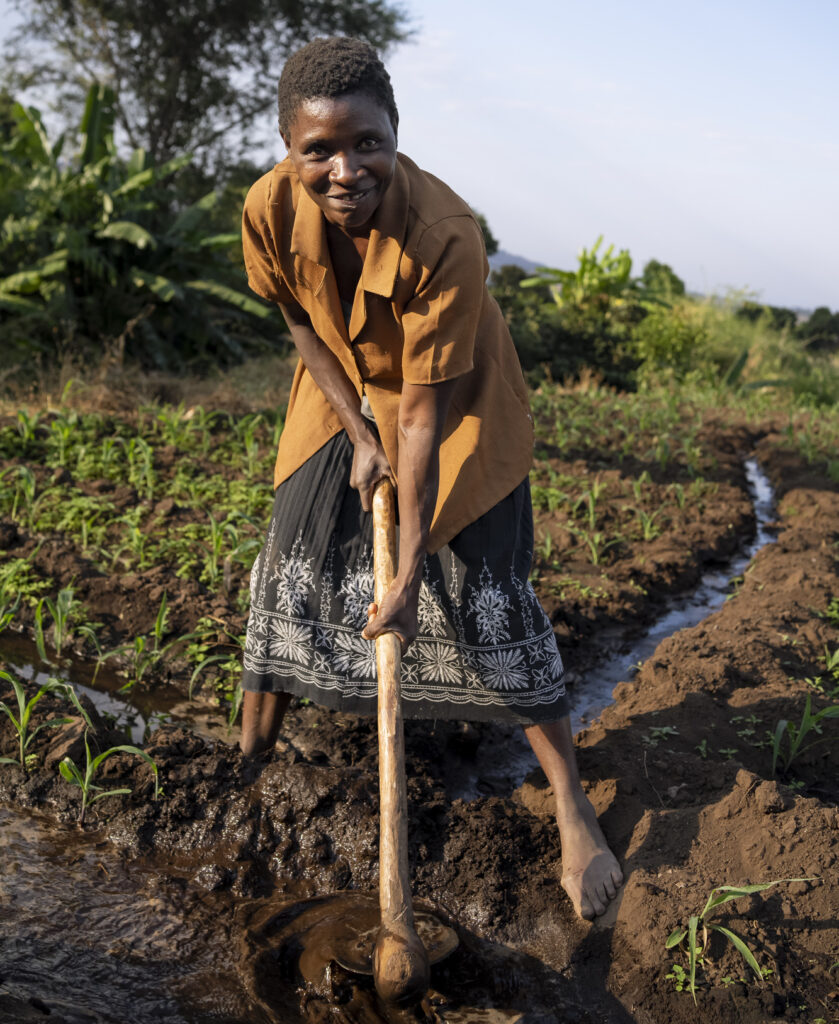
Margaret Kanada from Khomba irrigation scheme in Ntcheu, Malawi works to irrigate her plot using hand tools. Photo credit: Conor Ashleigh
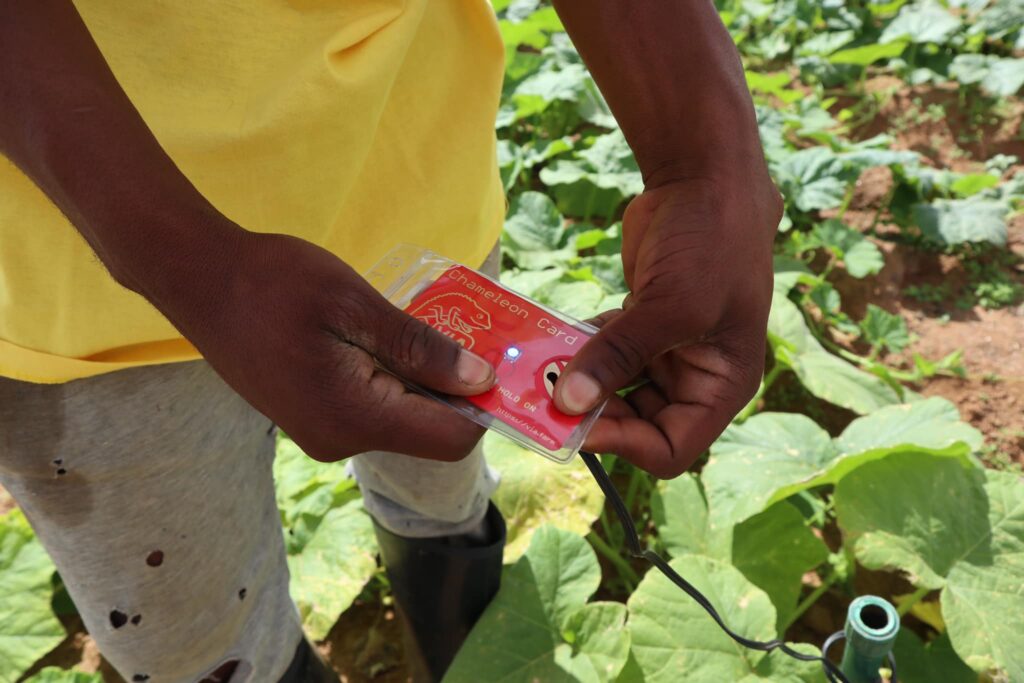
In order to do this, VIA has developed a soil water and solute monitoring system, called the Chameleon, designed specifically to fit the smallholder irrigation sector. The initiative claims to have developed a world-first soil water sensor that is buried in the ground and attached to a light, showing blue when the plants have plenty of water, green when things are okay, and red when they need a drink. This sensor gives a measurement of soil suction which is related to the stress experienced by a plant. Unlike a water content reading, the interpretation is independent of soil type. The data from the Chameleon sensor can be collected manually, through an App, or with a Wi-Fi enabled reader.
Farmer from Sand River in South Africa checks soil water using Chameleon Card.
VIA’s focus is the smallholder irrigation sector, where there is a long history of institutional failure. Their work is currently implemented in South Africa, Malawi, Mozambique, Uganda, Ethiopia, Pakistan, Viet Nam, Indonesia, Australia, Zimbabwe, Tanzania, and India, partnering with governments, research institutions, NGOs, and private sector organizations. Since its implementation, VIA has seen impressive results. According to the initiative, surveys of thousands of farmers who have used the products report that 71% saved time, 60% improved on-farm income, and 49% improved off-farm income. More specifically, a study of 183 farmers in Tanzania reported that 75% of users increased yield and 90% of users reduced water use. The same study of 175 farmers in Malawi reported 66% of users increasing yield and 71% reducing water use. Impressively, 41% of users report reduced conflict over water.
But there’s nothing better than hearing directly from the farmers themselves. “Thanks to an introduction to upland crops and the Chameleon card, I was able to continue farming on my paddy land for 4 months in the dry season,” one farmer in Vietnam stated. “Otherwise I would have to find a part-time job elsewhere.”
Written by Sarah Souli Photos provided by The Virtual Irrigation Academy
Country: Australia
Around the world, small family farmers face extreme challenges. These farmers and their families account for two billion of the world’s unbanked, and the fruits of their labor can be counted in a few meager dollars – just $2-3 USD per day. The increased perils of climate change, crop spoilage, economic and political corruption, unreliable record-keeping, and limited access to farming inputs, equipment, financing, and extension services all serve to keep farmers in a perpetual cycle of poverty. Many farmers in emerging markets are unable to maximize their farms’ potential, resulting in up to 50% lost produce. They face significantly restricted market access and rarely have access to information on best practices that would allow them to get the most out of their land.
AgUnity is a pioneering technology company dedicated to enabling smallholder farmers and their co-operatives to lift themselves out of poverty. Their Field Apps are designed to work in offline and low-bandwidth environments, and have also been designed for first-time, low digital literacy users. Easy to follow geometric shapes, images, and colors translate into an experience that can be used by most farmers, anywhere in the world, without prior tech background. Their co-op Manager, free for co-operatives to use under a “freemium” business model, enables co-operatives to manage members’ data, as well as transactions, regulatory compliance data (including EUDR & CS3D), and certificate data (including Fairtrade and Organic). By converting traditional, paper-based systems into efficient, digital records with these tools, AgUnity facilitates better decision-making, enhanced productivity, and access to global markets. According to AgUnity, their solutions offer end-to-end traceability and management capabilities, directly empowering farmers with the technology to improve yields, reduce waste, and achieve fair compensation for their produce.
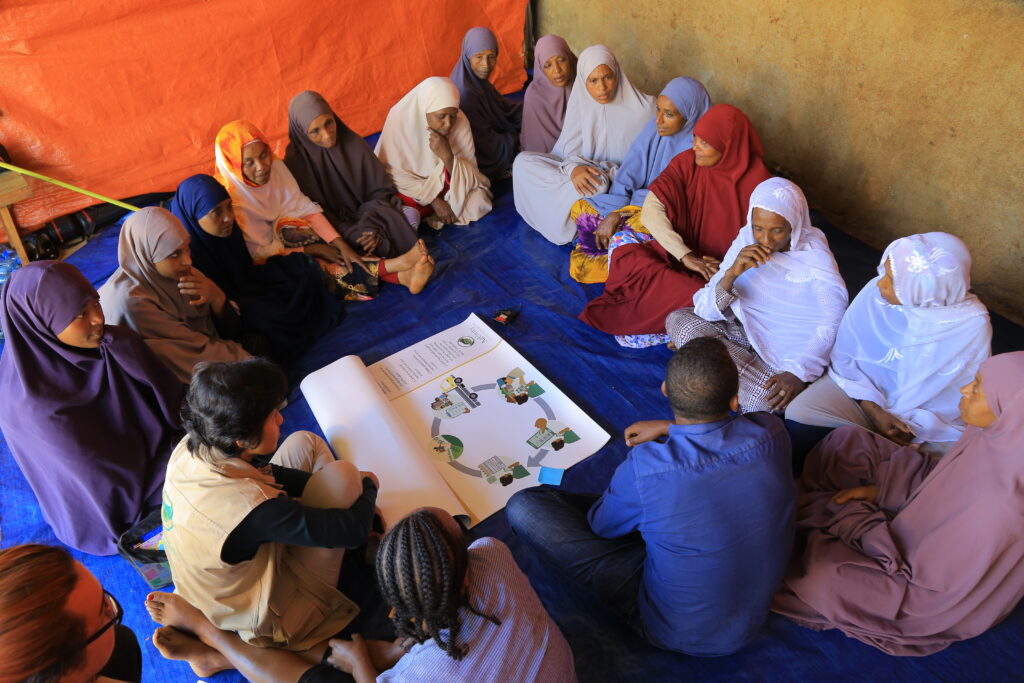
image by Agunity
According to the initiative, they are also committed to farmers’ data sovereignty – setting them apart from other organizations. Their technology ensures that farmers and their cooperatives maintain complete control over their agricultural data. This empowerment allows them to leverage information for better crop management, fulfill compliance requirements effortlessly, and negotiate more equitable terms in the marketplace. With tools designed to safeguard data integrity and security, farmers enjoy newfound autonomy over their professional destinies.
AgUnity has improved farmers’ lives in three critical ways: a digital identity and credit history for smallholder farmers that allows them to access learning materials and a marketplace; increasing operational efficiency of co-operatives by replacing inefficient paper-based systems that are often subject to corruption and graft; and providing a pathway for farmers and co-operatives to be compliant with international regulations such as the EUDR and CS3D through the easy collection and management of the required data (e.g., GPS coordinates). To date,
AgUnity claims to successfully have completed over 15 pilot projects with smallholder farmers across various crops, including wheat, coffee, cocoa, vanilla, rice, and fish, in more than 9 countries. These countries include Kenya, Ethiopia, Ghana, Tanzania, Uganda, Brazil, Indonesia, Papua New Guinea, Sierra Leone, Trinidad and Tobago, and the Solomon Islands.
The initiatives have yielded positive outcomes. Farmers have experienced increased incomes, with some seeing up to a threefold increase from one season to the next. Additionally, these programs have enabled farmers to access new buyers for export, and enabled a transition from paper-based and Excel systems to digital platforms.
They are currently running six official projects to deploy their comprehensive suite of digital solutions. These projects encompass the AgUnity Data Farm, Co-op Manager, Field Apps, Cropslist Marketplace, and the Tracingly traceability solution. They are being implemented in Ethiopia, Ghana, Kenya, Uganda, Tanzania, and Brazil.
With a target market of 2 billion farmers worldwide, AgUnity is providing a global tech platform that could touch the lives of countless people across the globe. This is just their beginning.
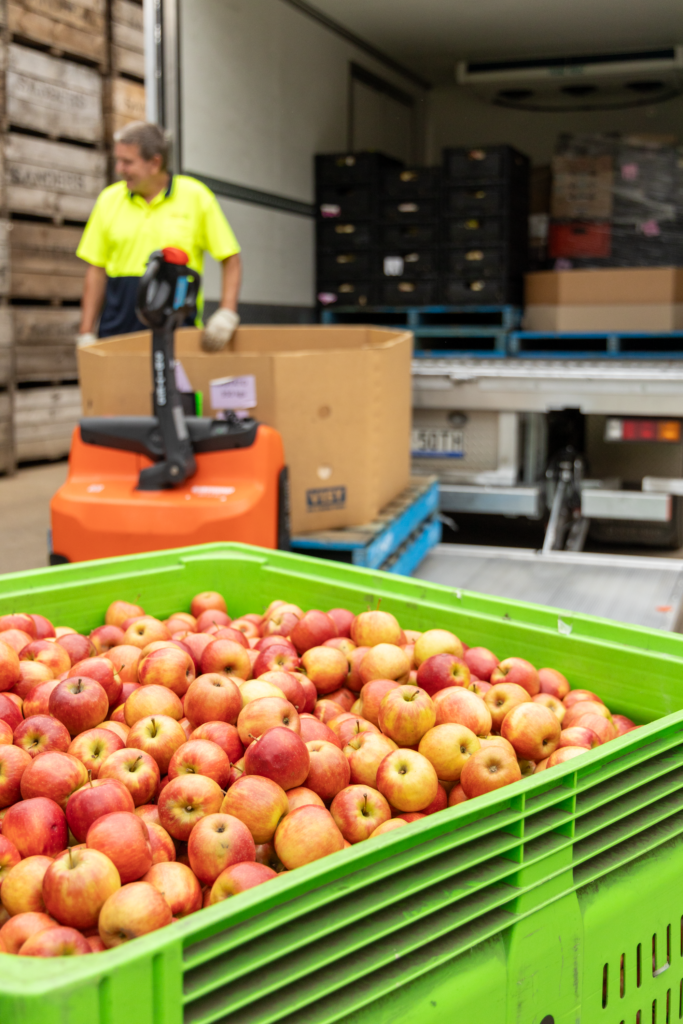
Australia’s largest food rescue organization, delivering food free of charge, is set to extend its reach from the shop floor to the farm gate as it steps up its bid to rescue and repurpose surplus food from farms. SecondBite has been delivering surplus food to people experiencing food insecurity in every state and territory of Australia since 2005, rescuing 25 million kg of unsold, edible food in Fiscal Year 2023 alone. But the surplus it distributes from markets, shops, supermarkets, and other retail outlets represents just 7% of total food waste in the country. Now the organization is setting its sights on the 40% of fruit and vegetables discarded at the farm gate, the bananas that are slightly too bent for supermarket standards, the apples with some hail damage, and potatoes that have retained too much water and wouldn’t make the grade with the buyers. The list is endless.
SecondBite says that it is these fruits and vegetables that are needed most to help support the healthy food requirements of vulnerable Australians, and is in discussions with its farming clients and philanthropic and freight partners to launch the Farm Fresh Project as a pilot.
It’s not the first organization to distribute food surplus in an effort to redress the double hit of food waste in Australia as a significant contributor to climate change and the nation’s growing food insecurity. But SecondBite’s expertise in national food logistics, operations, food rescue, storage, and redistribution could be a vital contribution to the national program and save more food from farms, regional hubs, wholesalers, and packing and redistribution centers to meet shortfalls in supply and increasing demand. Using its existing retail food rescue model, SecondBite aims to provide a regular stream of fresh produce into the food relief supply chain with some of Australia’s largest growers, manufacturers, and freight companies.
photo by SecondBite
Like so many Western countries, the disconnect between home-grown food in an export-oriented agricultural industry and the food needs of the people who live there is huge. Australia produces more than enough food for its population of 26 million people, according to End Food Waste Australia, yet nearly 30% of that food is wasted. And the annual 17.5 million tonnes of CO2 in waste contributes significantly to environmental stress; Australia is responsible for some of the world’s highest mammal extinction rates, according to the World Wildlife Fund because of its shift in use of its land for agriculture.
The immorality of a wasteful food system doesn’t just affect the 48% of Australians who, according to the SecondBite Food Insecurity Survey Report 2023, admit to cutting back on or skipping at least one meal a week due to economic/financial reasons; the damage to localized ecosystems and stress on water supplies contributes to the dangerous increase in the effects of climate change in Australia.
It’s a win-win solution to food waste; SecondBite says that its pilot project which aims to rescue 500,000 kg of bananas every year, could save an estimated 950,000 kg of CO2e per annum. Even without an increase in bananas redirected from landfill, over 10 years that’s 9.5 million kg of CO2e prevented from entering the atmosphere while helping to improve the health and wellbeing of people needing food relief in Australia.
The Challenge: The methane threat on our plates and in our glasses
Like most ruminants, cows burp and fart a lot, the result of digesting the tough, fibrous plants they eat. Especially the burping results in high methane emissions, a bi-product of one of nature’s most ingenious mechanisms; the ruminants’ step-by-step system of multi-stomach compartments that converts grass and other plants – inedible to us – to the nutritious, tasty mixes of proteins and fat that end up on our tables.
Nominate yourself or someone else, it takes three minutes and could change the world!