Thriving Foodscapes takes a neighborhood-scale approach to food systems change—shaping everyday places to bridge the gap between individual behavior change and systems change.
Spearheaded by Danish urban strategy and design consultancy Gehl, in partnership with the Steno Diabetes Center and supported by Novo Nordisk’s Cities for Better Health program, the initiative aims to challenge the status quo of city development to promote better public health and environmental sustainability.
According to the initiative, urban design can limit access to healthy food in many cities all over the world. Thriving Foodscapes shows how a neighborhood’s public life and public spaces, including food outlets, can deter healthy eating habits and aims to locate and dismantle the barriers.
While most food interventions focus on what people eat, Thriving Foodscapes focuses on where and how they encounter food, and what social and spatial conditions shape their food choices. Its comprehensive open-access toolkit consists of 14 modular methods aimed at helping city leaders, practitioners, and communities to effectively map and enhance the physical, social, and cultural dimensions of access to healthy and sustainable food.
Gehl – Foodscapes – South London: Youth citizen scientists observe and document their everyday foodscape in South London. By engaging communities and key stakeholders, Thriving Foodscapes uncovers opportunities for the built environment to better support healthy routines.
A key focus of the initiative is on disinvested and marginalized communities, which often face significant challenges in accessing healthy food. The initiative says it can empower residents to actively engage in shaping their food environments. The mission is to improve the quality of the built environment to better connect people to healthy, affordable, and culturally relevant food. It might mean redesigning a streetscape to improve visibility and hygiene conditions for market vendors, adding public seating near food hubs to encourage healthy food habits, or investing in higher-quality transportation infrastructure to strengthen food access. Access to quality food, particularly for those managing lifestyle-related conditions like cardiovascular disease and type 2 diabetes, not only promotes health equity but also strengthens community cohesion and resilience.
Gehl - Spor10 - Grand Opening - Copenhagen, Denmark: In 2023, alongside the World Congress of Architecture in Copenhagen, a Thriving Foodscapes exhibition was launched along with a three-day masterclass with urban planning and public health leaders from six cities. Spreading awareness, sharing knowledge, and building capacity are key to advancing community-centered food systems.
Urban environments often promote diets high in ultra-processed, high-emissions foods, especially in low-income, underserved neighborhoods. The initiative aims to make good food more visible, accessible, and desirable in schools, markets, and local communities. Thriving Foodscapes uses data to transform complex, systemic challenges into human stories which reveal limited access to healthy food options, highlight the social value of food places, and inspire locally owned strategies which can make a real difference. Reimagining underused public spaces as community gardens, neighborhood free-food fridges, spaces for communal dining, and healthy street vending zones, the aim is to normalize access to good food for everyone in their everyday environments.
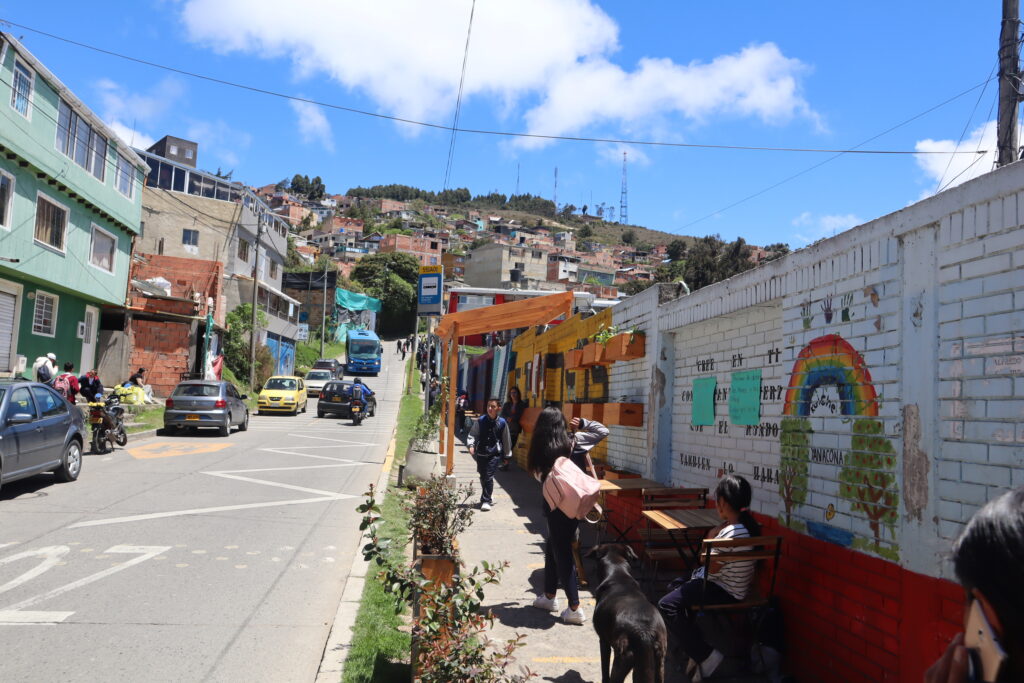
Gehl – Bogota Foodscape Pilot – Bogota, Colombia: In partnership with Bogotá’s Health Secretariat, Gehl piloted a school food environment intervention to improve access to healthy food for children. Building on a 2020 Foodscape Assessment, the project explored how public realm improvements can support healthier habits, reinforcing Bogotá’s commitment to tackling childhood obesity and promoting health equity.
Thriving Foodscapes demonstrates that its approach is scalable; pilot projects in Bogotá, Colombia, Philadelphia, USA and Copenhagen, Denmark already showcase how open-source tools, cross-sector collaboration, and a place-based approach can be effectively translated into real-life changes. Addressing these intricate interconnections between human health and planetary boundaries, the initiative claims, can bring about the transformation of food systems across the world.
Written by Gilly Smith Photos provided by Thriving Foodscapes
Country: Denmark
Traditional pesticides and insecticides are crucial for global agri culture but have huge drawbacks. Can insect sex pheromones be part of the solution?
COPENHAGEN, Denmark
On an ordinary workday in 2013, Irina Borodina, a professor of biotechnology specialized in yeast cells, was sitting in her office at dtu Biosustain, a research center focused on sustainability and biotechnology, in the northern suburbs of Copenhagen. When her colleague Scott Harrison, the head of the center’s analytical department, barged through the door and started drawing something on the whiteboard, there was no indication this day would result in the launch of BioPhero, a company pioneering the production of pheromones for pest management. Harrison had drawn a molecule, though it looked more like the number eight.
“Irina, can we make this?” he asked her.
“Sure, we can do anything with our technology. It’sonly a question of time and money,” Borodina said. “But what is it?”
“It’san insect sex pheromone.”
Harrison wasn’t the type to barge into offices, draw on his colleagues’ whiteboards, or talk to them about insect sex. But this was a big deal: this pheromone could potentially revolutionize global agriculture. If the molecule could be reproduced with fermented yeast cells—Borodina’s specialty—it could be a breakthrough for environmentally friendly insect control. Borodina was in. A week later, they flew to Athens to discuss the idea with a Greek colleague, Dimitris Raptopoulos, who’d been researching these sex pheromones for years.
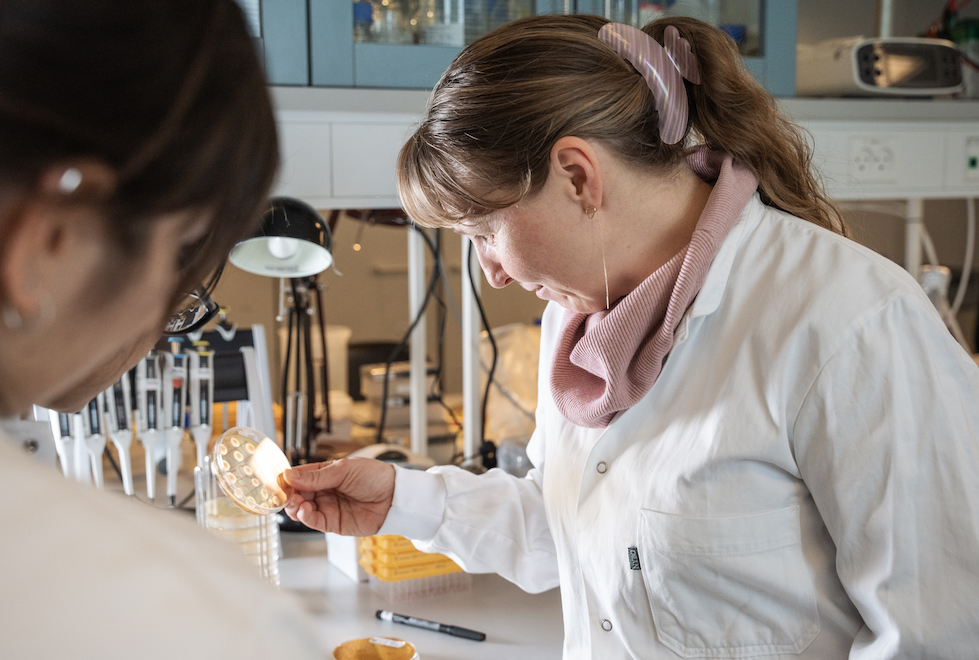
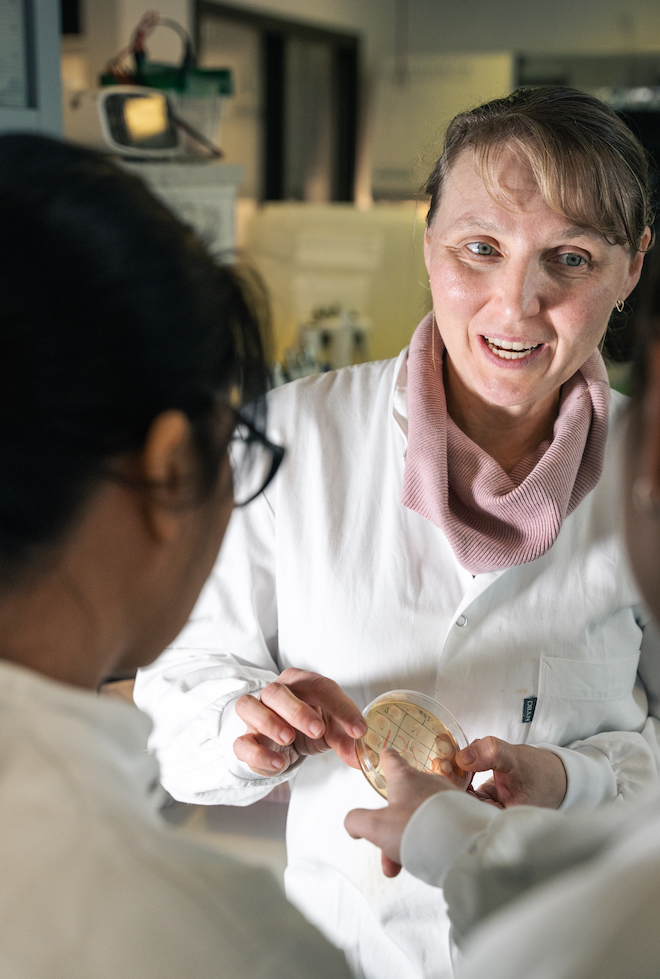
Professor Irina Borodina looks at yeast trial results in the strain development lab.
From greenhouses to open crops
The idea that would lead to the founding of BioPhero was simple, and it wasn’t new. When female insects are ready to mate, they naturally secret pheromones, chemicals that insects and other animals use to communicate with each other, to attract the male insects. If farmers could somehow secrete the same mating fragrances in their crops, they’d be able to confuse the male insects so much that they wouldn’t find the females. The reproduction wouldn’t happen and the insects would have been biologically controlled, rather than with the usual chemical pesticides.
Some organic fruit farmers already employed the mating disruption technique. They used small amounts of chemically produced pheromones in orchards and greenhouses, either by using dispensers or puffers, or by using water traps. By releasing exactly the same pheromones in the air, the farmers would be able to disrupt the communication between the calling females and the males.
Mating disruption worked well, but the high cost of chemically synthesized pheromones prohibits the applications on large areas of row crops. Therefore it had mainly been used to control pests in fruits and nuts and to control the gypsy moth in forestry. Because of the prohibitive price of chemically produced pheromones, it wasn’t financially sensible to saturate the air on open crops or greenhouses, even for farmers that charged a premium for their products.
“If we could produce pheromones by fermentation instead of chemical synthesis, we’dbe able to lower the cost so much that pheromones could be used on a much larger scale, also in row crops. The potential was huge,” Borodina says.
At her laboratory in Copenhagen, Borodina got to work with her team. Her initial job was to reproduce the active ingredients, the pheromones, which would then need to be formulated for use in the fields. With the help of several grants, colleagues, and collaborations with other experts, the company BioPhero started operations in 2018, five years after she had first heard about the sex lives of insects.
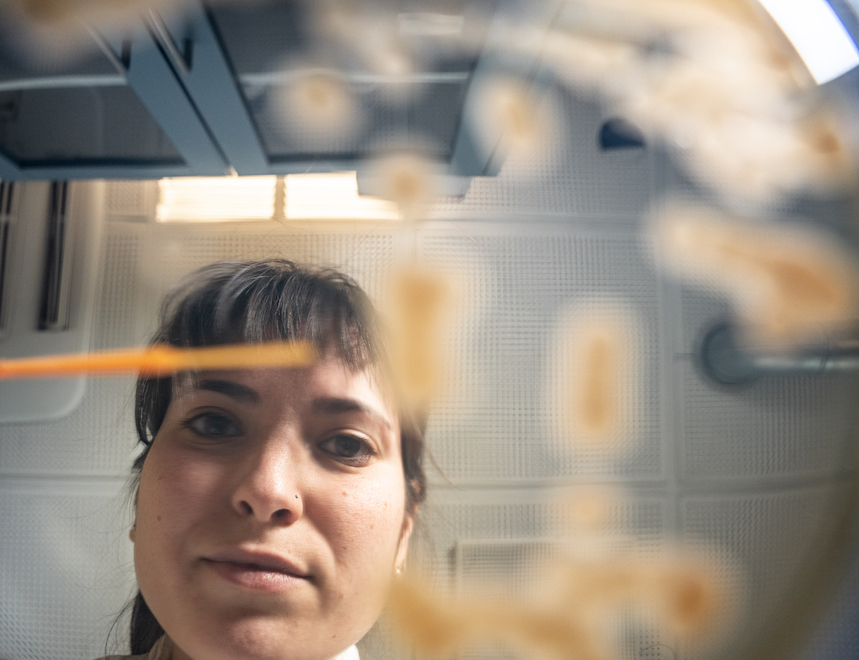
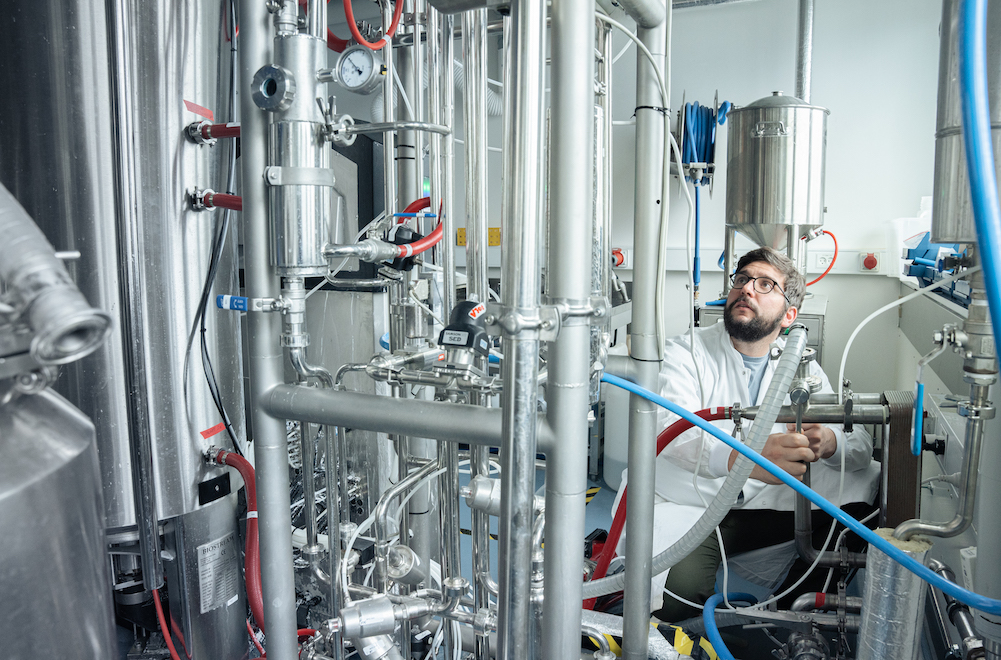
Strain Engineer Arian Belmonte Del Ama checking the result of a yeast strain experiment in the strain development lab.Fermentation Assistant Ede Balázs Mán adjusts the large bioreactor used to scale up the fermentation process ahead of commercial production of pheromones.
A global human rights concern
It’s hard to estimate how dependent global agriculture is on pesticides and insecticides, and whether or not the world needs pesticides to feed its quickly growing population is a hotly debated topic. While agriculture groups argue that more than half the world’s crops would be lost due to insects, diseases and weeds would be lost without crop protection, sustainability experts and NGO’s argue that the chemical crop control could easily be swapped for greener ways of farming. All sides agree on the need for some form of pest management.
“According to some studies, there’dbe up to a 40% production loss if farmers weren’table to protect their crops against plant diseases and insect plants,” says Joachim Offenburg, a senior researcher on biological pest control at the University of Southern Denmark.
But the widespread use of chemicals in agriculture is highly problematic. According to estimates, 4 million tons of agricultural pesticides are spread each year, a number that has grown by 80% between 1990 and 2017.
United Nations experts have called the excessive use of pesticides “a global human rights concern.” In a 2017 report presented to the Human Rights Council, two United Nations experts provided research that showed that an estimated 200.000 deaths each year—99% of them occurring in developing countries—are linked to acute poisoning caused by pesticides. They also pointed to research documenting how chronic exposure to pesticides can be linked to cancer and other diseases, hormone disruption and developmental disorders. Furthermore the UN experts warned that the excessive use of pesticides has contaminated soil and water sources, which threatens animals, biodiversity and the overall ecosystem.
Similar concerns have caused many countries to regulate the use of pesticides. The outdoor use of many chemical pesticides, especially insecticides such as neonicotinoids which pose a high risk to bees, were banned in the EU in 2018, a ban that was expanded in 2023. But EU countries are still issuing emergency authorisation for their use in exceptional cases, and the insecticides are still being used in many developing countries that have weaker regulations.
The regulatory issues are just one challenge that farmers dependent on pesticides are facing. Insects are increasingly developing pesticide resistance, and there’s a growing awareness of pesticide residue in food, which has caused resistance to the use of pesticides among many consumers.
“The certifications are being phased out more quickly than new pesticides are being approved, there are fewer and fewer pesticides available on the market for farmers, and the insects are developing resistance to the insecticides,” explains Offenburg. “That’s created a growing demand for alternatives, and especially for biological solutions.”
In addition to facing the same challenges as traditional insecticides, such as insect resistance, biological insecticides must grapple with their own issues. One of the biggest issues is that they often need to be deployed in tandem with other chemical or biological solutions, as they aren’t always as efficacious as conventional chemical pesticides.
Irina Borodina speaks with colleagues at the lab..
The demand for eco-friendly pest contol
In 2022 BioPhero was acquired by the agricultural chemistry company FMC Corporation for around $200 million. That one of the world’s largest pesticide manufacturers has invested in a company focused on biological solutions shows a wide belief in the importance of sustainability. It’s not just new policy, it’s also changing customer demand.
At the time of the acquisition, BioPhero was working towards launching four products, aimed at cotton bollworms, diamondback moths, rice stem borers and fall armyworms, which are used in row crops like corn, soybean, cotton and rice. Borodina chose to focus on these products because they address important pests in large crops, where there’s a big need for sustainable control methods. The scientists are now working on producing other pheromones, targeting key European row crop pests, among others.
The products are currently being tested for field use on all continents and in the different target crops. The main markets will be the row crop markets worldwide, with an initial main focus in Asia and Brazil. BioPhero’s products are already being used by farmers, either through trial permits for testing products, or through emergency permits issued when pests suddenly became resistant to chemical solutions.
So far, the results have been positive. One trial study in rice fields in Bangladesh, conducted by the company Russel IPM which had formulated pheromones produced by BioPhero, found that the insecticides could be completely replaced with pheromones and microbials. Furthermore, the insecticide-free protection gave a 40% higher rice yield than traditional insecticides. Borodina was almost as stunned at the results as the farmers, whose livelihoods and environment can be deeply impacted by the outcome. “That is a huge difference for these farmers, especially because their profit margin is often less than 20%. If they then get 40% extra, that is basically just pure profit. It is great for them,” says Borodina. “I hope we will see the products being used in their final, approved form this year. We want to see impact, and we want to see change.”