It took the passing of his mother in Southern Nigeria’s rural farming community for award-winning environmentalist Tunde Adeyemi to create a social enterprise, D-Olivette, dedicated to tackling energy-poverty, agricultural, and climate challenges.
At D-Olivette’s core lies the 1,000,000 Closed-Loop Farms Project, an initiative that transforms over 100 types of organic waste into livestock feed, fertilizer and clean energy, and was inspired by what Adeyemi discovered in the farming community where he grew up.
Adeyemi had turned his back on the gritty reality of farming life in Nigeria for Lagos University and better prospects. But it was when he returned home for his mother’s funeral that his research into her premature death unearthed some startling revelations.
As he visited her farm, he realized that her issues reflected the daily experience of farming life in Southern Nigeria: the significant postharvest losses, piled high and polluting the farmland, the filth of the cassava processing area, and the use of firewood for processing were causing harmful emissions. He saw that this toxic cocktail of waste, firewood smoke, and even counterfeit fertilizer probably contributed to his mother’s premature death from respiratory failure.
He visited thousands more farms in the area as part of his quest to understand the circumstances around her death, and found similar hotspots for greenhouse gas emissions. Methane-producing livestock were farmed with no sign of effective waste systems, and without access to clean energy or electricity, he found many communities trapped in a cycle of pollution, poverty and disease. According to the UN Food and Agriculture Organization (FAO), African farms produce over 1 billion tons of agricultural waste of which less than 5% is utilized. Nigeria generates about 25% of this waste. Moreover, energy poverty affects over half of Africa’s population, with nearly 700 million relying on traditional fuels—causing over 500,000 deaths annually, primarily among women and children.
These conditions are prevalent not only in Africa but in similar farming communities globally. Determined to use his professional experience to make real change in his own farming community, Adeyemi established D-Olivette, a clean-tech social enterprise that has the potential to empower millions of farming communities worldwide.
D-Olivette states its innovative AI-powered biodigesters use cutting-edge, 100% natural enzymes to accelerate and enhance the digestion process, producing biogas from farm waste to serve as clean energy for farming communities, as well as organic livestock feed and fertilizer as byproducts. The initiative’s Kitchen Box transforms organic waste into clean cooking fuel and bio-fertilizer, while The Bio-Tank provides clean energy, livestock feed, and bio-fertilizer. Tackling the waste issues that Adeyemi’s mother would have faced, D-Olivette’s Bio-360 AI Chatbot now helps farmers across diverse linguistic and cultural landscapes optimize waste into clean energy and food.
Each year, D-Olivette reports they provide clean energy and sustainable agricultural inputs to over 80,000 farms and homes and mitigate over 50,000 tons of carbon dioxide (CO2) emissions. The initiative believes they are on track to impact 1,000,000 beneficiaries by 2030, fostering resilience and sustainability in underserved regions.
Written by Gilly Smith Photos provided by D-Olivette
Country: Nigeria
It’s a catch-22: Land-based agriculture produces 97% of Africa’s food, yet two-thirds of currently productive cropland is becoming infertile from unsustainable practices. This worsens as farmers clear more forests for planting and burn crop stubble post-harvest. In Nigeria, the problem is particularly acute because some 80 million households also burn biomass (forest wood, crop stubble, and cow dung) for energy. Like gas thrown onto a fire, biomass usage further accelerates soil degradation and deforestation, which in turn drives erosion, flooding, and desertification. In the midst of this, 282 million people in Africa suffer malnourishment due in part to crops grown on nutrient-depleted farmlands.
Such a problem does not have a one-stop solution. That’s why the Food Innovation Nervecenter is combating this agricultural conundrum from a multi-faceted perspective: through a constellation of regenerative teaching growspaces, community-focused radio stations, solar mini grids, and innovation labs all integrated into a single holistic model to drive food abundance and avert the climate crisis. The Food Innovation Nervecenter has chosen to concentrate their work in southwest Nigeria because it serves as a microcosm for the issues plaguing the continent at large. First, the local population is equally split between urbanites and rural people. Second, extreme poverty and food insecurity are present (which, according to the initiative, drive the poorest rural residents to seek nutrition from eating mice and rats, leaving them vulnerable to rodent-borne diseases). Third, disorganized supply chains make farmers ill-equipped to predict demand. As a result, almost 75% of crop harvests are wasted, being food which could nourish the people most in need of nutrition. Despite this overwhelming waste, subsequent harvest cycles further lock farming communities into even more land degradation and malnutrition. What if the nutrients from these unsold harvests — that currently end up in dumps and landfills — could be revitalized into feeding malnourished households or restoring nutrient-depleted soils?
To transform this status quo, the team is currently implementing the FoodNerve vision, a blueprint for mobilizing communities to take immediate and concerted actions that sustainably nourish their growing population without further converting forests into agricultural land. Their larger goal is to deliver climate-resilient agrifood systems that will adequately nourish Africa’s projected 1.7 billion population, advance rural livelihoods, regenerate 35 million hectares of agricultural land and plant 15 million fruit and forest trees by 2030. Their model is based on grassroots partnerships built on trust, and they work closely with local communities.
photo by FoodNerve
FoodNerve has identified four ways to regenerate degraded farmlands, restore ecosystems, shift dietary habits, reduce food losses, and transition to efficient energy sources. First, at the core of their project is education: identifying indigenous and traditional soil health practices (many of which are highly regenerative, and that currently are, or have previously been, implemented regularly in Africa) and working with local communities to scale these sustainably profitable practices alongside modern planetary health techniques. Through teaching growspaces, arboretums, and broadcast medium, communities are being mobilized against bush-burning and to restore nutritious ecosystems, essentially changing worldviews. Their arboretums also germinate fruit-tree seedlings for communities to plant so that micro-nutrients can be accessed through fruits, for free by everyone within five years. Second, they are building commercial compost facilities to enable and teach rural farms to return biomass and night soil to the earth as mulch or compost after harvest. By composting crop stubble, uneaten food waste and cow dung, nutrient-dense soil is created which minimizes the need for inorganic fertilizer — thereby reducing farmer’s costs. Third, their Energy, Water and Utilities Access Cooperatives help rural communities switch to low-emissions energy sources like solar mini grids and water conservation techniques. Finally, they are reducing supply-chain linked food losses through their innovation lab and market exchange.
According to FoodNerve, their focus on grassroots partnerships and collaboration across the food systems value chain sets them apart from other agriculture-based initiatives in Nigeria. They note that external attempts to solve community problems have failed to achieve sustained change, due to the lack of incentives for indigenous communities to update their culture and traditions. Instead, FoodNerve approaches a systemic problem with dignity for, and interest in, the people who are the most impacted by it.
Africa is home to some 33 million small-scale farms, which provide around 70% of the continent’s food supply.1 Across the continent, 50% of all Africans till, sow and cultivate the land. They are the backbone of the agricultural sector, and yet, the vast majority of them live in poverty. Unfortunately, lack of resources, education, economic inequality, and climate change are just some of the factors that keep small-scale farmers locked into a vicious cycle of impoverishment.
The Nigeria-based social enterprise Africa Wealth Initiative (AWI) has long been aware of this problem. Their latest initiative, AWI Agricultural Venture, creates sustainable collaborations between small-scale, rural farmers and solution providers in the agriculture value chain. Ultimately, the goal is to create a viable food system that uplifts and empowers farmers through the ups and downs of contemporary farming. To achieve this, AWI has focused on a two-pronged solution: firstly, renewable energy for food production (called Renewable Energy Centers), followed by sustainable food distribution (dubbed Farm2Table Marketplace).
photo by AWI
AWI is setting up renewable energy centers right next to farms. Non-renewable sources of fuel, like fossil fuels, firewood, and charcoal, are typically used in contemporary farming practices across Africa. AWI’s renewable energy instead uses agricultural waste as a fuel source. The centers are clustered around farmers who will be able to transform their own agricultural waste to generate fuel, creating a circular loop. The energy is used to power facilities that process the food. As the processing facilities are so close to the farms, produce can be pre-processed and processed quickly, reducing the time between harvest and consumption. With conventional processing practices, produce often undergoes longer transportation and storage periods, which causes food to spoil and waste, and can also lead to decreased nutritional value.
In addition to electricity, AWI’s renewable energy centers can create bio-fertilizer, bio-char, and bio-ash. All of these fuel by-products can be used to improve soil quality, which can yield more produce that is more resilient in the face of climate extremes — and more produce means more money for farmers. Utilizing agricultural waste for electricity generation means that farmers will significantly reduce their energy costs. This is a circular economy initiative, which means farmers also get paid to exchange their waste for processing services, thereby creating additional income streams.
photo by AWI
Clustered renewable energy centers also offer social benefits, notes AWI. By consulting and working closely with farmers, AWI will encourage community empowerment, enhancing resilience and self-sufficiency; the hubs will also offer training programs for farmers of all ages. AWI also points to the potential health benefits: Air quality will improve, as the emission of pollutants in the air will be reduced, and focusing on regenerative agriculture and the use of biofertilizers will help farmers reduce their reliance on synthetic chemicals and pesticides.
With food production squared away, the Farm2Table Marketplace is a concept that naturally evolved to support agricultural commerce. AWI has created an online marketplace hub featuring two technical products: «Farm on your phone» for farmers to get support, and «Farm2Table» for consumers to directly purchase farmers’ produce by subscribing for one-time, weekly, or monthly delivery orders.
According to AWI, all this sets their initiative apart from traditional energy practices and offers a unique and sustainable solution for the agriculture sector. AWI Agricultural Venture is in its nascent stage but has a ten-year plan to achieve a larger scale, starting first in Nigeria before branching out to neighboring countries and eventually establishing themselves across the continent.
Across Nigeria, millions of people have been struggling to feed themselves as conflict, political instability, and climate change continue to directly impact what people can — and can’t — put on their plates. Nowhere is this more acutely felt than in northern Nigeria, where the cruel one-two punch of desertification and catastrophic flooding has decimated crop production and limited grazing land for livestock. According to the World Food Program, 4.4 million people will require food assistance in this region in 2024, and 1 million will face acute hunger.
It’s a massive problem that Auric Panache, a Nigerian agricultural technological company, is well aware of. They are directly assisting farmers in combating food insecurity linked to low agricultural productivity. According to Auric Panache, farmers in Nigeria typically produce much less per hectare than farmers in other regions of the world, due to poor access to inputs, inadequate extension services, and traditional farming practices that are ineffective in the face of extreme climate change. Their solution? Empowering farmers through cluster farming and smart agriculture technology.
Cluster farming has already been utilized in certain states in Nigeria to positive effect. It’s a form of agricultural production that brings together smallholder farmers to share resources and knowledge that might otherwise be siloed. The emphasis is on community: by diversifying production, sharing resources, and providing farmers with tools and knowledge that they would not be able to access on their own, it can help to reduce the risk of crop failure. For example, cluster farming can be used to promote sustainable land management practices, such as crop rotation and cover cropping; these solutions can help improve soil health and reduce soil erosion. By sharing resources and knowledge, farmers ensure that there is a collective solution to their productivity issues, not just a personal one — and this in turn can promote better community harmony and survival.
photo provided by Auric Panache
Smart agriculture technologies are data-driven technologies that can help farmers improve their productivity and resilience to climate change by providing them with data and insights that they can use to make better decisions about their farming operations. For example, these technologies can help farmers to optimize their use of water and fertilizer, and to identify and respond to pests and diseases early. Coupled together, cluster farming and smart agriculture technologies can collectively increase agricultural production. According to the FAO, cluster farming alone increases agricultural production by up to 30%, while a World Bank study found that smart agriculture technologies can help farmers to increase their yields by 10-20%.
Cluster farming has already been successfully adopted in Ethiopia and Kenya, while within Nigeria, there are several organizations developing and implementing smart tech solutions for farmers. But according to Auric Panache, they are the only organization taking a holistic approach to combating food insecurity in northern Nigeria by bringing together these two solutions. Led by a team of experts with a deep understanding of the challenges and opportunities in the region, they are engaged with a variety of stakeholders, including farmers, local NGOs, and various government agencies.
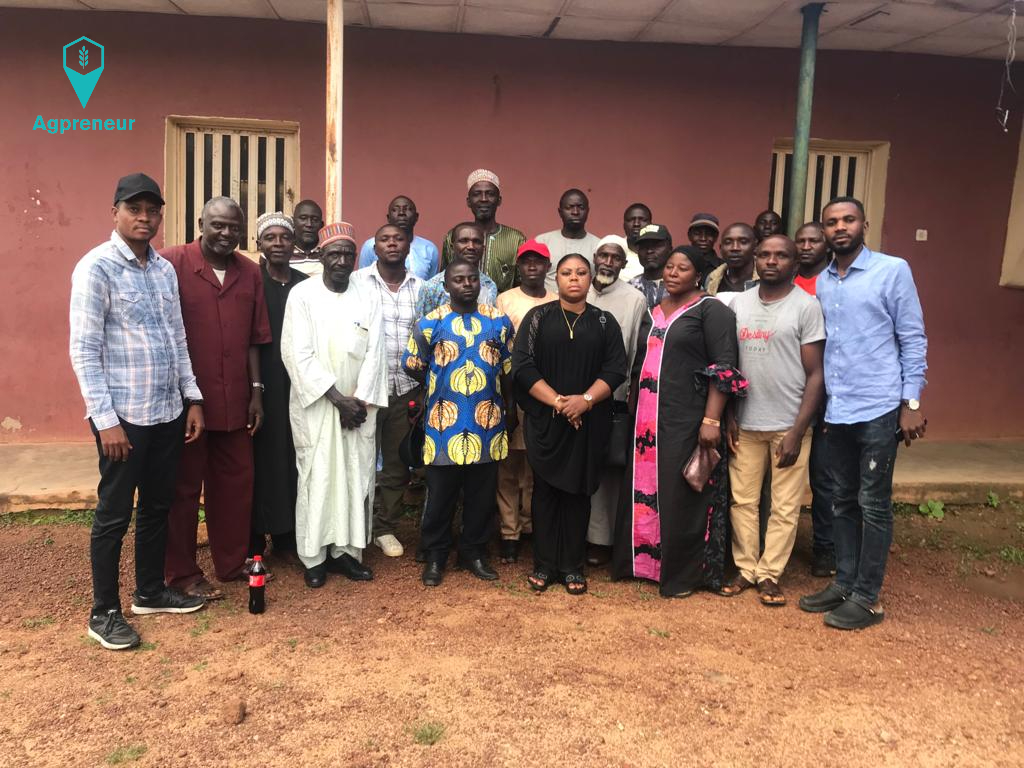
How are we supposed to feed a growing population as inequality continues to rise? By 2030, 660 million people are likely to still be grappling with hunger. It seems obvious to turn to farmers for solutions, but farmers themselves are often in extremely precarious financial and environmental situations. Agpreneur, a Nigeria-based organization, is aiming to transform the country’s agricultural landscape by empowering farmers and agribusinesses through a holistic solution that addresses the sector’s core challenges.
Agriculture is an unwieldy and complicated industry, but Agpreneur has adopted a five-pronged approach to address the sector’s most urgent needs. At the heart of their model is AgCredit, a unique community-based lending system. In Nigeria, many farmers receive capital too late due to lengthy lender processes; misidentify key growth aspects needing funding; spend capital on non-impactful items; and struggle to access profitable markets. With AgCredit, farmers self-organize into communities, and the collective responsibility within these groups acts as collateral, ensuring high repayment rates. This approach democratizes access to finance and fortifies community bonds: according to Agpreneur, over 1200 group loans have been processed to the tune of $2.5 million, with a 97% repayment rate.
With finances sorted, Agpreneur’s AgSchool steps in to share knowledge on sustainable and climate-smart farming techniques. By promoting practices like crop rotation, organic farming, and integrated pest management, the environmental footprint of agriculture is reduced, resources are conserved, soil remains fertile and waters unpolluted. Such a robust knowledge base helps farmers increase their yields, reduce losses, and adapt to dramatically changing climate conditions. Over 25,000 farmers across Nigeria have benefited from this program, according to Agpreneur.
Agpreneur is also leveraging technology to assist farmers to navigate the complex landscape of their sector. The use of AgSupply, a platform that allows farmers to place order inputs, facilitates farmers’ access to Agpreneur’s portfolio of products. When farmers have questions or concerns on anything ranging from market trends of produce to which type of pest control to use during harvest, they can use AgIQ, a chatbot providing instant assistance. These data-driven insights enable farmers to predict market demands, understand changing climate patterns, and adjust their strategies accordingly — thus ensuring minimal waste and maximum food production (which translates into economic benefits). Finally, AgTrade is a digital marketplace that bridges the gap between producers and consumers and ensures farmers get fair prices for their produce while widening their market reach.
photo by Agpreneur
In the vast landscape of agricultural initiatives, Agpreneur stands out for its offerings and for its ethos, approach, and unwavering commitment to the farming community. They are committed to placing farmers at the forefront of an agricultural revolution and aim to train over 500,000 farmers in sustainable practices by 2033, empowering them to contribute to a more sustainable and prosperous future for our planet. In this way, Agpreneur empowers the hand that feeds us — and we all benefit.
The Nigerian start-up takes on the problem of food spoilage at all steps of the production and distribution chain, one solar-powered cold room at a time.
OBINZE, NIGERIA
In the courtyard of Obinze Fruit & Vegetable market, haggling has peaked for the morning. Retailers, drawn from far-flung villages and suburbs of Imo state, southeast Nigeria and neighboring city of Port Harcourt, crowd the contours of the market, hunting for bargains and fresh fruits. On a wood-framed table, under a trading booth made of stilts, rusty zinc, and leaky tarpaulin, dozens of vendors display lettuce, Chinese cabbage, purple cabbage, green beans, onions, cauliflower, strawberries, broccoli, and cauliflower.
Three women form a semicircle—their waists draped in multicolored Ankara fabric with tiny square patterns—in front of a half-dozen raffia baskets stacked with tomatoes, dripping with juice. In the soft soil, the juice leaves warped trails that become caked as the morning sun intensifies over the city’s 950,000 residents. Owerri’s strategic position and flashy hotels have helped it emerge as the region’s hospitality hotspot, attracting the affluent from the nearby commercial cities of Aba, Nnewi, and Onitsha, as well as the oil city of Port Harcourt. However, thronging open-air green markets such as Obinze, key to feeding Owerri’s guests, still dominate the food economy.
Close to the exit gate at Obinze, a squad of loaders brings down sacks of cabbage from a semi-trailer in the open field. Thirty-two-year-old Muhammed Usman observes his stocks among the rising heaps. Before turning one of the sacks over, he slashes the strings holding its rim together with a blade. The bruised cannonball cabbage that rolls out emits a strong and warm stench: its outer layers have become rotten, loose, and yellowish; no longer green and clutchy.
“Many have been damaged,” says Usman, as he lifts one of the cabbages. He speaks in hushed tones, but his apprentice picks up on the cue, takes out a pair of pen knives, and starts chopping, layer by layer. A pork farmer approaches, eyeing the heap of rotten cabbage.
“It’s now food for his pig,” says Usman.
Helen, a vegetable seller at the Farin Gada Market in Jos, the capital city of Plateau state in Nigeria’s middle belt region.
Like the rest of the developing world, a large proportion of foods and fruits produced in Nigeria are lost before and after they reach the markets due to poor post-harvest handling. Fruits and vegetables are particularly vulnerable. Experts estimate that farmers lose 3.5 trillion Naira (8.1 million Euros) per year to food spoilage. The loss is significant.
“Fruit-farming and trading is a high-risk venture,” says Usman, who was losing around 300,000 Naira (700 euros) worth of fruits and vegetables monthly before 2016.
Adamu Usman, a fruit-seller at the Port Harcourt food market in Owerri, Nigeria.
Usman is hardly alone. Half a dozen farmers and fruit traders across visited markets and farm clusters recount various scales of their losses. Many have incurred heavy debts and losses that sent them out of business and farms.
As the losses festered, farmers and traders contemplated multiple remedies. Some settled for water sprinkling as a way of keeping the skin of the fruits fresh. But it was “midnight cooling” which became most popular. Overnight, leftover stocks were spread out on bare floors, rugs, mats, and tarpaulins at Obinze Fruit & Vegetable market and other outdoor markets. “This didn’t work out so well,” says Ibrahim Danladi, a fruit trader for six years.
Midnight cooling exposed the fruits to the moist night breeze, but the produce also attracted rodents, snakes, cockroaches, and ants. Aside from feeding, poisoning, and urinating on the fruits, these pests also defecate on them and burrow into the soft shells. As a result, the fruits and vegetables develop bad taste and odor, as well as discoloration and contamination. “There were a lot of complaints from customers,” says Danladi. “Many fruits perished, particularly green beans.”
The Farin Gada Market in Jos, in Plateau state, central Nigeria, is a regional hub that attracts vendors and buyers from several neighboring states. There is one ColdHubs unit at the market (center, background), but local farmers are asking for more.
Twenty-five years ago, neither Usman nor Danladi knew Nnaemeka Ikegwuonu, Executive Director of The Smallholders Foundation, an NGO in Imo state focused on sustainable agricultural development for rural farmers. The world of smallholder farmers, particularly in rural communities, captivated Ikegwuonu, now the CEO and founder of ColdHubs.
In 2003, he established a community radio station, which he used to reach out to farmers with advice. He traveled from one community to another, learning farmers’ opinions, sharing their concerns, and listening to their stories. Each episode of his “bush radio” broadcasting discussed his findings. He believed tackling the problems he had witnessed in those markets and rural communities required unusual action. After obtaining his Master’s degree in Development and Cooperation at the Institute for Advanced Studies of the University of Pavia in Italy, with promising job offers from Europe in the pipeline, staying in Nigeria to pursue a career in clean-cooling in 2015 seemed an odd decision to some in his community. “Some felt I was running mad at that time. It didn’t make sense to my sister,” he recalls.
ColdHubs storage rooms extend the shelf life of fruits and vegetables to 21 days, up from around two days. The social enterprise operates on a ‘pay-as-you-store’ subscription model, where farmers or traders pay approximately 48 cents for each 20-kilogram (0.46 euros ) plastic crate of fruits and vegetables stored overnight. Its reusable plastic crates with built-in hands have perforated edges to improve ventilation. Meat and seafood cost $1.3 per night (1.2 euros).
Each storage cold room cabin has a three-ton capacity. The energy produced by its 120-mm insulating panels, which are mounted on the cold room’s roof, is stored in high-capacity batteries. These batteries, in turn, recharge an inverter, which powers the refrigeration unit.
ColdHubs now manages 54 cold-room facilities across the country, a 12-fold increase since 2018. ColdHubs says it has reached over 5,000 outdoor food market traders and created jobs. In 2021 alone, 2,390 431 crates of fruits and vegetables were stored in 54 company-run cold rooms as well as 18 cold rooms built for and managed by small and medium-sized enterprises over 3,655 days. Each crate holds up to 20 kilograms (50 pounds) of food (multiplied by the number of crates and days to obtain the figures for saved food). Ikegwuonu estimates that approximately 62,700 tons of fruits and vegetables were saved from spoiling in 2021. The increased shelf life enables farmers to make more profits from sales and resist panic and cheap sales. “It’s a great help at a reasonable price,” says Usman.
A ColdHubs unit installed at Relief Market in Owerri, Nigeria. ColdHubs designs, commissions, installs, and operates “plug and play” cold rooms located at major food production and distribution centers in Nigeria, including farm clusters and outdoor markets.
Ikegwuonu and his team knew from their days in radio broadcasting that getting the technology ready would be a struggle.
Esther Nnwakwe, a ColdHubs cold room operator and attendant, sorts crates of fruits and vegetables at the ColdHubs unit at the Relief Market in Owerri
However, driving mass adoption, the lifeblood of ColdHubs, required even more delicate measures: Farmers had their own rigid ideas about fruit and vegetable storage, some of which were deeply rooted in culture and experience. Spiritual beliefs, linked to the goddess of fertility and fortune, make farmers accept post-harvest losses as fate.
“There is already a culture in place,” says Terrence Isebe, ColdHubs’ chief financial officer. “It takes a lot of effort and credibility to move them away from that culture. It takes a lot of convincing and practical evidence to win their hearts. It happens gradually.”
Farmers in northern Nigeria, for example, have long preferred sun-drying tomatoes, despite this practice posing a significant health risk. Farmers slice ripe tomatoes and spread them out in the sun or on a smoking hearth to dry after harvest. The dried carcasses are stacked and sold at markets in baskets, nylons, and sacks.
Mohammed Sani, a vegetable farmer and seller at the Deidei Market in Abuja, Nigeria. Sani uses ColdHubs to store his produce.
While ColdHubs set out to improve the longevity of fruits and vegetables, they soon discovered that consumers had a strong addiction to spoiled fruits and vegetables, or at least to their lower price. Spoiled fruits can be easier to sell than fresh ones. “It is usually much cheaper. But cheap is not the same as healthy,” says Augustine Okoruwa, a food technologist with the Global Alliance for Improved Nutrition (GAIN).
Okoruwa believes that thousands of Nigerians die each year from food poisoning linked to eating spoiled fruits, vegetables, and other food, though more research is needed to establish definitive facts and figures. Around 420,000 people die each year from eating food spoiled by heat. “Our dream is to provide people with fresh, safe, hygienic, and nutritious food. Foods without discolorations. Foods without water loss. Food without the loss of taste. Food without wrinkles,” says Ikegwuonu.
As a result, the ColdHubs team made educating traders and farmers on post-harvest handling of fruits and vegetables, as well as food hygiene, a core part of their awareness programs. They staged practical scenarios to supplement seminars. ColdHubs stored fruits for free in some new locations for the first few days to demonstrate the efficacy of their remedies.
Users gradually began to leave positive reviews. In early July, Abdullahi Albert, a carrot and tomato farmer in Jos, central Nigeria, requested additional cold rooms to meet the needs of the Farin Gada market there. “A single farmer can fill the existing cold room. More cold rooms are required,” says Albert, speaking by phone call. Similar appeals were made in Owerri’s Relief Market and Lagos’ Mile 12 Market. “We made certain that our solutions were unquestionable,” Ikegwuonu says.
Chidima Ruben purchases fruit at the Relief Market in Owerri, the city’s largest market.
ColdHubs isn’t Nigeria’s first foray into cooling stations. However, its model and success, according to Dr. Muhammad Imran, a lecturer in Mechanical and Design Engineering at Aston University in England, remain unique: “ColdHubs offered a pathway and a model for commercializing cold storage.” Its reliance on solar power made it clean and sustainable, while also lowering its operating costs.
The lifewire of cooling is energy. Cooling services account for approximately 17% of global electricity consumption. Nigeria’s outdated power grids, which are prone to frequent outages, are barely enough to meet the country’s energy demands. This year alone, the country’s national grid, which generates less than 4,000 megawatts of electricity for its 200 million population, has collapsed six times. In comparison, New York, a city of about 20 million people, generates twice as much electricity as Nigeria.
By using solar-powered cool rooms instead of fossil fuels, ColdHubs estimates that it has avoided emitting 1,040,688 kilograms (2,294,324 pounds) of carbon dioxide. Tackling the cooling deficit with fossil-fuel-powered cooling technologies also generates more heat and accelerates the climate crisis. But as more fruits are kept from spoiling, emissions from methane—a powerful greenhouse gas emitted by burning fossil fuels, raising livestock, and landfill waste, but also by rotting fruits and foods—are reduced. Some studies estimate that food waste accounts for about 7% of human-caused greenhouse gas emissions.
Furthermore, ColdHubs addressed their solutions to smallholder farmers and small-to-medium scale traders. This group has been largely priced out of the expensive fossil-fuel-powered cool-storage systems. More than 80 percent of Nigeria’s farmers are smallholder farmers, largely restricted to rural communities where they lack access to storage technologies that can extend the shelf lives of their products. Only 8% of West African rural residents have access to electricity.
While many businesses want to emulate ColdHubs’ clean energy models, the road ahead is difficult. Renewable energy projects in Nigeria, like those in many other developing countries, are underfunded. Imran estimates that the start-up capital is at least ten times that of a fossil-fuel cooling station, which discourages “short-term and profit-driven” investors.
The state government is not encouraging innovations in sustainable and clean cooling. Importing key components for ColdHubs’ operations, for example, has been subject to high customs duties and delays. “The sector is neglected,” says Ogheneruona Diemuodeke, a renewable energy expert and lecturer at the University of Port Harcourt in Rivers State, Nigeria.
Reversing the trends, according to Diemuodeke, will require capacity building, intensive research, and increased funding support for clean-cooling initiatives such as ColdHubs. Businesses that emit few or no emissions should be rewarded with tax breaks, carbon credits, and additional funding from the government.
ColdHubs survived Nigeria’s difficult business terrain for seven years, during which many others have failed. It all started on July 30, 2015, with what Ikegwuonu describes as a “funny looking” improvised cool room made of plywood, stilts, bolts, planks, and a window-unit air conditioner. Growth has transformed—and multiplied—that basic structure into a modern version. Each cold room is composed of 5-inch thick, insulated panels, a stainless steel floor, a safety door to keep cold air inside, and solar panels mounted on the roof to charge batteries that supply energy for night cooling.
A white-painted modular cool room now sits in the center of the open-field market in Owerri. In the interior, crates of fruit are stacked side-by-side with name tags. A stack of booklets lies on a one-legged table in the nearby container office, where customers’ names and records are kept. Traders come in from time to time to deposit or collect their fruits, fish, or vegetables as the sun and heat intensify.
In solving one problem, however, ColdHubs inflamed the appetites of farmers and traders, who then asked for more help in overcoming post-harvest losses in transit.
“A complete solution,” as Dike Chinedu, ColdHubs’ head of supply chain and logistics, puts it, has to go back to the farm. “The sun heats up the fruits and even spoils them before you get to the market,” says Albert, a farmer of 27 years.
Chinedu observes that “so much time and life” is lost before fruits reach the market. Manual crop-harvesting, which is common in Nigeria, can take several hours to a few days. Refrigerated trucks for transporting farm produce are scarce and costly. Furthermore, flooded rivers and dams, rising mountains, and rutted roads inhibit access to thousands of food-producing communities and slow transit time.
Harvesting of tomatoes along the Kaduna-Jos road in Plateau.
When trucks break down on remote routes or in small towns, it can be difficult to find a mechanic on short notice. The nearest urban centers, where repairmen or auto parts are available, may be a long distance away. Mechanics are also wary of visiting those routes due to rising security threats and concerns.
Meanwhile, potholes pockmark transit routes. “The roads are dead,” says Zakriah. “There are times when I struggle for several hours to get past a bad spot.”
Seasonal traditional festivals and customs may mean that communities close their roads for a period of time. Truckers rarely protect produce from heavy rains, harsh sunlight, heat, and dust.
A truckload of oranges and other fresh produce at the Relief Market in Owerri.
In mid-July 2022, ColdHubs launched two solar-powered refrigerated trucks. The trucks would pick fruits and vegetables directly from farms and deliver them to markets. “It is a moveable cold room,” says Emmanuel Monday, Coldhubs’ chief technology officer. “With the trucks, fruits can retain their freshness from the farm to the family table.”
The new trucks are better suited for packaging, which was a major shortfall in the existing transport system. Conventional trucks depend on tarpaulin to protect the fruit, which is tightly packed in bags and raffia baskets inside the truck, with no room for ventilation, and often exposed to rain, heat, and sunlight.
Tomatoes, carrots, and green peppers are stacked in hand-woven baskets made of palm frond fibers. These fibers’ edges are typically spiky. In transit, the soft shell of the produce bruises against the sharp edges of the basket as the vehicle staggers through potholes. As a result, the fruits get cuts and blisters and discolor. In some cases, the fruits packed at the bottom of the trucks are crushed by the weight of those above.
The new ten-ton ColdHubs trucks’ design aims to resolve these issues. The trucks’ frames are strengthened with extra fasteners, bolts, and grippers to keep them stable driving around potholes. The produce is kept in plastic crates vertically stacked and string-strapped from bottom to top: the weight of the fruit on top will not rest on those below.
As soon as the trucks arrived, the vendors at the Farin Gada fruit market in the northern city of Jos burst into a raucous celebration. “We were happy to set our eyes on that truck,” says Albert, the carrot and tomato farmer. “We need more of those kinds of trucks.” In Nigeria, food produced in the north is often sent directly to cities in the south, where the middle class pays a higher price.
Meanwhile, more ideas are being developed. ColdHubs will soon begin construction on a new set of cool rooms aimed at farm clusters in hard-to-reach communities. Farmers will then be able to deposit their harvests directly from their farms while waiting for pick-up trucks. “We want to secure every stage of the value chain,” Ikegwuonu explains.
Nnaemeka Ikegwuonu, founder and CEO ColdHubs (right), talking to Adamu Usman, a fruit-seller at the Port Harcourt food market in Owerri.
While these other achievements are admirable, ColdHubs’ ultimate goal is to alleviate food insecurity and poverty by increasing the returns farmers, and food vendors get from their produce. Post-harvest losses recycle poverty. Last year, Mishack Adamu, a tomato and green pepper farmer in Kano, northern Nigeria, lost more than half of his crop to heat. “I’ve been deeply in debt,” Adamu says.
As farmers like Adamu continue to suffer from these losses, the widespread effect of food scarcity unsettles all of Nigeria. More post-harvest losses, according to Terrence, means less food available for households. Food scarcity, in turn, drives up prices, decreasing household purchasing power. Some researchers claim that the price of food has climbed by more than 100% just in the last few years.
Nigeria, a major food provider to West Africa, is finding it harder and harder to feed its people. The World Food Programme said that in 2021, seven out of 10 Nigerians did not have enough to eat, placing the country at risk of acute food insecurity. “Every morning, there are 200 million mouths to feed in this country,” Ikegwuonu says, gently stroking his dense dark beard, sprinkled with sparse gray strands.
At the ColdhHubs office in Owerri, Amaka Clodeth (left) and Uzoamaka Umezuruike of the ColdHubs marketing and strategy team brainstorm marketing plans.
Back in Owerri, at the ColdHubs’ headquarters, Ikegwuonu muses on the company’s future. A mural of green and white hues is painted on the wall behind him. A densely leafed star apple tree flutters outside the bungalow office.
When he got the idea for this business six years ago, there were only a few friends to cheer him on, some of whom worked as amateur laborers to help out. Ikegwuonu’s ambitions and challenges have shifted as he now operates in 22 states with over four dozen employees.
Now, he wants to provide at least a 100-ton storage cold room to each of Nigeria’s 36 states, up from the current 3-6 tons. He has also begun negotiations with the government to build a solar-powered “all fruit and vegetable market.” The existing markets didn’t include cold room spaces in their takeoff layouts.
Securing land for this expansion could be a nightmare. “It is one of our biggest difficulties,” says Terrence. Available spaces are becoming increasingly competitive and costly. Getting land in Lagos, Nigeria’s most populous city, took three years of concerted effort. There are also many other markets where negotiations for land and space have stalled, especially in the country’s south. “We want to solve these problems profitably,” says Ikegwuonu. “We do not want to constitute an extra burden on an already overstretched population. In all this, we have to keep our integrity and honor.”
Combating food waste is one of the biggest challenges of our time. According to the Food and Agriculture Organization (FAO), every year, we lose or waste an astonishing 1.3 billion tons of food, about a third of all the food produced. In fact, about 45% of fresh fruits and vegetables are never eaten.
Nominate yourself or someone else, it takes three minutes and could change the world!