A young bioscience non-profit says that its new fermentation technology could bend the arc on malnutrition among some of Africa’s most vulnerable communities by converting agricultural by-product into protein as affordable as soy.
Essential, which is based in Kenya, believes its cutting-edge advances in fermentation technology could transform the food system in Africa.
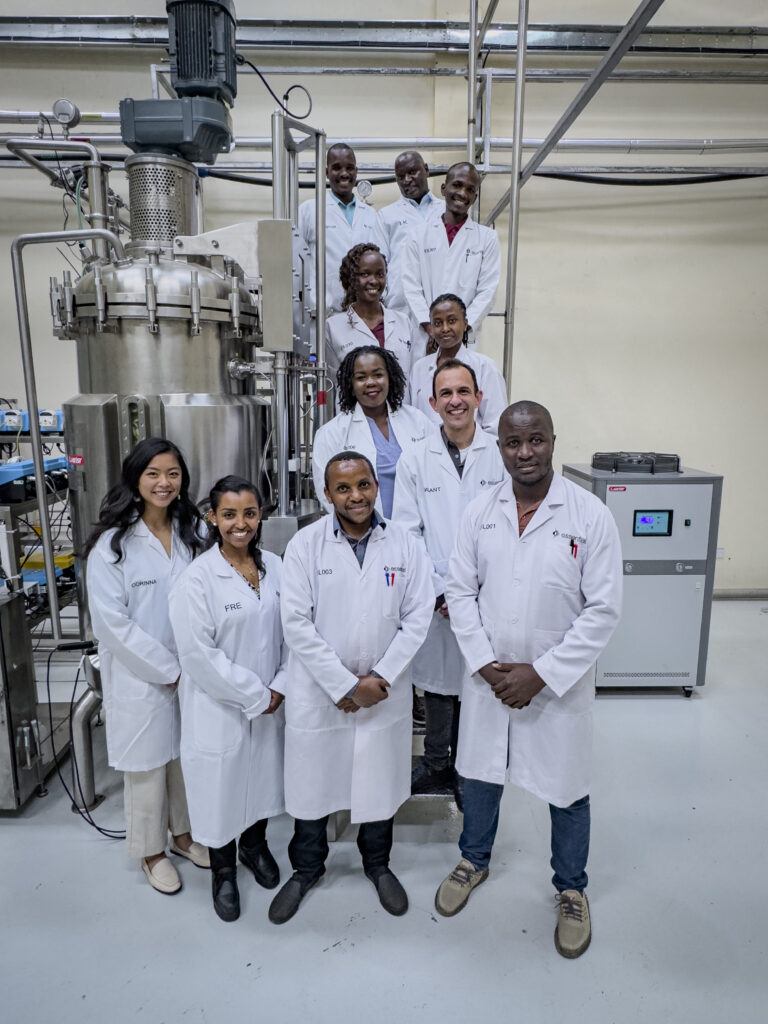
Essential’s team includes expertise in fermentation, biomanufacturing, strategy, and product.
The organization’s goal is to produce affordable, high-quality proteins that withstand climate challenges like extreme drought, and are integrated into products designed to combat malnutrition. Essential claims that fermentation is a super-process in this part of the world: its remarkable ability to continuously produce protein regardless of climate conditions is a crucial advantage given the frequent climatic disruptions that devastate crops and livestock.
Essential’s fermentation technology could provide a beacon of hope in an undernourished area with a growing population. This is where the interconnected crises of malnutrition, food system inefficiencies and climate change pose some of the most urgent challenges of the 21st century. A lack of affordable, high-quality proteins in Sub-Saharan Africa means that around 1 billion people do not have sufficient protein in their diets. Recent cross-country research reveals that 30-40% of stunting can be explained by a lack of high-quality protein.
Essential has launched one of the first biomanufacturing plants in Nairobi.
Essential says that strong evidence-based research like theirs is vital in the race to produce resilient, cost-effective, and sustainable proteins as the challenges of extreme weather conditions associated with climate change hamper agricultural productivity and nutritional content. Although fermentation has ancient roots, alternative proteins have generated scientific momentum in affluent nations in the past decades.
Now Essential says that its core technologies of fermentation and biomanufacturing offer a unique edge in combating malnutrition. The initiative envisions itself as the pioneering force advancing this scientific realm in Sub-Saharan Africa and plans to collaborate with governments, multilateral agencies, and development finance organizations to promote biomanufacturing as a climate adaptation strategy to enhance food security and address malnutrition.
Written by Gilly Smith Images provided by Essential
Country: Tanzania
In Tanzania, NovFeed is transforming the country’s compost into a source of cheap and nutritious feed for farmed fish.
DAR ES SALAAM, Tanzania –
When Diana Orembe was growing up in Northern Tanzania, her uncle worked as a fish farmer. It was a difficult profession, where high costs and low profit margins were the norm. He put a lot of money into the fish farm, but expensive fish feed meant minuscule returns. Orembe’s uncle tried to reduce the money spent on feed but didn’t have any real alternatives. The only other option was to feed the fish a diet of rotting vegetables and chicken droppings, but fish fed this way took a long time to reach market size—and he had a growing family to feed.
When Orembe joined the University of Dar-es-Salaam to study microbiology, she kept returning to her uncle’s problem, and to the plight of fish farmers like him. In addition to the cost of the feed, the efficiency of available fish feed products concerned her. They were made from either dagaa, a fish consumed widely in Tanzania, or soybean, another common food for Tanzanians. Both inputs were problematic. There were questions about the ethics of using a wild fish like dagaa to feed farm-grown fish. Plus, removing wild dagaa from their lakes has far-reaching, damaging repercussions on their ecosystem. Soybean farming is land-intensive, requiring extensive arable land and water to produce enough feed for all the country’s fish farmers.
NovFeed is creating a new kind of fish food, made from Tanzania’s organic waste matter.
At the end of 2019, Orembe attended a workshop with two other scientists trying to solve Tanzania’s fish feed problem: Otaigo Elisha, who studied Natural Resource and Environmental Economics and Innocent Lymo, who had a master’s degree in Aquaculture Science. They were excited to meet others working to solve the same issue. Soon after the workshop, they travelled to different parts of the country, talking to fish farmers who told them that their biggest problem was finding fish feed that was not only cheap, but also efficient. The three of them decided to start a solutions-oriented company. With NovFeed, they believed they could create a new kind of fish feed that would be affordable for farmers, efficient in its production method, and cause minimal impact on the fish. And the unlikely key to all of this? Tanzania’s garbage.
Dar-es-Salaam produces a lot of waste—roughly 9000 metric tons every day, 70% of which is organic waste. This is approximately the same amount as Kinshasa, one of Africa’s largest cities, despite the latter having a population double that of Dar-es-Salaam. “If we don’t take action now, Dar will be the town with the most waste in East Africa in ten years,” Orembe says.
NovFeed employees sort through discarded fruit waste. 70% of Dar-es- Salaam’s waste is considered organic waste.
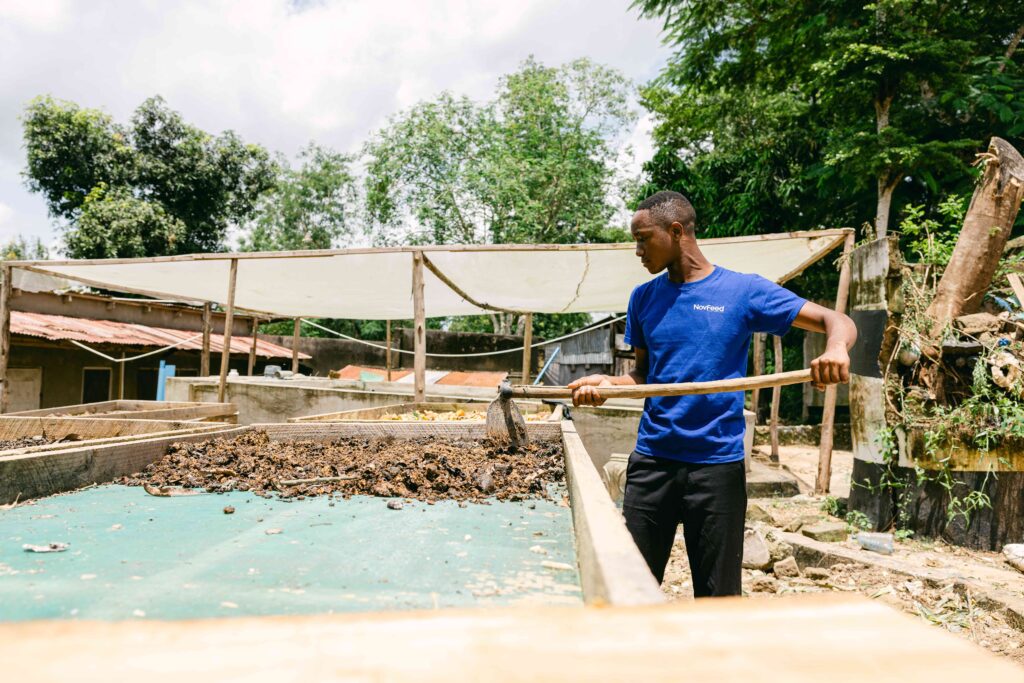
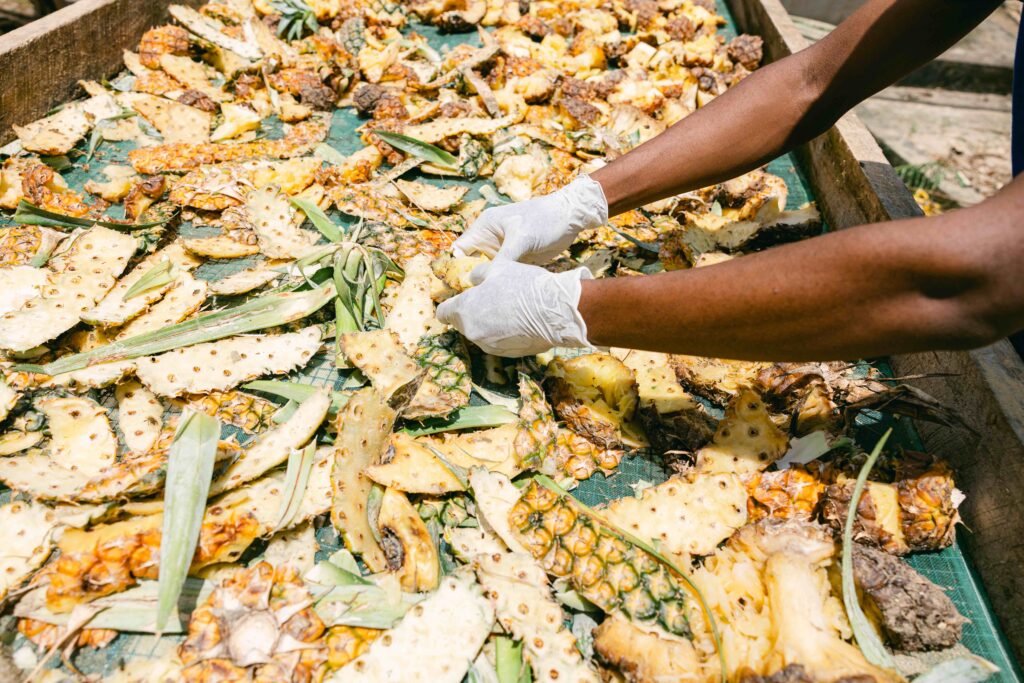
NovFeed’s fish feed is made from some of this waste, particularly fruit. Every week, the company collects fruit waste from markets across Dar. That waste is then transported to the NovFeed site in Kibamba, roughly thirty kilometres from the city centre, with offices, a waste sorting area, a fermentation lab, an extractor for drying the feed, and storage rooms. A corridor of tall green tree ferns welcomes one into the compound, though the ferns do little to mask the pungent smell of fermentation. Arrayed around NovFeed’s compound are the bright iron sheet roofs of nearby villages, and in the middle of the compound are shelves for storing the waste fruit collected from the markets in the city. There are discarded pineapples, avocados, bananas, mangoes, eggplants, and whatever other fruits are in season at a given time. The fruit must dry completely before it can be processed. Instead of using electricity, NovFeed employees dry them in the sun. On a late January visit to the facility, swarms of bees hovered over the drying fruit, attracted by the sugary scent.
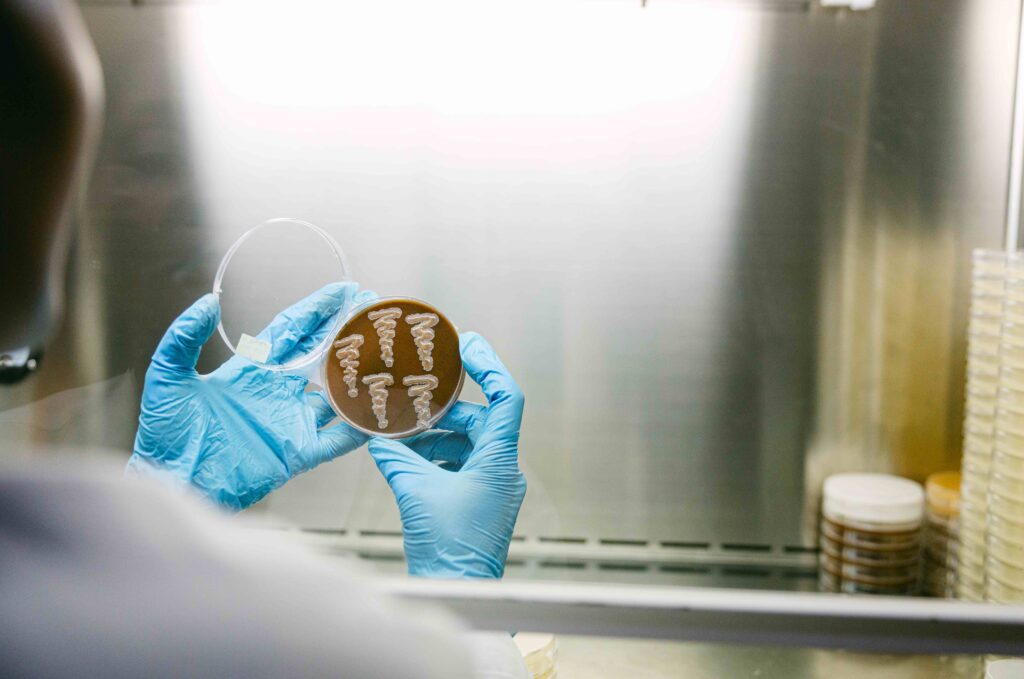
A scientist inspects the fermentation process inside NovFeed’s laboratory.
Once dried, the fruit is taken into the lab. There, it’s mixed with a lactic acid bacteria to induce fermentation. There are specific kinds of bacteria which are used to break down the dried fruit into biomass which will be used as the feed, and in the lab a team of scientists isolates the bacteria that will do the fermentation. The faster the fermentation process, the cheaper the feed is to produce. To ensure that the fermentation can be done as quickly as possible (between 56-72 hours), a concoction of five specially chosen microbes is used in the fermentation. The microbes have been tested to make sure they are compatible with each other. The NovFeed team changes the combination of microbes often, as they experiment to see which ones produce a faster rate of fermentation.
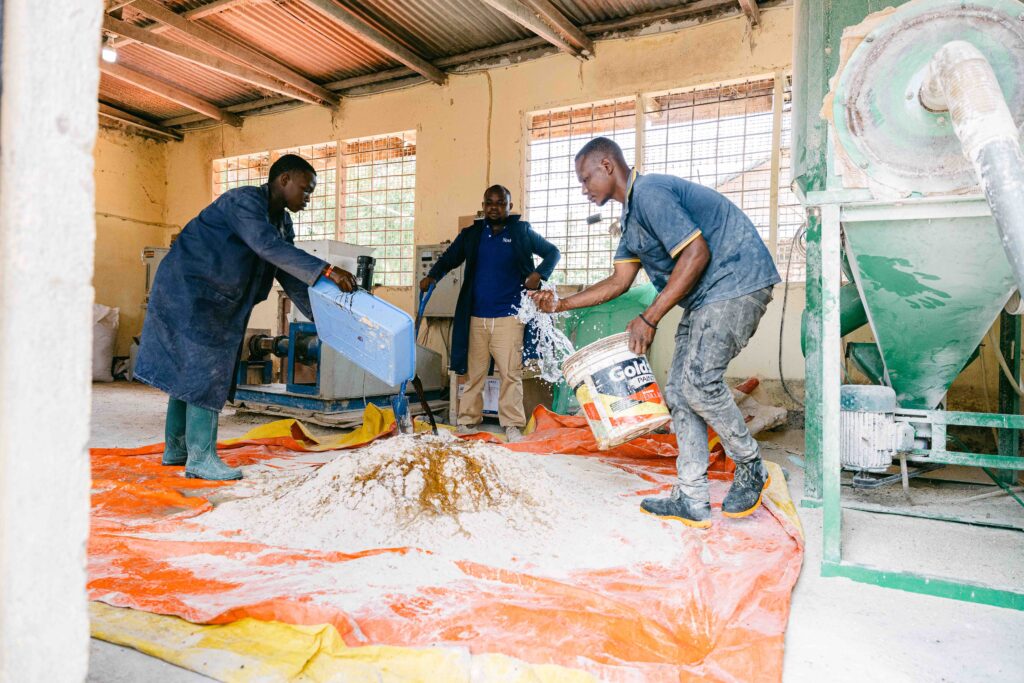
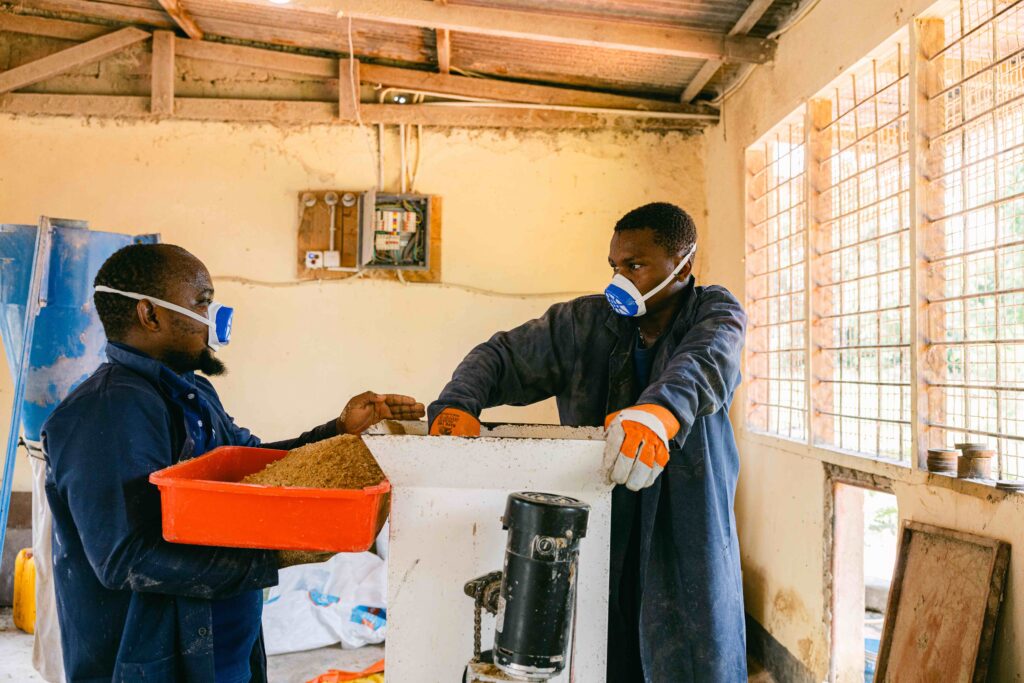
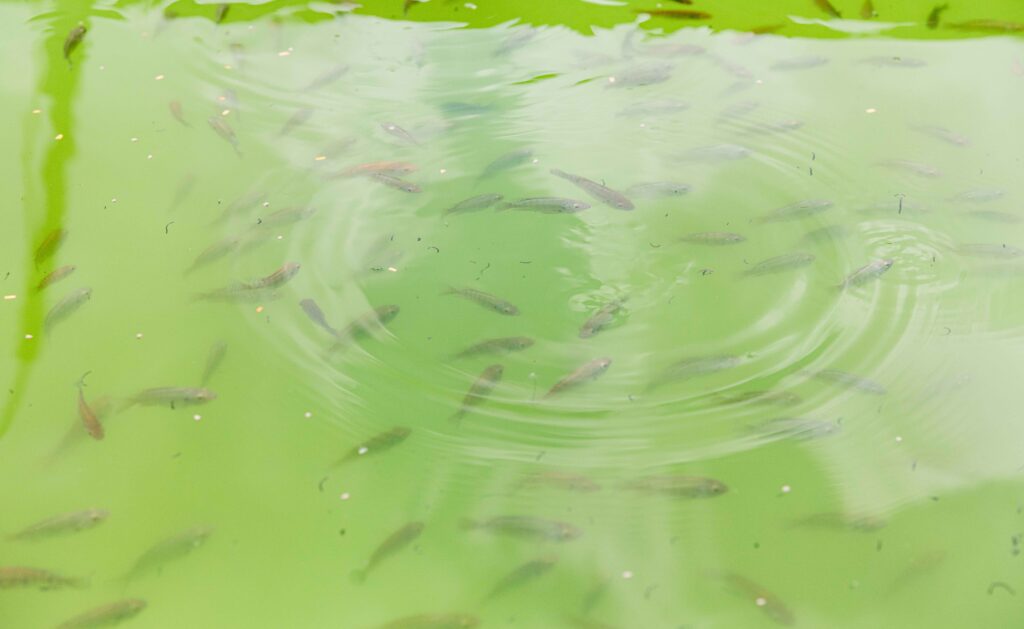
After fermentation, the resultant biomass is placed in an extractor to produce floatable pellets. Most fish farmers in Tanzania grow tilapia, which eat food on the water’s surface. The pellets are then dried to prohibit fungi growth that would render the feed unusable. NovFeed produces pellets in four different sizes to be eaten by fish at different stages of maturity, whether tiny fingerlings or full-grown tilapia that are almost at market size.
NovFeed employees making the pellets on-site.
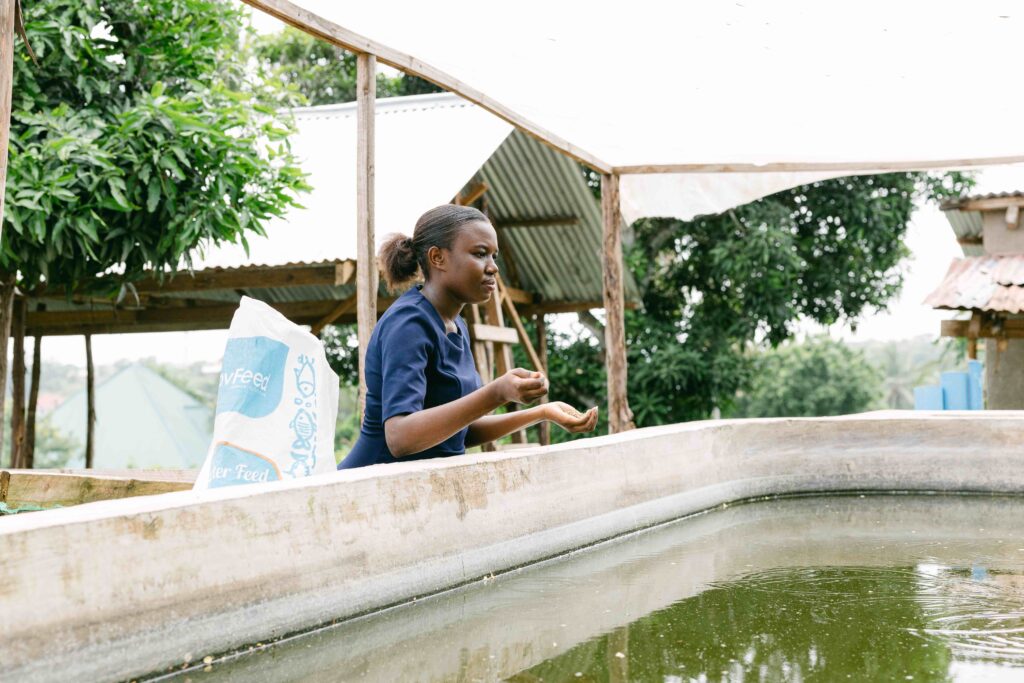
Pellets are tested on fish at the NovFeed plant before being sold to farmers. Next to the racks of drying fruit are three fishponds, each with a different environment. These diverse ponds are meant to mimic the water conditions fish farmers must contend with. Elisha says, “When we advise farmers, we have to advise them based on the parameters we have.”
In the ponds, NovFeed scientists test the water quality as well as the growth rate of the fish. Education is an important part of their sales pitch: Before a farmer signs up to use their feed, NovFeed sends a scientist to explain to them how the feed works, and how to use it. After the farmer joins the NovFeed program, the company continues to provide support. Over a few months, they collect information from the farmers about their process — how the fish are responding to the feed, the kind of water used in their fish farms, where the farmers get their fingerlings from. This collection aims to find out what the farmers need to tweak in order to achieve optimum growth conditions for the fish.
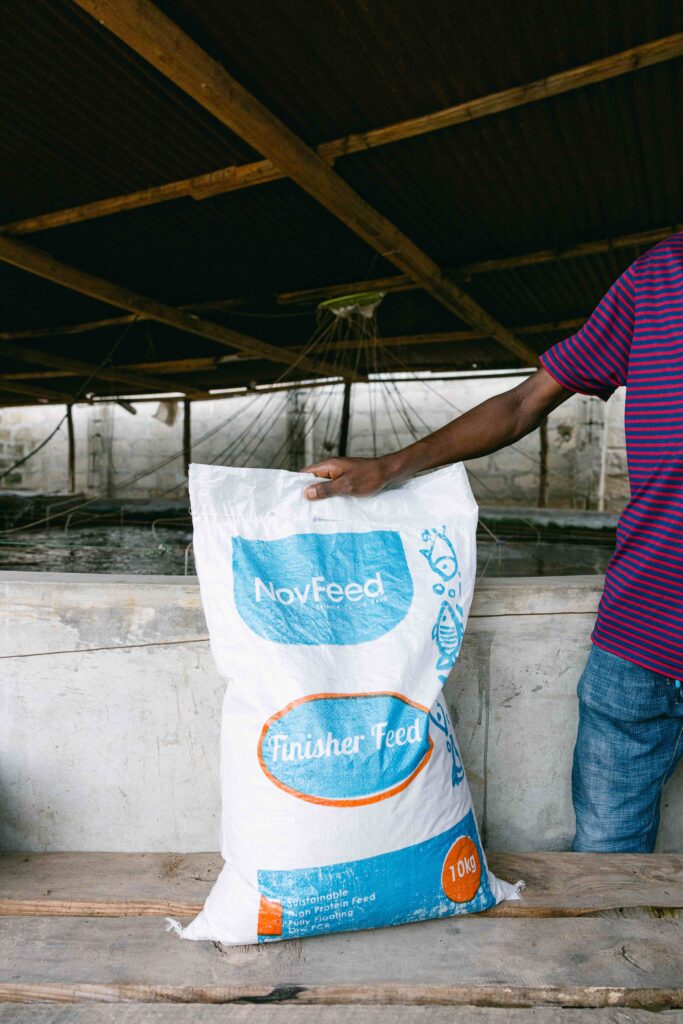
A bag of NovFeed fish food, packaged and ready for distribution.
According to research undertaken by NovFeed, their feed has thus far proven more efficient than feed made from soybean and dagaa. NovFeed has a higher protein content (over 70% as compared to 50% for the dagaa feed and 45% for the soybean feed), and a much quicker production time (3 days, as compared to 3 months for soybean and 2 months for dagaa). While Orembe’s uncle has since passed away, his spouse—her aunt—is still a fish farmer. She’s one of 72 farmers signed up to NovFeed’s program. The farmers are located in different parts of the country, some along the coast near Dar es Salaam, others as far out as Dodoma, the country’s capital, 400 kilometres away. Transportation is currently a challenge: NovFeed doesn’t have its own distribution network yet, so they send the farmers the bags of feed via public buses.
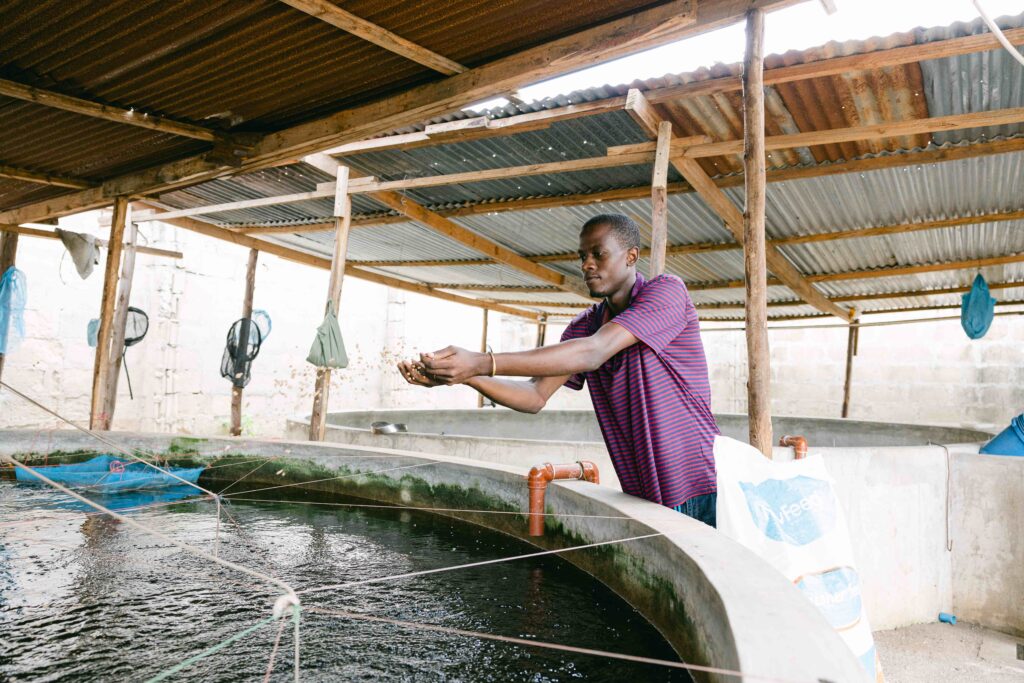
A NovFeed employee feeds fish NovFeed food made from organic waste.
Now, their aim is to scale up their product and get more farmers signed up. Elisha is bullish about the size of their potential market, pointing out that while the fish feed market in Tanzania so far is valued at $240 million USD, NovFeed aims to provide as much as $25 million USD worth of feed to the country by 2030. A huge driver behind his optimism is the Tanzanian government’s interest in increasing fish consumption in the country in order to increase the nutrition levels of its citizens. Currently, the average person in Tanzania consumes 8kg of fish per year, far below the recommended consumption rate of 20kg per person.
The national government wants to increase the consumption rate to 10kg per person by 2030. To do that, Tanzania needs 100,000 more tons of fish by 2025, and because the state’s aim is to produce this fish locally, the country’s fish farmers stand to benefit. Already, the government has been giving grants to people who want to start fish farming, as well as loaning fish cages to them. These farmers will need a lot of fish feed. “We believe that if the fish will feed the world, we must feed the fish,” Orembe says.
Currently, 72 farmers have signed up for NovFeed’s program. In the course of producing their feed, NovFeed discovered that they could use their methods to produce a more climate-friendly plant fertilizer, also made from discarded organic waste. They’ve so far managed to complete two fertilizers, with different efficiency rates. With the first one, which is already being sold to farmers, one needs to use five litres of the fertilizer for every acre of farmland. The second one, which is still waiting for approval from the state regulator before being sold, has produced spectacular results in testing. One litre of the fertilizer is enough for an acre of farmland.
NovFeed founders Diana Orembe (above) and Otaigo Elisha (below).
With both the fish feed and the fertilizer, NovFeed’s plans to feed Tanzania by boosting local farmers, thus increasing food security in the country. In addition, they are tackling Dar es Salaam’s food waste problem, determined to not let the city succumb to its piles of garbage.
Living on a farm might sound idyllic to some — but it’s also a full-time job, a sun-up till sun-down non-stop litany of logistics. Smallholder farmers have to wear multiple hats, and are beholden to fluctuating market demands and an increasingly erratic climate. Many smallholder farmers, particularly in developing countries, live in poverty, face food and nutrition insecurity, and are barely able to keep their families afloat. They rely on rainfed agriculture and traditional marketing channels to sell their produce, which tends to be more abundant during the rainy season resulting in market floods, postharvest losses, and low income. This highlights the need for functional market solutions to prevent exploitation by middlemen and ensure better income for farmers to meet competing needs such as family health care and education.
Shamba Calendar was designed to help smallholder farmers in rural areas with agricultural productivity and profitability. It is a demand-driven digital platform that provides an assured market to smallholder farmers so that they can focus on production. Going beyond the business-as-usual model, it fixes AI-determined market prices for produce, which are then graded at standardized prices to ensure zero food loss due to quality. As the primary beneficiaries, the smallholder farmers have year-round access to the centrally positioned Shamba Connector that allows them to sell their produce to interested parties. As a one-stop shop, the Shamba calendar provides access to value chain-specific agronomic information including climate-smart agricultural practices integrating indigenous crops for climate resilience.
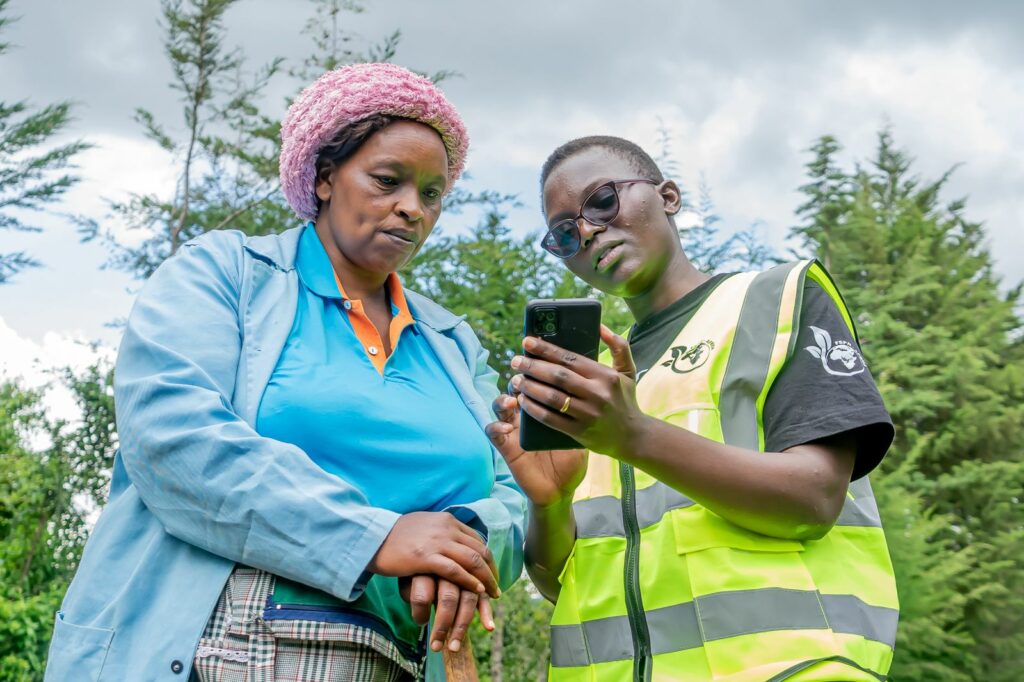
According to the FSPN-Africa, previous iterations of data-driven apps did not address the low rates of digital literacy and online know-how for many smallholder farmers. In response to this, the Shamba Calendar supports farmers through tech savvy Shamba Connectors and Lead Farmers to bridge digital divide at farm and market levels. At the farm level, smallholder farmers organized into groups of 15 to 20 members have access to digital extension services through the Lead Farmers. The trained Lead Farmers ensure that all participating farmers are registered with the digital platform and facilitating value chain-specific in-person training and farm demonstrations.
photo by Shamba Calendar
At the market level, Shamba Connectors aggregate, grade, and enlist smallholder farmers’ produce on the Shamba Calendar’s agricultural marketplace for purchase for ease of redistribution. With this approach, smallholder farmers access diverse market opportunities digitally despite the low digital literacy. Upon registration, information on the crop variety, inputs used, quantity of produce, and percentage of surplus available for sale vs. household consumption is collected to achieve food traceability and inform future research on suitable seed and input recommendations for maximum yield with minimum environmental footprint. One of the biggest environmental drains on the food supply chain is loss of food because of lack of reliable market. Reducing food loss at farm level through market availability will reduce greenhouse gas emissions. Any surplus food that does not reach the market is refined into organic manure and used in the farms to improve soil health — a promising substitute for fertilizers.
The goal of Shamba is to enable smallholder farmers in Africa is to adopt nutrition sensitive agriculture and climate smart agriculture, and access diverse agricultural markets for health and wealth. By working out the market demand, it enables smallholder farmers to maximize quality food production throughout the year. And smallholder farmers have access to more digital agricultural information such as weather, quality seeds, inputs, and agronomic information. With the click of a button, farmers are able to sell their produce for a better price, with less waste — and everyone leaves happy.
The East African country of Tanzania is known for its lush landscape, wild seacoast, and plentiful rivers. The waterways of Tanzania are a bountiful source of fish, which serves the dual purpose of both feeding the population and providing work for thousands of fishermen. Yet fishing is an industry plagued with financial difficulties and logistical barriers. For small-scale fish farmers in Tanzania, rising feed and related costs are often too high to be absorbed into already thin profit margins. In small-scale aquaculture operations, feed can account for 70% or more of total production costs. When faced with an increase in feed costs, many poor farmers may have no other choice than to stop feeding their fish – meaning they’ll soon be out of work, too.
NovFeed is revolutionizing the aqua-feed industry in order to help small-scale fish farmers in developing countries around the world. They transform organic waste into protein-rich feed ingredients via the emerging industrial biotech field of fermentation. Based in Dar es Salaam (though they plan to expand across the African continent), NovFeed has access to an incredible amount of waste: the city generates over 9,000 tons daily, of which around 70% is organic. Dar es Salaam’s daily waste generation is projected to grow to nearly 15,000 tons by 2030. Employing local women and girls, NovFeed collects fruit and vegetable waste, and then applies a consortium of microbes that break down organic waste and reassemble it into low-cost, nutrient-rich protein ingredients for aqua-feed.
photo by NovFeed
NovFeed states that their feed is “nutritionally comparable to traditional fishmeal but can be scaled quickly, efficiently, and without the need for wild-caught fish, other marine ingredients, and farmed soy, to completely replace traditional sources.” Their technology takes organic waste, a powerful greenhouse gas emitter, and inserts the associated carbon into the food chain again using bacteria as a cell bio-factory, driving a circular economy, and reducing pressure on finite natural resources. Importantly, fish feed for farmed fish often relies on wild-caught fish or farmed soy, which has lasting negative effects on ecosystems and our environment. NovFeed claims that with their product, “there is no longer a need to catch fish from the marine environment as nutrition for farmed fish. According to our research, the use of Single Cell Protein (SCP) in fish feed improved fish growth rates by up to 35% and reduced the overall cost of feed by up to 30%.” A 30% reduction in feed price is a huge win for low-income fish farmers where every cent can make a difference.
photo by NovFeed
Besides helping fish farmers, NovFeed believes their novel approach to fish feed could significantly help feed the local population. Currently, per capita consumption of fish is only 8kg per annum in Tanzania, significantly below the global average of 20kg. NovFeed believes this disparity highlights the transformative impact their initiative can have in these communities “not only by increasing their access to a vital source of protein but also by improving their overall nutrition and well-being.”