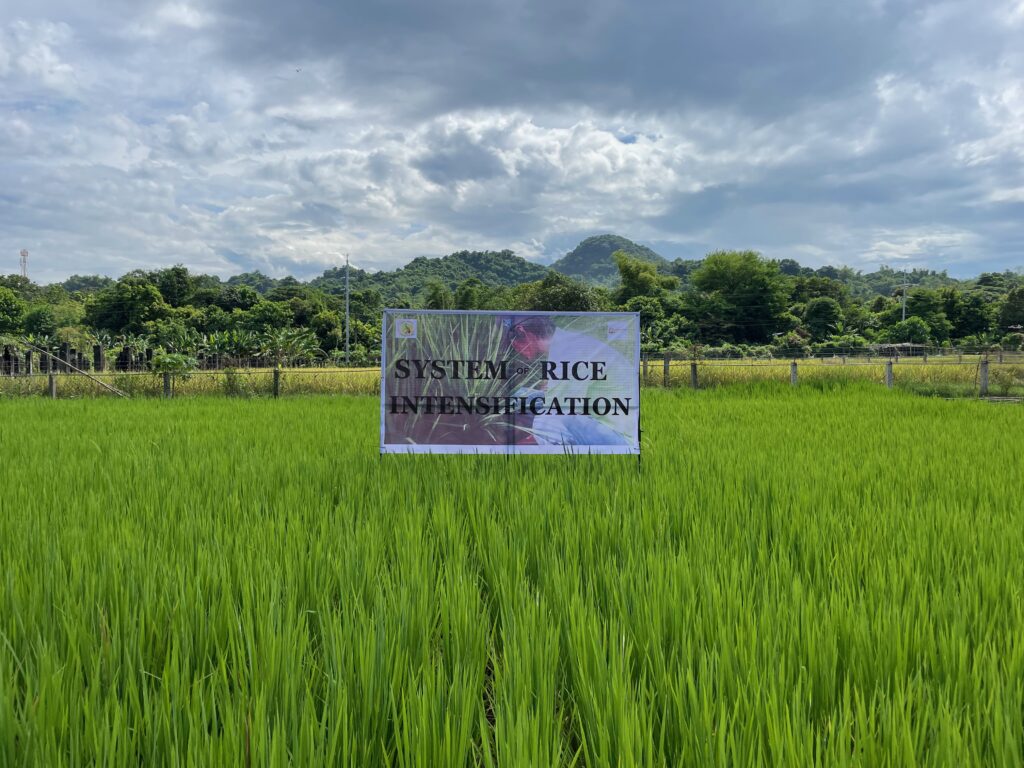
Around the world, people eat a lot of rice. It’s the culinary and nutrition backbone of many cultures, and the main crop for millions of farmers, contributing over 21% of global caloric intake. It’s also one of the most notoriously difficult to grow, one of the thirstiest, and one that negatively contributes to climate change. Indeed, its production presents significant environmental challenges, accounting for 11% of global methane emissions, 1.3% of all anthropogenic carbon dioxide (CO2)-equivalent emissions, and consuming approximately 40% of the world’s irrigation water. And its yields are consistently low, putting small-scale farmers in particular at economic risk. How can we fix this?
These two critical challenges – insufficient yields and a substantial climate impact – are individually addressed by various organizations. But the System of Rice Intensification (SRI), which SRI-2030 advocates, has been widely evidenced as a solution that holistically addresses both. The UK-based initiative SRI-2030 is dedicated to accelerating the adoption of the SRI approach, which has been researched for the last thirty years. SRI-2030 is increasingly focused on the African continent. In Africa, large yield gaps persist due to sub-optimal cultivation practices. At the same time, demand for rice across the continent is steadily rising, driven by rapid population growth and shifting dietary preferences as urbanization increases. The result is a gap filled in by expensive imports, which misses a crucial chance for local production, jobs, and economic growth.
SRI is based on agroecological practices that have a proven history of providing ecological, social, and economic benefits to farmers, families, consumers, and businesses. It follows four key principles (the early establishment of healthy plants; low plant density, i.e. wider spacing of plants; soil enrichment; and the sparing application of water) that address water, soil, and crop management. These principles can then be modified by farmers themselves to suit local conditions. According to SRI-2030, SRI has been shown to typically increase yields by 50% while simultaneously reducing emissions by 50%. In comparison to conventional practices, the initiative claims that SRI uses about 30% less irrigation water.
SRI-2030 works by combining top-down policy engagement with governments and mid-level interventions. They strengthen policy commitments and facilitate the implementation of existing policies, particularly by fostering synergies between disparate policy objectives, such as aligning Nationally Determined Contributions (NDCs) under climate ministries with National Rice Development Strategies under agricultural ministries. SRI-2030 states that their most significant achievement to date is bringing together multiple rice producing countries and various actors within these rice producing countries through the creation of the “Sustainable Rice NDC Alliance.”
According to the initiative, the application of SRI is applicable across various geographical scales. However, given that 90% of rice farmers globally are smallholders, it is particularly noteworthy that SRI is most effective on small to medium sized plots of land. That makes it especially well-suited for the countries they are focused on across Africa.
Written by Sarah Souli Images provided by SRI-2030
Country: UK
A one-stop digital platform for food distributors and suppliers could tackle the root cause of food waste through AI.
Choco, a UK based tech company, claims that it has discovered a way to create food sustainability on a global scale. By transforming how orders are handled in the food supply industry, it says that it could prevent waste at source.
Its digital platform connects vendors directly with the producers, cutting out the middle man or woman, streamlining the food chain and making food travel the shortest routes possible. The company’s goal is to create a globally connected digital food system.
Choco claims that 70% of food waste happens in the supply chain before food reaches the consumer. But the company says AI can help tackle this inefficiency deep in the system where a lack of end-to-end accountability and disconnection between producers and buyers has led to a fragmented and complex structure. Without digitalization, transparency and data-driven decision-making is almost impossible.
image by Choco
Choco, which currently works with 15,000 restaurants and 10,000 suppliers to help them save time, money, and food, has a two-step action plan to address the problem. With every value-adding business across the food supply chain using its technology, the automation process, according to the company, would decrease cost, eliminate waste, and immediately increase profitability.
The app’s ability to harness the power of AI to find innovative solutions could lead to better demand forecasting, inventory management, ordering, food waste monitoring, and more accurate cost reports. This unravelling of the back end directly addresses the root causes of food waste within the food supply chain.
Choco is a third-generation business whose societal and environmental values are intrinsically linked to economic success and sustainability. It claims that by creating a direct link between commercial value and environmental impact, it can make a substantial difference in curbing GHG emissions.
And a streamlined, waste-free food system which connects suppliers directly to vendors could compensate farmers more fairly for their produce, according to Choco. The impact of this on farmers in poorer regions could lead to better access to education and community engagement. By regulating supply based on needs rather than price, Choco believes that it can help to ensure a stable and consistent food supply, fostering social stability and security.
The system could even redirect surplus food to those in need, significantly contributing to alleviating hunger and food insecurity on a global scale.
The company’s vision for the next 10 years is bold; it aims to use AI to optimize the food chain for farmers and manufacturers from source to plate, solving food sustainability on a global scale. It says that it has proven the model in Europe, North America, South America, the Middle East, South East Asia, and Australia.
In a small dry corner of England, Aquagrain is creating a super-absorbent biodegradable hydrogel that could help crops grow in degraded lands.
NEEDHAM, United Kingdom –
In one of the smallest units in a sprawling industrial estate in the tiny English village of Needham Market, a scientist has been painstakingly refining a soil improving product. Made using animal carcasses, this hydrogel can hold enough water to transform degraded land into fertile soil. It may seem like the stuff of sci-fi, but Dr. Arjomand Ghareghani, the inventor of Aquagrain, has patented a technology that combines waste from abattoirs and farms with a super-absorbent hydrocarbon that acts as a reservoir for plants. It’s a product that could reduce the use of inorganic fertilizer and make it possible to grow food on parts of the planet that long ago became too dry and depleted to support traditional agriculture.
On a cold January day, Dr. Ghareghani meets me at the unit where he has been developing his patented technology. There’s no desert in England, but there are towns here in the country’s east that get less rain than arid Andalucia. The climate and chalky earth make the soil dry and sandy—the perfect place to test a polymer that addresses desertification. One area farmer who used Aquagrain during company trials immediately requested 35 tons for his 70 hectares of cereal fields. He described the difference between the field strips sowed with Aquagrain and those that weren’t as “like walking across a black and white zebra crossing”.
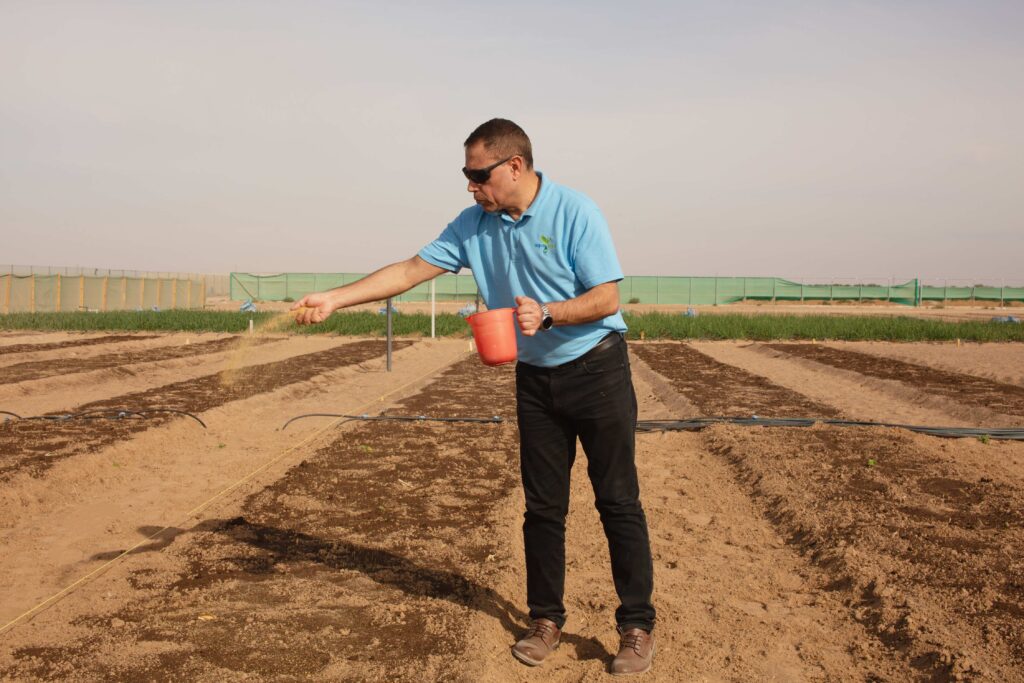
Scientist Arjomand Ghareghani spreads an even layer of Aquagrain on a test bed at Silal.
Desertification, or the degradation of drylands by unsustainable farming and overgrazing, ranks together with climate change and biodiversity loss among the greatest threats to the planet. It’s not necessarily a new problem – desertification has claimed multiple civilizations in human history, as far back as the Akkadians of Mesopotamia, who forged the world’s first empire more than 4,300 years ago only to disappear, researchers believe, during a 300-year drought that destroyed the farmlands they relied on to grow wheat and barley. Today, multiple factors have led to the increasing desertification of large farmland areas, from synthetic fertilizers to higher global temperatures and the growing frequency of droughts, with a catastrophic effect on food production. It has been estimated that 23 hectares of land are lost worldwide to land degradation every minute (more than the EU average farm size of nearly 17 hectares). That’s 12 million hectares per year.
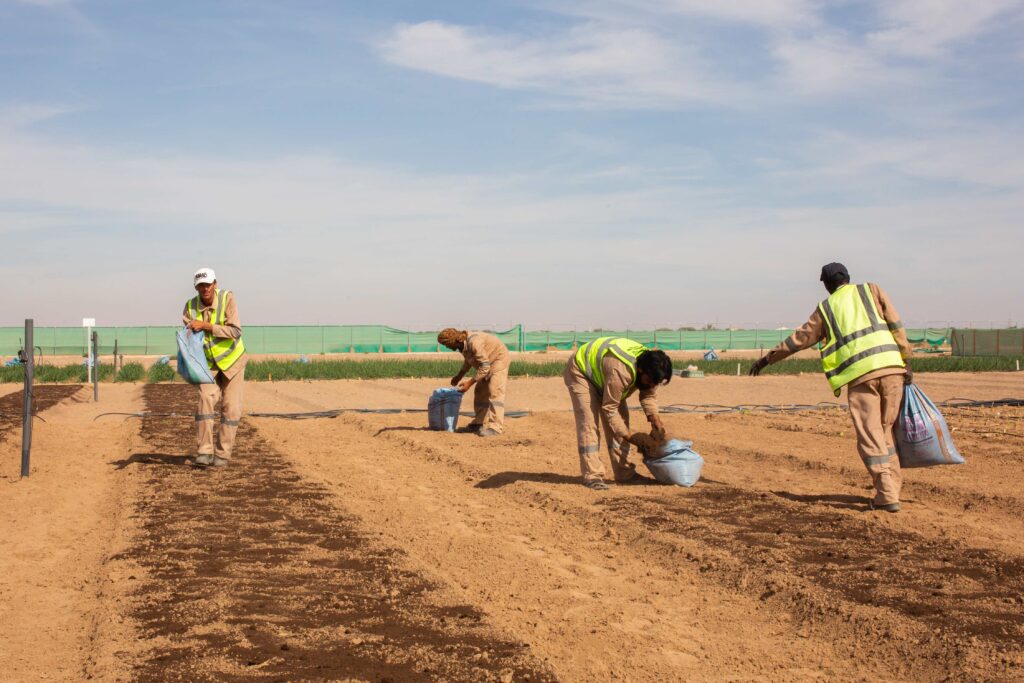
Farm Crew distributing fertilizer on the Aquagrain beds at Silal, Agri-tech Research & Development Farm.
But desertification is reversible. Some of the leading human causes of desertification are the practices and products used by farmers, including the heavy use of machinery, tillage, and chemicals, which can affect the structure of soil and its water content. Aquagrain acts as a water-holding sponge – a jelly-like substance filled with moisture and food that remains in the soil long enough for crops to grow, stopping nutrients from leaching out of the soil.
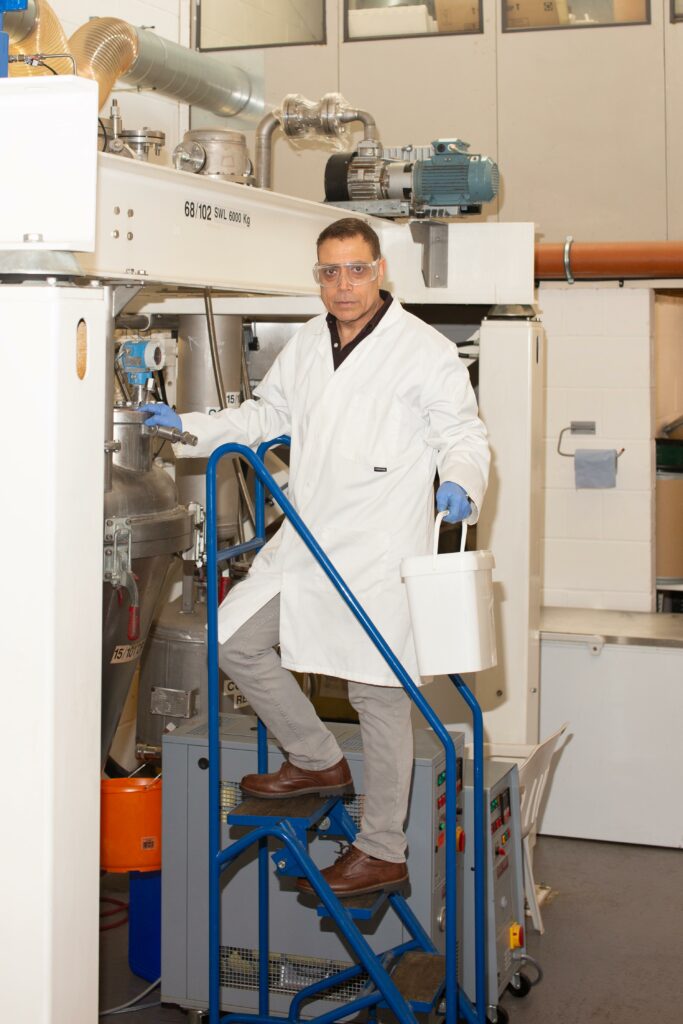
Arjomand Ghareghani (Scientist and Creator of Aquagrain) at the Aquagrain Laboratory, in front of the industrial equipment used to make Aquagrain.
There’s just one problem: the production capacity at the industrial estate is only one ton per month. The next challenge for Dr. Ghareghani and Aquagrain is scaling up its production, an expensive process requiring significant investment. At the industrial estate, nothing suggests that this small unit could hold the key to turning the parched ground into fertile land. To the left is a shuttered flooring company. A car mechanic on the other side waves as Dr. Ghareghani turns the key to an unmarked white wooden door. Inside are three small, connected rooms: a kitchen, a lab, and an office. A long, complicated chemical equation is written across the whiteboard on one kitchen wall. Behind it, in the lab area, the counters are spectacularly clean, covered in glass test tubes, goggles, scales, and thermometers. Underneath the stainless steel unit, however, is a dirty brown bucket: a clue to the grislier side of the work. Behind a glass screen, in an adjoining unit, a small warehouse has been turned into a production lab with machinery used to vacuum dry the animal protein and turn it into the brown pellets that farmers can sow on their land. Here, Dr. Ghareghani explains he is free to work on developing the product in peace. It took him just three years to invent Aquagrain. That was almost ten years ago.
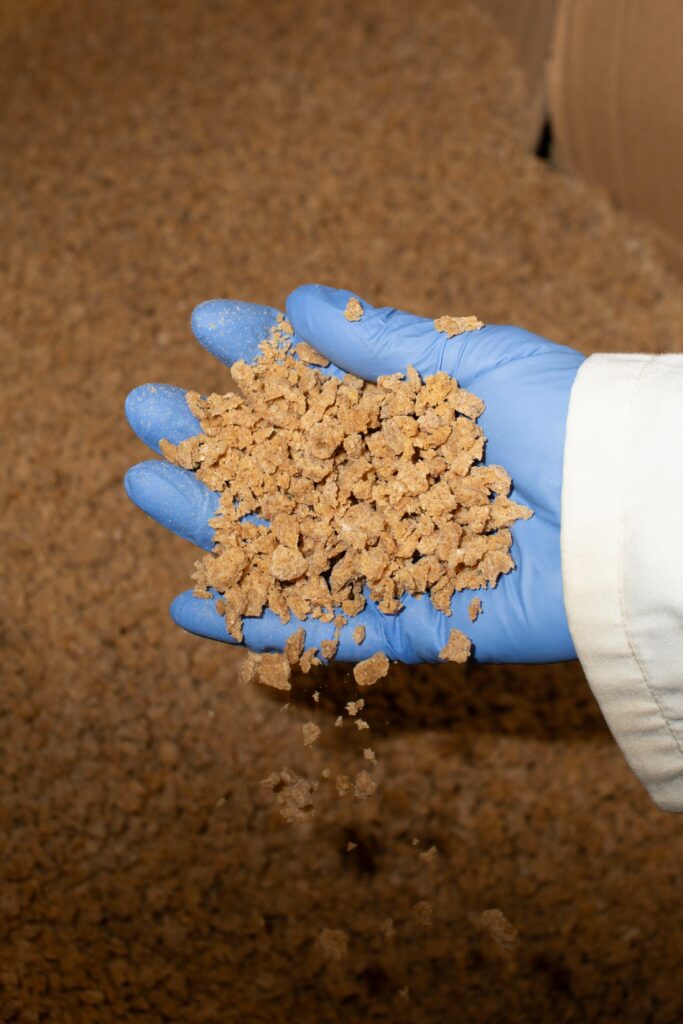
Aquagrain at the final stage of development after coming through the shredding machine.
The following day, Dr. Gharenghani will fly to the United Arab Emirates to meet Paul Smith, who joined Aquagrain’s parent company 11 years ago as group head of development to prepare the company’s products for investment. It became harder to raise funds during the pandemic after international travel was restricted and the UK government diverted DfID (Department for International Development) funding from Innovate UK, the UK’s national innovation agency. Aquagrain might have been invented in England, but it has been forced to look further into the field for investment. Smith is currently running a pilot project worth €2.3 million ($2.5 million) in Abu Dhabi, supported by a €25 million ($27 million) R&D fund owned by ADQ, an Abu Dhabi-based investment and holding company.
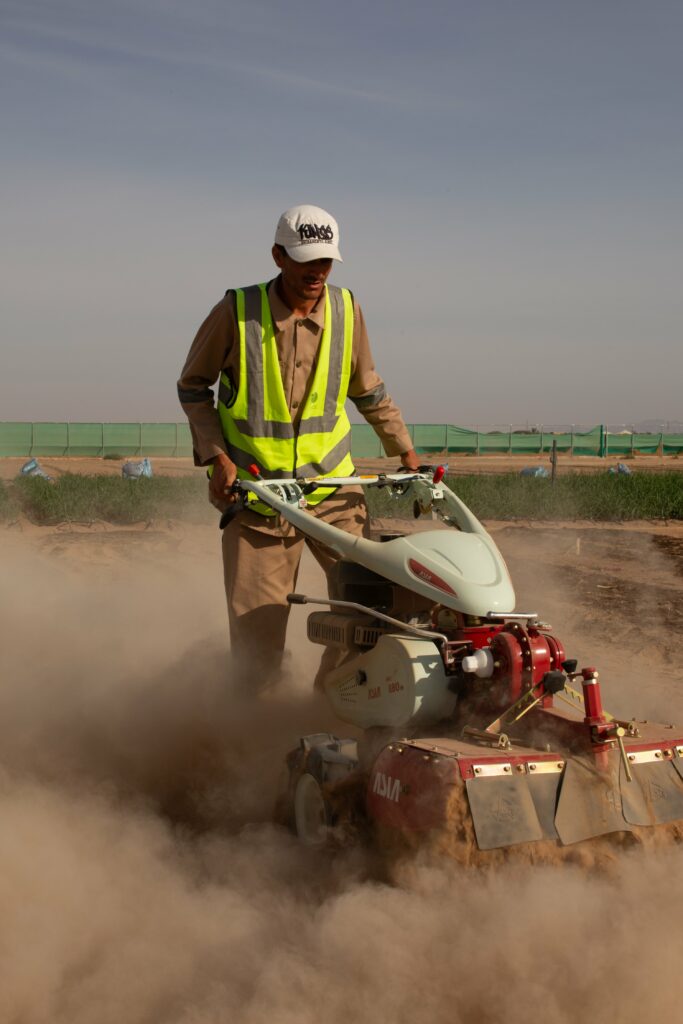
Farm Crew using a Rotavator to distribute the Aquagrain at root level in advance of transplanting the onions to the test beds.
The UAE, one of the hottest and driest countries in the world, has been investing in inventions such as vertical farming and climate-resilient crops to grow its produce since the 2008 financial crisis when an export ban on rice from India contributed to panic buying and food price inflation. The federal government there hopes that half the food Emiratis consume will be produced locally by 2050 (compared to just 20 percent today), insuring it against further food shocks as more frequent weather events hit supply chains for everything from rice and wheat to herbs and flowers.
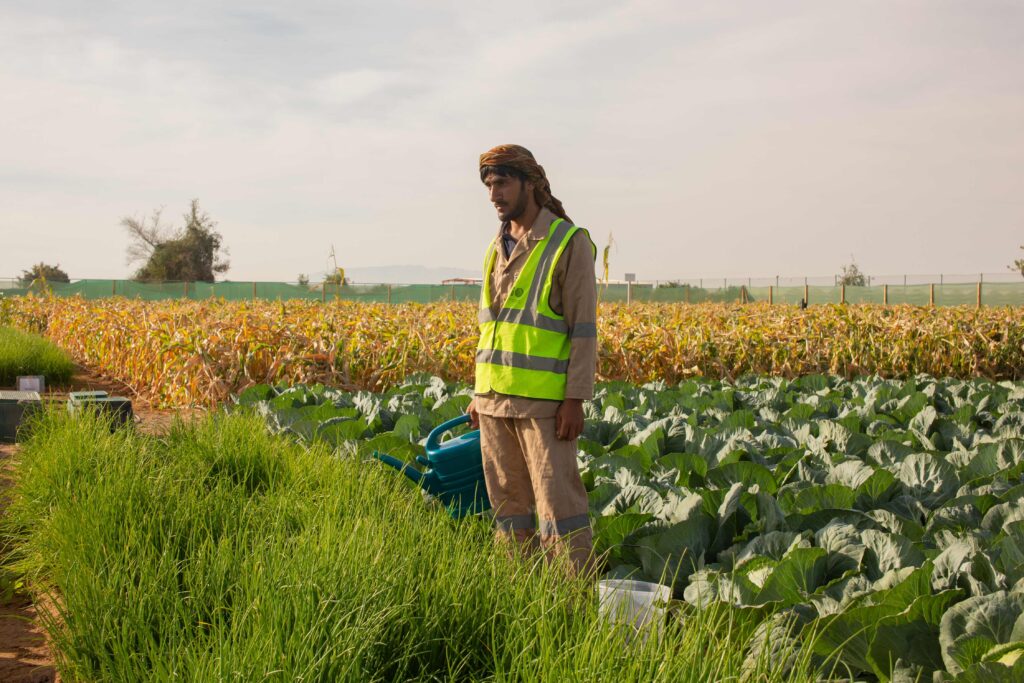
Farmer at Al Ain farm waters onions that will be transplanted to the Aquagrain test beds.
Aquagrain has the potential to solve multiple problems at once: reversing desertification, reducing the need for synthetic fertilizers that could advance degradation, and—a perhaps overlooked environmental challenge—reusing abattoir waste. “In some developing countries, dead animals are dumped in the desert or sent to landfills, which can generate methane or contaminate groundwater,” Smith says.
The UAE, one of the hottest and driest countries in the world, has been investing in inventions such as vertical farming and climate-resilient crops to grow its produce since the 2008 financial crisis.
Smith foresees applications across the globe, from Australia to California, as farmers seek to comply with water authorities demanding that they cut down on their abstraction from rivers – Aquagrain reduces the moisture needed to grow crops by holding water 30 times its mass and binding the soil. Company trials show it cuts irrigation and reduces the necessary fertilizer by up to half. Already, Aquagrain is working with interested parties, from farmers facing desertification in Nigeria to UK supermarkets wanting to reuse fish waste to grow food and flowers. In Nigeria, Professor Adnan Aminu, an agronomist and bio-science engineer, is working in parts of the country where farmers are abandoning their lands completely because the soil fertility has declined to such a degree it is no longer possible to grow crops. Professor Aminu, who comes from a family of farmers and owns his land, has been running Aquagrain trials with students as part of their studies at Bayero University Kano in northwestern Nigeria. “Farmers are losing their livelihoods, that’s why we are pushing on regenerative agriculture principles in the country. And the use of organic minerals like Aquagrain is one part of this [solution],” Professor Aminu explains. In January 2022, Professor Aminu tested Aquagrain on maize and amaranth. The results were remarkable: Using a medium amount of Aquagrain gave them yields over 180 percent higher than in trials without fertilizer. While the cost of Aquagrain is prohibitive for farmers growing domestic produce like cassava and sorghum, Professor Aminu envisages its usage on crops grown for export, such as organic groundnuts and hibiscus, which can command a much higher market price.
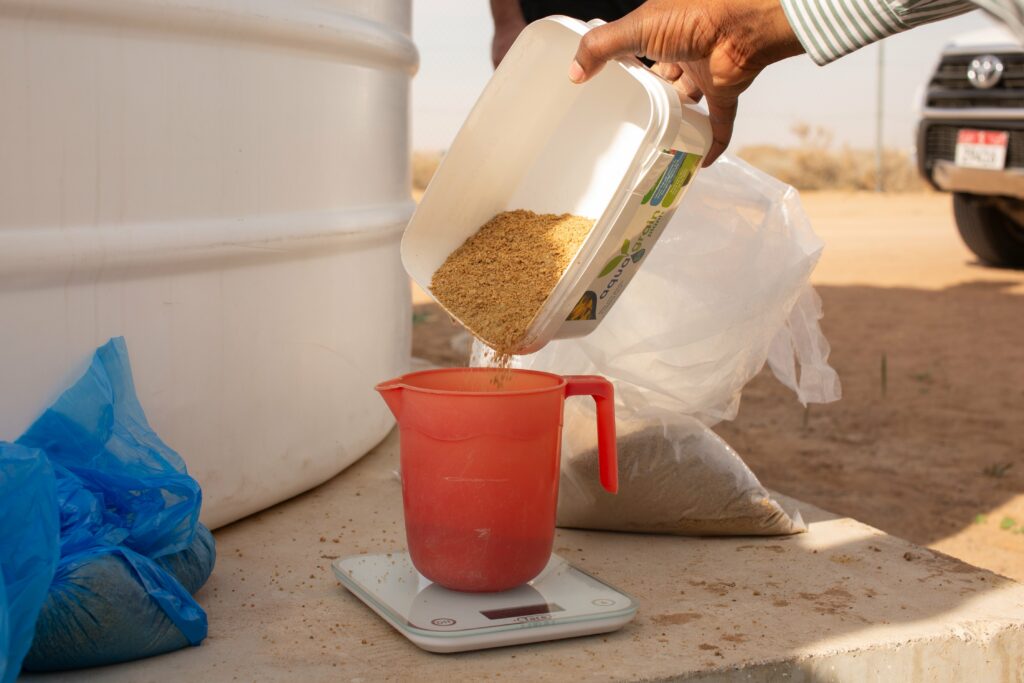
Weighing out the Aquagrain for the test beds.
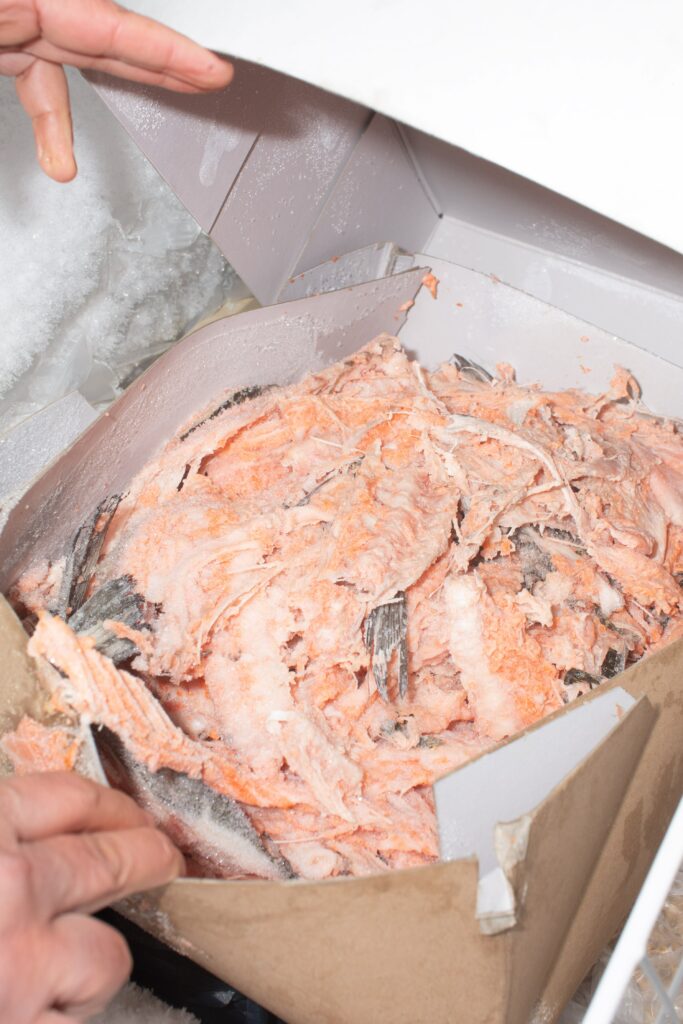
“At the industrial unit in Needham Market, Dr. Ghareghani opens a huge white sack of brown grain that smells curiously close to dog food. It’s the remnants of animal carcasses from farms and abattoirs after they have been rendered and any pathogens removed. Dr. Ghareghani combines this product with a super-absorbent polymer that biodegrades in the soil after it has been used for a single crop cycle, leaving nothing but organic matter. Behind the machines, he opens a chest freezer to reveal a cardboard box full of an icy mass of pink fish skeletons. It’s a delivery from a major UK supermarket chain called Morrisons, hoping to cut down on waste from its fish factories in the northeast. Dr. Ghareghani has been working on a bespoke version of Aquagrain that is ready for Morrisons to trial later this year, turning fish waste into fertilizer for ornamental plants and herbs.
Aquagrain is working with interested parties, from farmers facing desertification in Nigeria to UK supermarkets wanting to reuse fish waste to grow food and flowers.
Dr. Ghareghani is hopeful that the trials in the UAE could increase production of Aquagrain. The company is already in talks with neighboring countries to export its technology. The UN estimates that every year rising tensions over natural resources and the forced migration of farmers. “A project like this, which can reverse that process, would make a massive difference,” he says.
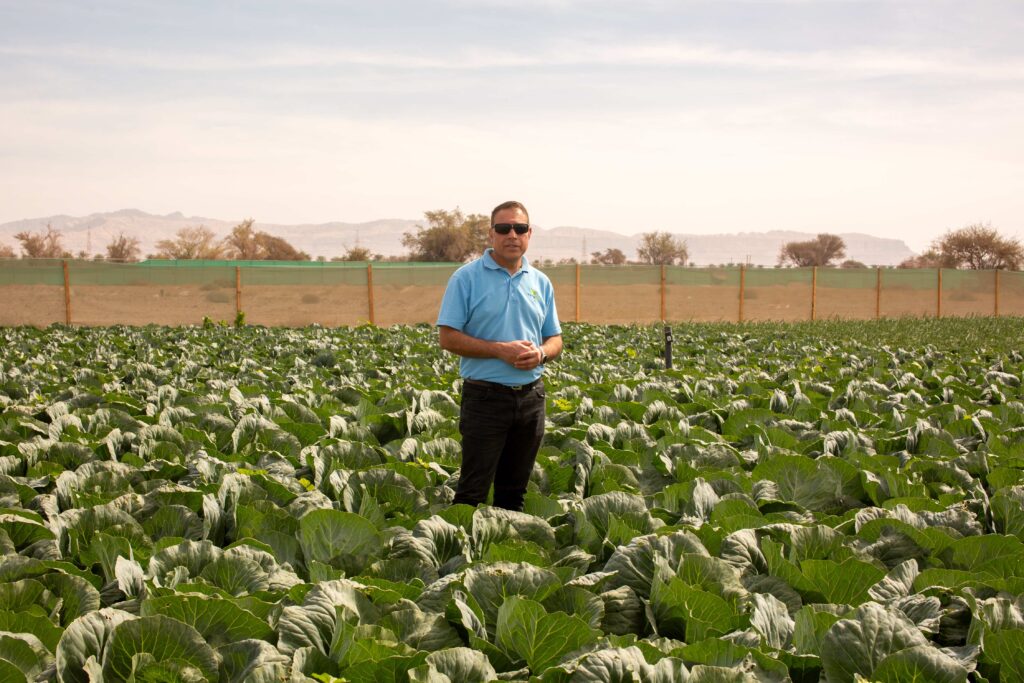
Aquagrain creator Arjomand Ghareghani poses for a photograph in a cabbage field at Al Ain.
A British company claims to have created the first product that can repurpose the world’s meat, poultry, dairy, and fish waste as a soil improver.
Aquagrain is a unique, organic based, biodegradable hydrogel made from animal waste which allows crops to be grown in sandy soil and arid lands with a fraction of the water usually required. It could become a game-changer in creating healthier soil.
Absorbing up to 30 times its mass in water or liquid fertilizer, it enables agricultural and horticultural crops as well as landscaping and ornamental plants to flourish. Aquagrain claims that it supplies crops with valuable nutrients, cutting the requirement for inorganic fertilizers, while significantly stimulating microbial activity in the soil.
But it is also a valuable solution to the massive greenhouse gas emissions from animal waste which is usually burned, creating CO₂, or sent to landfill, creating methane. According to the United Nations Food and Agriculture Organization, in 2019, global food systems accounted for 17 billion metric tons of carbon dioxide equivalent to 31% of human-made greenhouse gas emissions. That includes emissions related to farming and land use, producing crops and livestock, household food consumption and waste, and energy used in farm and food processing and transportation. Aquagrain believes that it could not only reduce this by transforming animal waste into a product that can feed plants, but also restore soil health.
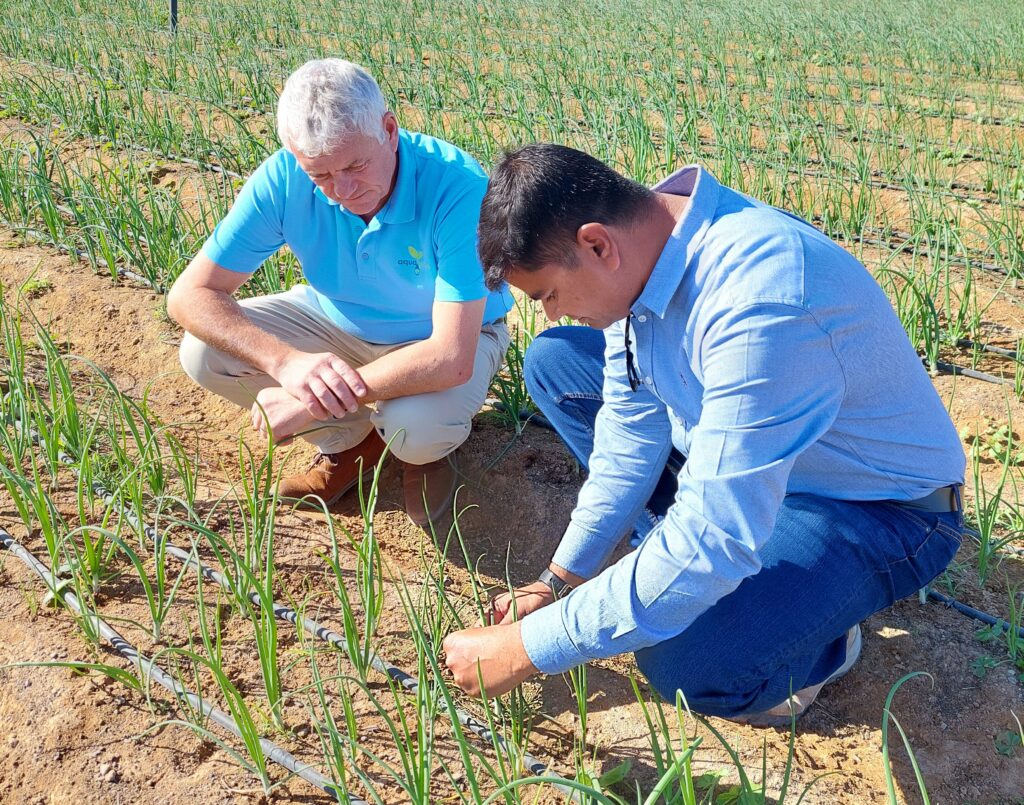
Aquagrain CEO Paul Smith and Silal’s Senior Officer Trials, Dr. Shoet Khot discussing onion trials. Photo by Aquagrain
As a simple product that requires no specialist equipment, farm machinery or infrastructure, its application could be vast. And its cost from as little as £250 per hectare could ensure a global appeal. The granules or jellies, which the company claims could increase crop yield by as much as 3 times, can be spread on fields by standard farm machinery or applied by hand, and could transform unproductive poor soils into crop-producing soils.
It could even help reverse desertification. Aquagrain tests have shown that it can cut sand movement by 99% in winds up to 30 kph, protecting crops from wind blow at the critical early stage of development. Its sandy crust also reduces the evaporation of soil moisture.
While animals on the land have become one of the most hotly contested issues in arguments about climate change, regenerative farming, which harnesses the power of their natural fertilizing capacity, is gathering clout. Aquagrain says that its innovative technology supports the growth of this natural form of farming while cutting emissions from the disposal of their waste. By improving crop yields, this low impact technology with no directly comparable products could prove to have a massive influence in reducing hunger.
The company now wants to deploy its product globally. As Aquagrain is made from meat and dairy industry waste streams which, in most countries, have strict biosecurity and food safety regulations, the transportation has regulatory hurdles. Aquagrain says that by building production facilities at the source of the organic waste streams within each regulatory region, it would avoid these regulations, reduce emissions for transporting materials and invite fewer cultural objections to the source of Aquagrain’s organic ingredients.
An ancient fruit tree could be the answer to thousands of families in South America at risk of becoming climate refugees as slash and burn threatens to destroy their farmlands.
The super-resilient, nitrogen-fixing Inga tree has been central to food culture in pre-Columbian Peru for thousands of years, its fruit sold in local markets and making up the basic indigenous diet.
But slash and burn, the farming practice which is used to clear land for planting, has resulted in the rapid loss of soil fertility. 200,000 acres of rainforest are destroyed every day by slash-and-burn agriculture, forcing subsistence farming families to clear new patches of rainforest to feed themselves. And as the climate crisis brings severe heat and drought, thousands face starvation with no alternative than to flee to cities to find food.
The Inga Foundation believes that its Inga tree model can reverse this agricultural practice while improving livelihoods among the rural poor. It says it can create employment, particularly for women and young people, without the need for loans to invest in new technology.
During El Niño in 2023, Honduras experienced prolonged and intense drought with over four months without a drop of rain, sparking concerns about the loss of many thousands of trees. Yet within two weeks of the first rainfall, defoliated Inga trees began to regrow their foliage. The Inga Tree Foundation claims that this shows that tree-based systems are resilient to climatic violence.
The Inga Foundation has trained 450 Honduran farming families to plant alleys of 5 million Inga trees, regenerating 600 acres of steep, degraded slopes, sequestering carbon, protecting wildlife and marine habitats, preserving watersheds, and creating new springs. The trees are planted in hedgerows and along contours with crops planted in between the rows, breaking the destructive cycle of slash-and-burn and allowing farming families to stay on their land and aim for sustainable food security. Inga nurseries have already distributed over 350,000 cacao plants, 75,000 black pepper plants, thousands of hardwoods, citrus, avocado, vanilla, turmeric, and many other crops.
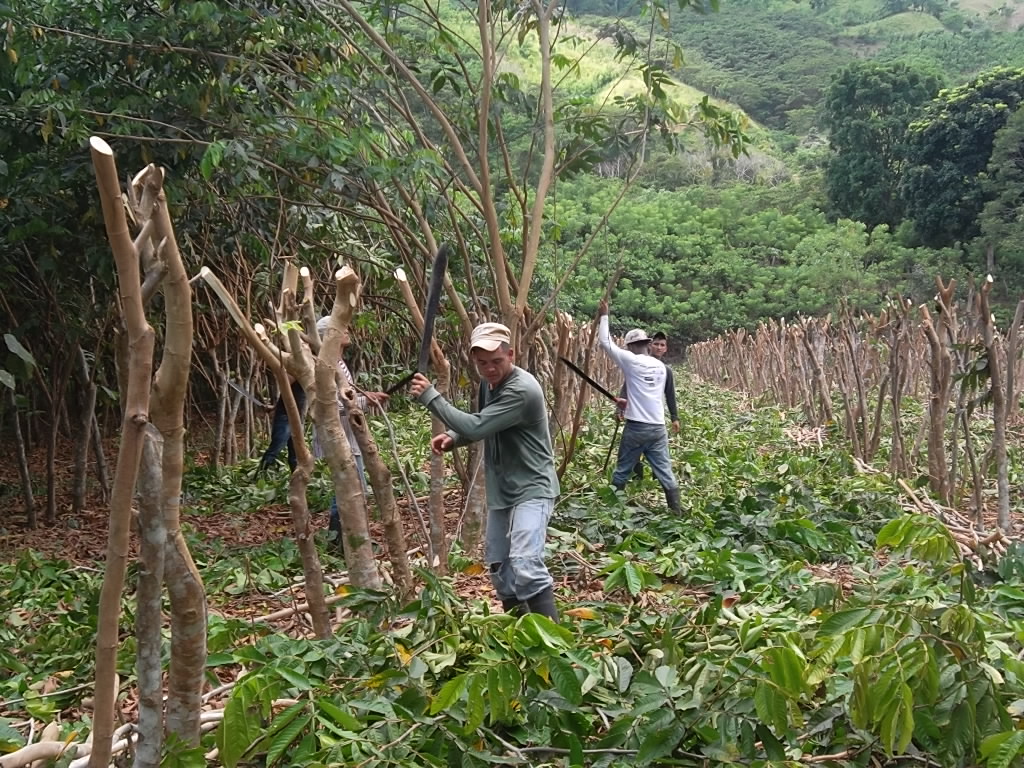
Pruning operation on a demonstration farm at Las Flores in the Cuero valley, Atlántida, Honduras. Photo by Inga Tree
The mulch of the Inga tree provides a unique environment for corn and beans, vital food as well as cash crops, to grow without irrigation or a drop of rain. The thick mulch from the pruned leaves keeps the soil cool and moist, and the fast-regrowing trees shade crops such as coffee, cacao, and tea. The Foundation claims that within 18-24 months, the participating families have become completely self-sufficient in basic grains.
The alleys of trees have been shown to provide much more than food; planted near the family homes, they stop erosion and mudslides, and provide vital renewable firewood when the trees are pruned annually.
The Inga Foundation claims that its alley cropping is a fully integrated ecosystem which naturally recreates conditions of the forest floor, stabilizing and replenishing the soil and slowing the socially destructive rural-urban migration, which could have life-changing results for the rural poor. Working with the local farm workers is about graining trust, and the Inga Foundation has built a demonstration or pilot farm at Las Flores in the Cuero valley, Honduras where they run regular open days to allow families from across the area to come and see the benefits for themselves.
The program claims to be the most successful of its kind, fulfilling 14 of the United Nation’s 17 Sustainable Development Goal (SDGs), its blueprint for achieving a better and more sustainable future. And now the Foundation believes that the model could be rolled out across all humid tropics where the rural poor are being forced off their depleted land to find food.
Challenge: Producing more food without the need for more agricultural land
In the context of environmental and health crises, as the world’s population continues to grow, so does food insecurity. Our present cultivation systems cannot keep up the pace.
There is heightened pressure to produce more food without expanding agricultural acreage. By encroaching on vulnerable, untouched lands, yield-decreasing pathogens infest new areas whose crops are not prepared for such pathogens. We then use fertilizers to boost productivity, but plants absorb them inefficiently, leading to environmental hazards such as the nitrification of soil and freshwater. Moving some food production offshore could alleviate “exhausted” agricultural lands.
The world’s current agricultural practices are also vulnerable to the ever-growing soil salinization, increased droughts, increasingly frequent extreme weather events, and higher temperatures jeopardizing yield. Finding innovative ways to grow foods, especially staple foods, becomes imperative to combat food insecurity.
Rice is a major staple food everywhere on the planet. In the 2020/2021 crop year, the global population consumed over 500 million tons of rice. Nearly half of us eat it daily. Yet, it’s among the most resource-intensive staple grains. On average, it takes 1,432 liters of water to produce one kilo of the ubiquitous carbohydrate. Finding less thirsty ways to grow rice would help the food system reduce its contribution to the growing water scarcity.
Country: UK
The adage ‘there are plenty more fish in the sea’ no longer rings true in many parts of the world. Destructive fishing techniques, rising ocean temperatures and other human influences have devastating effects on the distribution, productivity, and species composition of global fisheries. Taking only as much fish as we need is a key sustainability challenge. But this is not as simple as it sounds. Even when we try to be selective, not all fish that end up in nets are intended to be there. According to the Food and Agriculture Organization of the United Nations, between 8 and 25% of the total global fisheries catch is discarded each year due to a technical inability to accurately target and catch the right fish, at a cost of €1.59bn per annum. In the fishing industry, by-catch refers to the fish or other marine species that are caught unintentionally while fishing for a certain target species. Bycatch can be a problem especially when endangered, threatened and protected species are accidentally caught, injured or killed. Catching the wrong species can also disrupt the food chain by inadvertently catching fish species that other fish rely on as food.
Guided by science and the knowledge that fish species are attracted or deterred by certain colors of light, SafetyNet Technologies has developed a series of light emitting products to keep non-target species at bay. One of SafetyNet Technologies’ products is Pisces, a kit of lights that can be attached to fishing gear to repel unwanted bycatch. The fisherman can select specific light colors before dropping their nets. This allows for greater control over the composition of the catch. Studies have shown that lights can reduce by-catch by 90% in some instances. Pisces provides light for more than 270 hours of use and can help fishermen comply with fishing regulations that require the use of sustainable fish gear, says SafetyNet Technologies.
The Challenge: Vulnerable marine habitats beyond mere preservation
Biodiversity loss, largely caused by the food system, is one of the gravest risks to human and planetary well-being. Combining ecosystem conservation with measures to improve food security is crucial. Now under threat, the world’s oceans – essential to our survival and food sourcing – are no exception.
Global warming and climate change have already decreased fisheries’ yields, acutely impacting the tropics, where they will also menace agriculture. Rising sea levels destroy fertile coastal lands and reduce available groundwater for drinking. In many regions, harsher droughts are exacerbating hunger and driving farmers to resort to fishing.
Nominate yourself or someone else, it takes three minutes and could change the world!