Amid a global reckoning over how food systems drive climate change and ecological decline, the Savanna Institute is advancing a bold, evidence-based solution: bringing trees back to farms. Since 2013, this nature-based non-profit has been pioneering agroforestry in the United States’ Midwest, a region both emblematic of industrial agriculture’s challenges and ripe with opportunity for transformation.
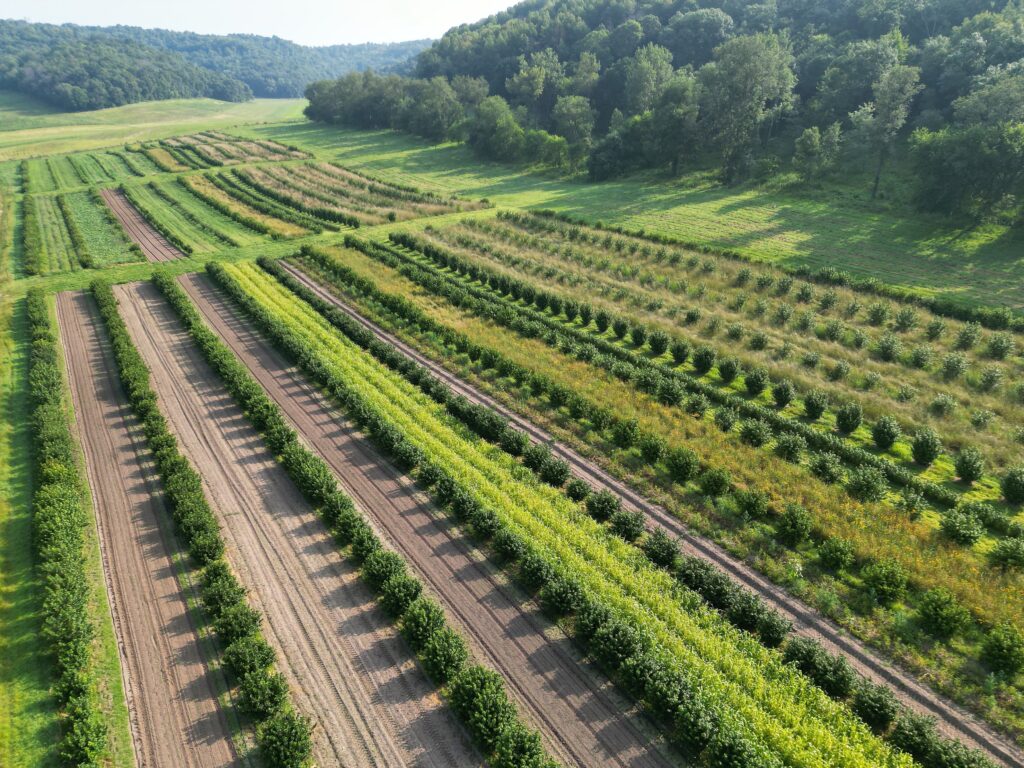
Alley cropping on display at the experimental North Farm; Savanna Institute, Spring Green, Wisconsin.
Agroforestry integrates trees with crops and livestock in systems that deliver a suite of climate, ecological, and social benefits, such as sequestering carbon at rates 5-10 times higher than conventional conservation agriculture, reducing nutrient runoff, building flood resilience, diversifying farm income, and improving biodiversity. According to the Savanna Institute, with over 5,200 acres transitioned and 400 farmers directly supported, they have become a national leader in scaling this holistic, systems-level approach.
The Midwest is one of the world’s seven agricultural breadbaskets, and also one of its most simplified landscapes. Savanna Institute sees this as both a challenge and a historic opportunity. Their approach rests on a three-phase strategy: de-risk agroforestry through demonstration farms and technical assistance, scale implementation by supporting early adopters and building markets, and expand possibilities through culture change and policy.
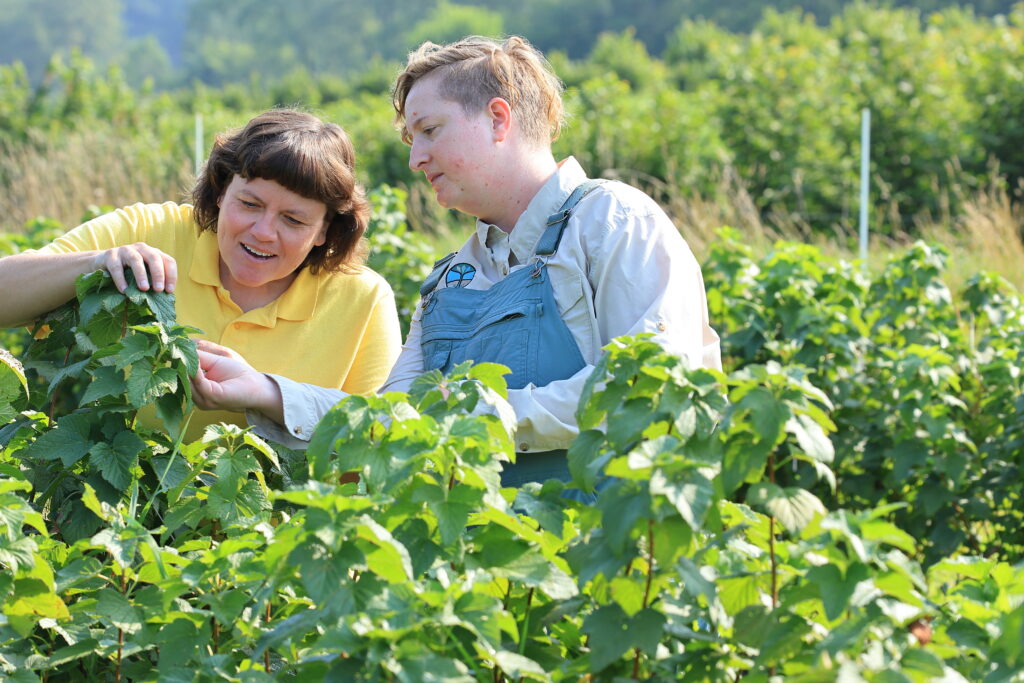
Agricultural scientists Ebony Murrell and Lily Hislop examine black currants being grown in a silvopasture demonstration plot at experimental North Farm; Savanna Institute, Spring Green, Wisconsin.
According to the initiative, what makes them distinct is their integration of cutting-edge science, deep practical experience, and systemic thinking. Their research team leads breakthroughs in perennial crop development—such as sequencing the American hazelnut genome and deploying drone-based yield analysis—bringing tree crops into the 21st century. Their technical assistance network now supports over 100 new farms annually, with demand far outpacing capacity.
The Institute has also created critical infrastructure: seven demonstration farms and a network of partner farms across eight states host over 1,200 visitors per year, offering tangible proof that tree-based systems can succeed at commercial scale. In partnership with landowners and philanthropic investors, they launched Canopy Farm Management, a business that offer implementation services and finance tree crops, further breaking down barriers to adoption.
Agroforestry isn’t just climate-smart agriculture, it’s people-smart too. These systems offer diversified revenue, reduce pesticide use, improve water and air quality, and reconnect farmers with long-term land stewardship. The Institute says it supports intergenerational land planning, strengthens rural economies through skilled labor and value-added processing, and offers culturally resonant practices rooted in Indigenous ecological knowledge.
Looking ahead, Savanna Institute aims to help scale agroforestry adoption to 39 million acres in the U.S. by 2050, as outlined by the IPCC. Their plan is grounded in theory, tested by practice, and adaptable globally. Already, their farmer-led model is being replicated in other U.S. regions and shared internationally through networks like the Agroforestry Coalition and International Union for Agroforestry.
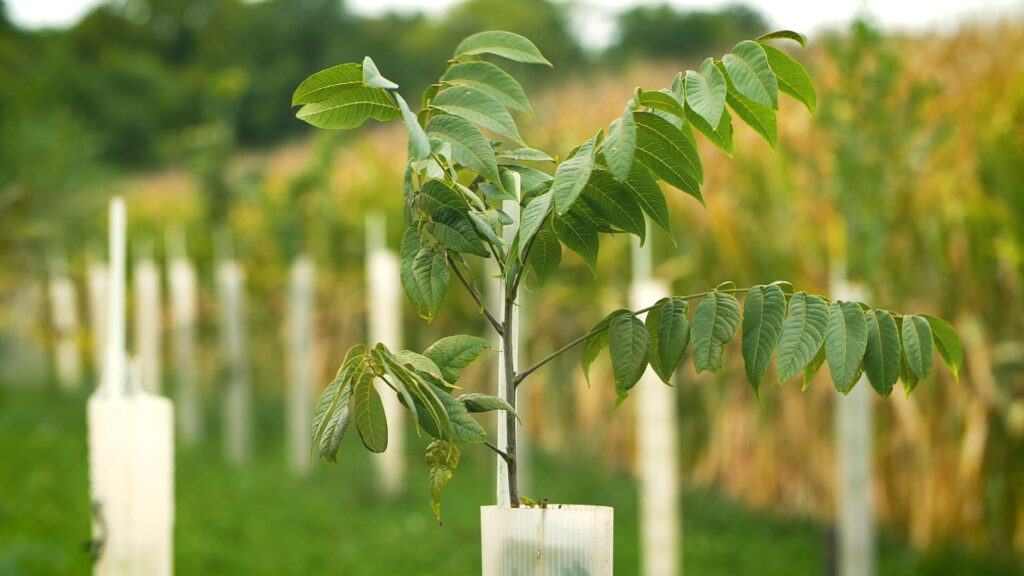
Young walnut trees growing in tubes near cornfield, Illinois.
Savanna Institute is positioned to make multifunctional agriculture the norm, not the exception, starting in America’s heartland and spreading outward. As climate pressures escalate, their work offers a compelling roadmap for food system transformation rooted in resilience, regeneration, and trees.
Written by Sarah Souli Photos provided by the Savanna Institute
Country: USA
In the fight against climate change, agriculture is often seen as part of the problem. But what if it could be part of the solution, at scale, and without disrupting food production? That’s the ambitious goal of the Harnessing Plants Initiative (HPI) at the California-based Salk Institute for Biological Studies. They’re doing so by getting to the root of the issue—plant roots, that is.
Launched in 2017, HPI takes a fundamentally different approach to climate-smart farming. Rather than changing how we grow food, they are examining the plants themselves. HPI has zeroed in on root systems, enhancing them to capture and store more carbon dioxide underground, where it can remain for centuries. Roots are nature’s underground carbon storage system. Every growing season, plants absorb CO₂ from the atmosphere and push a portion of it below ground through their roots. But most modern crops, selectively bred for above-ground yield, have shallow, underperforming root systems that lose carbon quickly to the atmosphere. HPI is working to reverse that.
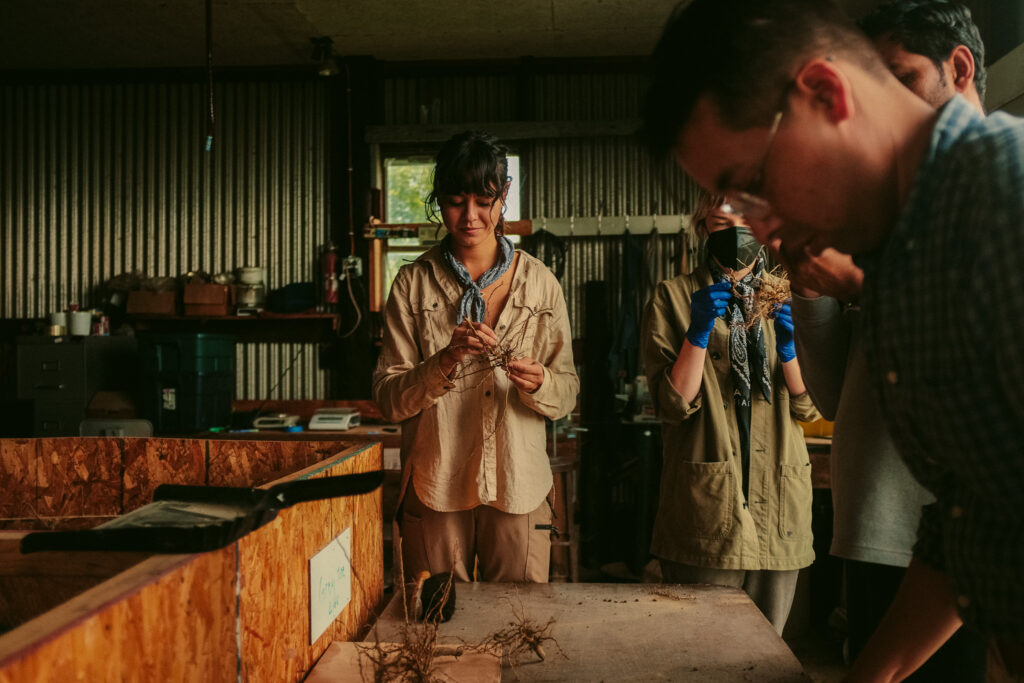
HPI researchers examine harvested root systems in the field lab, assessing traits linked to soil carbon storage and plant resilience under changing climate conditions.
Through their CRoPS (CO₂ Removal on a Planetary Scale) program, the initiative uses advanced genetic tools—CRISPR, transgenics, and conventional breeding—to improve three key root traits across major staple crops: depth, biomass, and suberin content. Suberin is a waxy biopolymer that makes root tissue resistant to decomposition. The deeper and more durable the roots, the longer carbon stays in the soil.
HPI’s early results are striking. According to the organization, a single gene modification can boost target traits by up to 400%, and enhanced crops could sequester up to one extra ton of CO₂ per acre each year. Scaled across the 814 million hectares planted globally with crops like maize, rice, wheat, soybean, and canola, the climate potential is massive—up to 2.7 gigatons of CO₂ removed annually.
HPI’s enhanced crops require no new equipment, no yield trade-offs, and no costly inputs. That makes them accessible to both conventional and regenerative farmers alike. The team is also working with global nonprofit breeding centers to ensure that smallholder farmers, especially in low-resource settings, can benefit, while simultaneously partnering with commercial seed companies to reach commodity markets.
Their impact goes beyond carbon. Healthier, deeper-rooted plants improve soil structure, water retention, and nutrient availability, increasing resilience to drought and reducing reliance on fertilizers. Over time, this could revitalize degraded farmland and open up new areas for sustainable food production. The initiative says they reached a major milestone in 2025: their first field trials of enhanced crops. Backed by a state-of-the-art research platform housing genomic data from 900 plant species, advanced imaging, and single-cell RNA sequencing, HPI has already identified over 350 genetic leads, with 38 improved plant lines under study.
With ongoing work in isotope labeling and soil carbon monitoring, HPI is building the foundation not just for improved crops, but for credible, verifiable carbon markets. Ultimately, HPI sees agriculture not just as a source of food, but as a global-scale climate solution that can restore soils, support farmers, and help pull carbon from the sky back into the earth.
Written by Sarah Souli Photos provided by the Harnessing Plants Initiative
Country: USA
A once-dismissed discovery in Yellowstone’s geothermal soils is now helping farmers worldwide fight drought, boost yields, and reduce dependence on chemical fertilizers.
SEATTLE, U.S.A. –
Russell “Rusty” Rodriguez didn’t expect to find a key to climate resilience in the superheated soils of Yellowstone National Park. But in 1999, while studying how plants survive in extreme conditions, he and his colleagues Regina Redman and Joan Henson stumbled upon something that could transform global agriculture. They thought their discovery would be celebrated. Instead, they were met with resistance from many scientists.
At the time, Rodriguez was part of the faculty at University of California, Riverside, focusing his research on plant pathology—studying fungal pathogens and what differentiates them from beneficial fungi. He was curious to find out how plants adapted to climate stressors, particularly heat and drought.
Drought pressure causes stunted growth in plants, as well as loss in crop yield and reduced seed germination. Drought has become the biggest concern in terms of food security, putting millions of people at risk of hunger. One quarter of the world’s crops are grown in areas where water supplies are highly stressed and unreliable. Rice, wheat, and corn, which provide more than half the world’s food calories, are particularly vulnerable. Maize crop yields have been projected to decline by 24% by 2030, thanks to climate change impacts.
Since the 1960s, there has been an enormous effort worldwide to generate drought-resilient crops, says Rodriguez, from trying to breed drought-adapted plants with crop plants, to genetic engineering. “And that has been largely unsuccessful,” he adds. “There are no commercially available heat- or drought- tolerant crops—anywhere.”
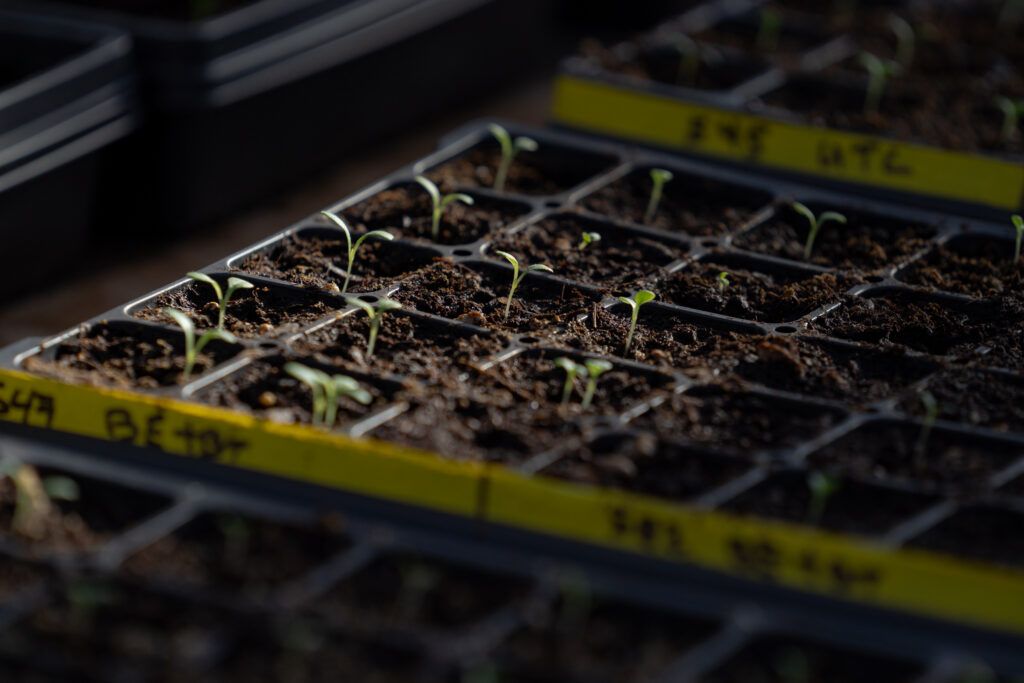
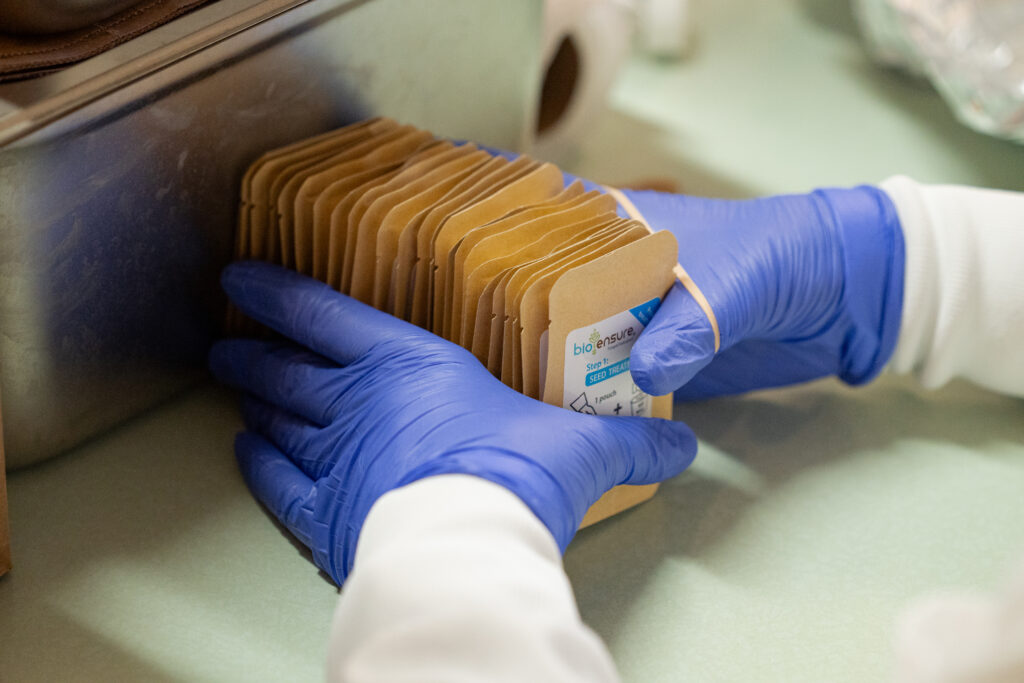
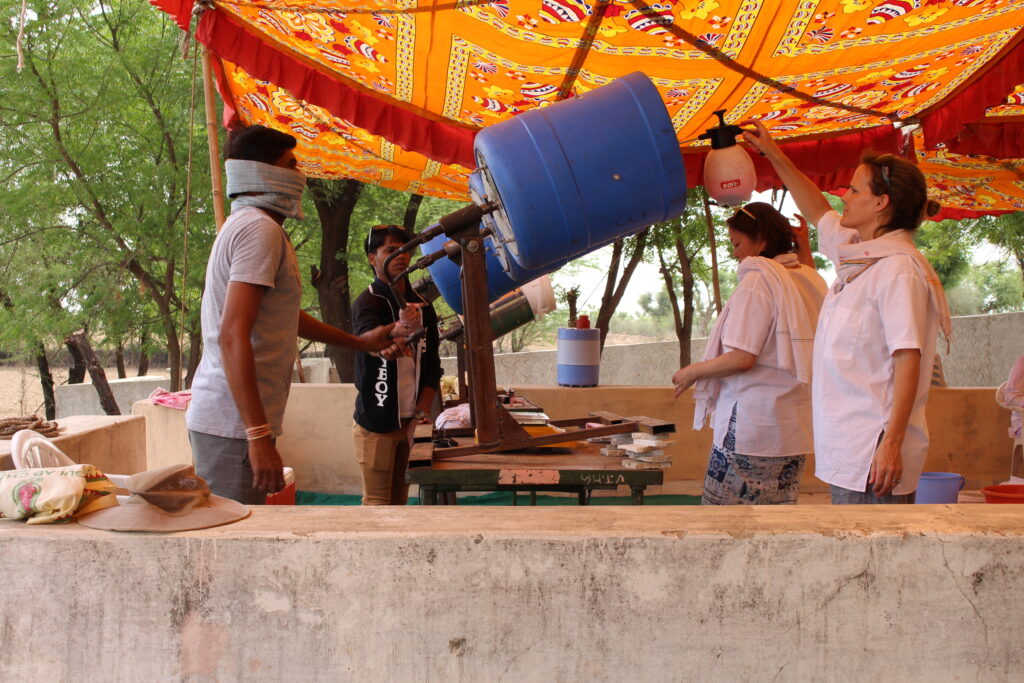
Plants treated with different levels of symbiotic fungi.Researches package spore packets for farms in Ghana.
The approach, Rodriguez says, was a bit naive. “They were focused on the plant being in control of its own destiny.”
It has been common knowledge for a long time that plants are colonized with microbes—just like us. Mycorrhizal fungi are the most well-known; they form a symbiotic relationship with the plant’s roots and grow into the soil, transferring nutrients and water to the plants.
But not all plant-supporting fungi live in the soil. Some, called endophytes, reside entirely within the plant, weaving themselves between its cells. Unlike their more famous counterparts—mycorrhizal fungi, which extend root net- works—endophytes work from the inside out, influencing how plants respond to their environment.
“We knew that plants can adapt to stressors,” Rodriguez explains. “There are desert plants, cold plants, there are all sorts of stress-tolerant plants. So my colleagues and I decided to start asking questions about how plants adapt.”
Very few scientists, says Rodriguez, have asked this question of whether plants are in charge of their own destinies. “Being a microbiologist, I’m more biased on that front, and we’d already learned so much about how microbes can influence plants, so we went out and started looking at whether microbes influenced how plants adapt to stressors.”
Back in the late 1990s, Rodriguez and his colleagues went out to Yellowstone National Park, where in geothermal areas there are places where plants thrive despite the soil being very hot, sometimes reaching up to 65.5°C (150°F). “We started asking questions about how they survive.”
Eventually, by running field tests for more than a year, the scientists found that the plants were colonized by endophytes—and it was these endophytes, living inside the plants, that were the reason why these plants could survive under such intense conditions. The moment of discovery is seared in Rodriguez’s mind. “I’ll never forget it,” he says. “We were like, ‘Wait a minute, wait a minute, let’s check the maps and make sure we’re seeing this right.’”
They were seeing it right. “Turns out that these fungi were responsible for the plants ’ ability to tolerate the higher temperatures,” says Rodriguez. We realised that this could be an answer for mitigating the impacts of climate change. These fungi have a profound impact on plants.”
From Scientific Skepticism to Agricultural Breakthrough
The scientists published their discovery in 2002. But the paper was not well received. “At the time I thought, ‘oh, you make a great discovery and people will embrace it’,” Rodriguez remembers. “But we got a lot of heat from the scientific community. I was yelled at in meetings. Our discovery did not fit into the paradigm of ecology and plant biology, and after that we had difficulties getting grants and getting our papers published.”
For the next decade, Rodriguez and his team conducted intensive lab research to support their discovery, including growing the plants in hot conditions without the endophytes (they died). “But when we put the plants back together with the endophytes, they could survive these 150F temperatures again,” Rodriguez says. “The symbiosis between the plant and the endophytes was clearly responsible for their heat tolerance.”
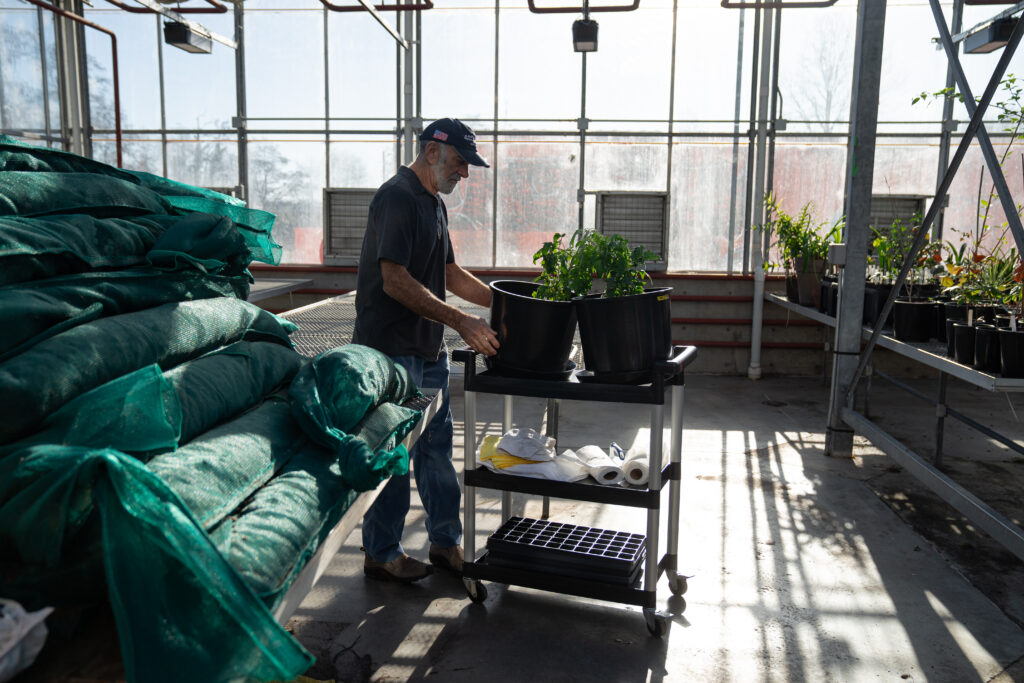
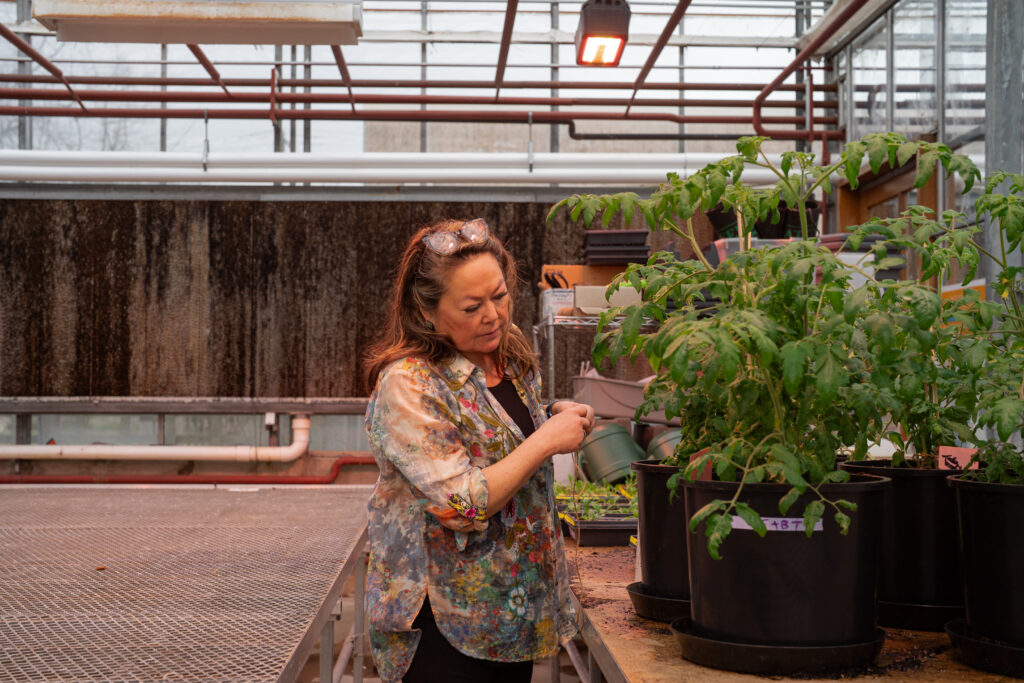
Rusty Rodriguez moves plant experiments at the University of Washington greenhouses.Regina Redman checks on a tomato plant at the University of Washington greenhouses.
Through experimenting with different plants from different stressful environments, such as salinity and cold, Rodriguez and his colleagues found that the plants needed the specific fungus that was indigenous to the soil the plants came from to survive. In fact, it’s a virus in the fungus that enables heat tolerance—it’s a three-way symbiosis.
Years of academic scepticism pushed Rodriguez in a new direction. If he couldn’t convince the scientific establishment, he’d take his research directly to the field. In 2012, he launched Symbiogenics, a nonprofit focused on applying his findings to real-world agricultural challenges. Around the same time, his wife, geneticist Regina Redman, was developing a startup, Adaptive Symbiotic Technologies (AST), to create climate-resilient plant treatments that harnessed beneficial fungi. Their work aligned perfectly—so they joined forces.
Eventually, AST landed enough funding to bring on staff and focus on developing a product, opening a laboratory in Seattle, Washington. They began field trials on land across the globe ranging from small plots to 100 acres, and have performed more than 1,000 trials since 2012. Crops were sprayed with a liquid form of the fungi and the results were significant, Rodriguez says; irrespective of climate zone and soil type, when the fungi were applied to plants, crop yields increased. During low-stress growing seasons, treated seeds increased crop yields by an average of 3-5%, during high-stress growing seasons, there was an increase of up to 50%.
Entering the Market
In 2017, they commercialized their first product, BioEnsure, a fungal inoculant liquid that can be sprayed directly onto plants, either at seed stage, or when they’re fully grown. They began a partnership with an independent seed company to conduct large-scale experiments on corn and soy fields that had been damaged by heat and drought. Within just a matter of days, the plants began recovering. Not only that, but the company ended up with large yield differences between the control crops that weren’t treated and the crops that were.
“They started buying from us the next year, and now they put our product on all their seeds,” says Rodriguez.
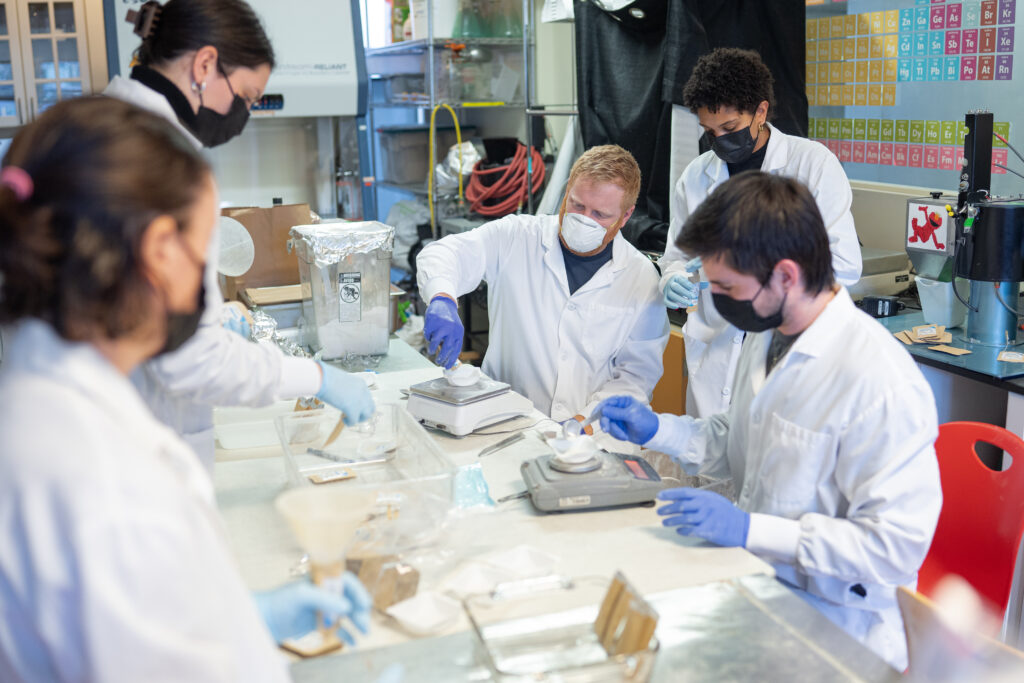
Researchers prepare spore packets for farms in Ghana at the Adaptive Symbiotic Technologies lab.
Since 2017, the year AST went commercial, BioEnsure has been sprayed on 12 million acres in the U.S., primarily soy and corn. It’s been a difficult arena to expand into, though, due to the dynamics of large seed companies, and AST mostly takes on smaller agricultural distributors.
But while AST faces roadblocks in the U.S., its potential is being recognized abroad. In India and Africa, smallholder farmers—who bear the brunt of climate change—are already seeing yield increases of up to 60% using AST’s treatments, the company reports. According to the farmers, the quality of the yield also improved.
AST now has four products for sale, including the fungal inoculant liquid BioEnsure and BioEnsureFP—a powder version of the original.
After creating the fungal inoculant products, the AST team wanted to see if they could boost the yields that BioEnsure produced by developing a bacterial product that would act as a fertilizer, fixing atmospheric nitrogen—an essential plant nutrient—and making soil minerals such as potassium and phosphorus easier for the plant to absorb.
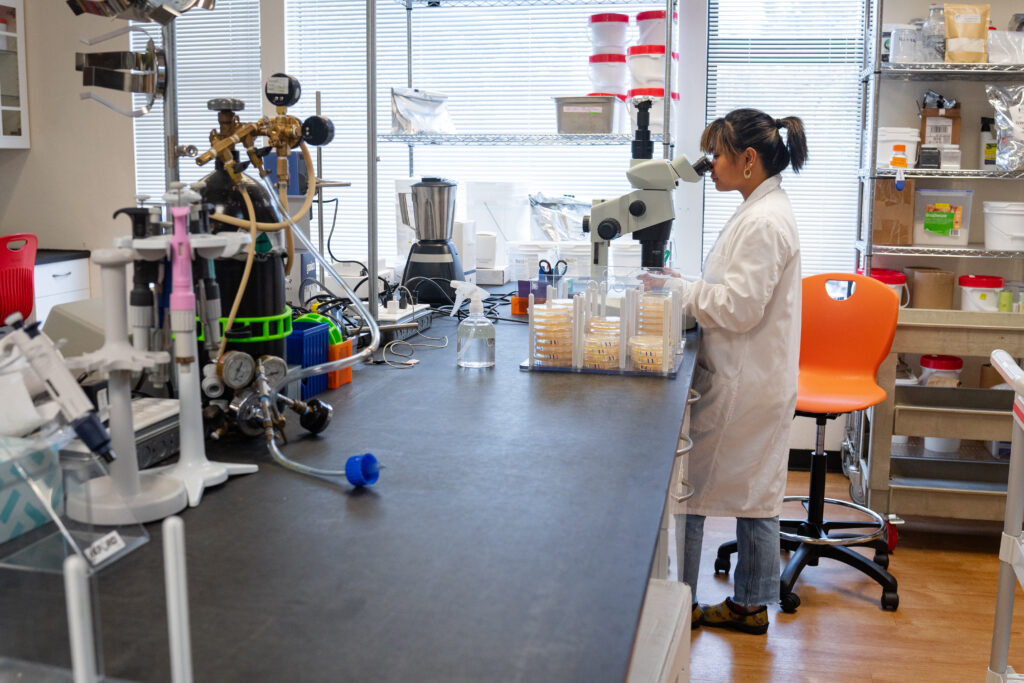
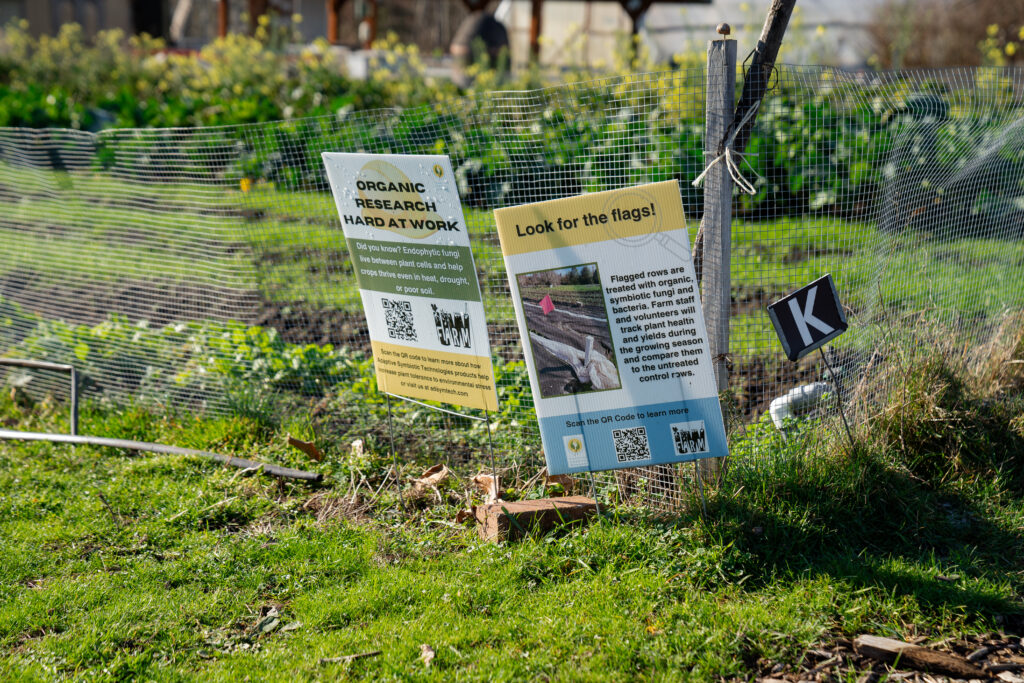
A scientist sample testing at the Adaptive Symbiotic Technologies lab.Signage at the University of Washington farms indicates rows of crops treated with symbiotic fungi and bacteria.
They came up with BioTango, a bacterial inoculant powder, and BioIQ, a blend of BioEnsure and BioTango, in powder form. All products are organic and have been found to increase crop yield and yield quality, as well as improved seed germination. AST has introduced BioTango in Ghana and found it replaced at least 50% of chemical fertilizers used by farmers. Tests on corn in Indiana showed using BioIQ increased yield by up to 15.3%, and in soy crop testing in Michigan, yield increase was 12%.
There is no shortage of farmers who would welcome yield increases like these. There are an estimated 570 million farms on the planet, and about 80% of them are operated by small landowners. So the question, Rodriguez says, becomes: “How are you going to reach 456 million farmers?”
AST doesn’t have the resources to hire a big sales team to reach that many farmers. Instead, they develop products that fit into the existing supply chain. Rather than individual farmers, they work with distributors who sell their product to farms. And they’ve worked to boost their production system so they have the capacity to produce 30 million acres worth of product each year.
This year they are beginning to work with farms in Canada, as well as branching into the country of Jordan. With further expansion into the Middle East and Africa on the horizon, Rodriguez is hoping that these humble fungi could bring about global change.
BioFiltro is an innovative climate tech company providing wastewater treatment solutions. BioFiltro sees the earthworm as the answer to several of the most pressing environmental challenges in sanitation, agriculture and food production, from water pollution and scarcity, to soil health and climate change.
At the heart of BioFiltro’s technology is the BIDA System, a patented vermifiltration system which harnesses the natural abilities of earthworms and microbes to clean organic liquid waste.
This ingenious approach features a biological reactor with a filter medium—usually wood chips—providing a home for earthworms and microorganisms that have numerous beneficial outcomes. Wastewater is intermittently sprayed onto the biomass, where it undergoes a remarkably efficient, low-energy purification process through natural filtration.
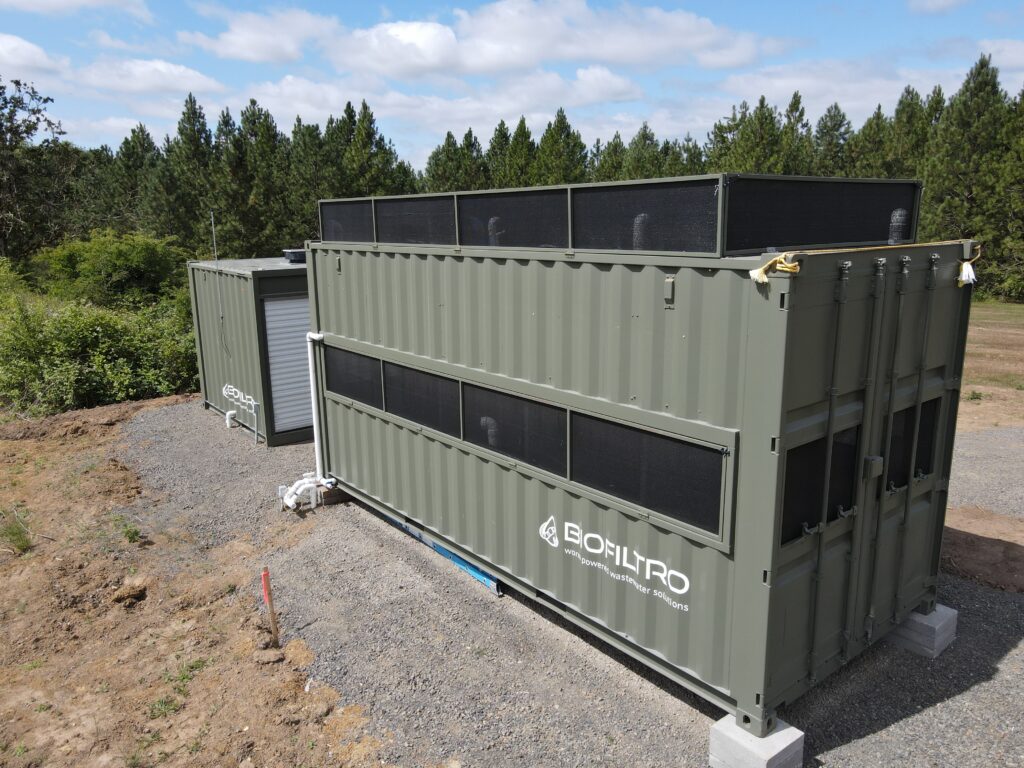
The BioFiltro BIDA System is highly accessible with container-sized units available for installation in sanitation and smaller food production applications like wineries.
BioFiltro claims the BIDA System could eliminate 70% to 99% of total nitrogen, phosphorus, ammonia, and volatile solids, the organic matter found in wastewater, in just four hours. Its eco-friendly approach involves no chemical input.
The treated water can also be upcycled for agricultural reuse, including irrigation in certain applications. This is a crucial solution to global water scarcity and the increasing pressure on water resources due to climate change.
Vermifiltration dramatically cuts greenhouse gas emissions by over 90% compared to traditional wastewater management, according to BioFiltro. Strategically installed upstream, the BIDA System removes volatile solids and diverts methane production from anaerobic lagoons before it can be created.
For livestock farms, this innovative system could also reduce their greenhouse gas footprint by as much as a third. With vermifiltration, less land is needed for manure management, reliance on synthetic fertilizers is reduced, and soil health, water quality, and crop yields are increased.
The capacity to create new revenue streams from the work of the humble worm could be life-changing for the poorest farming communities; worm castings are a valuable coproduct as a soil amendment which can be sold or used to improve crop yields. BIDA’s ability to generate high-quality verified carbon credits also provides an additional income source.
According to BioFiltro, the controlled environment of the BIDA System guarantees consistent performance regardless of external weather conditions in tropical, temperate, and cold weather regions. As a result, its innovations already span the globe, boasting over 200 installations in nine different countries, tackling environments as varied as the icy expanse of Antarctica and the arid Atacama Desert in Chile.
Written by Gilly Smith Photos provided by the initiative
Country: USA
In 1993, the very first Got Milk? commercial aired, directed by action movie legend Michael Bay. In subsequent years, the Got Milk? campaigns would feature a slew of celebrities; everyone from Beyonce to Spongebob Squarepants wore a milk mustache and brought the dairy industry into Americans’ homes, asking consumers where their mustache was. Americans were already drinking a lot of milk beforehand, though milk became ‘cool’ thanks to the celeb endorsements, and the dairy industry exploded.
In 2023, U.S. milk production totaled roughly 100 billion liters; each liter resulted in 3 kg of carbon dioxide (CO2) emissions, or a total of 300 billion kg of CO2 emissions annually. How best to reconcile our love of dairy with the crippling cost it has on the climate? TurtleTree Labs has one potential solution. They operate a precision fermentation (PF) platform to produce animal-free, vegan-certified functional dairy proteins that can be used in a variety of ways. Their first product, recombinant bovine lactoferrin (rbLf), is currently used in food and beverage and can be additionally used in nutritional supplements, infant formula, cosmetics, and more. The company’s goal is to enrich plant-based milk with animal-free dairy proteins to provide functional, healthy, and sustainable milk to all. Unlike many PF companies focused on nutritional proteins like whey or casein, TurtleTree specializes in functional dairy proteins like lactoferrin, which has well-documented health benefits including iron regulation, immune support, and gut health.
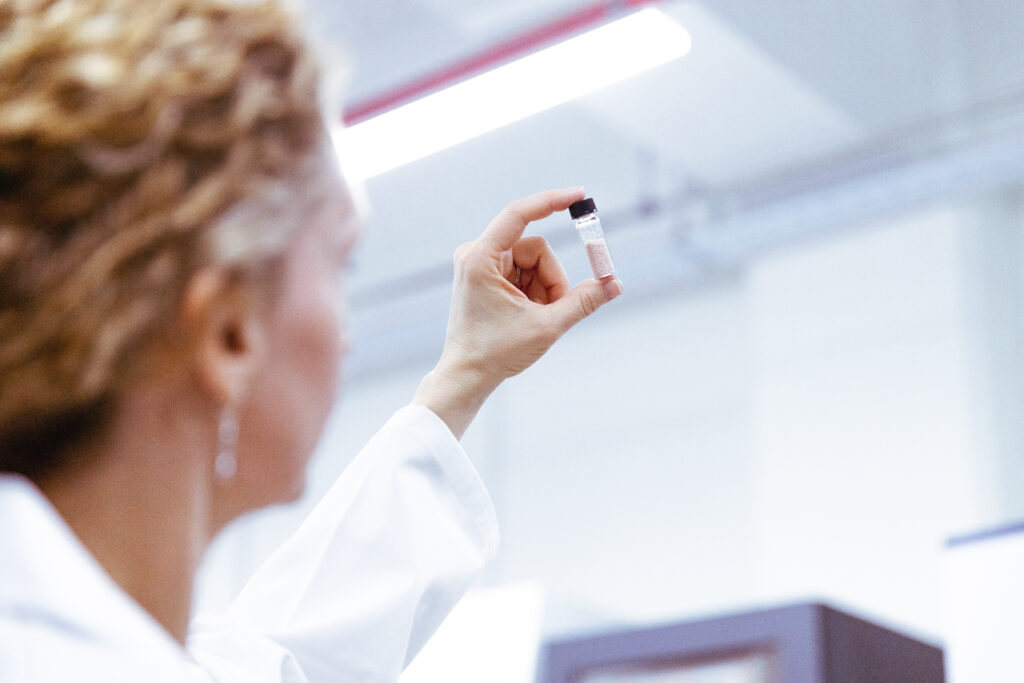
Dr. Aletta Schnitzler, Chief Scientific Officer, holding vial of their product LF+.
In order to replace dairy milk with PF-enhanced plant-based milk as a true sustainable alternative, the company believes their most impactful next step is to valorize the fermentation biomass, making use of each byproduct of the fermentation process for climate friendly applications. TurtleTree’s initial research suggests the biomass, containing residual lactoferrin, could be a beneficial replacement for components of pet food and fertilizer. According to the company, usage of this biomass would contribute to reducing waste and emissions, promoting circular economy practices, and enhancing environmental sustainability. Additional funding would allow TurtleTree to validate these innovative applications, conduct the necessary testing, and navigate regulatory approvals to bring this solution closer to market.
Internal calculations from TurtleTree estimate that 1 kg of dairy-derived lactoferrin requires 6.2M liters of water, 2.14 acres of grass hay to feed the cows, and produces 86 kg of methane emissions. The company states that replacing just 5% of the U.S. dairy market with PF-enhanced plant-based milk, assuming minimal emissions from its production, has the potential to reduce emissions by up to 13.5 billion kg of CO2 annually. While TurtleTree is currently focused on commercialization of their lactoferrin, the company believes that their PF platform and use of biomass will significantly reduce the dairy industry’s carbon footprint while providing an accessible, stable, and scalable supply of dairy proteins to consumers. It’s no longer a question of Got Milk? but rather, Got TurtleTree?
Written by Sarah Souli Photos provided by TurtleTree Labs
Country: USA
Ancient plant intelligence could be the answer to increasing crop yields for small landholders in Africa, even in the face of climate change.
Adaptive Symbiotic Technology’s (AST’s) BioEnsure and BioTango are products which have harnessed the power of plant communication to mitigate the impact of climate stress on crop production and reduce the need for fertilizer.
Plant-microbial interactions have existed for 400 million years since plants first moved onto land. Fungal endophytes are part of an ancient process that allows plants to adapt to harsh environments and use nutrients more efficiently. These fungi reside entirely inside plants and alter plant gene expression patterns, allowing them to thrive in environments they can’t otherwise survive in.
Now BioEnsure has tapped into that power of communication to help crop plants mitigate the impacts of climate change. With BioTango, a microbial fertilizer designed to synergize with it, the twin technologies could be ground-breaking, reducing climate-based crop failures and fertilizer needs while increasing food security and farmer revenue.
Coating the seeds with fungi, the initiative states that BioEnsure helps plants to adapt to water and temperature-related stress and become more resilient to the increasing challenges of climate change, the greatest threat to agricultural sustainability in this century.
Climate-induced drought and temperature stress are already limiting crop production globally. Despite many efforts to counter impacts of climate stress by generating stress-tolerant crops via genetic manipulation in the 1970s, there is still little to show for it.
The company was awarded funding by USAID to develop BioEnsure after successfully increasing yields by an average of 35% in India, according to the initiative. Bio Ensure was applied to seeds of pearl millet, mung bean, guar, sesame, mort and black-eyed peas in hundreds of small holdings in rural villages of Rajasthan.
The data was then shared with government officials, agricultural distributors, seed companies and NGOs which work with small landholders, enabling collaborations and partnerships to build a sustainable network. This could lead to an end to the vicious global cycle that begins with food insecurity and can lead to poverty, gender inequality, illness, political instability, and human migrations.
In 2025, the project is expanding to Africa where shortages of food and agricultural inputs increase the likelihood of mass starvation, and where farmers are already seeing the impacts of climate change. By 2026, the company hopes to expand its reach across more of the most vulnerable farmland in the world.
Written by Gilly Smith Photos provided by Adaptive Symbiotic Technologies
Country: USA
It’s an ugly truth: we waste a lot. Leftovers go directly in the trash, food spoils in supermarkets, we throw out tons and tons of produce. Globally, we waste 30% of agricultural land growing food that is never going to be eaten. In the U.S. alone, Americans generated 91.2 million tons of surplus food in 2023. The overwhelming majority of it goes into landfills, incinerators, down drains, or is left to rot in fields. Most consumers actually want to reduce their food waste—they just don’t often know how.
What’s the solution? According to the Upcycled Food Association (UFA) and Upcycled Food Foundation (UFF) we can accelerate the upcycled food economy with innovative ways to stop food waste. Founded in 2019 to prevent food loss and waste across the supply chain, the two non-profits work in conjunction: UFF advances research initiatives that help to maximize food waste reduction through upcycling and drives public consumer education campaigns, while UFA supports and connects over 200 members in 14 countries. Together, they claim to leverage market forces to prevent food waste by coordinating hundreds of global leaders and empowering millions of consumers to take action to prevent climate change with the products they buy.
They began by defining upcycled foods and grew to expand access to upcycled products and ingredients. According to the initiative, upcycled products prevent food waste by creating new, high-quality products out of surplus food. The organizations work with members and stakeholders spanning businesses and organizations of all sizes, whether they have an established upcycled product or ingredient or if they are exploring where to begin. According to the initiative, as the hub of the global upcycled industry, UFA propels innovation by providing resources and sharing best practices, connecting surplus ingredients and byproducts supply and demand, and promoting collaboration across industries.
Reducing food waste is a matter of global importance in the fight for climate change. The food we waste is responsible for roughly 8% of global greenhouse emissions. Reducing food waste is one of the largest potential climate change solutions across all sectors. The initiative states they developed the standard for the first global certification for upcycled foods, which launched as Upcycled Certified in North America 2021 and has grown to global use since. They now work in partnership with Where Food Comes From, which administers Upcycled Certified as of December 2023.
According to the initiative, since its launch, over 560 Upcycled Certified products and ingredients developed by over 100 companies have diverted 1.9M tons of food waste. Leftovers just got a lot more interesting.
Written by Sarah Souli Images provided by Upcycled Food
Country: USA
Imagine this: you spend all season growing, watering, tilling, fertilizing, and tending to your crops. When it comes time to harvest, a significant portion cannot be reaped for profit. It’s an issue plaguing farmers around the world. It is estimated that globally about 30% of the total foods produced are damaged or lost during harvest, postharvest handling, storage, on the journey from farm to market, or in the home. In some developing nations, depending on the commodity, these losses can extend to more than 50%.
The Postharvest Education Foundation (PEF) was created with the primary goal of preventing and reducing postharvest losses in developing countries through intensive informal specialty education. Their approach is to train local postharvest specialists through innovative mentor-guided e-learning programs, conducting workshops, and supplying them with postharvest tools. Additionally, PEF offers long-term mentoring to establish socio-economic development and support healthy rural communities, small-scale farmers, and food-related businesses in their home countries.
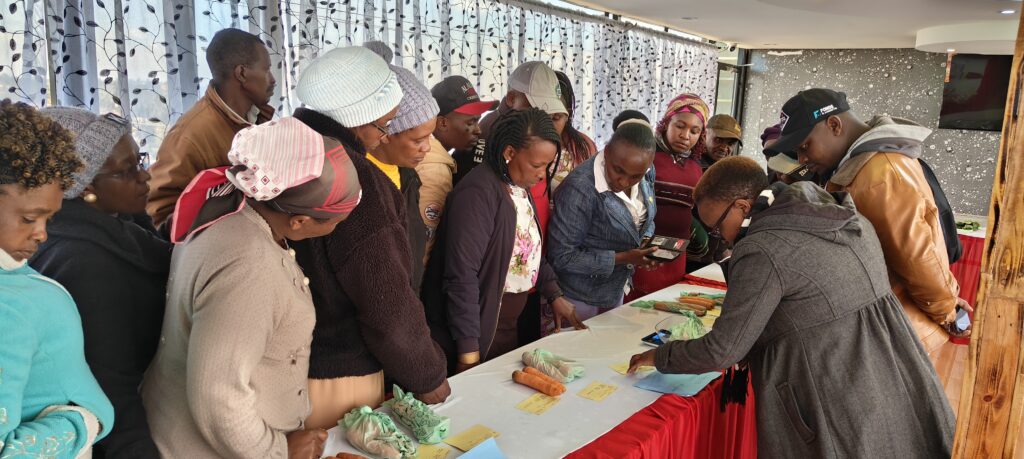
Demonstration of postharvest tools to farmer groups in Kimende, Kenya.
Postharvest loss reduction is increasingly being cited as a sustainable means to reduce global hunger and malnutrition and to reduce carbon emissions. It is imperative that farmers and stakeholders have access to information that can reduce their postharvest loss, not just for personal gain, but for the health of our food planet. Since its establishment 13 years ago, the initiative claims to have trained 181 people as postharvest specialists in 31 countries, predominantly from Africa (18 nations) and Asia (9 nations).
The PEF target audience is young graduates in middle- and low-income nations; the program content is in a simple format relevant even to small landholding farmers, who constitute the majority of farmers in developing countries. Their graduates work as extension workers and postharvest technology consultants and have trained thousands of farmers—crucially, PEF isn’t just about training the person who takes their course. The initiative is focused on creating a chain reaction of knowledge transfer. Importantly, PEF claims to stand out from other e-learning programs that can be prohibitively expensive and thus sometimes inaccessible to those who would most benefit.
PEF’s long-term vision is to design and launch Postharvest Training and Services Centers (PTSCs) in developing countries in Africa and South Asia to fill the many local gaps in food handling education, information, advice, tools, supplies, and services such as cooling, packing, and food storage. There is no reason why people should go hungry, why small-scale farmers should suffer harvest losses that decimate their livelihood, and why perfectly good food should go to waste. The PEF hopes to help farmers find smart, easy solutions to a manageable problem.
Written by Sarah Souli Photos provided by The Postharvest Education Foundation
Country: USA
A new approach to redirect global food waste to feed its inhabitants could also mitigate some of the biggest challenges of climate change.
The Global Food Donation Policy Atlas, known simply as The Atlas, claims to offer the most comprehensive examination of food loss and waste (FLW) and food donation policies in countries around the world, having worked directly in over 25 countries. Created by Harvard Law School’s Food Law and Policy Clinic (FLPC) and The Global FoodBanking Network (GFN), it aims to find solutions to global FLW and food insecurity through a circular economy approach.
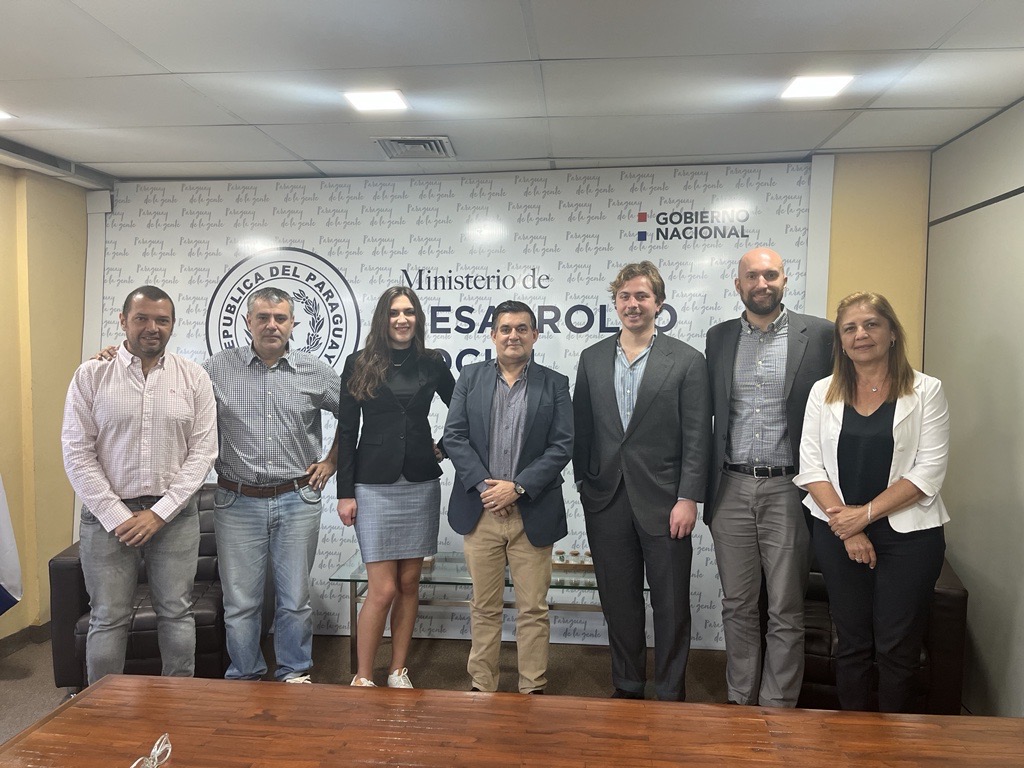
Atlas staff and student team and Banco de Alimentos Paraguay Director and board member meet with Paraguay’s Vice Minister of Social Development
Around the world, a staggering one-third of food is either lost or wasted, despite over 2.4 billion people facing food insecurity. Typically, this waste ends up in landfills, where it breaks down and releases greenhouse gases (GHGs), fueling climate change. Alarmingly, FLW contributes to 8-10% of global GHG emissions. The problem spans across the entire food supply chain, from production and processing to storage, transportation, and consumer use. Despite the clear challenges associated with FLW, existing laws in most countries make it cheaper and easier to send food to rot in a landfill instead of donating it.
To cut down on food waste significantly, it is crucial to establish policies that incentivize action across the entire food system. The Atlas uses national legal and policy frameworks related to FLW to design solutions for reducing food waste and addressing the often-complicated issues surrounding food redistribution. With Harvard’s FLPC providing legal expertise, GFN, which supports community-led solutions to alleviate hunger in nearly 50 countries, contributes practical insights and feedback from local partners. The initiative states that the Atlas has now become an indispensable tool for policymakers and practitioners focused on reducing food waste.
The initiative claims that by reducing the environmental footprint of food production and waste, The Atlas supports the health of ecosystems and diversity of species. It addresses the ways in which the global food system interacts with the major Earth systems: the geosphere by reducing the strain on resources and optimizing land use to preserve natural habitats and biodiversity; the hydrosphere by implementing effective food donation policies which reduces the amount of water unnecessarily used in food that becomes waste; the atmosphere by reducing methane emissions produced from food rotting in landfills; and the biosphere by enhancing food security and improving efficient use of natural resources.
Aligned with the principles of the circular economy, redirected surplus food becomes food for those most in need in a closed-loop system. The circular economy approach is crucial in slowing climate change and has the potential to protect the environment, reduce hunger, improve health outcomes, and enhance economic stability.
Now the team plans to widen the Atlas’s horizons and drive global policy changes by tackling a broader suite of FLW policies which will promote sustainable, locally driven policy initiatives. Since policy is key to altering behaviors, offering incentives, and educating the public and policymakers, the initiative suggests that its influence could be profound.
Written by Gilly Smith Photos provided by Harvard Law and The Global FoodBanking Network
Country: USA
Food waste is one of the most costly aspects of the food system, both to the planet and to the purse. And its carbon footprint is particularly heavy in the global foodservice sector, which accounts for 27% of worldwide food waste according to a 2024 United Nations Environment Program (UNEP) report.
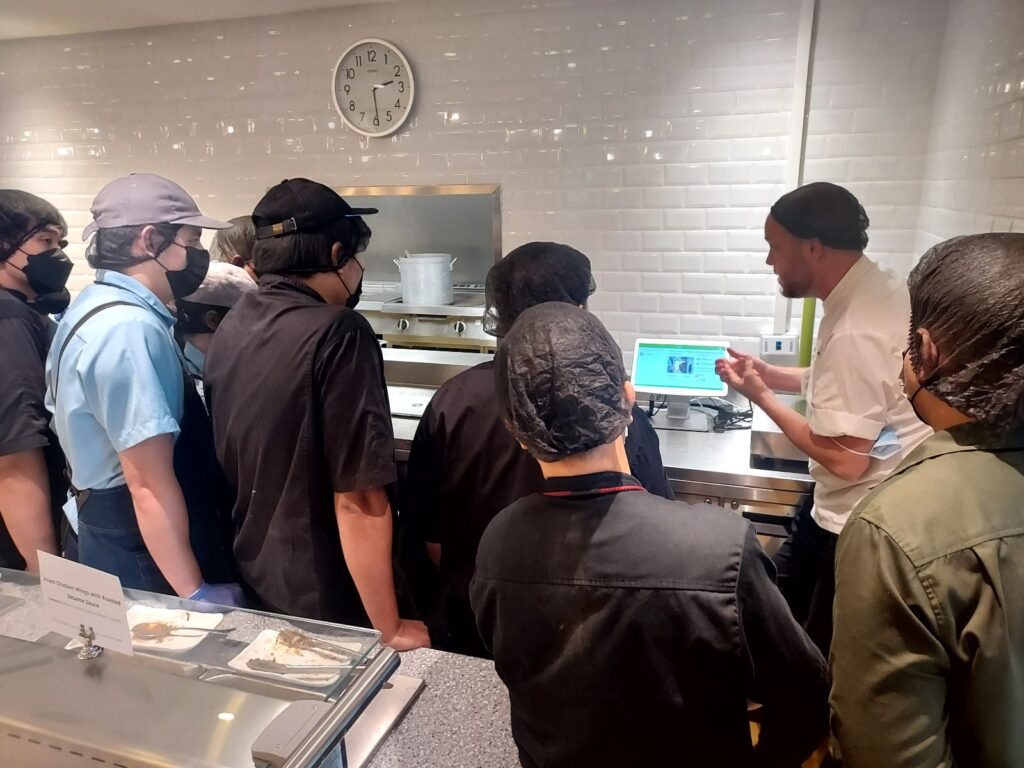
An intelligent food waste tracking system from Leanpath has prevented over 130 million pounds of kitchen waste in more than 45 countries, according to the initiative. Working with foodservice organizations across the world, its technology captures critical details of every food waste transaction in the kitchens of its clients.
Making food waste visible, claims Leanpath, is the key to drive action to reduce it. Leanpath’s suite of intelligent hardware and software tools with AI-powered tracking and a new AI-based food waste coaching assistant are designed to work together to highlight the waste that is so often hidden or forgotten in professional kitchens.
A suite of smart scales and cameras measure all food waste stemming from overproduction, spoilage, trim waste (and other sources). Leanpath’s food waste dashboard pinpoints waste patterns. With graphics giving waste overview summaries, participation reports, and trend reports, Leanpath states they create a clear new plan for behavior change with efficiency and precision driving the savings in waste and money.
In the foodservice industry, sustainability and financial goals share a common purpose. For any business looking to improve its triple bottom line, learning how to reduce waste at the source is a no-brainer. Leanpath’s aim is to reform the global food system and reach Sustainable Development Goal 12.3, which seeks to cut food waste by half. The company claims that its unique range of tools and strategies to prevent overproduction and other causes of food waste will ensure economic, social, and environmental benefits for the entire industry.
Since it was founded in 2004, Leanpath has worked with more than 4,000 sites around the globe including partnerships with Sodexo, Compass, Aramark, Google and hundreds of other clients.
Leanpath says that it has already prevented 10 million pounds of food waste at Google alone, the equivalent of eliminating 25,000 metric tonnes of carbon dioxide from the atmosphere.