A one-stop digital platform for food distributors and suppliers could tackle the root cause of food waste through AI.
Choco, a UK based tech company, claims that it has discovered a way to create food sustainability on a global scale. By transforming how orders are handled in the food supply industry, it says that it could prevent waste at source.
Its digital platform connects vendors directly with the producers, cutting out the middle man or woman, streamlining the food chain and making food travel the shortest routes possible. The company’s goal is to create a globally connected digital food system.
Choco claims that 70% of food waste happens in the supply chain before food reaches the consumer. But the company says AI can help tackle this inefficiency deep in the system where a lack of end-to-end accountability and disconnection between producers and buyers has led to a fragmented and complex structure. Without digitalization, transparency and data-driven decision-making is almost impossible.
image by Choco
Choco, which currently works with 15,000 restaurants and 10,000 suppliers to help them save time, money, and food, has a two-step action plan to address the problem. With every value-adding business across the food supply chain using its technology, the automation process, according to the company, would decrease cost, eliminate waste, and immediately increase profitability.
The app’s ability to harness the power of AI to find innovative solutions could lead to better demand forecasting, inventory management, ordering, food waste monitoring, and more accurate cost reports. This unravelling of the back end directly addresses the root causes of food waste within the food supply chain.
Choco is a third-generation business whose societal and environmental values are intrinsically linked to economic success and sustainability. It claims that by creating a direct link between commercial value and environmental impact, it can make a substantial difference in curbing GHG emissions.
And a streamlined, waste-free food system which connects suppliers directly to vendors could compensate farmers more fairly for their produce, according to Choco. The impact of this on farmers in poorer regions could lead to better access to education and community engagement. By regulating supply based on needs rather than price, Choco believes that it can help to ensure a stable and consistent food supply, fostering social stability and security.
The system could even redirect surplus food to those in need, significantly contributing to alleviating hunger and food insecurity on a global scale.
The company’s vision for the next 10 years is bold; it aims to use AI to optimize the food chain for farmers and manufacturers from source to plate, solving food sustainability on a global scale. It says that it has proven the model in Europe, North America, South America, the Middle East, South East Asia, and Australia.
To meet growing global demand, meat production is projected to increase by at least 50 percent from 2012 levels by 2050. If the world is to achieve our climate, biodiversity, public health, and food security goals, making meat differently via alternative proteins will be as essential as the global transition to renewable energy. By reimagining how meat is made, we can produce food that people love and usher in a more sustainable, secure, and just food future.
Alternative proteins—meat made from plants, cultivated from animal cells, or produced via fermentation—are designed to taste the same as or better than conventional animal products while costing the same or less and providing equivalent or better nutrition. Transitioning toward alternative proteins can dramatically reduce emissions, require far less land, eliminate the use of antibiotics in our food system, and feed more people with fewer resources.
Good Food Institute (GFI) is a nonprofit think tank working to make the global food system better for the planet, people, and animals. Alongside scientists, businesses, and policymakers, GFI’s teams focus on making alternative proteins delicious, affordable, and accessible. Powered by philanthropy, GFI is an international network of organizations advancing alternative proteins as an essential solution needed to meet the world’s climate, global health, food security, and biodiversity goals.
Their work centers on developing a roadmap to improve the way protein is made, by identifying the most effective solutions, mobilizing resources and talent, and empowering partners across the food system to make alternative proteins accessible, affordable, and delicious. GFI accelerates alternative protein innovation, working in the most critical economies and regions for alternative protein advancement: Asia Pacific, Brazil, Europe, India, Israel, and the United States. GFI maps out the most neglected areas that will allow alternative proteins to compete on taste, price, and nutrition and meets these challenges by developing open-access research and resources, educating, and connecting the next generation of scientists and entrepreneurs, and funding research that benefits alternative protein development across the sector.
photo by Good Food Institute
GFI also seeks to ensure that alternative proteins are a part of the policy discussion around climate change mitigation, global health, bioeconomies, and food security. In every region where GFI has a presence, they advocate for public investment and incentives to transition toward alternative proteins and say they are paving the way for the approval of novel proteins such as cultivated meat.
Further, GFI works to replicate past market transformations by showing companies of all sizes, from startups to multinationals, how alternatives to animal products can be profitable while meeting sustainability goals.
Finally, GFI is committed to free knowledge sharing. Unhampered by IP laws or trade secrets, their research, data, and insights are open-access and support the advancement of every innovator. They believe that governments should fund alternative protein R&D and incentivize private sector research, manufacturing, and infrastructure build-out.
According to GFI, which is supported by a global community of donors, in 2022 they awarded over $4 million in grants to projects across 13 countries on five continents. Their insights and resources were sought and featured in leading global and national media outlets, and they published 50 reports, resources, and peer-reviewed papers. They have 53 Alt Protein Project student chapters across North America, Europe, Asia, Africa, and Australia, and are growing. The future of how we feed the world is up to us, and GFI is leading the way.
The data behind what we eat and how it’s produced should play a critical role in informing policies that support healthy people and planet. But this data has been fragmented, confusing, and difficult for policymakers to use. The Food Systems Dashboard is changing that by making food systems data and insights accessible to all, especially for decision makers who need it most.
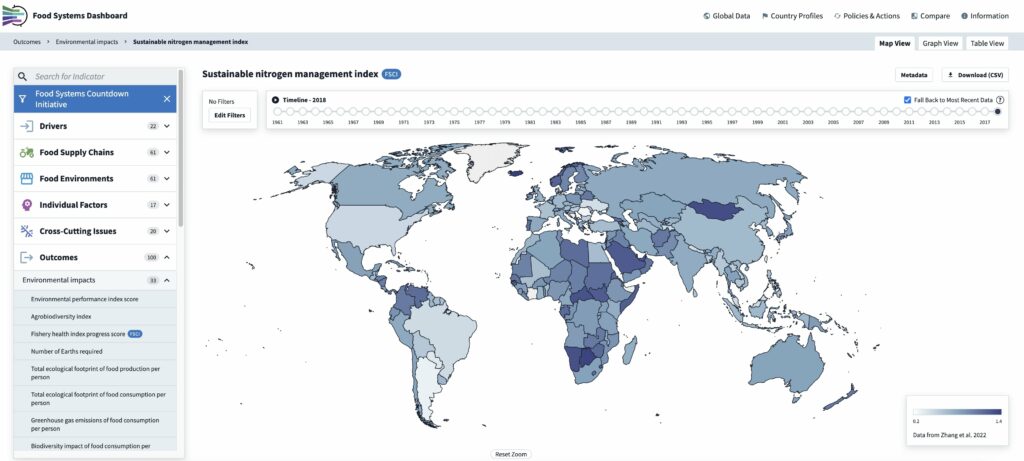
The FSD states that it is one of the most comprehensive tools around for crunching data from farm to fork at both national and subnational, or regional, levels. Analyzing the impact of the food system on human and planetary health, it reveals and analyses the complex mix of issues which make up the narrative arc of food production.
According to the initiative, the platform is unique in terms of offering data on all main components of food systems presented in a visually appealing, easy to use format of maps, graphs, and tables, allowing users to compare and explore data by country, region, food system type, and country income group.
photo by the Food Systems Dashboard
The FSD’s analysis is based on three pillars: «Describe,» «Diagnose,» and «Decide.» The first gives us a fascinating insight into what it takes to bring our food to the table; almost 300 indicators provide users a complete view of global food systems, from government policies to agricultural production and climate challenges issues. Data is sourced from over 40 agencies including the United Nations, World Bank, CGIAR, and Euromonitor.
The Diagnostic tool pulls focus on each country’s strengths and weaknesses, drilling deeper into its food supply chains, food environments (the physical, economic, political, and socio-cultural contexts of where we get our food), nutrition, health, and environmental impacts with a traffic light system giving clear alerts. For example, in Mozambique, greenhouse gas emissions from food consumption are coded green as an unlikely challenge area, while the biodiversity impact of food consumption is red.
The FSD brings together data on both the macro (national) and micro (subnational) levels, highlighting areas which have achieved balance, while showing clearly that no single country has got it right. The substantial agricultural yield gaps in lower-income countries, which are a major contribution to hunger as well as inefficient use of natural resources, are set against the excess consumption of sugar-sweetened drinks and ultra-processed foods in higher income countries.
Without this rigorous analysis of how food interacts with the planet, societies, and human health, decision makers are unable to improve food systems’ environmental sustainability through the choices they make. Through its «Decide» function, the FSD shows stakeholders how to use its evidence to find better solutions.
And it’s happening; the Country Dashboards, which dig into the subnational data across various administrative levels to supplement national averages, are a powerful tool for locally led evidence-based decision making and are already becoming embedded in governmental decisions; Indonesia uses its dashboard in its Ministry of National Development Planning. Countries dedicated to achieving the goal of food systems transformation by 2030, as outlined in the UN Food Systems Summit, utilize the subnational dashboards as one of the vital tools for governments to track progress. Launched in 2023 and 2024 the first Country Dashboards now exist for Bangladesh, Indonesia, Kenya, Nigeria, Mozambique, and Pakistan, bringing together subnational data that covers almost one billion people and informing decisions which could affect their lives. This year, work has also started on Dashboards in India and Rwanda, expanding FSD’s coverage to almost 2.5 billion people. With requests from governments in Tanzania, Benin, and Ethiopia, the FSD’s vision to play a critical role in supporting a healthy food planet is already becoming a reality.
Imagine a world where resilient, thriving communities are the norm, and where hunger is a thing of the past. Water scarcity and food insecurity in climate-vulnerable and low-income regions have been replaced by plenty of fresh produce grown in soil restoring farms, food forests, and gardens.
Growing to Give, a US non-profit, claims that this dream could become the key to community food resilience even in the smallest urban spaces. Growing to Give highlights two unique food growing systems, Crop Circle Farm and Gardens and a vine growing system called the Tomato Volcano, both of which are dedicated to transforming the landscape of agriculture and community well-being. Growing to Give’s mission is to combat water scarcity and food insecurity by promoting sustainable agriculture — optimizing efficient and productive growing areas in climate-vulnerable and low-income regions.
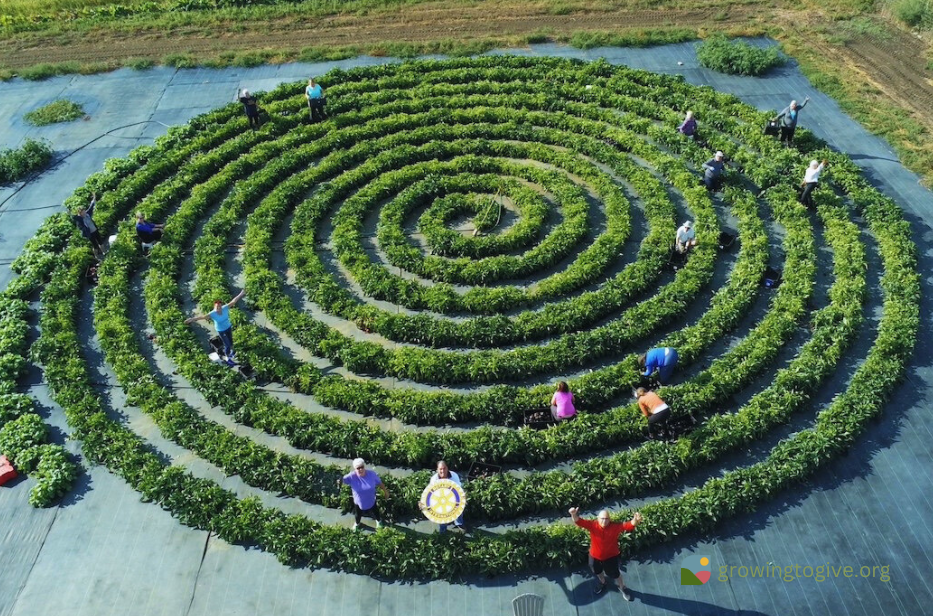
From small container gardens and backyard growing spaces to urban farms and rural acreages, Crop Circle Farms and Gardens are both pretty and productive. The organization states that these spiral food formations use 90 percent less water, 85 percent less fertilizer and a quarter of the land space used by conventional agriculture, and that they work synergistically with the natural environment above and below the soil thereby supporting biodiversity.
The Tomato Volcano is the organization’s showcase. The design keeps plants elevated from the soil and facilitates air circulation, preventing excess moisture that can lead to molds and mildews, and allowing for vines to grow as they would in nature over undulating ground.
During drought and wildfire season, plants still flourish. The organization says that users report that the systems are easy to harvest and require zero weeding, and that a small-scale farmer using a Tomato Volcano system in South Africa could expect a tenfold increase in tomato yields compared to traditional methods. Growing to Give claims that a Tomato Volcano system uses 50 percent less water than other methods and is based on an heirloom model that grows new plants from a non-GMO cultivar. Moreover, it is designed to last for generations. Marine-grade stainless steel construction can last 260 years, minimizing the ecological impact associated with manufacturing and the waste associated with short-lived products destined for the landfill.
Significantly boosting crop yields while conserving water and space in chemical-free growing environments means that Growing to Give can tackle food insecurity in many vulnerable parts of the world in a climate positive approach. It believes that a sustainable and equitable food system must come from innovations made to withstand the test of time.
Growing to Give says that it’s about empowering communities with the tools they need to thrive. The initiative, Strengthening Community Gardens Across America, Africa and the Caribbean, demonstrates Growing to Give’s commitment to educating farmers and communities in sustainable agriculture practices and sustainable living through webinars and online courses and resources.
“One of our volunteers harvesting 4000 lbs of bell peppers for the food bank” – photo by Growing to Give.
Those using the Growing to Give’s agricultural systems have expressed a deeper understanding of the environmental impact of their food choices and gardening practices. The organization’s long-term vision is to ensure that the impact lasts well beyond the next decade.
Those thriving communities may be just up ahead on the road toward a more sustainable food system. Growing to Give says that its initiatives are already enabling women who have traditionally been underrepresented in the economics of agriculture, to take a more active role, giving them economic independence. Promoting cooperation and engagement at all stages of its programs, it reports that farmers and smallholders are already creating more cohesive communities, growing more food, sharing knowledge, and building a sense of shared purpose and belonging as they tackle food security and climate-positive growing together.
Helping former factory farmers transition out of debt-ridden, environmentally unfriendly agricultural practices to sustainable initiatives.
ANSON County, North Carolina, USA –
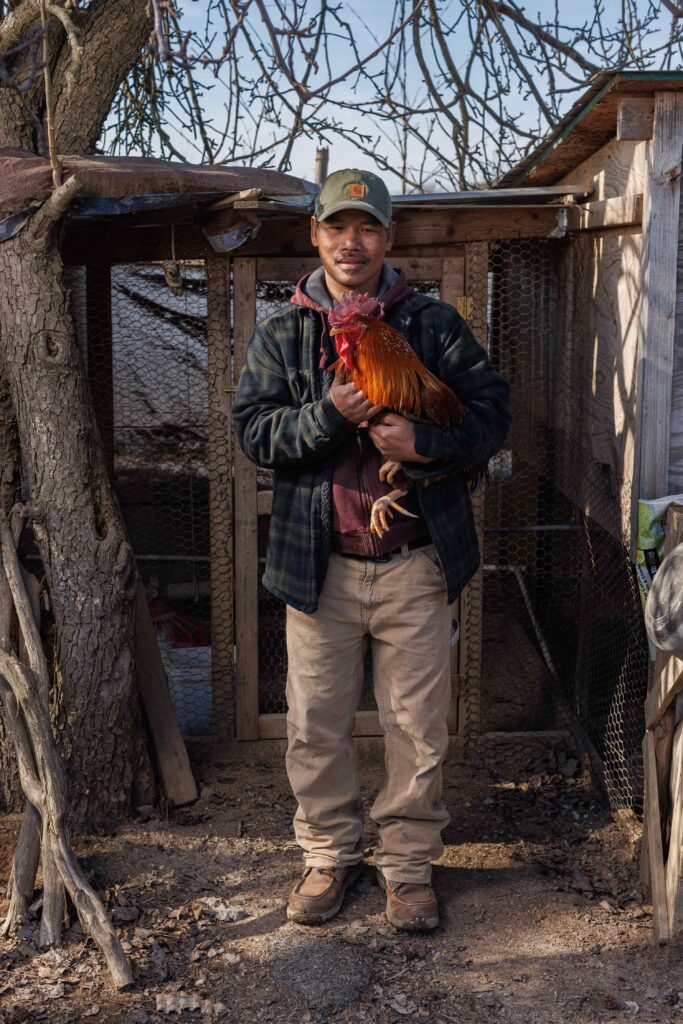
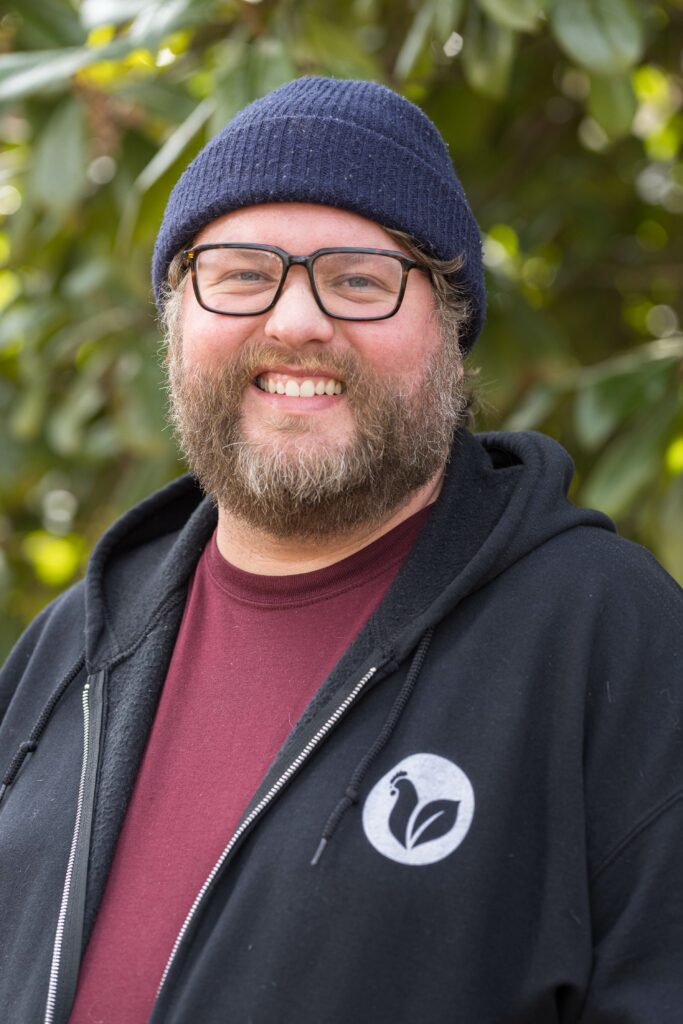
There is a sweetness to Tom Lim’s caress while he cradles his pet rooster, Cuti.
It’s another irregular winter season in North Carolina, but a cold front just rolled in the night before. Cuti is shivering. Lim finds a sunbeam outside his garden chicken coop and carries the rooster into the warm light, petting the glistening feathers until he becomes still and comfortable.
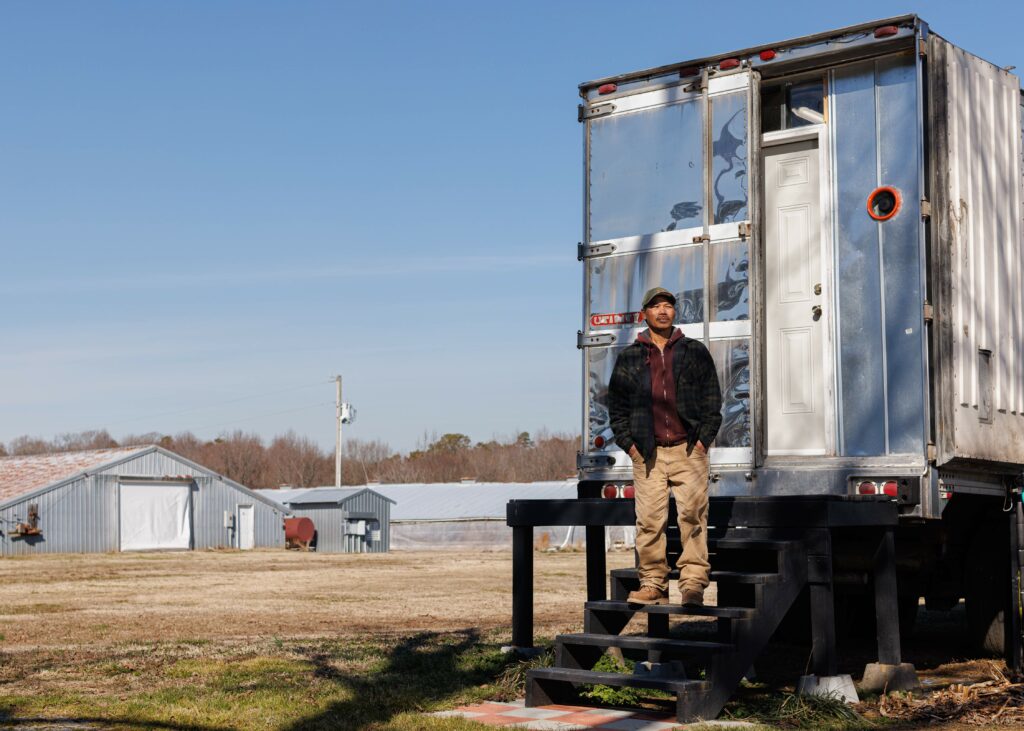
A water pump burst on the Anson County property after last night’s freeze and Lim has been busy patching up holes all morning. Lim grows a variety of mushrooms in a converted truck trailer that uses that pump to create a climate- and moisture-controlled indoor garden. Just two months into growing shiitake and different types of oyster mushrooms, Lim is slowly learning the ins and outs of a business that he hopes will flourish into a booming economic model.
The mushroom trailer sits beside Lim’s chicken coop, where Cuti and a handful of chickens roam around a large fenced-in area flanked by garden beds and a lotus pond. Lim and his wife, Sokchea Kol Lim, who are originally from Cambodia, grow a variety of herbs and vegetables that keep their homeland close: luffa, sweet corn, jujube, lemongrass and shiso, to name a few. Sturdy and tall persimmon trees dot the edge of the property lining the perimeters of the family home.
The truck-turned-mushroom farm is a collaboration with Transfarmation, an offshoot program of Mercy for Animals, an international nonprofit dedicated to a food system that is kind to animals, humans, and the planet.
Mushroom farmer Tom Lim and his rooster Cuti.
Transfarmation works with former factory farmers specifically to transition them into more just and sustainable agriculture businesses. And it collaborates with farmers around the country to experiment and fine-tune ideas. In Lim’s case, he is paid a monthly stipend to collect data from his mushroom operation in addition to having all the equipment, construction and resources provided free of charge.
Since its founding by Leah Garces in 2019, Transfarmation has supported 12 farms. Currently, nine farms have transitioned from industrial animal operations to plant-focus endeavors. Funded by private donations and foundations, Transfarmation works with farmers in Indiana, Iowa, North Carolina, and Texas.
“I came up with the idea of Transfarmation after learning through my collaboration with farmer advocate Craig Watts that many farmers wanted a way out but had no economic options. Around the country, fed-up farmers were starting to ask, ‘What else? What else can we do with this land, these structures, our lives?’’ says Garces.
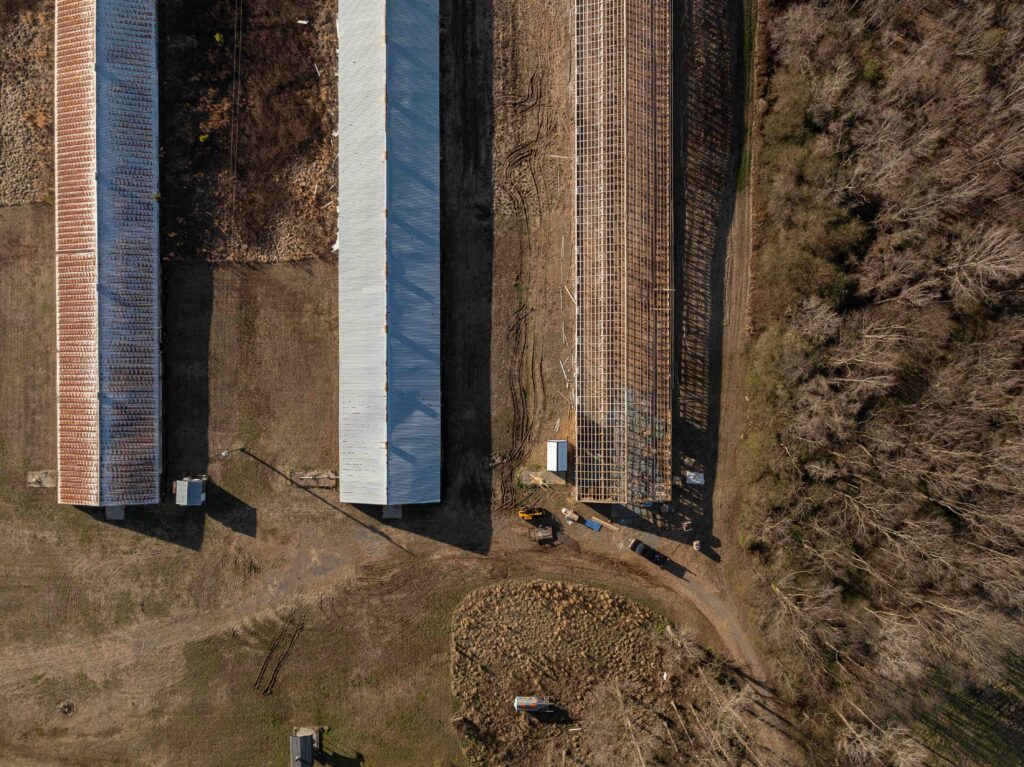
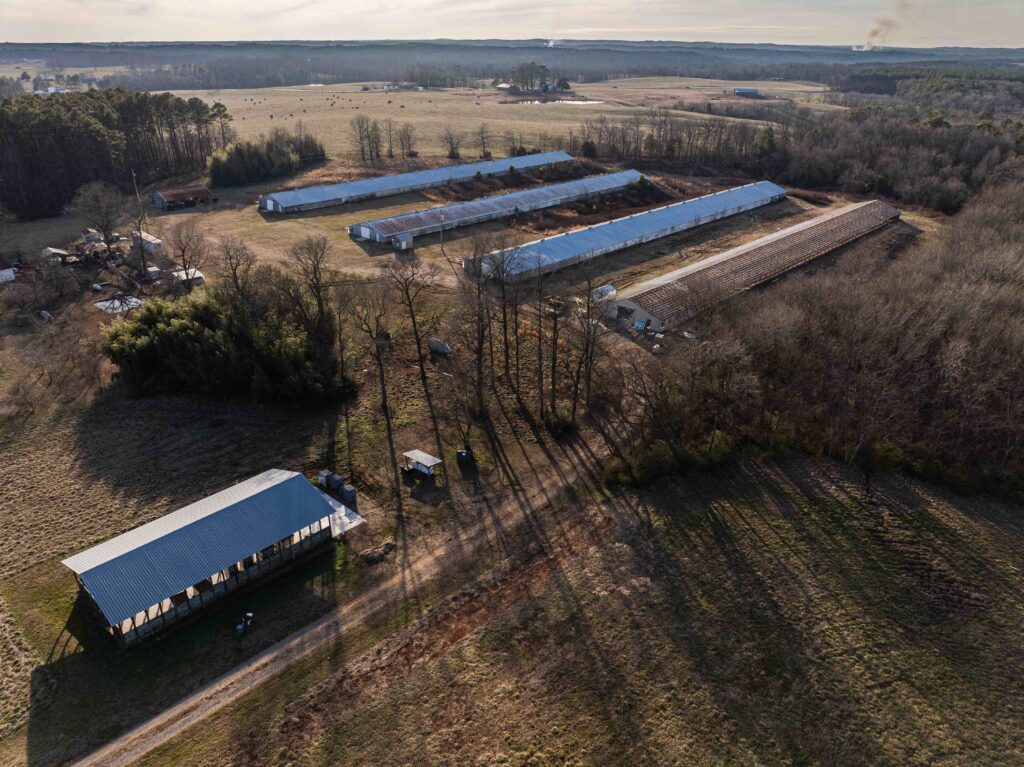
Mushroom farmer Tom Lim once ran a poultry farm, but Transfarmation helped him convert to a mushroom growing operation. His old chicken CAFOs are visible next to a new demonstration space that is under construction.
Watts, also in North Carolina, works with Transfarmation and other organizations as an advocate for contract growers. He has become a spokesperson for sustainable agriculture from the perspective of a former factory farmer who transitioned into mushroom farming.
“The quickest immediate change would be government policy,” Watts says. “The worst thing that ever happened was so much consolidation in agriculture. It gives farmers fewer choices to contract, who to sell to… and they become vulnerable. It’s almost like it’s that or nothing. You cannot prepare yourself for signing that contract.”
“It was an essential part of what Mercy for Animals had always believed,” adds Garces, “that anyone can be part of this movement to end factory farming. As a movement we had overlooked an ally [in factory farmers], and now we were embracing a powerful new partner.”
An agricultural shift, for the planet
Tyler Whitley, director of Transfarmation.
The systems developed at Lim’s farm are meant to be replicable and scalable. Transfarmation posts reports and tutorials online— publicly and for free—as resources for farmers anywhere.
In Iowa, Transfarmation supported the Faaborg family, who converted an industrial hog farm to also grow mushrooms and make tinctures as a value-added product. But it’s not always about food. In Texas, for example, Halley Farm transitioned into a donkey refuge.
The beginning of the pandemic thwarted Transfarmation from kicking off as planned. But by 2021, Garces hired Tyler Whitley to join as the program’s director. Whitley had previously helped run a financial crisis hotline for farmers for four years at the Rural Advancement Foundation International (RAFI) based in North Carolina. Before that, he worked with small farmers in Haiti and Cambodia to help connect them to markets directly and bypass middleman buyers.
Whitley says he applied for the role at Transfarmation because he was inspired to find solutions to the major hurdle that he witnessed working both stateside and globally: the corporatized farming model works against the farmers, just as it was designed.
“At Transfarmation we work to create alternative uses so that farmers don’t have to factory farm anymore, whereas most other people work to make factory farming a better system,” he explains. “But [factory farming] is working exactly how it’s supposed to. It’s not meant to be a compassionate system. It’s not meant to be a caring system.”
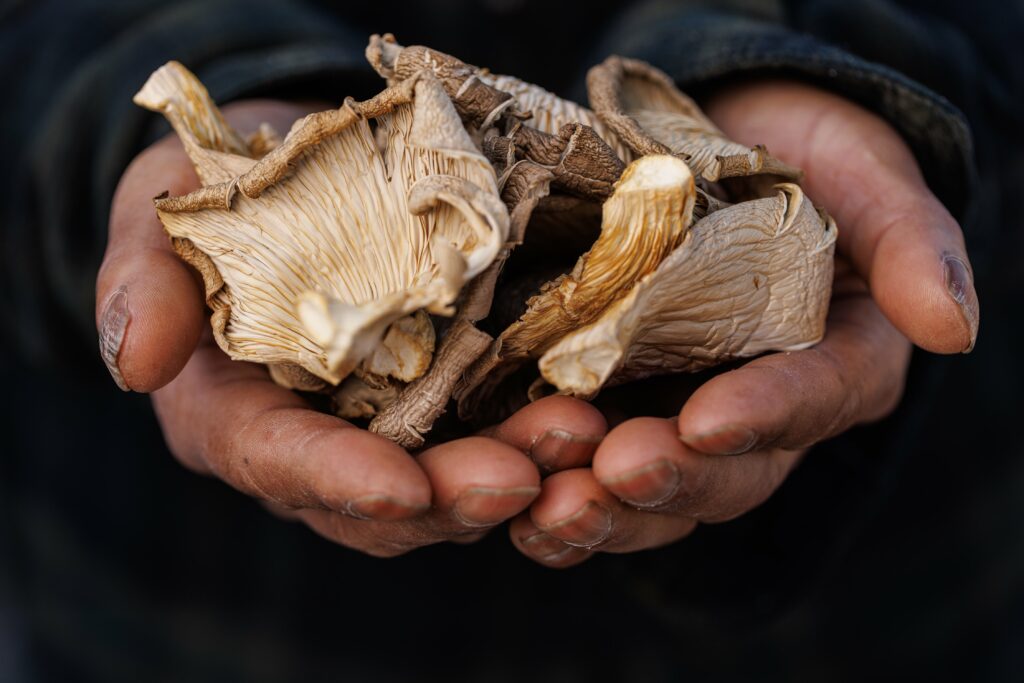
Tom Lim holds White Oyster Mushrooms he grew.
Transfarmation also aims to reduce the harmful environmental impact of industrial animal agriculture through its plant-based models. Whitley says this area of study has not been fully explored; his team is currently collaborating with Plant Futures Lab at the University of California, Berkeley to figure out more.
“Much less research is done on specialty crops than industrial animal agriculture or commodity crops, such as corn or soybeans,” he says. “We plan to change that. Policymakers should understand the implications of all forms of agriculture as we battle climate change.”
Take, for example, atmospheric carbon dioxide, a greenhouse gas. According to the NOAA Global Monitoring Lab, in 2021 carbon dioxide alone was responsible for about two-thirds of the total heating influence of all human-produced greenhouse gasses. A soon-to-be-released joint study by Transfarmation and Plant Futures Lab at UC Berkeley compared strawberry production with broiler chicken production. It found that strawberry production generates 0.69 pounds of CO2 per pound of fruit, to chicken’s 5.4 pounds of CO2 per pound of carcass weight. According to the study, converting one four-house industrial chicken farm to a strawberry farm would result in 14 million fewer pounds of CO2 emissions per year – or the equivalent of taking 1,300 cars off the roads.
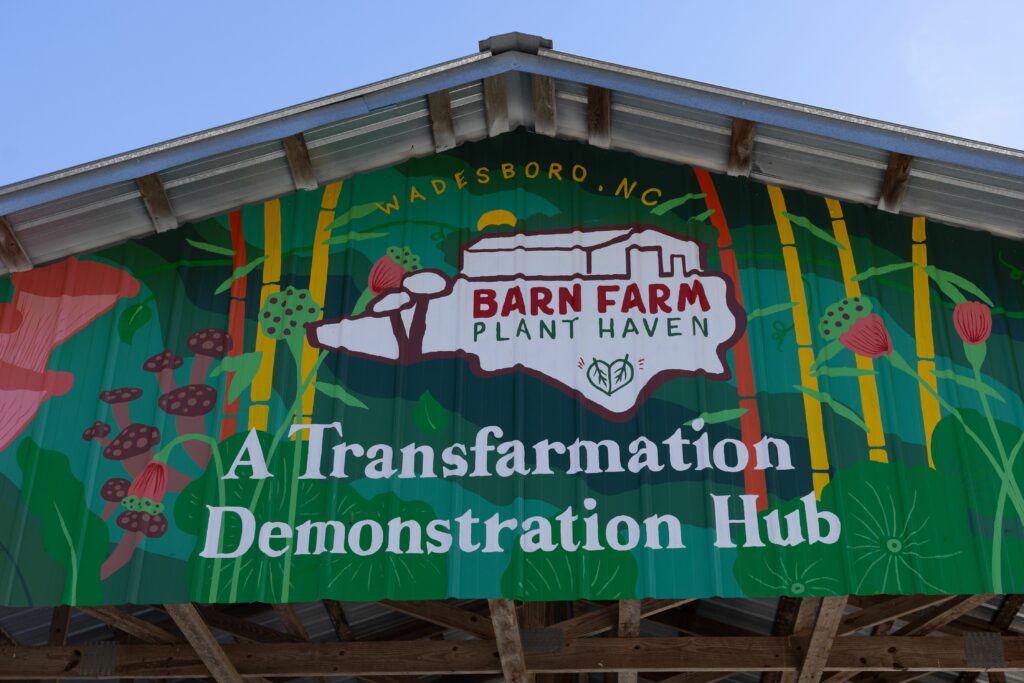
In the foreground is a new Transfarmation demonstration hub.
Improving the lives of farmers
Farm life wasn’t always so idyllic for the Lim family and their chickens. He previously operated an industrial chicken farm, where hundreds of thousands of animals were packed into four Concentrated Animal Feeding Operations, or CAFOs, that took up the majority of the property.
Lim’s 20-year tenure as a contract poultry farmer began shortly after he arrived in North Carolina via California. He and his siblings invested in land in 1999 to start the chicken farm. The company he worked for that entire time abruptly ended his contract in 2019. And Lim’s life took a deep hit.
“Every time I got up in the morning and looked at the [chicken] houses, I felt like I had nothing left,” recalls Lim. “Because they cut me off. And all I got left is bills.”
The new demonstration hub.
Year after year, he sunk thousands of dollars into maintaining the houses up to the company’s high-output standards. This capricious dynamic led to Lim ending up in $120,000 in debt by the time his contract ended in 2019.
“Every time they come check on us, it [felt] like they’re ready to let us go,” he says about the poultry company. “The last time that they came to my farm, they said I have to upgrade many things before they keep me. So I borrowed more money from the banks and it kept adding up. They just care about performance and profit.”
This is a story common to rural America. When growers sign contracts with big poultry companies, they become beholden to company whims.
Whitley met Lim during his time at RAFI. The farmer called the crisis hotline immediately after losing his contract, searching for ways to get out of the industry.
“[Factory farming] is meant to be a profitable system for large corporations,” Whitley says. “It’s designed to produce animal food products at the lowest possible price to shift costs to the farmers, to the local communities, to our environment, to taxpayers and to sacrifice animal welfare in the process.”
North Carolina is a particularly tenuous place for industrial poultry farmers. Agriculture is the state’s most lucrative industry and, within that industry, poultry sits at the top of the list.
Mushroom farmer Tom Lim and his trailer where he grows mushrooms.
“Big Chicken” refers to the emergence of these Concentrated Animal Feeding Operations and the environmental impact of this industrial-scale production. An investigative report in North Carolina’s News & Observerfound, among other problems, that poultry was one of the least regulated types of agriculture, and that the farmers were often not personally benefiting from the corporate poultry profits.
According to Pew research in 2013, 71 percent of U.S.-based growers whose sole income came from chicken farming lived below the poverty line.
“I didn’t know which way to turn to handle all these bills,” Lim says, recalling spending many desperate nights in tears. Every four to five years, Lim estimates that he shelled out $25,000 per chicken house for updates and requirements.
“Poultry processors contract with individual farmers to tend company-owned birds according to very detailed specifications and directions,” notes the 2013 Pew report. “Each company has unique and frequently changing requirements for barn size, ventilation, watering systems, and other equipment but obligates growers to pay for these costly fixed assets. Under this system, even highly capable and environmentally responsible growers can be constrained by heavy debt.”
Snow White Oyster Mushrooms growing at Tom Lim’s farm.
Watts, the former poultry farmer turned farmer advocate, knows the deal all too well.
“These CAFOs will absolutely tear the fabric of a community,” says Watts. He cites a reduction in property values as well as the dire effects on the climate and water systems.
“I’ve seen farmers on their knees literally crying from the despair of debt and death inherent in factory farming,” says Garces. Transfarmation, though, is about fostering hope. “One of the most satisfying experiences of my career was seeing the trajectory of Craig Watts: from despair to hope, from wanting to give up—not just on farming but on life—to being a powerful beacon of hope for all farmers,” she says.
Today, Lim’s operation is growing through exciting challenges that light him up, all with the support of Transfarmation.
His four giant, vacant CAFOs each measure 450 feet long by 50 feet wide. For reference, that’s more than 100 feet longer than a FIFA soccer field. With Transfarmation, he is converting one into an educational hub that will consist of an entire farm sectioned off into flowers, vegetables, and hydroponics.
“I feel inspiration. I feel less worry,” says Lim. “I feel like I’m new again—and I have a lot to learn.”
Vermont’s Rich Earth Institute is looking to an unusual alternative to industrial fertilizer: human urine.
BRATTLEBORO, Vermont, USA –
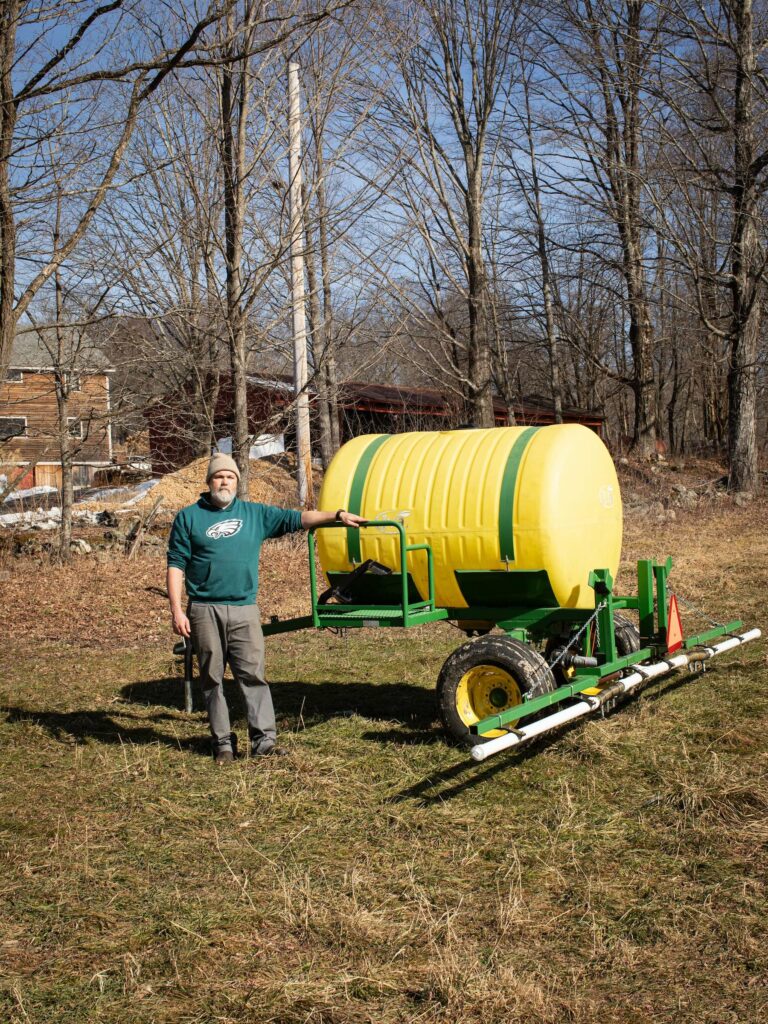
On a hillside in southern Vermont, some six miles outside Brattleboro and two miles from the Connecticut River, farmer Noah Hoskins points to one of his snow-covered fields. “We’re probably putting out eight thousand gallons a year,” he says, “but we could use ten times that. There’s just not enough supply—yet.” He’s talking about urine. Pasteurized, nutrient-rich, human urine.
Hoskins sells award-winning maple syrup; cut flowers; and pasture-raised beef, chicken, and pork. Raising livestock requires a lot of nutrient-rich farmland. “If we had an unlimited supply, I’d probably be doing every field twice a year, maybe three times,” he says. “We’re not approaching the land’s capacity for nutrient absorption or grass production.”
Farmer Noah Hoskins has stopped purchasing chemical fertilizer since working with Rich Earth Institute.
Hoskins’ fifty cows are in the barn on this frigid January afternoon. But, come spring, they’ll be out on pasture, fattening up on grass. And grass, to grow fast and build strong roots, needs plenty of nitrogen and phosphorus. Urine makes up less than 1% of the wastewater going into sewage treatment plants. But it contains about three-quarters of the nitrogen and half of the phosphorus in that wastewater.
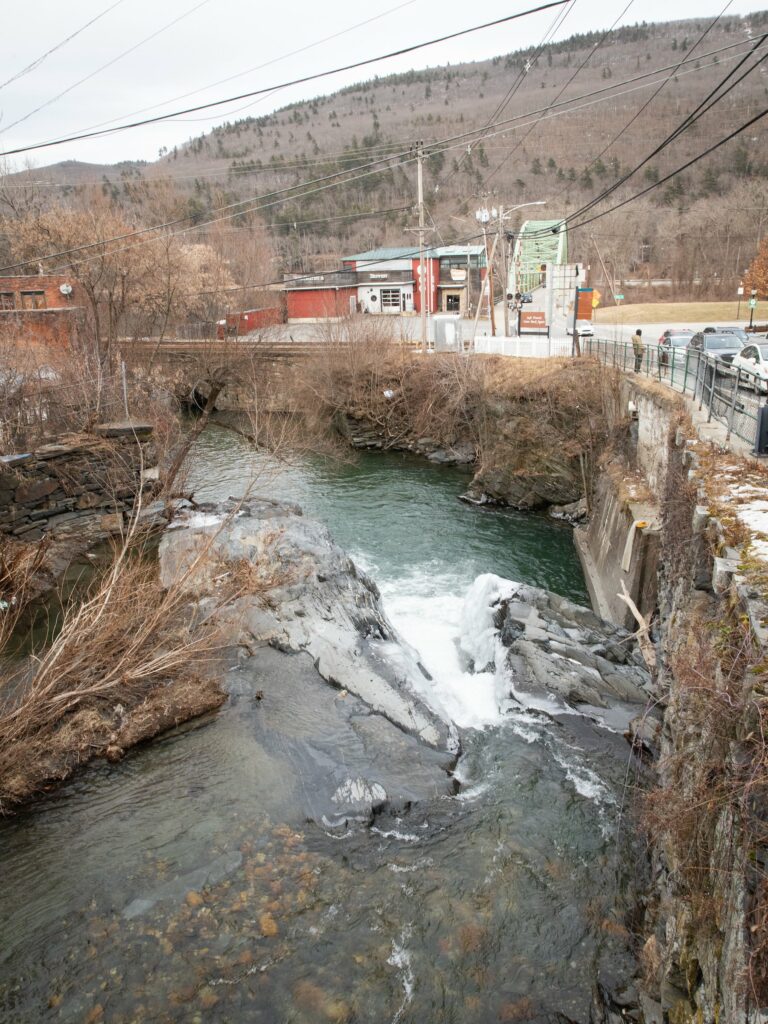
Nitrogen and phosphorus are also associated with environmental damage. Many coastal regions, like the Gulf of Mexico, have developed dead zones because of excess nitrogen. Freshwater lakes worldwide are threatened by excess phosphorus that triggers nasty, fish-killing algal blooms. Nutrient pollution running down the Connecticut River washes into Long Island Sound, closing New York beaches. But what spells pollution in rivers and oceans can become valuable fertilizer on farms.
Nitrogen and phosphorus pollution“is just a resource in the wrong place,” says Jamina Shupack, the executive director of Rich Earth Institute, a research and education organization based in Brattleboro. The institute is a few winding miles downhill from Hoskins’ farm, one of nine local farms working with Rich Earth. The organization provides each farm with sanitized urine and conducts research studies in their fields. With careful manure management, rotational grazing—and regular deliveries from Rich Earth’s appropriately yellow truck—“we’re not purchasing any chemical fertilizer anymore,” Hoskins says. “We’ve ceased that entirely.”
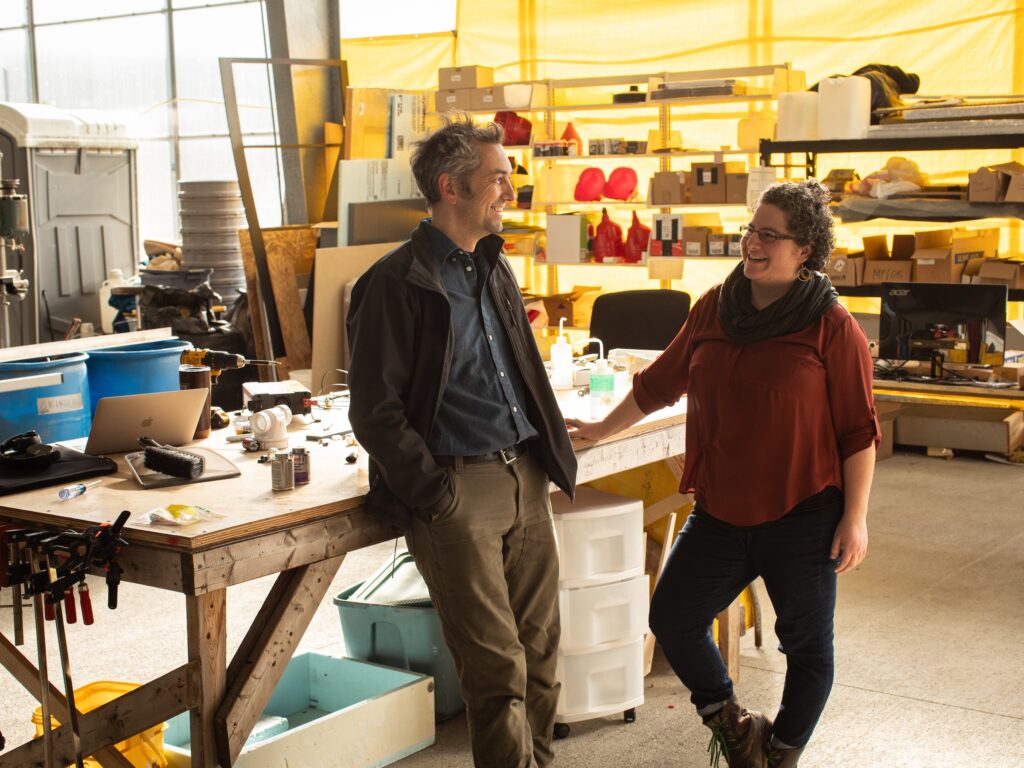
Research director Abraham Noe-Hays (L) and executive director Jamina Shupack (R) share a moment at Rich Earth Institute.
To make food from sunlight, all plants need nitrogen and phosphorus. Grass for animals and many agricultural plants require huge amounts of these two nutrients. Much of the industrial fertilizer used around the world comes from phosphorus mines in Morocco and other countries and from fixing nitrogen out of the air using vast inputs of fossil fuels. (A study in 2022 found that nitrogen fertilizer production contributes almost 2 percent of global greenhouse gas emissions, about the same as aviation.) It then takes a one-way trip from factory to farm to food to flushing. “We’d like to make that straight line into a loop, capturing the nutrients before they enter the sewer,” Shupack says. “When we apply urine to a field, it’s an economically valuable fertilizer. It’s not a waste product anymore.”
Urine makes up less than 1% of the wastewater going into sewage treatment plants, but contains about three-quarters of the nitrogen and half of the phosphorus in that wastewater – could its powers be harnessed for good?
Inside his house, Hoskins pulls at his shaggy gray beard and looks out the window. “We live in a world of endless, complex problems and farming is an ongoing process of dealing with challenging issues. It’s not often that we have solutions right in front of us,” he says. He then laughs, almost to himself. “This one is obvious and easy. The science is clear. The biggest challenge is that some people think it’s gross.”
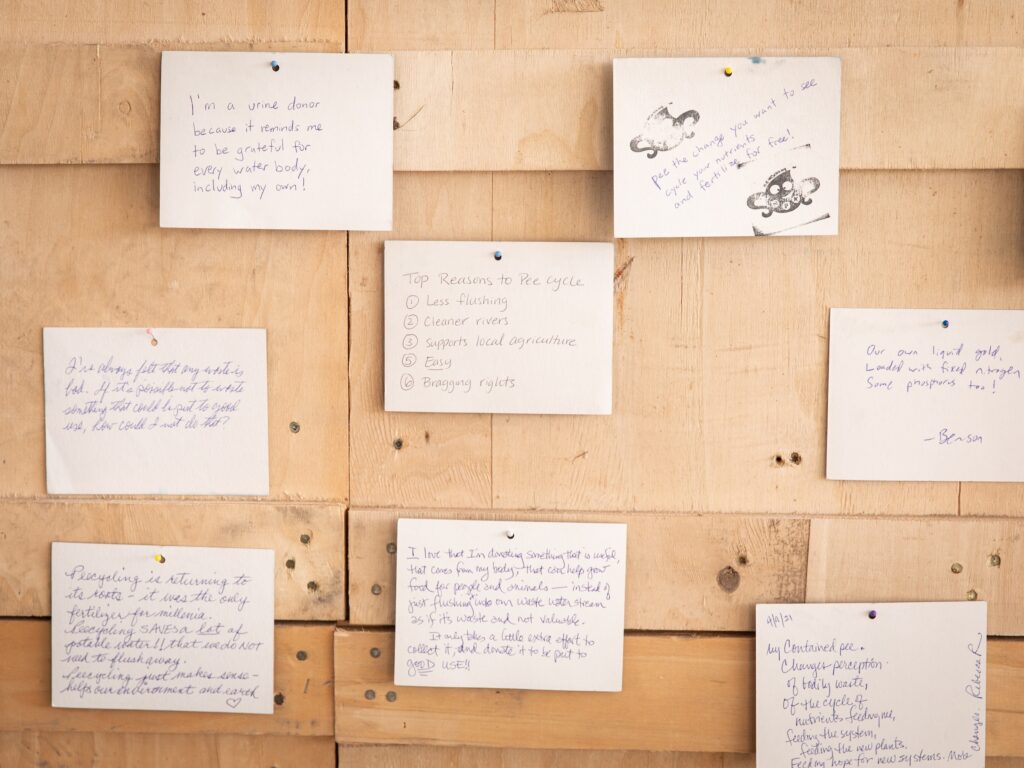
Brattleboro volunteers leave encouraging notes explaining their reasons for diverting their household’s urine to Rich Earth Institute.
But not, apparently, the 244 people in Brattleboro who voluntarily divert their household’s urine into plastic tanks in their bathrooms or to piped ones in their basements—the first community-scale urine recycling project in the United States. Participants include Kevin O’Brien, who, once a week, carries urine from his house, sometimes on his bike, to a collection depot in the center of town. “This doesn’t happen everywhere—but why not?” he asks. When indoor plumbing was first brought into buildings in the 19th century, it was often viewed with a mix of curiosity and fear. Now it’s an unremarkable part of life in the developed world. “You just want me to collect my urine? Yeah, that makes sense,” O’Brien says. And at the Hermit Thrush Brewery in Brattleboro, a “peecycling” urinal drains into a tank in the basement, which Rich Earth then pumps out with their truck. Some of this urine may fertilize grains used to brew beer that will be downed at the brewery and… yield more urine. “How do we help ourselves be more a part of nature?” O’Brien asks. “How do we get back with the cycle?”
Abraham Noe-Hays and Kim Nace asked themselves the same thing in 2011, as they met to discuss their shared interest in composting toilets and human waste recycling. The following year, they founded Rich Earth Institute and collected 600 gallons of urine from 60 donors. The non-profit organization now holds an annual Urine Reclamation Summit, bringing together researchers from around the world. It also rents out urine-collecting port-a-johns for events, collecting thousands of gallons of urine. It is the largest such project in the United States.
Utilizing urine could avoid the excessive use of fossil fuels that come from industrial fertilizers.
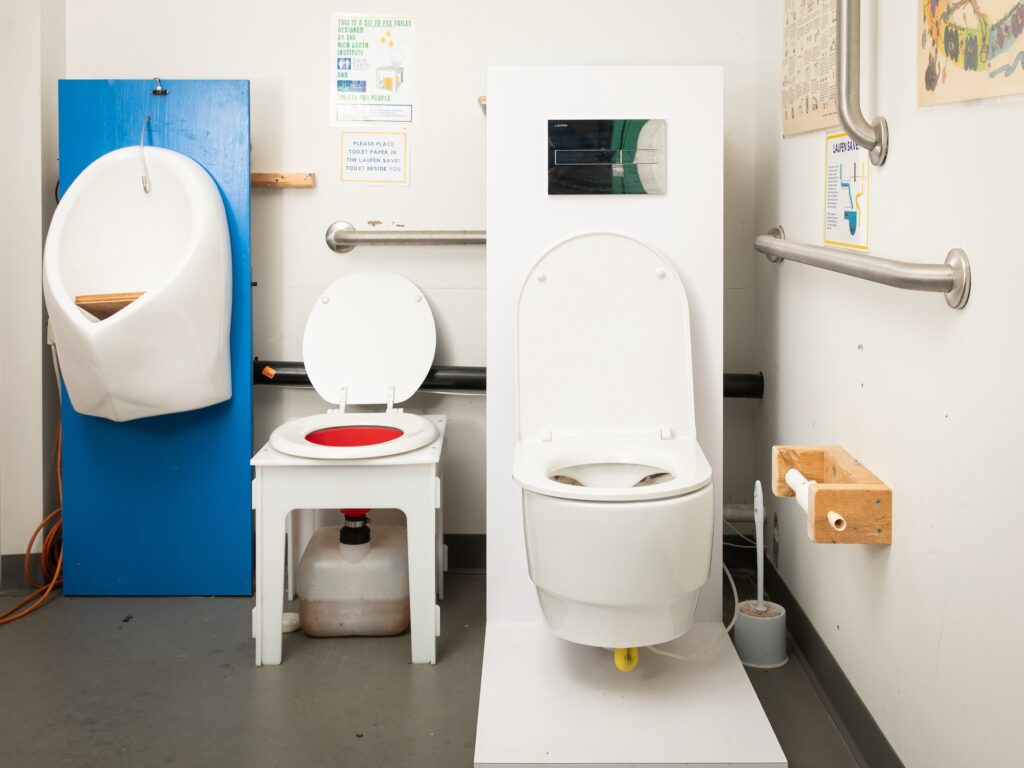
Noe-Hays, now the research director of Rich Earth, smiles impishly as he asks if I need to pee. The best place to start a tour of the organization’s research facility is in the bathroom. There are four toilets to choose from—each an example, from low-tech to high-tech, of ways to collect urine. One is a simple funnel that drains into a five-gallon jug. This is Rich Earth’s “cubie,” a mini-urinal the organization sells to home gardeners, which many urine donors use. Another is a porcelain LAUFEN Save! toilet. This clever device diverts urine, flowing down the front of the bowl, into a separate pipe, flushing the feces as usual.
Which throne would you choose? A selection of toilets available to visitors at Rich Earth Institute.
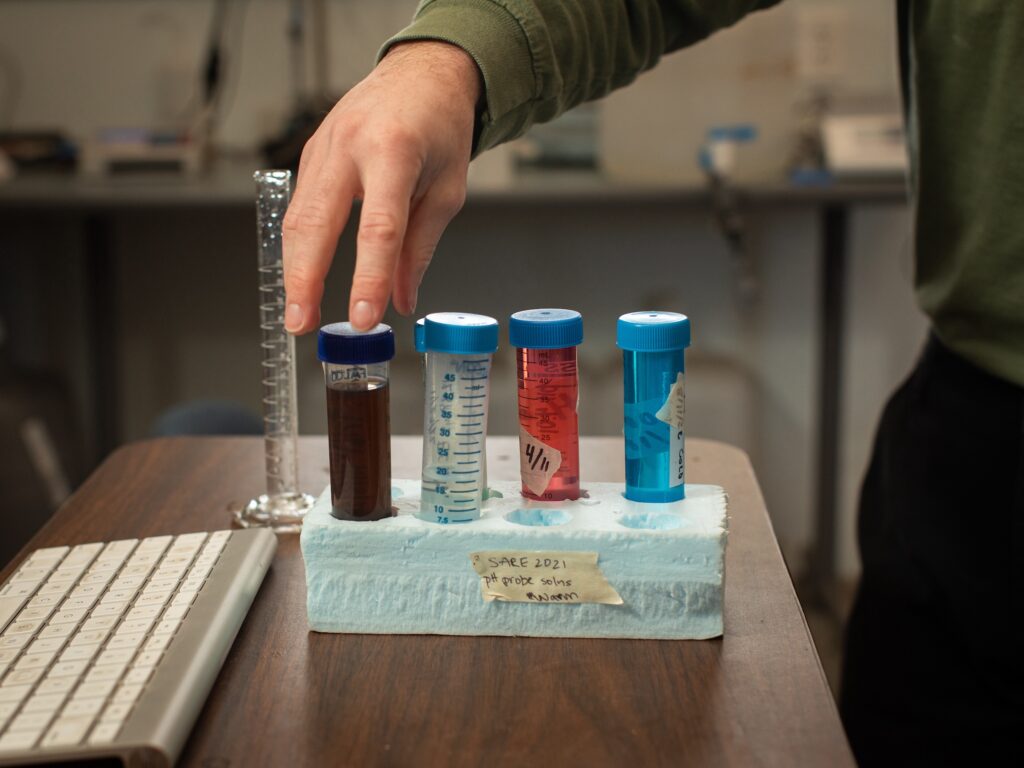
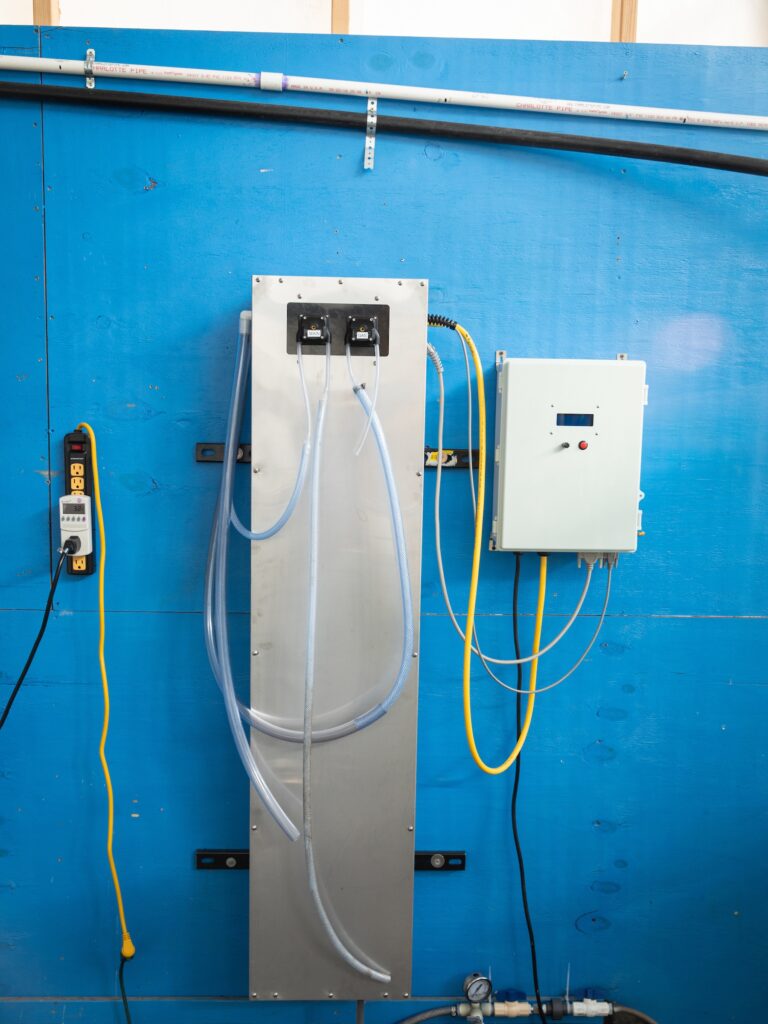
Whatever toilet a visitor chooses, their urine ends up in Rich Earth’s underground tank. “And from there it goes through this pasteurizer,” Noe-Hays says as the tour moves through the research facility’s wet room. He points to a five-foot-tall stainless-steel box on the wall with hoses attached. This device heats urine to 80° Celsius for 90 seconds, meeting EPA guidelines for killing pathogens. Designed and manufactured by Brightwater Tools, a for-profit company that Noe-Hays and other Rich Earth employees started in 2019, six pasteurizers have been sold to customers in several states. This is Rich Earth’s vision: demonstrate how urine recycling can succeed in Brattleboro while creating tools, training manuals, and understanding so that communities anywhere can develop their own human nutrient recycling projects. Working with academic researchers, including Nancy Love at the University of Michigan—and with funding from the US National Science Foundation, Department of Agriculture, and others—Rich Earth has tackled several technical challenges (like energy-efficient pasteurization) and regulatory hurdles (like outdated plumbing codes) that make urine recycling so uncommon.
Stainless steel pasteurizer that meets EPA guidelines for killing pathogens at Rich Earth Institute.
Urine is heavy to carry in a truck, but when repeatedly frozen and thawed, most of the water can be extracted, combined with greywater from sinks and showers, treated onsite, and reused. Water recycling is becoming an urgent challenge in arid places like the US Southwest.
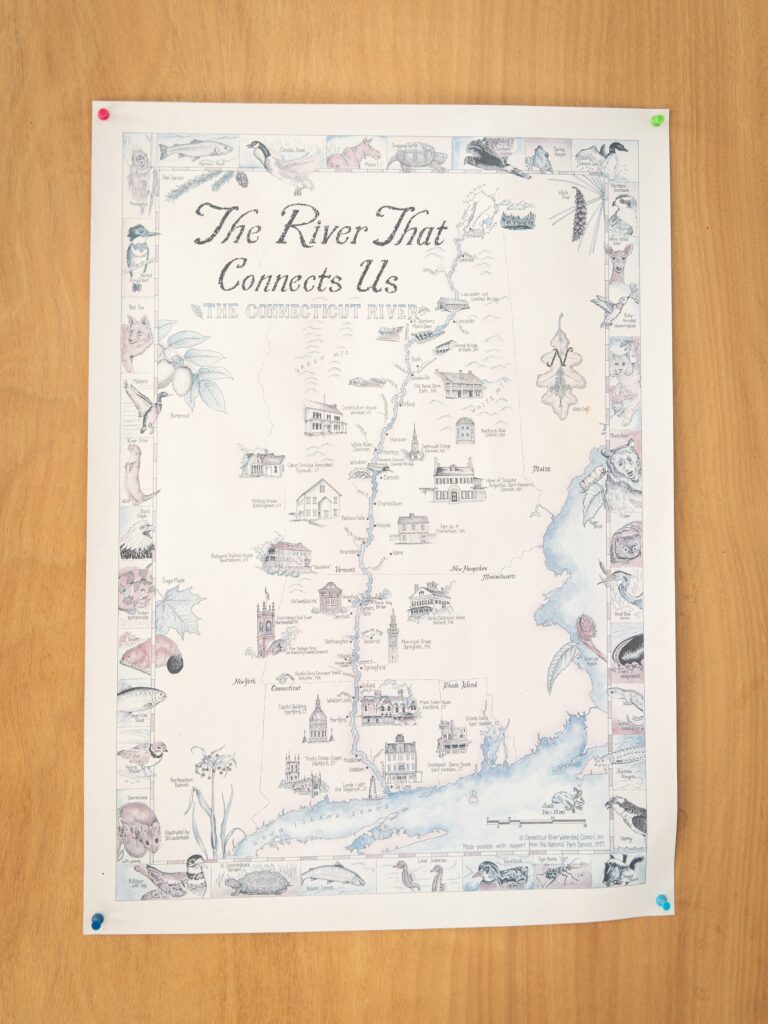
Nutrient pollution running down the Connecticut River washes into Long Island Sound, closing New York beaches. But what spells pollution in rivers and oceans can become valuable fertilizer on farms. The Connecticut River on a map by the Connecticut River Watershed (above) and live (below).
Brightwater Tools is developing a building-scale system using their pasteurizer and a newly invented freeze concentrator (plus charcoal filtration to remove any pharmaceutical residues) that would yield concentrated, sanitized fertilizer for farms and water that could be reused on the premises for toilet flushing, laundry, and irrigation. Noe-Hays walks across the room to where his colleague works on a riveted steel box about the size of a bureau. A cable from a laptop and several hoses and wires disappear inside the box. On the front, a clear panel reveals ice near the top and then, in shades of brown near the bottom, a dense layer of urine. This is the freeze concentrator, a tool that the Vermont team plans to bring to market soon. In a few countries, including France, other organizations are also working to tackle this critical challenge: how to efficiently get water out of urine so that concentrated liquid or dried crystals can be easily transported.
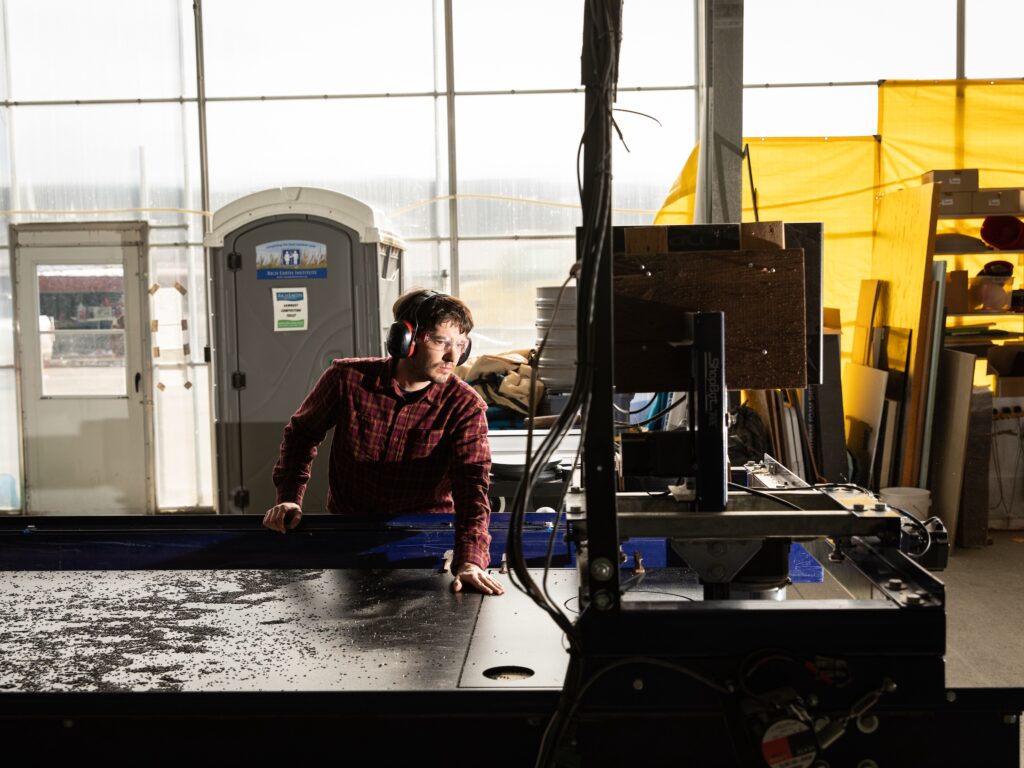
Arthur Davis, Operations Director, uses a robotic cutting tool to carve out seats/ bases for the portable toilets.
“Separating human waste at the source is powerful,” Noe-Hays says. “If you mix it all together, then, at the wastewater plant, you have this dilute, but very polluted, water. Every gallon has to be treated and each constituent removed through a different process until you, finally, have water that you can discharge.” That water may be clean if the treatment plant has a complex suite of technologies, but it’s very expensive and energy consuming. “We say, let’s just get most of the nutrients in one very small flow, before it goes there,” Noe-Hays says, “and avoid all that cost.”
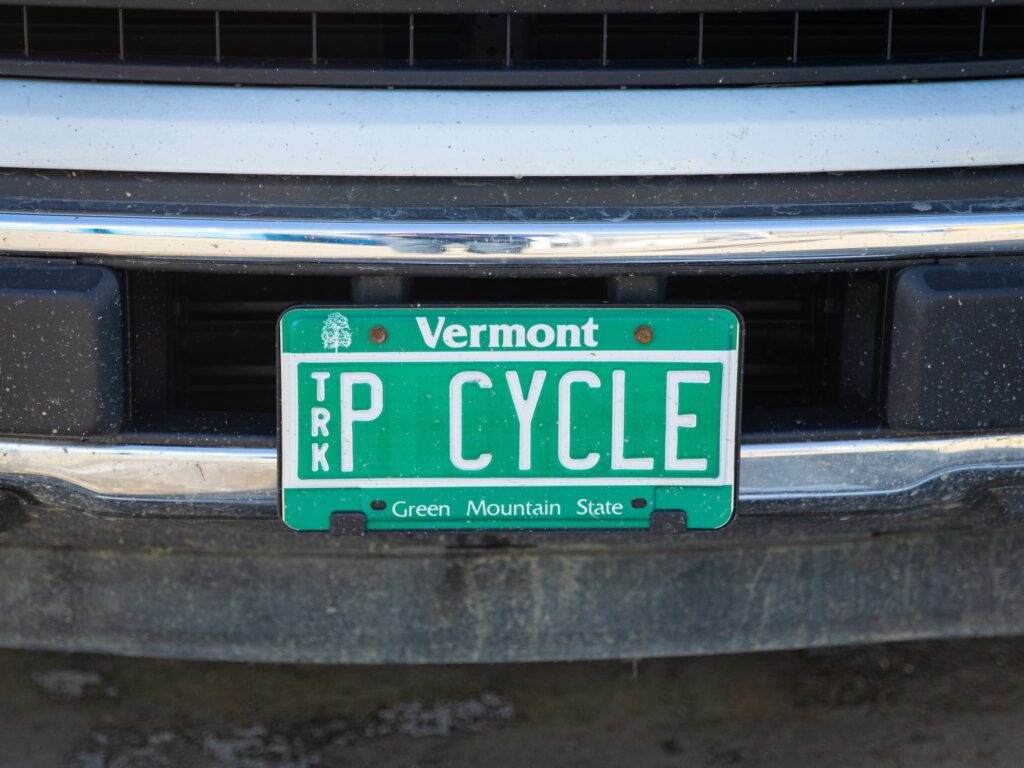
A tongue-in-cheek vanity license plate parked outside Rich Earth Institute.
According to one estimate, humans produce enough urine to replace about one-quarter of fertilizers worldwide. If this urine could be used on farms, it would mean not having to mine, extract, and ship millions of tons of phosphorus and nitrogen. Rich Earth has recently opened a second urine depot in nearby Bellows Falls, Vermont; provided expertise for a new community-scale urine recycling initiative in Cape Cod; and answered questions from curious potential peecyclers around the globe. “When they think about it, and get past the yuck factor,” says Shupack, “most people understand.”
A new collaboration of environmental heavyweights has created a framework to restore degraded and deforested land, addressing one of the defining challenges of our time.
The Restoration Initiative (TRI) brings together nine countries and three Global Environment Facility agencies — the International Union for Conservation of Nature (IUCN), the Food and Agriculture Organization of the United Nations (FAO), and the United Nations Environment Programme (UNEP) — to reverse unsustainable farming practices and other drivers of deforestation and ecosystem degradation that contribute to food insecurity and climate change.
One of the biggest global drivers of deforestation and forest degradation is an agricultural system that degrades soil through chemical interventions, destroying ecosystems and delivering lower yields, compromising water quality and access, and resulting in lower incomes to rural communities. TRI is reversing the impact of decades of poor practices, enhancing ongoing land-use strategies to provide sustainable and nutritious food, fodder and fuel production to the local people living and working on these lands.
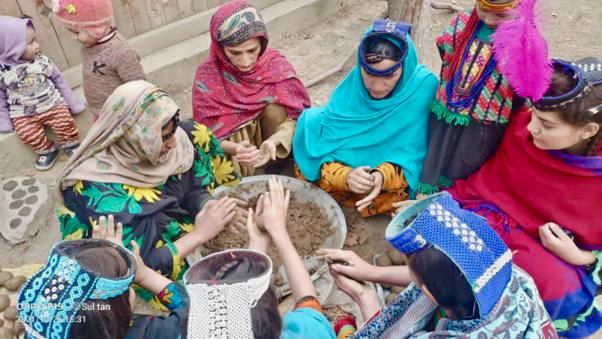
TRI project beneficiaries producing seed balls to revive degraded forests. Photo Credit– TRI Pakistan
TRI aims to restore healthy lands involving communities that rely on the natural ecosystems under threat. TRI’s global team helps countries to increase their seed cultivation and genetic diversity, while local units train communities in sustainable land management, climate-smart agriculture, value-chain development, and techniques to restore degraded forest areas, which in turn will improve water security. TRI emphasises that its real value resides in the collaborative opportunities it creates through its international and national teams. The combined expertise in policy design, institutional capacity building and best practices, private sector engagement and finance mobilization may well be the key to its success.
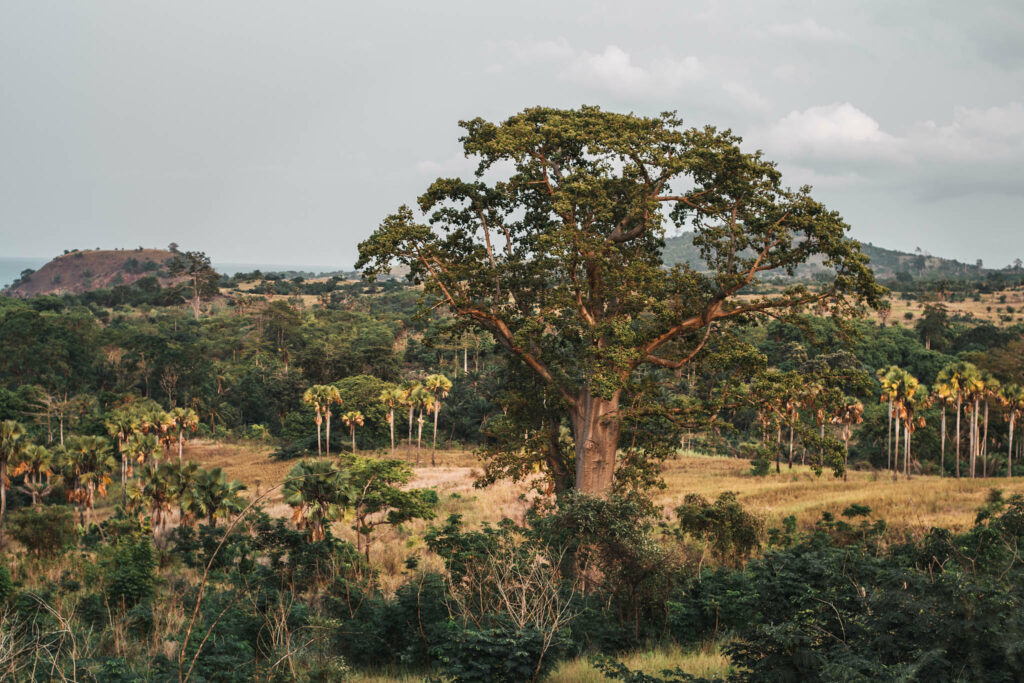
Forests, mangroves, grasslands, and semi-arid lands of Kenya, Tanzania, China, Pakistan, Cameroon, Democratic Republic of the Congo, Central African Republic, Guinea Bissau, and Sao Tome and Principe are part of this bold alliance encompassing governments, international and national partners, and local stakeholders. For example, in the Democratic Republic of the Congo, TRI has facilitated funding of 70 microprojects to improve household incomes through forest and landscape restoration by engaging with existing community organisations. Its impact has already reached 3 680 households. In Guinea Bissau, collaborations between governments, non-profit organizations, businesses, and local communities have helped to repair coastal ecosystems and facilitated long-term mangrove restoration. In Cameroon, 12 nurseries have cultivated over 211 628 bamboo and non-timber forest product plants, and 142 local stakeholders have been trained in restoration practices.
Sao Tome, photo by TRI.
According to the organization, incentivizing investment in restoration is critical, and its model includes financial and technical support directly to those on the ground. TRI’s global team of experts from IUCN, FAO, and UNEP collaborate with country teams to reinforce results, improve current agricultural practices, and promote restoration, while training locals to develop their agricultural businesses.
TRI’s anticipated impacts are significant: 483 000 hectares under restoration, 1.8 million hectares under improved sustainable management, and 30.4 tCO2eq emission reductions/removals. It’s a massive plan for the restoration of degraded lands and forests across the world. To bolster its impact, TRI maintains that, with additional funding, the initiative could significantly enhance food and water security, mitigate against climate change impacts, conserve biodiversity, and create employment opportunities.
An ancient fruit tree could be the answer to thousands of families in South America at risk of becoming climate refugees as slash and burn threatens to destroy their farmlands.
The super-resilient, nitrogen-fixing Inga tree has been central to food culture in pre-Columbian Peru for thousands of years, its fruit sold in local markets and making up the basic indigenous diet.
But slash and burn, the farming practice which is used to clear land for planting, has resulted in the rapid loss of soil fertility. 200,000 acres of rainforest are destroyed every day by slash-and-burn agriculture, forcing subsistence farming families to clear new patches of rainforest to feed themselves. And as the climate crisis brings severe heat and drought, thousands face starvation with no alternative than to flee to cities to find food.
The Inga Foundation believes that its Inga tree model can reverse this agricultural practice while improving livelihoods among the rural poor. It says it can create employment, particularly for women and young people, without the need for loans to invest in new technology.
During El Niño in 2023, Honduras experienced prolonged and intense drought with over four months without a drop of rain, sparking concerns about the loss of many thousands of trees. Yet within two weeks of the first rainfall, defoliated Inga trees began to regrow their foliage. The Inga Tree Foundation claims that this shows that tree-based systems are resilient to climatic violence.
The Inga Foundation has trained 450 Honduran farming families to plant alleys of 5 million Inga trees, regenerating 600 acres of steep, degraded slopes, sequestering carbon, protecting wildlife and marine habitats, preserving watersheds, and creating new springs. The trees are planted in hedgerows and along contours with crops planted in between the rows, breaking the destructive cycle of slash-and-burn and allowing farming families to stay on their land and aim for sustainable food security. Inga nurseries have already distributed over 350,000 cacao plants, 75,000 black pepper plants, thousands of hardwoods, citrus, avocado, vanilla, turmeric, and many other crops.
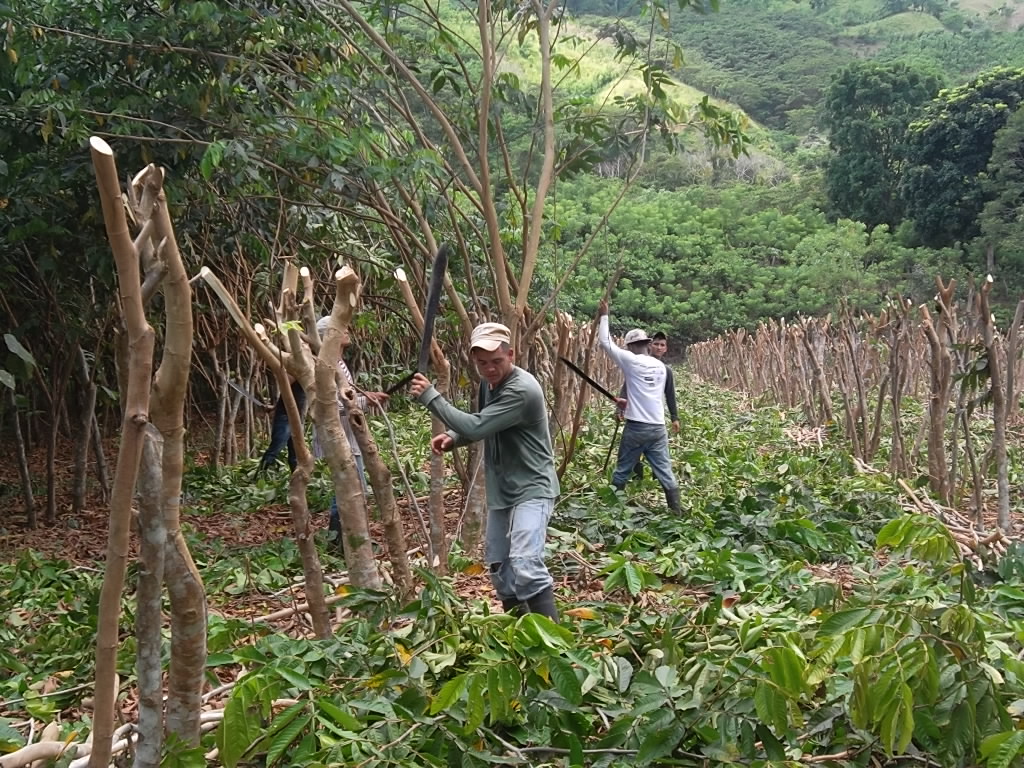
Pruning operation on a demonstration farm at Las Flores in the Cuero valley, Atlántida, Honduras. Photo by Inga Tree
The mulch of the Inga tree provides a unique environment for corn and beans, vital food as well as cash crops, to grow without irrigation or a drop of rain. The thick mulch from the pruned leaves keeps the soil cool and moist, and the fast-regrowing trees shade crops such as coffee, cacao, and tea. The Foundation claims that within 18-24 months, the participating families have become completely self-sufficient in basic grains.
The alleys of trees have been shown to provide much more than food; planted near the family homes, they stop erosion and mudslides, and provide vital renewable firewood when the trees are pruned annually.
The Inga Foundation claims that its alley cropping is a fully integrated ecosystem which naturally recreates conditions of the forest floor, stabilizing and replenishing the soil and slowing the socially destructive rural-urban migration, which could have life-changing results for the rural poor. Working with the local farm workers is about graining trust, and the Inga Foundation has built a demonstration or pilot farm at Las Flores in the Cuero valley, Honduras where they run regular open days to allow families from across the area to come and see the benefits for themselves.
The program claims to be the most successful of its kind, fulfilling 14 of the United Nation’s 17 Sustainable Development Goal (SDGs), its blueprint for achieving a better and more sustainable future. And now the Foundation believes that the model could be rolled out across all humid tropics where the rural poor are being forced off their depleted land to find food.
Food accounts for 13% of cities’ carbon emissions every year. But a small league of C40 Good Food Cities, from New York to Quezon City, is hoping to change that.
BROOKLYN, New York –
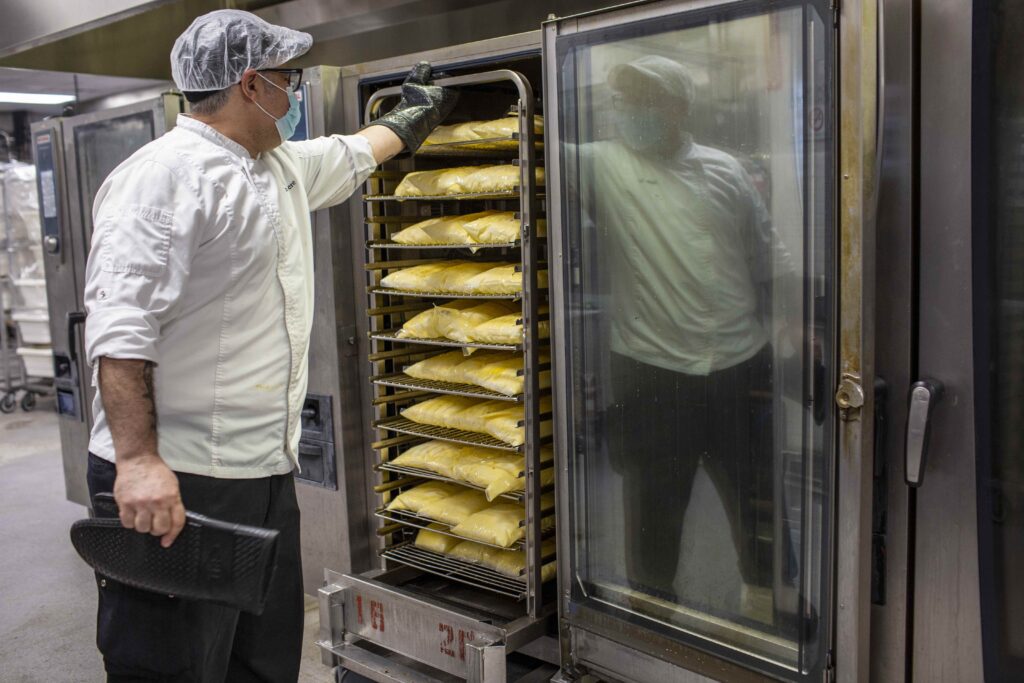
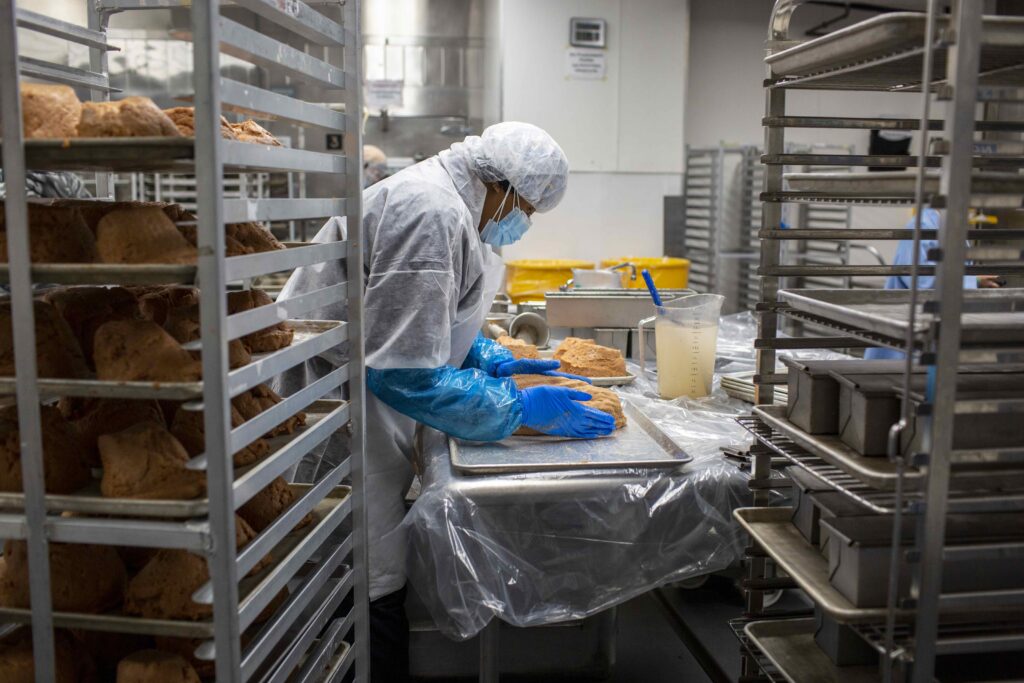
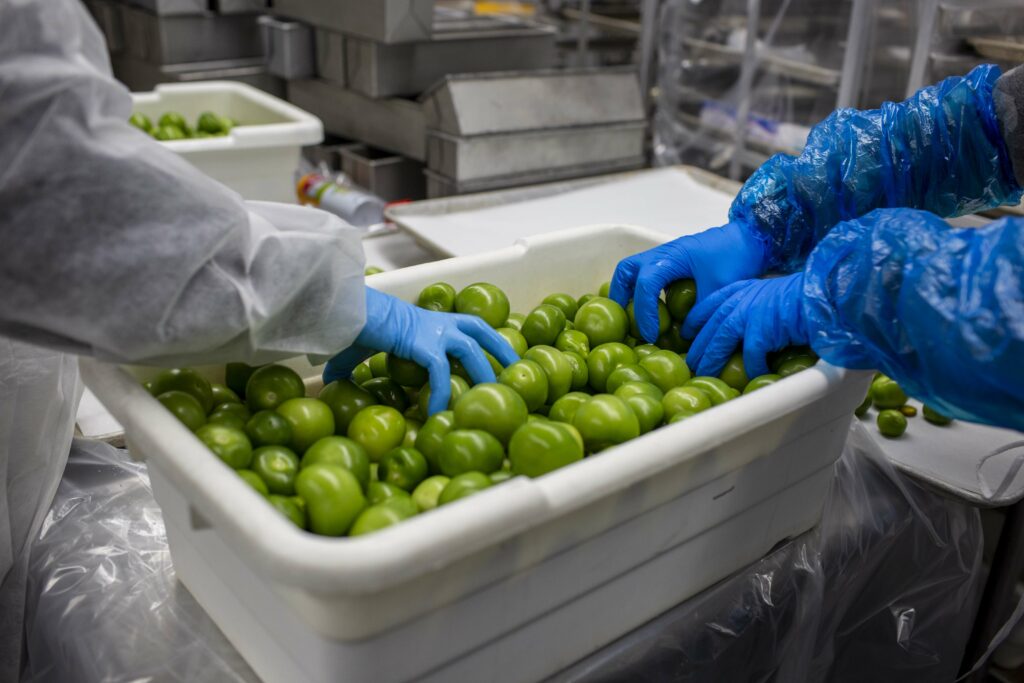
Little about the culinary center serving New York’s Health + Hospitals agency evokes a home kitchen. Hair-netted cooks mix the ingredients for salsa verde in white bins the size of babies’ bathtubs. A row of combi ovens, gleaming and tall, roast hundreds of sweet plantains at a time. Nearby, a 200-gallon water bath chills reduced-oxygen packets of just-steamed yellow-and-white “sunshine” rice, preserving their freshness.
Health + Hospitals preps 15,000 meals each day to supply public hospitals and nursing homes across New York City.
And yet, the 15,000 meals prepared daily inside this yellow brick building in Brooklyn to supply New York City’s 11 public hospitals and four nursing homes are meant to provide the same succor as a get-well bowl of homemade soup lovingly proffered by Mom on a sick day home from school. When plotting out menus, “What we wanted to do was say, what comfort foods would our patients enjoy?” says the center’s corporate chef, Philip DeMaiolo, who gets a little wistful when he remembers the pastina in brodo his mother used to cook him when he had a cold. “They’re lying in a bed, they don’t choose when the nurse comes in to take blood or measure their blood pressure,” he says. “We want them to at least be satisfied with what they’ve chosen to eat.”
Plant-based meals are becoming increasingly popular with patients.
Increasingly over the last two years, New York’s hospital patients are choosing some of the 25 plant-based meals DeMaiolo and his staff of 30 chefs and cooks have painstakingly devised. And it’s not just about replicating that home cooked meal. Rather, it’s part of a years-long calculated effort to reduce New York City’s food-based carbon footprint by 33 percent by 2030. Behind that goal is a nonprofit network of 96 global mayors called C40 Cities (so named back in 2006 when membership was just 40 cities). C40’s mayors commit to a science-based approach to limiting global heating while building healthy, equitable, resilient communities. Under that broader umbrella is the 55-city-strong Food Systems Network, which work together to reduce greenhouse gas emissions by improving food policies. A smaller subset of those 55 are part of C40’s Good Food Cities Accelerator program
Boston is one of C40’s 55-city-strong Food Systems Network members.
What does it mean to be a Good Food City?
To date, sixteen cities, including Copenhagen, Milan, Quezon City, Seoul, and New York, have joined the Accelerator. With urban populations consuming 70 percent of the world’s food, and animal-centric diets responsible for as much as 20 percent of a city’s total carbon emissions, Accelerator mayors recognize they can make a transformative change by tackling issues around what we eat. They’ve signed a pledge to improve our planet’s health by procuring and promoting more plant-based foods, using what’s known as the Planetary Health Diet devised by the EAT-Lancet Commission as a baseline. In this metric, meat and dairy take up a much smaller portion of a plate than perhaps has been traditional in some cultures. Cities also agree to cut their food waste in half from a 2015 baseline. In the process, they aim to improve the health and wellbeing of their most vulnerable residents. “The kind of programs that have most success within cities, and have been replicated most around the globe, are the ones that hit the climate, health, and inequity angles at the same time,” says Stefania Amato, C40’s head of food strategy.
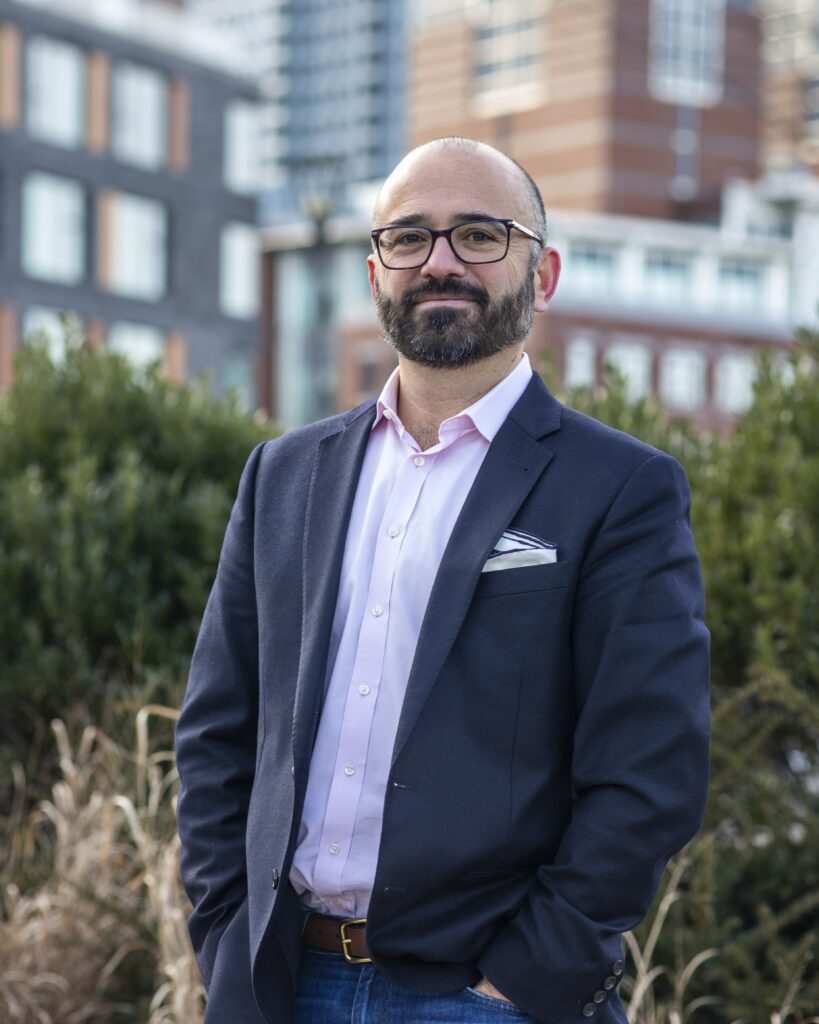
Zachary Tofias, C40’s director of food and waste, poses for a portrait in Boston.
As a requirement to be a member, C40 cities “have written climate action plans that address how they’re going to achieve a 1.5-degree C future,” explains Zachary Tofias, C40’s director of food and waste. Accelerator cities develop strategies with residents, businesses, and public institutions to make plant-based eating and reduced food waste more achievable for everyone. Some have amped up their composting efforts and compelled their agencies to cut back on the purchase of animal-sourced products, which can account for 75 percent of a city’s food-based emissions. They report their progress every year, using a data framework devised by the Carbon Disclosure Project. Finally, C40 checks this data to ensure cities have decreased the volume of the highest-emitting food groups in their purchasing, and reports are publicly shared.
Plant-centric menu- planning in New York City.
Since different cities have different procurement policies and different mayoral priorities, there’s variation in strategy among Accelerator signatories. The city of Lima has helped build over 1,800 “bio-gardens” to make hyper-local produce available to its citizens. Since 2008, New York has required its 11 agencies to serve a plant protein for lunch and dinner at least once a week. But its food- based efforts in schools and hospitals—the largest public municipal systems of their kind in the U.S., each serving around one million students or patients per year—are where it has so far shined.
Kitchen workers sort through vegetables at Health + Hospitals.
New York City children are now served culturally relevant, plant-based meals cooked from scratch every Friday, with more plant-powered options offered throughout the week; they also learn about the importance of healthy diets through school garden programs and visits to farmers’ markets. “Changing behaviors—that’s what this work is all about,” says Kate MacKenzie, executive director of the Mayor’s Office of Food Policy.
At Health + Hospitals, plant-based meals are offered as the primary option, and about 50 percent of in-patients are now opting for these plant-based meals during their stay—significantly more than in 2021, when the agency’s plant-centric initiative began in earnest. In 2023 alone, Health + Hospitals served more than 783,000 plant-based meals. Though there were previously vegetable-based options on the menu, says DeMaiolo, “It’s very easy to steam vegetables and call it plant based. But the thing is, people don’t enjoy them, and then you’re wasting food.” He says patient education has been a big part of the program’s success.
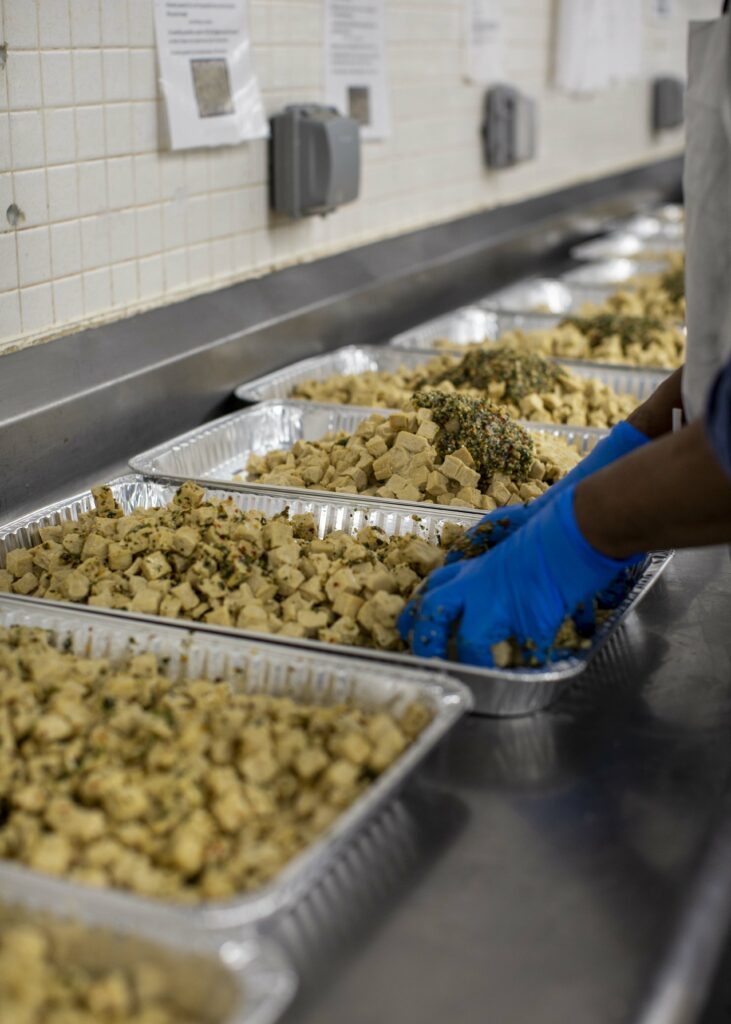
Kitchen worker prepares a vegetarian meal for hospital patients.
Every day, lunch and dinner menus feature a plant-based chef’s special and a plant-based alternative. Animal-sourced dishes turn up further down the menu. That daily special could be Puerto Rican sancocho, where plantains, garbanzos, pumpkin, and corn replace pork in a vegetable broth; or red curry tofu; or jerk mushrooms with collard greens and beans. “It’s a very diverse, cultural-type menu,” DeMaiolo says. That too is by design. Over 60 percent of patients served at NYC’s public hospitals are Hispanic or Latinx, 15 percent are Black, about six percent are Asian. Each patient has deeply held and diverse memories of what comfort food looks, smells, and tastes like to them.
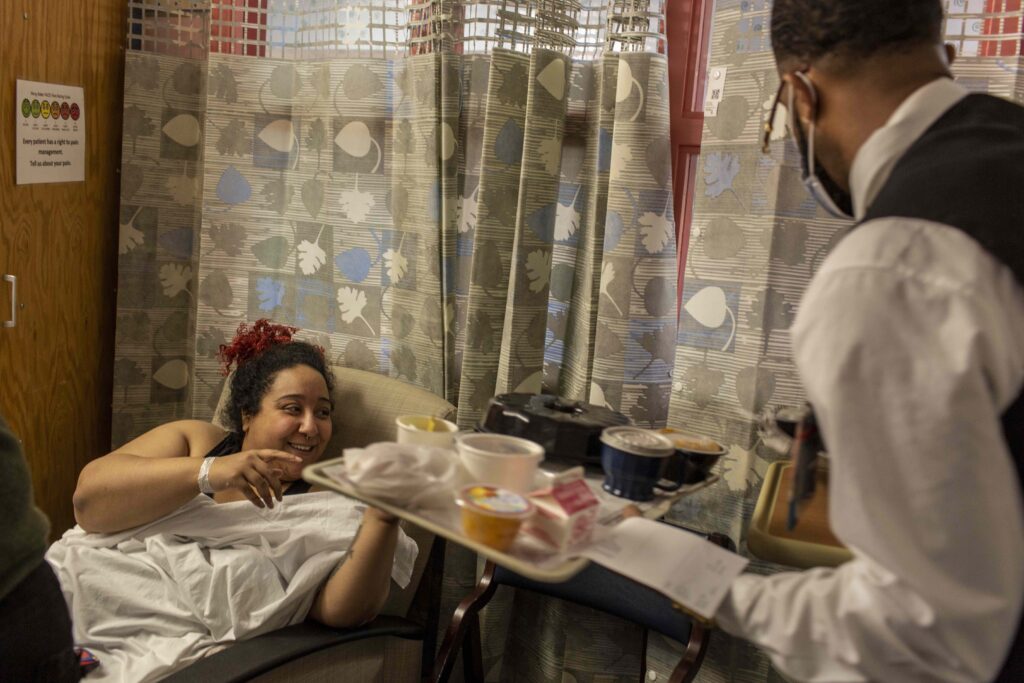
Patients are visited by food service associates who break down what’s on offer. “They’ll go, ‘Mrs. Smith, tomorrow’s chef’s special is mushroom stroganoff over rotelli pasta,’ and they’ll explain exactly what’s in it to you,” says DeMaiolo. After the meal, the associate returns to the patient for feedback. “If a new dish is too spicy, I can turn that spice down. Then I’ll run it as a special again, see if that improves its rating,” says DeMaiolo. He considers any dish that scores 80 percent approval a homerun and adds it to the rotation.
A patient receives a meal during their hospital stay.
This sort of innovation, attention to small details, and getting things just right befits a program in a city that was one of the founders of C40 back in 2006. “They’ve been a leader in a wide variety of the activities that we’ve undertaken,” says Tofias. This is the sort of tenacity necessary to participate in the organization, since C40’s approach is not to do the projects themselves, but rather to “support the sharing of good ideas that can help raise ambition and give confidence to mayors that they’re on the right track,” says Tofias. With a 90 percent overall approval rating for the plant-based meals New York’s Health + Hospitals are serving, and with even more plant-based meals about to come on the menu in other agencies, the city is well on track.
A global coalition of business and political leaders is powering up to reduce loss and waste right across the food system by 2030.
Champions 12.3 is a powerhouse of international influencers and thought leaders from governments, international organizations, research institutions, and farmer groups. Using their clout and connections to recruit partners and drive change, they’re out to inspire a whole new ambition about rethinking food waste at every step of the journey from spade to spoon.
«Each year, Australian industry and households discard an astonishing 7.6 million tons of food, and the majority of it ends up in landfill,» said Dr Steven Lapidge, Creator and CEO of Fight Food Waste Ltd, as he was invited to become the first Champion 12.3 from Australasia. «This invitation means that Australia will have a seat at the table working alongside other leaders in the global fight against food waste to divert it from landfill, so we can save money, help people, improve food security and safeguard the environment.»
The «12.3» in the name refers to the UN’s Sustainable Development Goal, or SDG, 12.3 which calls for halving global food loss and waste throughout the food chain by 2030. According to Champions 12.3 co-secretariat World Resources Institute, if food loss and waste were a country, it would be the third-highest emitter of greenhouse gases after the US and China. An area of land larger than China is used to grow food that people don’t eat, while a quarter of all freshwater used by agriculture goes to food that becomes waste. More than 800 million people are currently food insecure while more than 1 billion tons of food is lost or wasted each year. Now, Champions 12.3, armed with moral outrage and super-connections, are on a mission to slash the rate of food loss and waste in half.
And with the deadline of 2030, the clock is ticking; the Champions are already showing us what bossing it can really achieve in their own boardrooms, their relationships with partners and the media, and even how they can influence government policy.
Champions use the «Target-Measure-Act» approach to influence their peers, supply chains, customers, and policy makers. But they also walk the talk; their initiatives include the 10×20×30 project, which involves ten of the world’s largest food retailers to sign up twenty of their priority food suppliers to cut food loss and waste by 50% by 2030.
With the support of Champions 12.3, the African Union has already developed its continental post-harvest loss reduction strategy. Champions 12.3 has helped the World Farmers’ Organization to design a «Digital Dustbin» which connects farmers in Africa who have surplus harvest with companies, food banks, and others in need of additional food. Champions 12.3 has even worked with IKEA to become the first major company in world to reach 50% reduction in food waste.