The 2027 Longlist Is Here!
We are so happy to share this exciting moment: the reveal of the 2027 Food Planet Prize longlist! Every year, the evaluation process renews our optimism and our faith in what we can achieve together.
This year’s longlist features projects from 24 countries - from Samoa to Argentina. We’re proud to share their remarkable work, which reminds us once again how many different solutions it takes to transform the global food system.
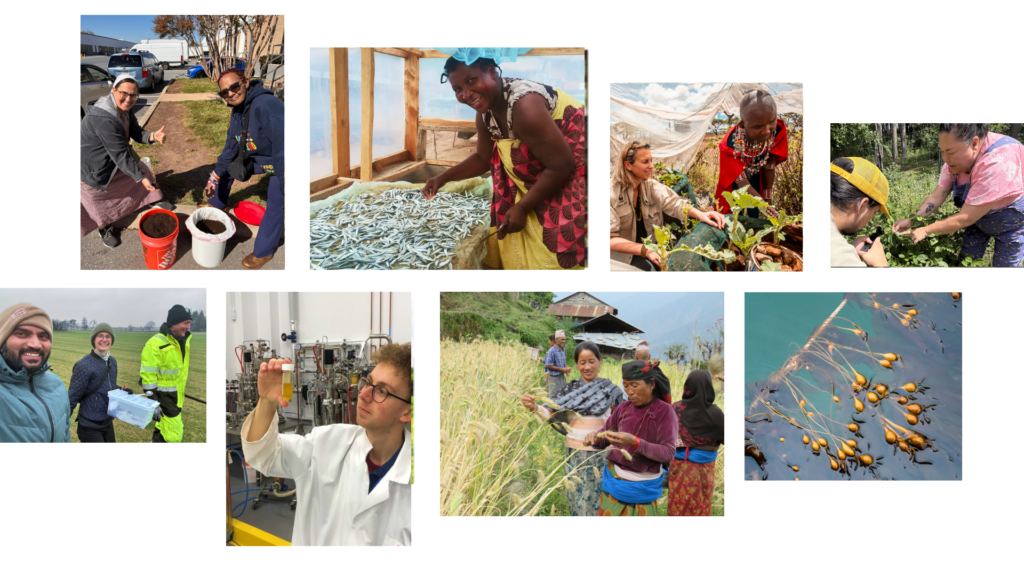
We will soon present every longlisted initiative in an article on our website. Together, these articles form a growing library of approaches across the food value chain, from farm and sea to processing, retail, and the plate. This repository is an inspiring starting point for anyone looking for new ideas being put into practice worldwide.
Next, we will examine each longlisted initiative in depth and select around five thoroughly vetted finalists with the greatest potential impact. In June 2027, the finalists will present their work in person to the international jury in Sweden, and the jury will then choose the winner.
Congratulations to all the longlisted initiatives!
The longlisted initiatives for the 2027 Food Planet Prize are:
4My City (USA)
4MyCiTy diverts household organic waste from landfill, transforming it into nutrient rich compost.
Action for Ocean (Tanzania)
Action for Ocean partners with Tanzanian coastal communities to rebuild the marine ecosystems and fisheries that protect biodiversity and safeguard local food security.
Africa Agriculture Watch (Senegal, Rwanda)
Africa Agriculture Watch (AAgWa) uses AI and satellite imagery to forecast crop yields and provide early warning insights for African food security.
Africa's Food Future by WWF (Kenya)
Africa's Food Future Initiative addresses the underlying drivers of food insecurity and biodiversity loss by developing frameworks for integrated land and water planning and management, nature-positive agriculture, and inclusive value chains.
AGRICARE Women Farmer Centres (Côte d'Ivoire)
AGRICARE enables women farmers to preserve, dry, and store their harvests, combining solar-powered cold storage, solar drying, and dry storage within modular, cooperatively owned hubs.
BITE (USA)
Building Impact Through Eaters (BITE) equips food service operators with the latest behavioral science tools to shift consumer diets toward climate-smart foods.
Climate Farmers (Germany)
Climate Farmers has built a peer-to-peer network of regenerative farmers across Europe to encourage the sharing of knowledge and practical experience.
Comida Invisível (Brazil)
Comida Invisível operates a digital platform that connects food surpluses with communities in need.
Conexões Orgânicos Macaé (Brazil)
Conexões Orgânicos Macaé has developed a participatory governance model designed to connect agroecological farms with the Brazilian national school feeding program.
CONSEA (Brazil)
CONSEA is Brazil’s National Council for Food and Nutritional Security, a participatory governance body that places the right to nutritious and environmentally sound food at the center of food system policies.
Faeger (Japan)
Faeger blends digital tracking infrastructure, rural cooperative networks, and carbon credits to reduce the emissions intensity of rice cultivation in Asia.
Food Ladder (Australia)
Food Ladder provides schools with solar-powered hydroponic systems that act as both food production systems and living classrooms for food literacy.
Food Pact Network (UK)
Food Pact Network is a global movement that drives collective commitment and action on scalable food loss and waste reduction.
Food Recycle (Australia)
The Food Recycle Platform uses patented thermal processing technology to convert commercial food waste into high-grade animal feed.
Foodsteps (UK)
Foodsteps has designed a data-driven platform that enables food companies to measure, reduce, and communicate the environmental impact of their products.
From Soil to School by Rise Against Hunger (Philippines)
From Soil to School supplies school feeding programs with nutritious produce from local regenerative farms and food banks.
GAAS movement (Brazil)
GAAS is a farmer-led movement supporting pathways for small- and large-scale farms alike to adopt regenerative agricultural practices.
International Wheat Improvement Network (IWIN) (Mexico)
The International Wheat Improvement Network by CIMMYT coordinates global germplasm exchange and breeding networks to develop climate-smart, resilient wheat varieties.
JET-AgriSOL (Colombia)
JET-AgriSOL works with agrivoltaic systems, which combine agricultural production and solar energy generation on the same land.
Jooules (New Zealand)
Jooules uses a renewable energy-powered fermentation process to convert hydrogen and other gases into protein-rich aquaculture feed.
Just Food Transition Network (global)
Just Food Transition Network has grown a coalition of diverse actors advocating for a phased transition away from inequitable and unsustainable food systems.
Keep Growing Detroit (USA)
Keep Growing Detroit is working to cultivate a local food system where most of the fruits and vegetables consumed by residents are grown within the city's neighborhoods.
LI-BIRD (Nepal)
LI-BIRD has worked for more than two decades to strengthen farmer-managed seed systems through community seed banking.
Low Carbon Chinatown (UK)
Low Carbon Chinatown collaborates with communities to redesign recipes that reduce the carbon footprint of East and Southeast Asian food cultures.
M4Life (Microbes for Life) (Argentina)
M4Life finds microbes that thrive under environmental stress, which can then be used to improve plant and soil health.
MagrowTec (Ireland)
MagrowTec retrofits agricultural sprayers with magnetic technology that improves spray coverage, reduces drift, and ultimately can reduce chemical use on farms.
Mazao Hub (USA, Tanzania, Kenya)
MazaoHub provides soil analysis and AI-driven predictive farming advice to help smallholder farmers make decisions that will benefit both their livelihood and the environment.
Native Conservancy (USA)
Native Conservancy helps Indigenous coastal communities develop cooperative kelp mariculture while protecting ancestral lands and reviving ocean abundance.
North American Traditional Indigenous Food Systems (NATIFS) (USA)
NATIFS revitalizes Indigenous foodways and boosts food sovereignty by showcasing local, seasonal ingredients and supporting Indigenous land stewardship.
OzHarvest (Australia)
OzHarvest supplies rescued food to people in need, while building food literacy and advocating for systematized food waste prevention.
Public Diners by Nourish Scotland (UK)
Public Diners advocates for state-supported restaurants that provide affordable, nutritious, and locally sourced meals as essential public infrastructure.
Puna Bio (USA, Argentina)
Puna Bio uses extremophile microorganisms to develop biostimulants and biological seed treatments that improve crop yields and resilience.
Rare Earth Global (UK)
Rare Earth Global processes hemp into a nutrient-rich, low-carbon aquaculture feed.
Seed Film Cultivation by Green and Seed (South Korea)
Seed Film Cultivation (SFC) developed a seed sowing technology that enables rice to grow without methane-intensive flooded paddy systems.
Solar Foods (Finland)
Solar Foods uses hydrogen-based fermentation to produce a novel protein-rich ingredient that can be used as an alternative to animal-based foods.
Straw Innovations (UK, Philippines)
Straw Innovations collects and upcycles rice straw, avoiding the high emissions that occur when straw is left to decompose in flooded paddies.
Sun Bear Biofuture (UK)
Sun Bear Biofuture uses yeast-based fermentation to produce alternatives to palm oil, reducing deforestation pressure on tropical rainforests.
Sustain: The Australian Food Network (Australia)
Sustain is a "think and do" network driving food system sustainability through advocacy, research, and capacity development.
Syracuse Onondaga Food Systems Alliance (SOFSA) (USA)
Syracuse-Onondaga Food Systems Alliance unites diverse urban and rural stakeholders to build an equitable, resilient, and community-driven regional food network.
Tiyeni (Malawi)
Tiyeni helps smallholder farmers adopt Deep Bed Farming, a technique with benefits for soil health, water retention, and farm yields.
UjuziKilimo (Kenya)
UjuziKilimo utilizes sensor technology and data analytics to provide soil information and agricultural advice, helping smallholder farmers reduce their environmental impact while improving yields.
Unibaio (Argentina, USA)
Unibaio develops biodegradable microparticles that improve the performance of agrochemicals, reducing overall chemical application rates.
Vermi-Farm Initiative (Kenya)
Vermi-Farm Initiative combines vermicomposting with community microfinance models to supply organic fertilizers and build financial resilience for rural farmers.
Women in Business Development Inc (WIBDI) (Samoa)
WIBDI supports Samoan farmers by connecting them with organic supply chains and fair-trade markets, and developing processing facilities for their products.
WorldFish (Malaysia)
WorldFish advances research and innovation to help make aquatic food systems more sustainable and resilient.
Yngvi Bio (Denmark)
Yngvi Bio is developing precision biological crop protection, designed to safeguard food production without the environmental costs of conventional chemical insecticides.
Zest (UK)
Zest provides real-time analytics and process insights to identify, track, and eliminate internal food waste at the manufacturing level.